India Macro Daily(Beta Mode)
Rupee Gains on RBI Swap and Dividend
Market Snapshot
| Asset | Level | Change |
|---|---|---|
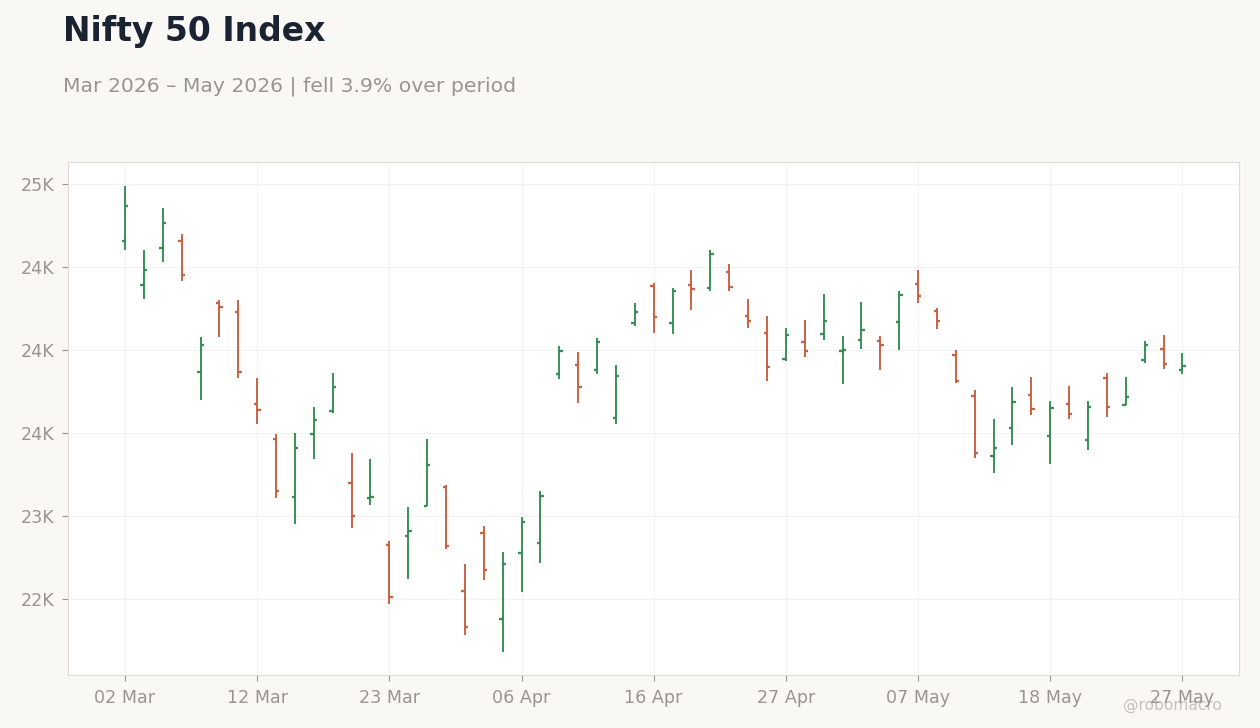
| Nifty 50 | 23,907.15 | -0.03% |
| Sensex | 75,867.80 | -0.19% |
| USD/INR | 95.68 | -0.39% |
| EUR/INR | 111.48 | +0.33% |
| Reliance | 1,350.50 | -0.43% |
| HDFC Bank | 758.65 | -2.60% |
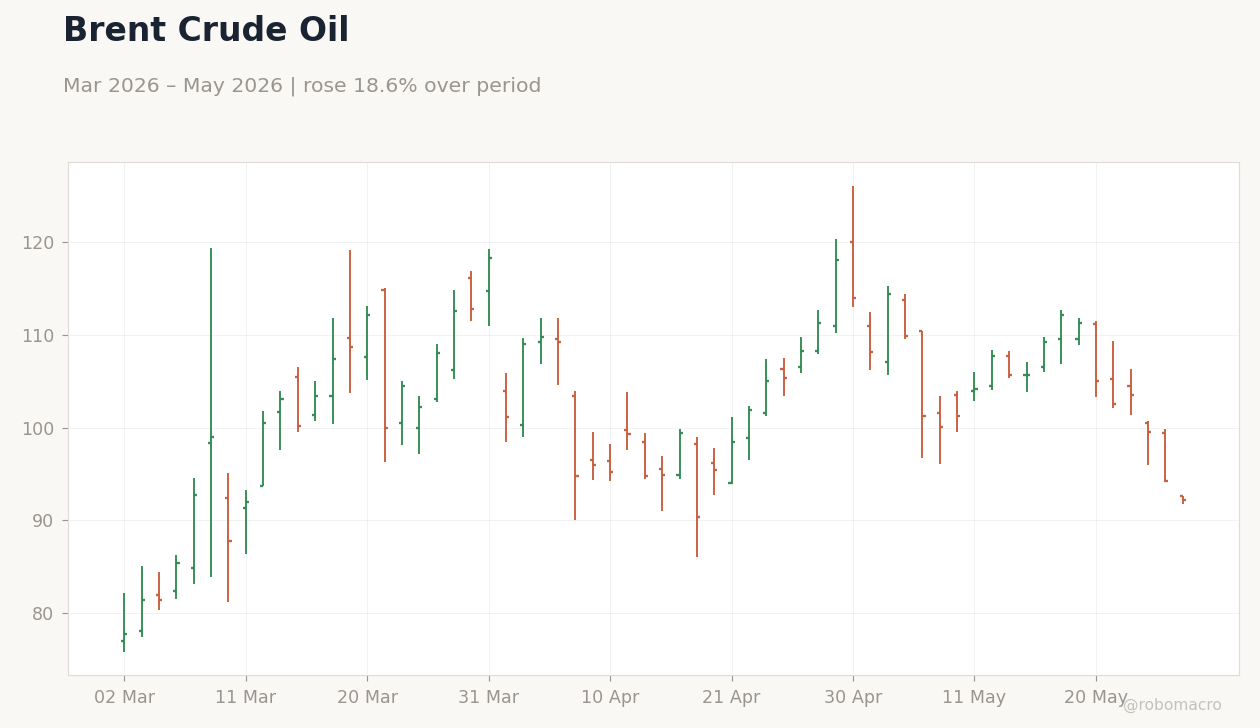
| Brent Crude | 92.26 | -2.15% |
| Gold | 4,525.60 | +1.76% |
| Bitcoin | 73,683.80 | -0.89% |
| India Short-term Rate | - | - |
| India Long-term Rate | - | - |
Prior Economic Events
| Data | Prior | Cons | Actual |
|---|---|---|---|
| No events available | |||
 USD/INR Exchange Rate | Type: market_hloc | Rate: 95.68 (2026-05-29) | Range: 91.08–96.57 | Trend(5pt): 91.08,93.24,93.17,94.61,95.68
Today's Economic Events
| Data | Prior | Cons | Time |
|---|---|---|---|
| No events available | |||
- Nifty 50 closed at 23,907.15, down 0.03%, while Sensex fell 0.19% to 75,867.80 amid mixed sectoral moves.
- USD/INR declined 0.39% to 95.68 as RBI conducted dollar-rupee swaps that drew nearly double the offered bids.
- Brent crude dropped 2.15% to 92.26 while gold rose 1.76% to 4,525.60, reflecting softer energy prices and safe-haven demand.
Yesterday's Recap
Indian equities traded in a narrow range with limited volume as investors digested the absence of fresh data prints. Nifty and Sensex posted marginal losses led by weakness in HDFC Bank, which fell 2.60%. The rupee strengthened against the dollar after the RBI swap operation absorbed excess dollar supply.
News flow centered on the central bank's record dividend transfer of ₹2.87 lakh crore to the government, which analysts said narrows the fiscal comfort zone for FY27. Former RBI Governor Subbarao reiterated that the rupee should be allowed to depreciate gradually rather than defended at arbitrary levels. Brent's decline supported the external account outlook while gold's advance reflected global risk-off flows.
No MPC members spoke publicly.
The Day Ahead
Markets will open to a data-light session with no scheduled releases on industrial production, trade, or inflation. Traders will monitor follow-through on the RBI's swap results and any comments on the upcoming polymer note rollout. Equity sentiment may hinge on global cues from US equity futures and oil prices.
The absence of events leaves focus on corporate results from banks and IT names still in the earnings season. Liquidity conditions remain steady ahead of month-end.
Other Economic Notes
The larger RBI dividend provides fiscal headroom but reduces the buffer for future capital needs at the central bank. Rupee weakness continues to highlight India's energy import dependence and the need to revive corporate capital expenditure. IT services export growth remains modest at mid-single digits, with guidance from major firms pointing to steady rather than accelerating demand.
Monsoon progress will be watched closely for its impact on rural consumption and food inflation.
Global Macro News
Softer US data elsewhere raised expectations for a more dovish Fed stance later in the year, supporting EM currencies including the rupee. European Central Bank commentary also leaned accommodative, easing pressure on global yields. <i>↓ p.2</i>