India Macro Daily(Beta Mode)
CAD Flips to Surplus as Rupee Weakens
Market Snapshot
| Asset | Level | Change |
|---|---|---|
| Nifty 50 | 23,366.70 | -0.21% |
| Sensex | 74,243.34 | -0.16% |
| USD/INR | 95.70 | +0.79% |
| EUR/INR | 110.38 | +0.28% |
| Reliance | 1,291.00 | -0.97% |
| HDFC Bank | 747.05 | -0.95% |
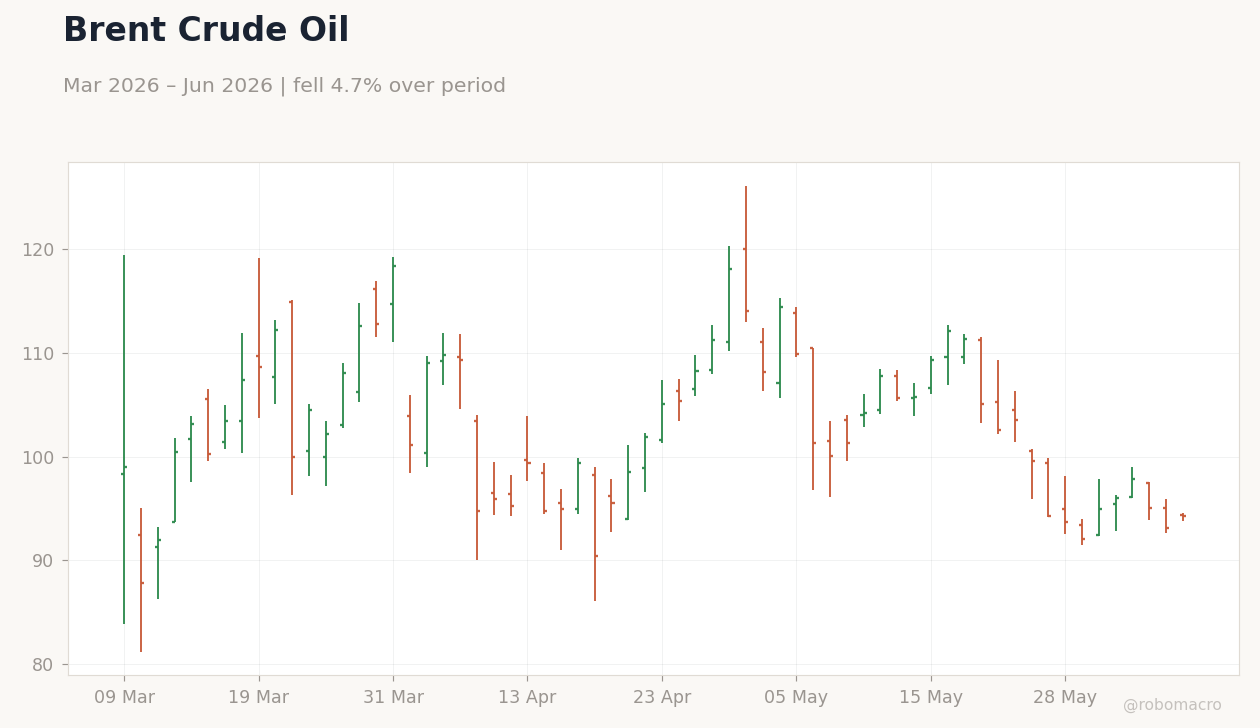
| Brent Crude | 94.07 | +1.05% |
| Gold | 4,341.80 | +0.11% |
| Bitcoin | 62,540.99 | -1.10% |
| India Short-term Rate | 5.50% | +0.00% |
| India Long-term Rate | - | - |
Prior Economic Events
| Data | Prior | Cons | Actual |
|---|---|---|---|
| Current Account Balance | -15,500m | -15,000m | 7,100m |
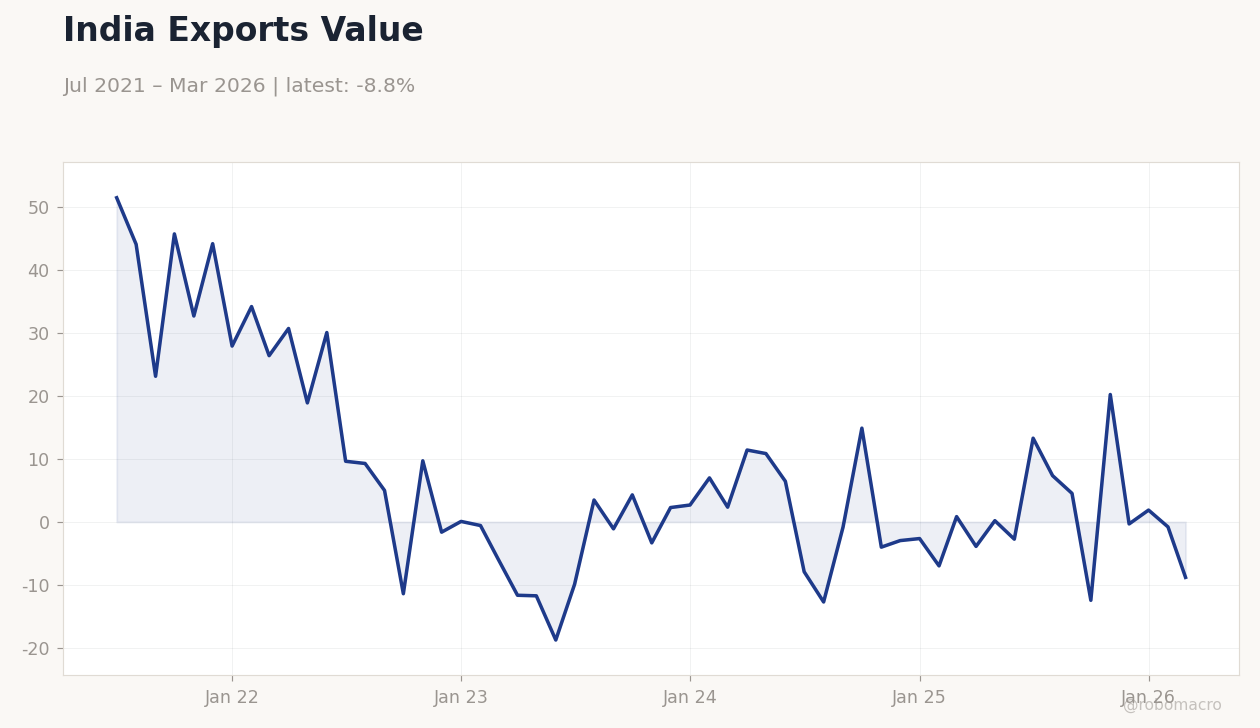 India Exports Value | Type: macro_line | USD Million: -8.813 (2026-03-01) | Range: -18.76–51.49 | Trend(5pt): 51.49,5.001,-3.326,-2.644,-8.813
Today's Economic Events
| Data | Prior | Cons | Time |
|---|---|---|---|
| Friday (2026-06-12) | |||
| Inflation Rate Year-over-Year | 3.48 | 4 | 02:30 |
- India recorded a 0.7% current account surplus in Q1 2026, beating forecasts by a wide margin.
- Equity benchmarks slipped while USD/INR rose 0.79% to 95.70 despite RBI support measures.
- RBI held the repo rate at 5.50% and expanded FPI access to attract inflows.
Yesterday's Recap
India’s current account balance flipped to a $7.1 billion surplus in the March quarter, sharply above the -$15 billion consensus. Official data released Friday also showed GDP growth exceeding forecasts in Q1 2026 even as Middle East tensions intensified. Nifty 50 fell 0.21% to 23,366.70 and Sensex declined 0.16% to 74,243.34.
The rupee weakened, with USD/INR climbing 0.79% to 95.70. Brent crude rose 1.05% to $94.07 on geopolitical supply concerns. Reliance and HDFC Bank each dropped nearly 1%, weighing on the broader market.
RBI measures to support the currency provided only partial offset amid equity outflows.
The Day Ahead
Markets await the June 12 inflation print, with consensus at 4.0% YoY after March’s 3.48% reading. No major data releases are scheduled for today. Traders will monitor FPI flows following the RBI’s expanded access measures.
Equity sentiment may remain pressured by global risk-off flows tied to Iran-US developments. The RBI’s liquidity operations and any further FX intervention signals will be watched closely for rupee direction.
Other Economic Notes
Strong Q1 growth and the unexpected current account surplus underscore India’s resilient domestic demand and improving external position. Persistent rupee depreciation of nearly 7% year-to-date highlights structural pressures from portfolio outflows and elevated crude prices. RBI’s focus on attracting long-term capital inflows aims to reduce reliance on short-term debt and stabilize reserves.
Equity valuations in IT and financials remain sensitive to both global rates and domestic inflation outcomes.
Global Macro News
Brent crude climbed above $94 on renewed Middle East supply risks, raising India’s import bill. Global equity markets turned cautious amid Iran-US tensions, prompting outflows from emerging-market assets including India. The dollar stayed firm, keeping pressure on Asian currencies.
<i>↓ p.2</i>