India Macro Daily(Beta Mode)
Rupee Climbs on Oil Relief, RBI NRI Deposit Push
Market Snapshot
| Asset | Level | Change |
|---|---|---|
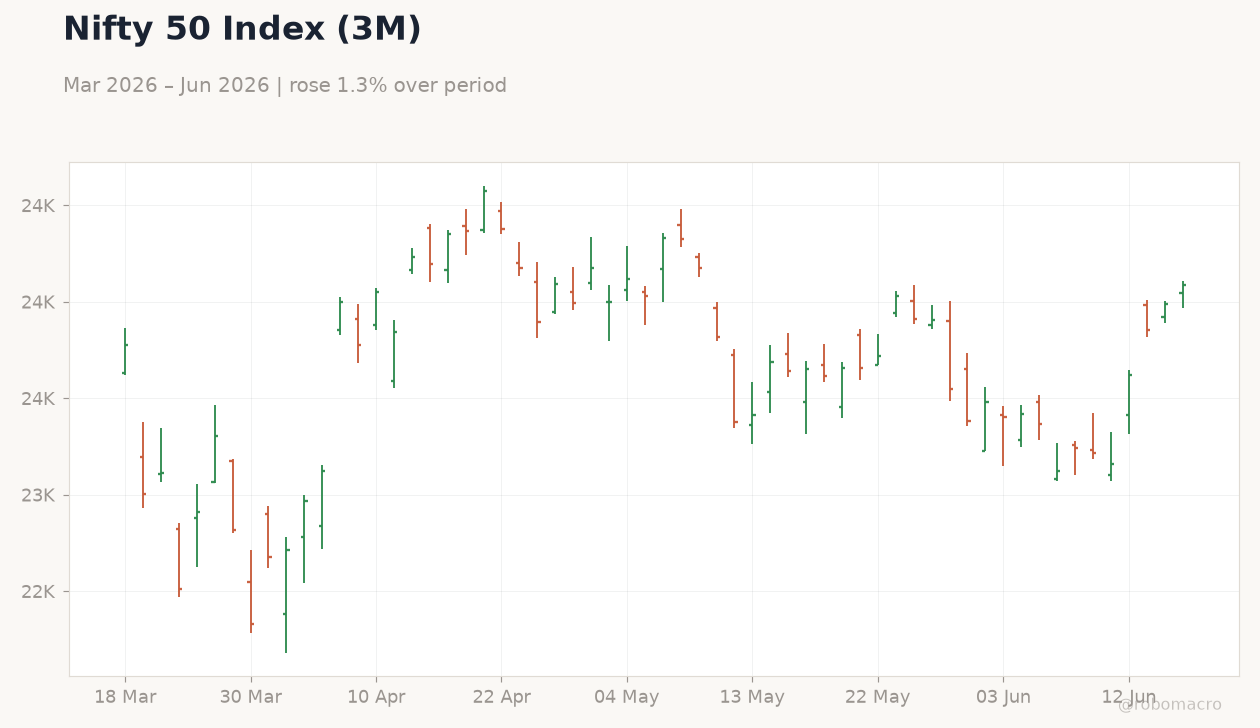
| Nifty 50 | 24,085.70 | +0.40% |
| Sensex | 77,155.62 | +0.45% |
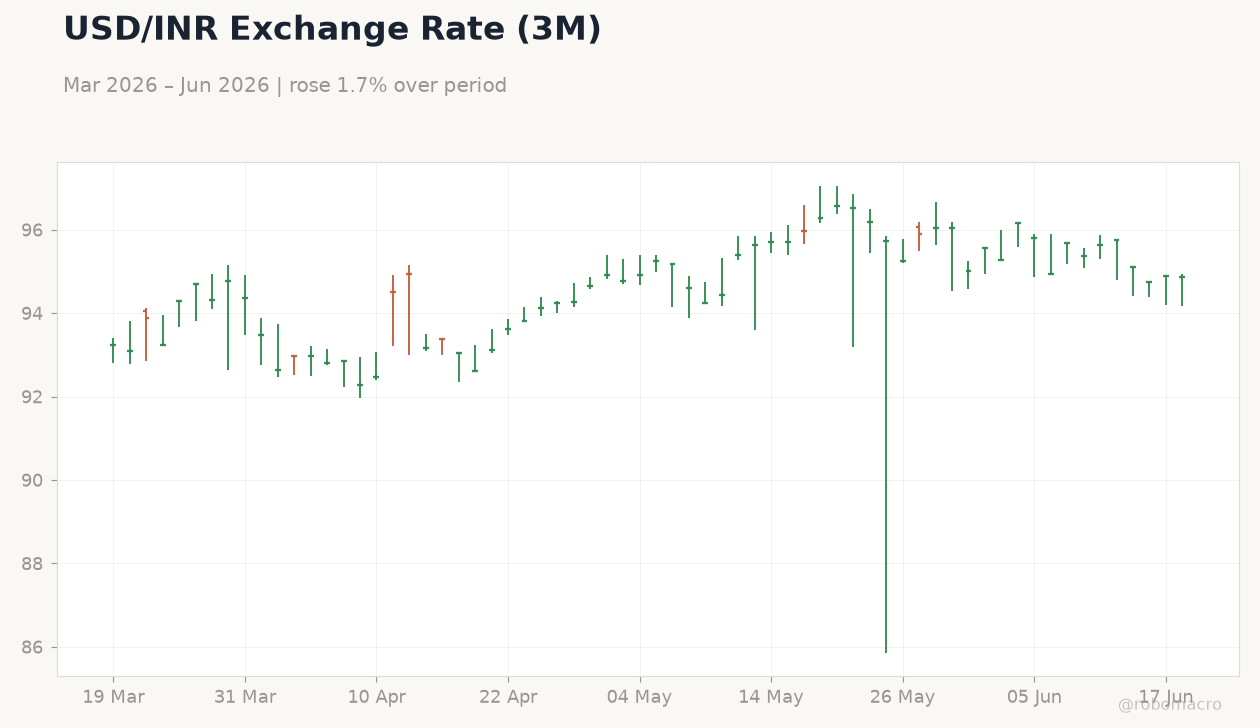
| USD/INR | 94.86 | -0.03% |
| EUR/INR | 108.69 | -0.95% |
| Reliance | 1,328.10 | -0.35% |
| HDFC Bank | 799.00 | +1.51% |
| Brent Crude | 79.00 | -0.69% |
| Gold | 4,204.40 | -3.54% |
| Bitcoin | 62,919.27 | -4.09% |
| India Short-term Rate | 5.50% | +0.00% |
| India Long-term Rate | - | - |
Prior Economic Events
| Data | Prior | Cons | Actual |
|---|---|---|---|
| Trade Balance | -28,380m | -27,000m | -28,210m |
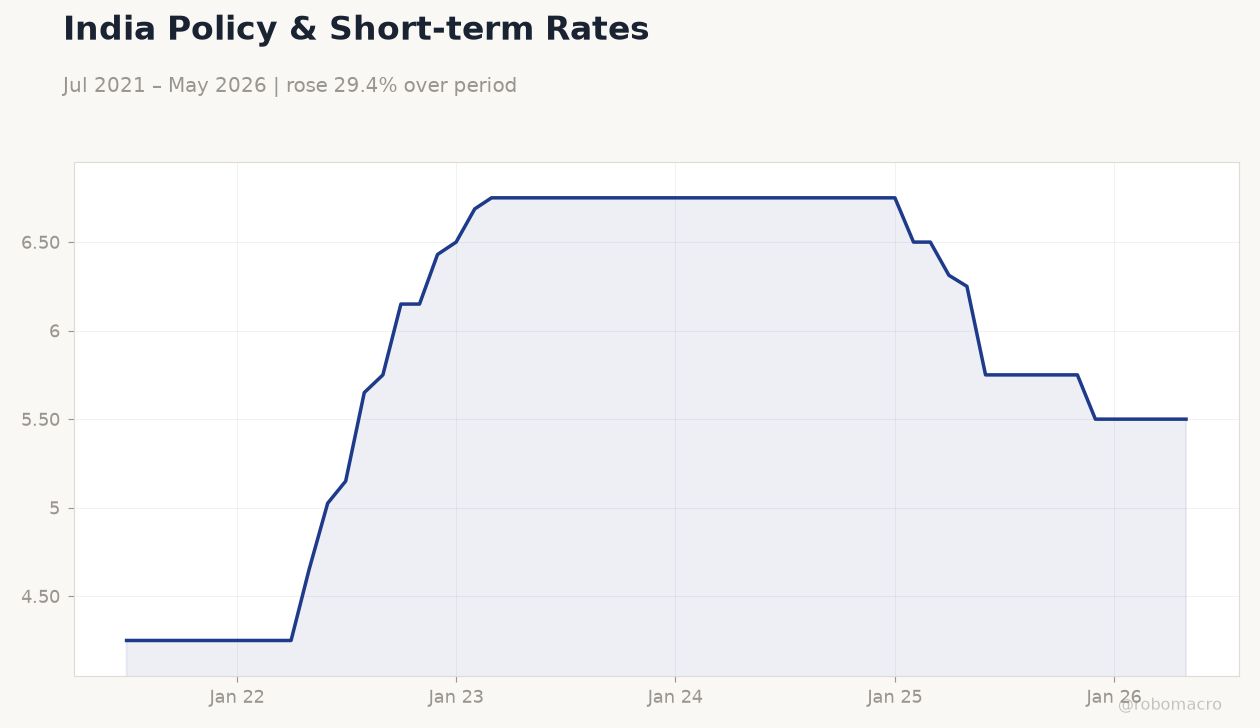 India Policy & Short-term Rates | Type: macro_line | Short-term Rate %: 5.5 (2026-05-01) | Range: 4.25–6.75 | Trend(5pt): 4.25,5.75,6.75,6.75,5.5
Today's Economic Events
| Data | Prior | Cons | Time |
|---|---|---|---|
| Friday (2026-06-19) | |||
| Monetary Policy Meeting Minutes | - | - | 03:30 |
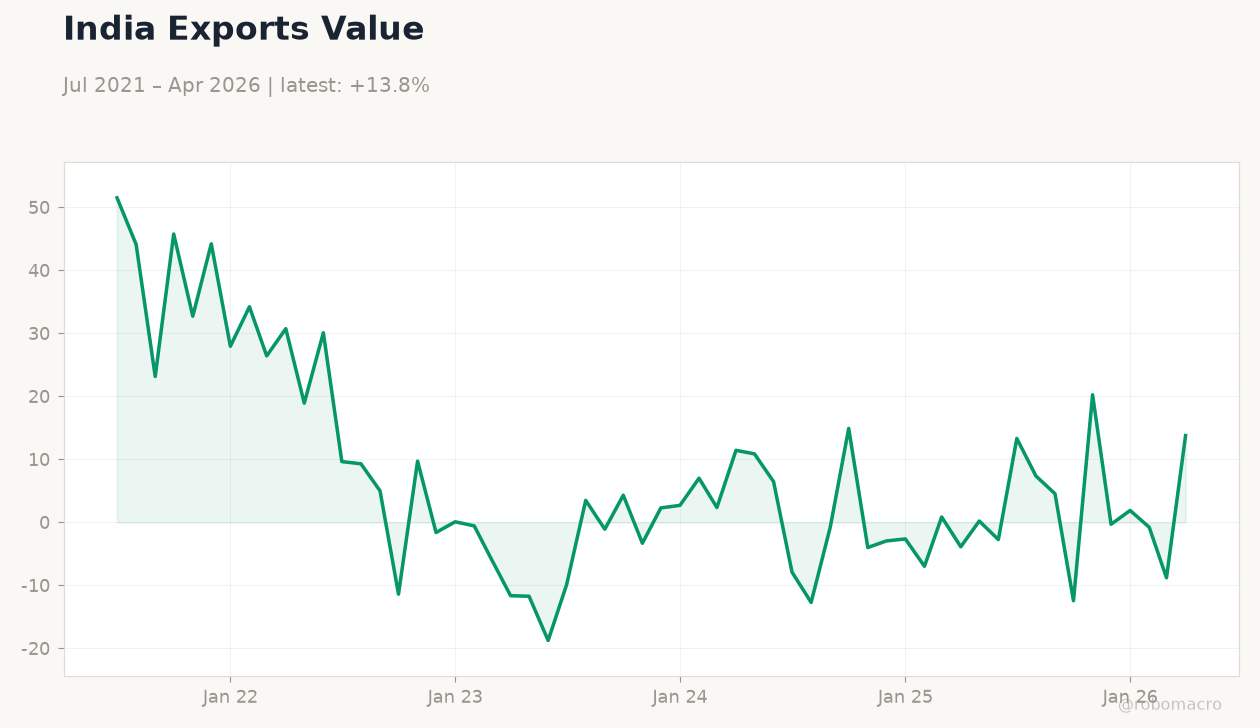
- Trade balance printed at -$28.21 billion, wider than consensus, yet equity benchmarks advanced on lower oil prices.
- RBI eased FCNR(B) deposit norms, enabling banks to offer up to 7.1 percent rates to attract NRI inflows.
- Nifty closed at 24,085.70 (+0.40 percent) and Sensex at 77,155.62 (+0.45 percent) while USD/INR eased to 94.86.
Yesterday's Recap
India's May trade balance came in at -$28.21 billion, missing the -$27 billion consensus and underscoring persistent import demand. Equity markets shrugged off the print, with Nifty and Sensex rising 0.40 percent and 0.45 percent respectively on softer crude. USD/INR edged 0.03 percent lower to 94.86 as Brent crude fell 0.69 percent to $79 per barrel.
Banks responded to RBI's FCNR(B) relaxation by quoting 7.1 percent rates for NRI deposits, drawing early interest. IT stocks lagged after Accenture's cautious outlook triggered ADR weakness in Infosys and Wipro. Gold dropped 3.54 percent amid stronger risk sentiment.
Overall, flows remained supportive for the rupee despite RBI's ongoing FX book activity.
The Day Ahead
Markets will focus on the June 19 release of MPC meeting minutes at 03:30 ET for any fresh signals on liquidity and inflation tolerance. Trade data follow-through and NRI deposit inflows will be tracked for rupee direction. Steel exporters begin availing UK FTA quota benefits from 15 July, supporting order books.
Oil price volatility remains the dominant external driver for both inflation prints and RBI FX operations. Equity sentiment hinges on global tech earnings and domestic FII positioning.
Other Economic Notes
Authorities plan to extend anti-dumping duties on Bangladeshi jute products, protecting domestic mills despite lower shipment volumes. Export sustainability norms are being drafted to align with EU and US buyer requirements. Northeast tourism infrastructure is positioned as a new growth lever for services exports.
These measures complement the UK steel access deal, broadening India's defensive trade toolkit.
Global Macro News
Lower Brent prices provided direct relief to India's import bill and current-account gap. Global risk-off moves in Bitcoin and gold reflected shifting liquidity preferences that could pressure EM flows. UK safeguard quotas on steel are now ring-fenced for Indian mills under the CETA, limiting downside from British tariffs.
<i>↓ p.2</i>