Japan Macro Daily(Beta Mode)
Tankan Beats, Nikkei Falls
Market Snapshot
| Asset | Level | Change |
|---|---|---|
| Nikkei 225 | 51,063.72 | -1.58% |
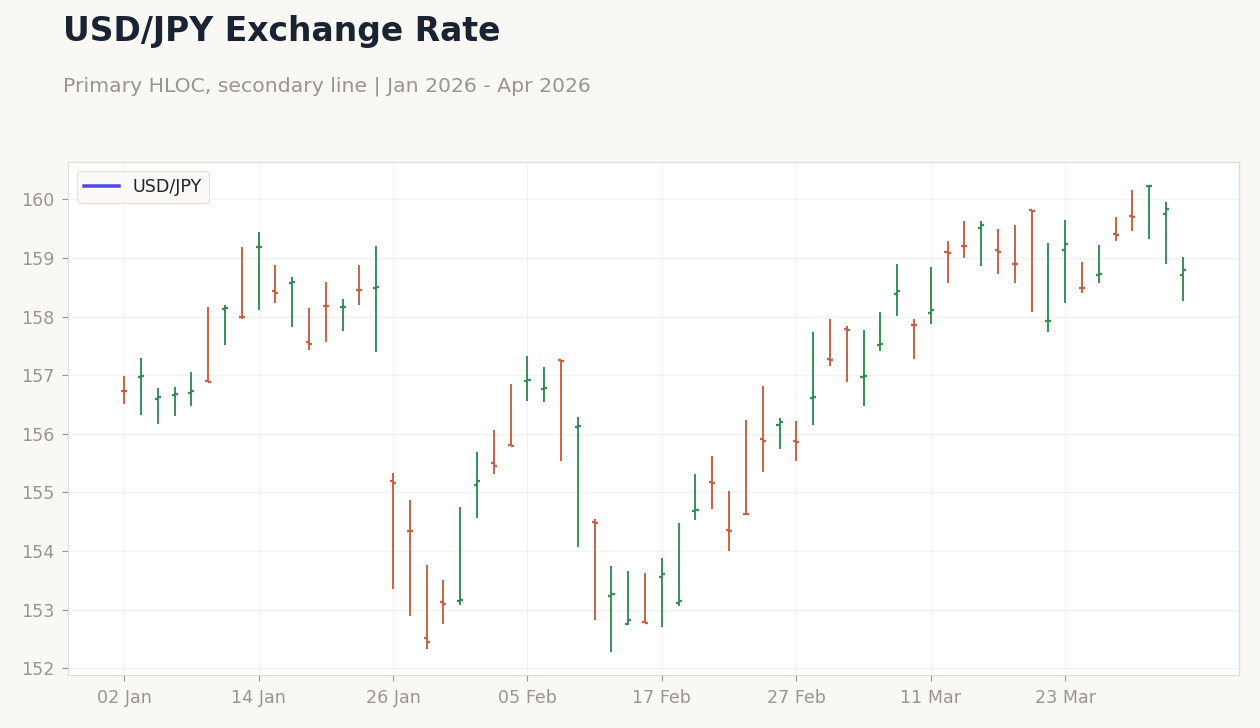
| USD/JPY | 158.80 | +0.14% |
| EUR/JPY | 184.07 | +0.33% |
| GBP/JPY | 211.24 | +0.62% |
| Gold | 4,787.90 | +3.02% |
| Brent Crude | 100.23 | -15.31% |
| Bitcoin | 68,191.32 | -0.06% |
| Japan 2Y Govt Yield | 0.73% | +0.00% |
| Japan 10Y Govt Yield | 2.11% | -5.80% |
Prior Economic Events
| Data | Prior | Cons | Actual |
|---|---|---|---|
| Headline Unemployment Rate | 2.70 | 2.70 | 2.60 |
| Industrial Production Month-over-Month Preliminary | 4.30 | -2.10 | -2.10 |
| Retail Sales Year-over-Year | 1.80 | 0.80 | -0.20 |
| Housing Starts Year-over-Year | -0.40 | -4.70 | -4.90 |
| Tankan Large Manufacturers Index | 15 | 16 | 17 |
 Japan Short-term Rates | Type: macro_line | Short-term Rate (%): 0.728 (2026-02-01) | Range: -0.07–0.728 | Trend(5pt): -0.017,-0.012,-0.054,0.227,0.728
Today's Economic Events
| Data | Prior | Cons | Time |
|---|---|---|---|
| No events available | |||
- Tankan survey exceeded expectations, signaling manufacturing optimism amid global tensions.
- Unemployment dipped while retail sales disappointed, highlighting uneven recovery.
- Yen weakened slightly as markets digest BoJ vigilance on currency moves.
Yesterday's Recap
Japan's unemployment rate fell to 2.6% in March, beating consensus of 2.7% and signaling a tightening labor market despite broader economic headwinds. Industrial production declined 2.1% month-over-month, aligning with expectations but underscoring weakness in manufacturing output. Retail sales dropped 0.2% year-over-year, missing the 0.8% forecast and reflecting subdued consumer spending amid rising costs.
Housing starts decreased 4.9% year-over-year, slightly worse than the -4.7% consensus, pointing to ongoing softness in the property sector. The Tankan large manufacturers index rose to 17, surpassing the 16 consensus and indicating improved business sentiment. Nikkei 225 closed down 1.58% at 51,063.72, pressured by global risk-off sentiment from Middle East conflicts.
JGB 10-year yield fell to 2.11% with a -5.80% change, while USD/JPY edged up 0.14% to 158.80, reflecting yen vulnerability.
The Day Ahead
No major Japanese economic releases are scheduled for today, allowing markets to focus on global developments. Attention may shift to potential verbal interventions from finance ministry officials on yen movements. Tomorrow also lacks key data, potentially leading to subdued trading volumes.
Investors will monitor any spillover from international events, such as oil price fluctuations. Broader sentiment could be influenced by U.S. market openings.
Overall, the quiet calendar underscores a wait-and-see approach for Japanese assets.
Other Economic Notes
Broader economic themes in Japan highlight persistent challenges from global inflation pressures, with core Tokyo CPI at 1.7% in March remaining below the BoJ's 2% target. Recession fears are mounting as the Nikkei sinks amid widening Middle East conflicts, pushing benchmark JGB yields toward 27-year highs before recent retreats. Efforts to boost FDI into India by Japan's Foreign Ministry signal strategic diversification amid domestic growth constraints.