Japan Macro Daily(Beta Mode)
BoJ Split on Rates, Yen Defended
Market Snapshot
| Asset | Level | Change |
|---|---|---|
| Nikkei 225 | 59,513.12 | +0.38% |
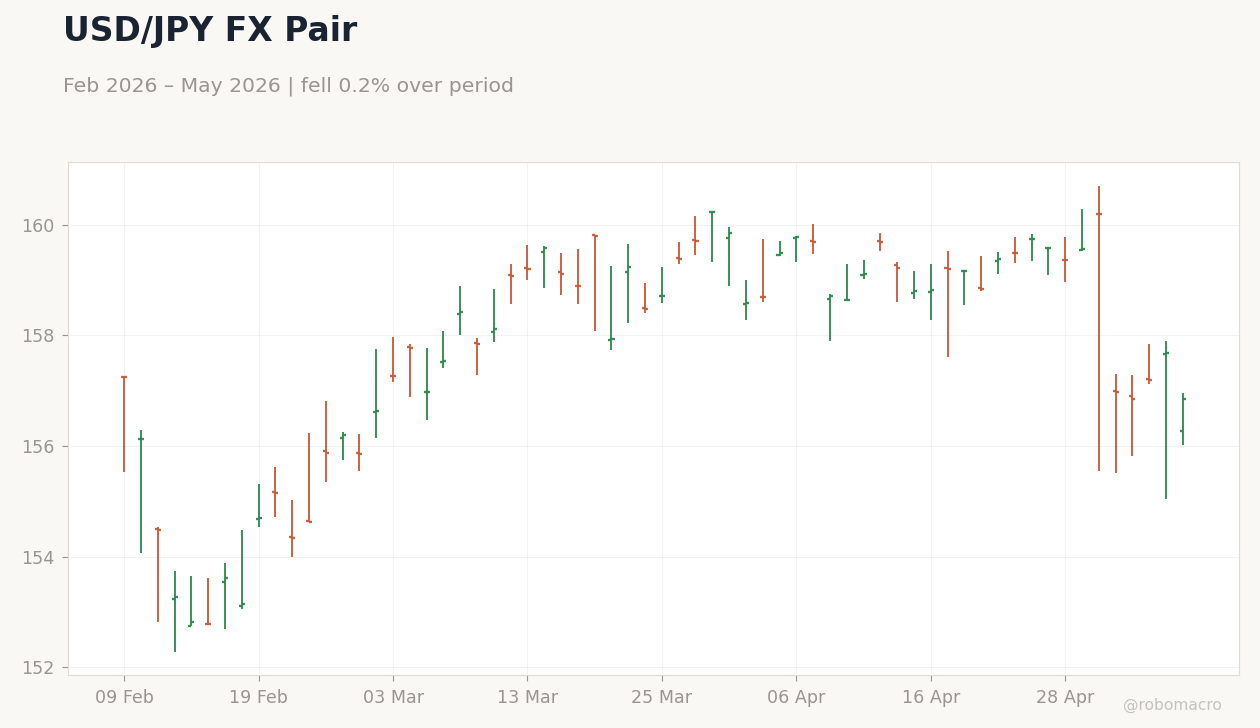
| USD/JPY | 156.85 | +0.22% |
| EUR/JPY | 183.93 | -0.44% |
| GBP/JPY | 212.55 | -0.07% |
| Gold | 4,711.30 | +0.63% |
| Brent Crude | 102.59 | +1.30% |
| Bitcoin | 79,880.85 | -1.90% |
| Japan 2Y Govt Yield | 0.73% | +0.00% |
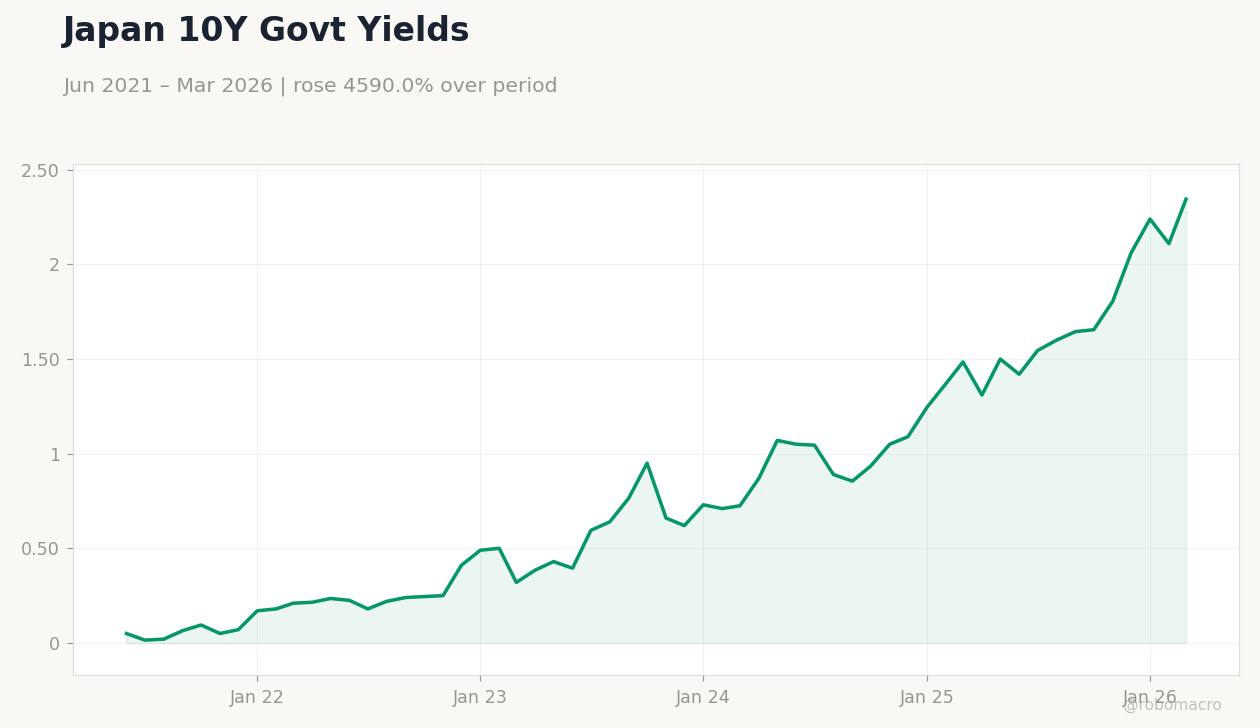
| Japan 10Y Govt Yield | 2.35% | +11.14% |
Prior Economic Events
| Data | Prior | Cons | Actual |
|---|---|---|---|
| BoJ Monetary Policy Meeting Minutes | - | - | - |
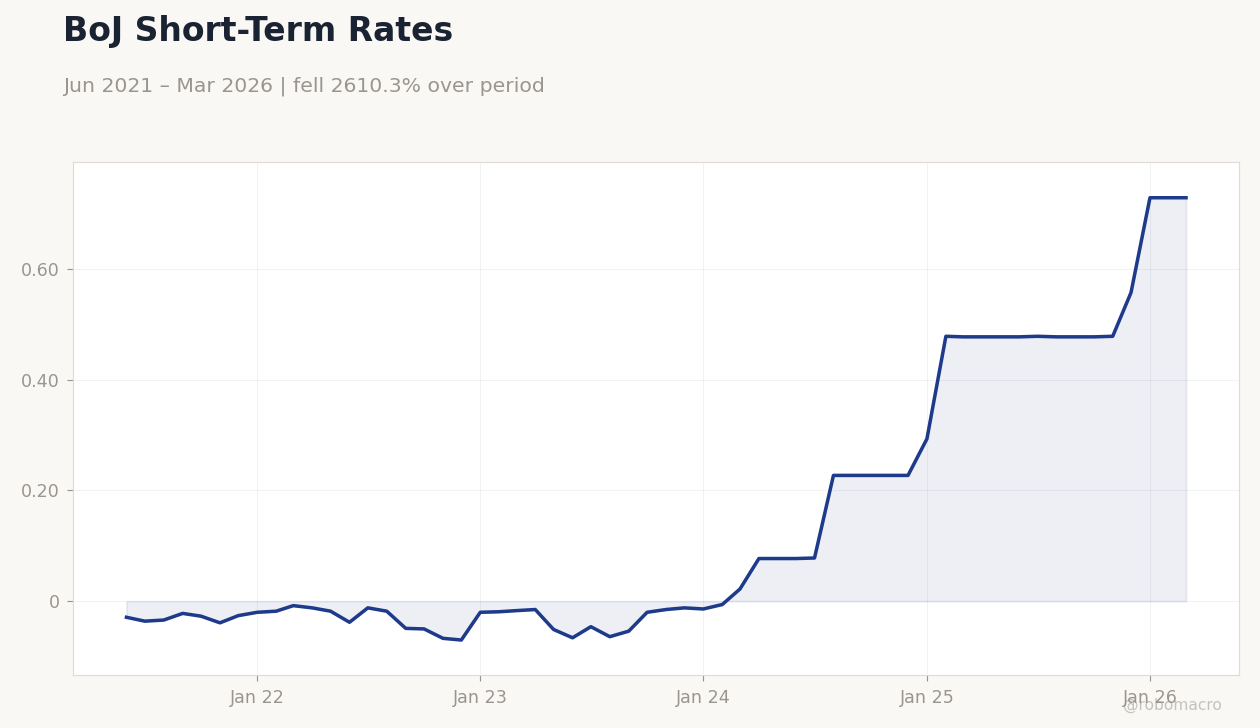 BoJ Short-Term Rates | Type: macro_line | Short-Term Rate %: 0.728 (2026-03-01) | Range: -0.07–0.728 | Trend(5pt): -0.029,-0.018,-0.02,0.227,0.728
Today's Economic Events
| Data | Prior | Cons | Time |
|---|---|---|---|
| No events available | |||
- BoJ minutes reveal internal divisions on rate hike timing amid yen weakness.
- Massive yen interventions signal unlimited defense, boosting Nikkei to record highs.
- JGB 10Y yields surge on policy normalization bets despite global optimism.
Yesterday's Recap
The Bank of Japan released minutes from its March 18-19, 2026, Monetary Policy Meeting, highlighting splits among members on the rate path amid inflation risks from Middle East conflicts. Some members advocated for rate hikes in line with economic and price improvements, while others noted flexibility on inflation targets as per IMF views. Markets reacted with the Nikkei 225 climbing 0.38% to 59,513.12, driven by optimism over a U.S.-Iran deal that spurred risk-on sentiment.
USD/JPY rose 0.22% to 156.85, reflecting ongoing yen pressure despite reports of Japan's fourth yen-buying intervention. The Japan 10Y Government Yield jumped 11.14% to 2.35%, signaling heightened expectations for BoJ policy tightening. EUR/JPY fell 0.44% to 183.93, and GBP/JPY dipped 0.07% to 212.55, amid chatter of unlimited yen defense strategies.
No other major data releases occurred, but the minutes reinforced focus on gradual normalization.
The Day Ahead
Today features no scheduled economic releases or events for Japan, providing markets a breather after yesterday's BoJ minutes. Attention may shift to broader Asian trading dynamics, with yen volatility potentially persisting from recent interventions. Tomorrow also lacks key data points, though global developments like U.S.
Treasury Secretary Bessent's visit could influence sentiment. Traders will monitor any unscheduled BoJ communications on currency defense. Overall, the quiet calendar underscores reliance on intervention signals for yen stability.
Expect Nikkei and JGB yields to track global equity and bond moves in the absence of domestic catalysts.
Other Economic Notes
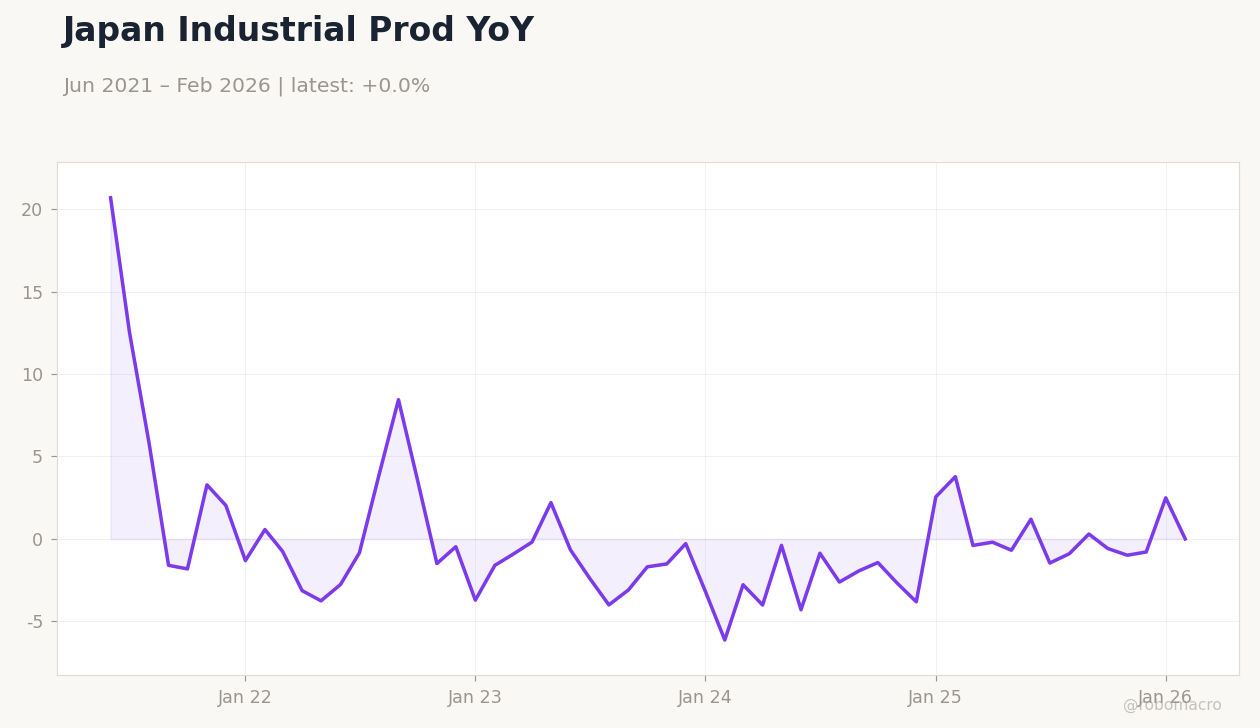
Japan's industrial growth accelerated to 55.1 in April, supporting exporter stocks amid yen weakness, though Tokyo inflation remained below the BoJ's 2% target. This divergence highlights challenges in achieving sustainable price gains despite external boosts from currency depreciation. Broader themes include potential impacts from Middle East tensions on energy prices, which could fuel imported inflation and complicate policy normalization.