Japan Macro Daily(Beta Mode)
BoJ Hike Odds Rise on Wages and GDP Beat
Market Snapshot
| Asset | Level | Change |
|---|---|---|
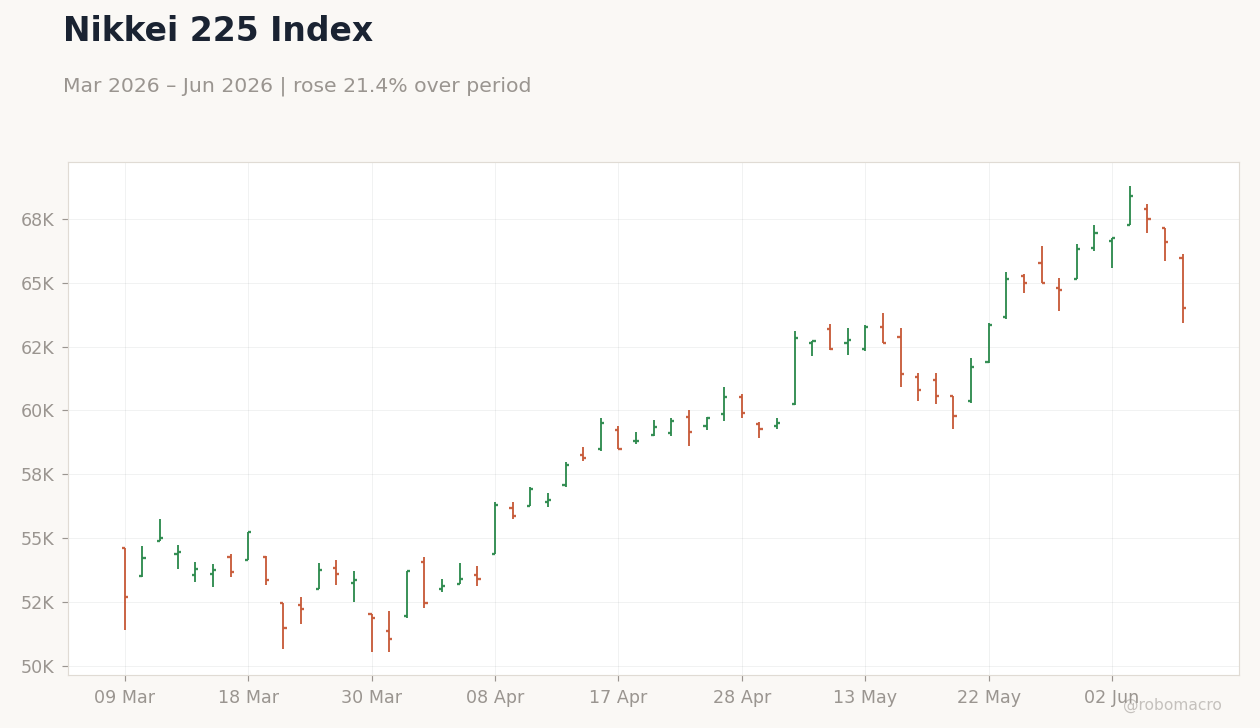
| Nikkei 225 | 64,024.60 | -3.85% |
| USD/JPY | 160.32 | +0.09% |
| EUR/JPY | 184.65 | -0.04% |
| GBP/JPY | 214.42 | +0.40% |
| Gold | 4,284.80 | -1.18% |
| Brent Crude | 91.83 | -2.57% |
| Bitcoin | 61,728.61 | -2.16% |
| Japan 2Y Govt Yield | 0.73% | -0.14% |
| Japan 10Y Govt Yield | 2.52% | +7.25% |
Prior Economic Events
| Data | Prior | Cons | Actual |
|---|---|---|---|
| No events available | |||
 Japan Long-Term Govt Bond Yield | Type: macro_line | Yield %: 2.515 (2026-04-01) | Range: 0.015–2.515 | Trend(6pt): 0.015,0.24,0.66,1.245,2.345,2.515
Today's Economic Events
| Data | Prior | Cons | Time |
|---|---|---|---|
| No events available | |||
- Smaller firms raise wages 4.29% in fiscal 2026, adding to wage momentum
- Q1 GDP beats forecasts despite later capital-spending revision, lifting BoJ tightening odds
- Nikkei 225 drops 3.85% to 64,024.60 as 10-year JGB yield surges 7.25% to 2.52%
Yesterday's Recap
Japanese equity markets closed sharply lower with the Nikkei 225 falling 3.85% to 64,024.60 amid rising rate-hike expectations. USD/JPY edged 0.09% higher to 160.32 while the 10-year government yield jumped 7.25% to 2.52%. News that smaller firms lifted pay 4.29% in fiscal 2026 reinforced wage-driven inflation views.
Q1 GDP beat initial forecasts, bolstering arguments for policy normalisation even after a capital-investment revision. The 2-year yield eased 0.14% to 0.73%. Brent crude declined 2.57% to 91.83, adding to external disinflation signals.
Yen softness persisted despite renewed intervention warnings from Tokyo officials.
The Day Ahead
Markets enter a data-light session with no scheduled releases through tomorrow. Attention stays fixed on next-week BoJ policy meeting where Citi and other houses now assign elevated odds of a rate increase. USD/JPY will remain sensitive to any fresh verbal intervention from Japanese officials.
Equity sentiment hinges on whether the recent wage data sustains exporter support. JGB curves may stay volatile as participants price further normalisation steps. No BoJ speakers are listed before the meeting.
Other Economic Notes
Persistent services prices and bank-lending strength continue to underpin BoJ hawkish bets. Tourism inflows remain robust into 2027, supported by a still-weak yen that keeps Japan affordable for foreign visitors. Corporate earnings season shows mixed capital-spending signals after the Q1 GDP revision.
Broader price data remain anchored near the verified -0.50% CPI YoY level from mid-2021, leaving room for further policy adjustment from the current 0.73% rate.
Global Macro News
Gold fell 1.18% to 4,284.80 on reduced safe-haven demand while Bitcoin dropped 2.16% to 61,728.61. Brent crude weakness reflected softer global demand readings outside Japan. EUR/JPY eased 0.04% to 184.65 and GBP/JPY rose 0.40% to 214.42, highlighting cross-rate divergence.
<i>↓ p.2</i>