Japan Macro Daily(Beta Mode)
Ueda's Absence Fuels BoJ Hike Speculation
Market Snapshot
| Asset | Level | Change |
|---|---|---|
| Nikkei 225 | 64,179.27 | -1.89% |
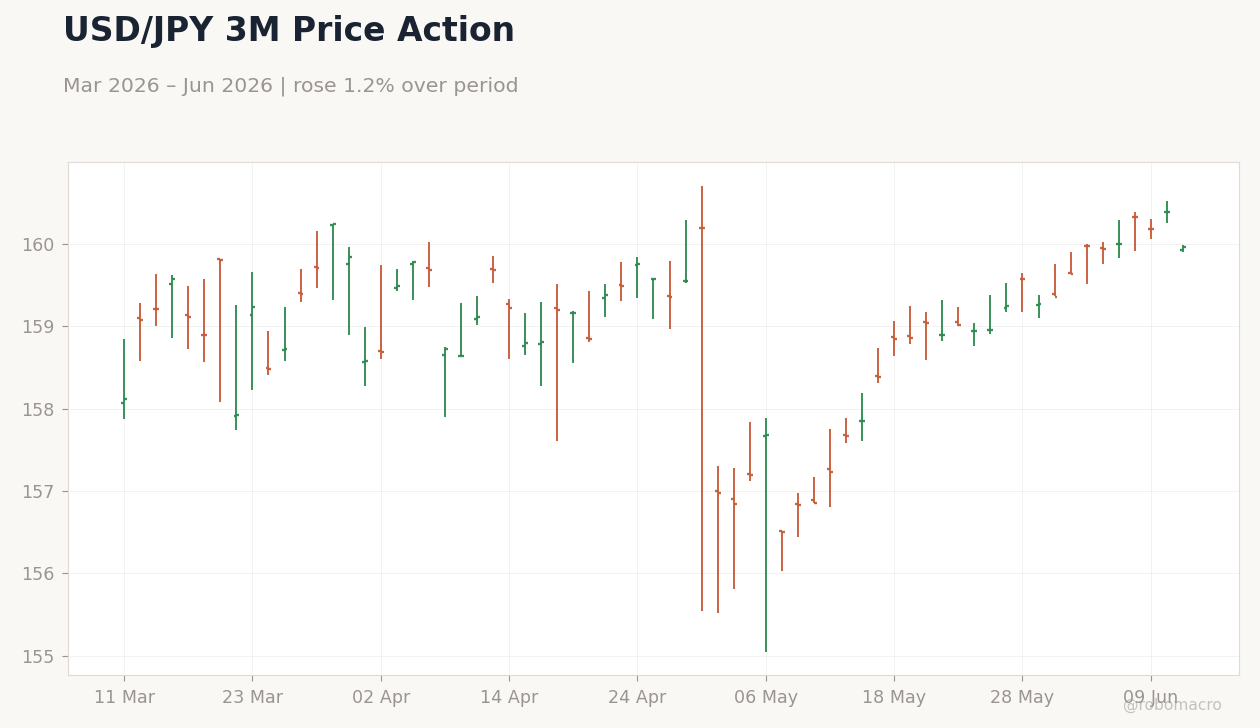
| USD/JPY | 160.53 | +0.09% |
| EUR/JPY | 185.16 | -0.00% |
| GBP/JPY | 214.65 | +0.08% |
| Gold | 4,233.80 | +3.06% |
| Brent Crude | 89.09 | -4.31% |
| Bitcoin | 63,432.00 | +3.23% |
| Japan 2Y Govt Yield | 0.73% | -0.14% |
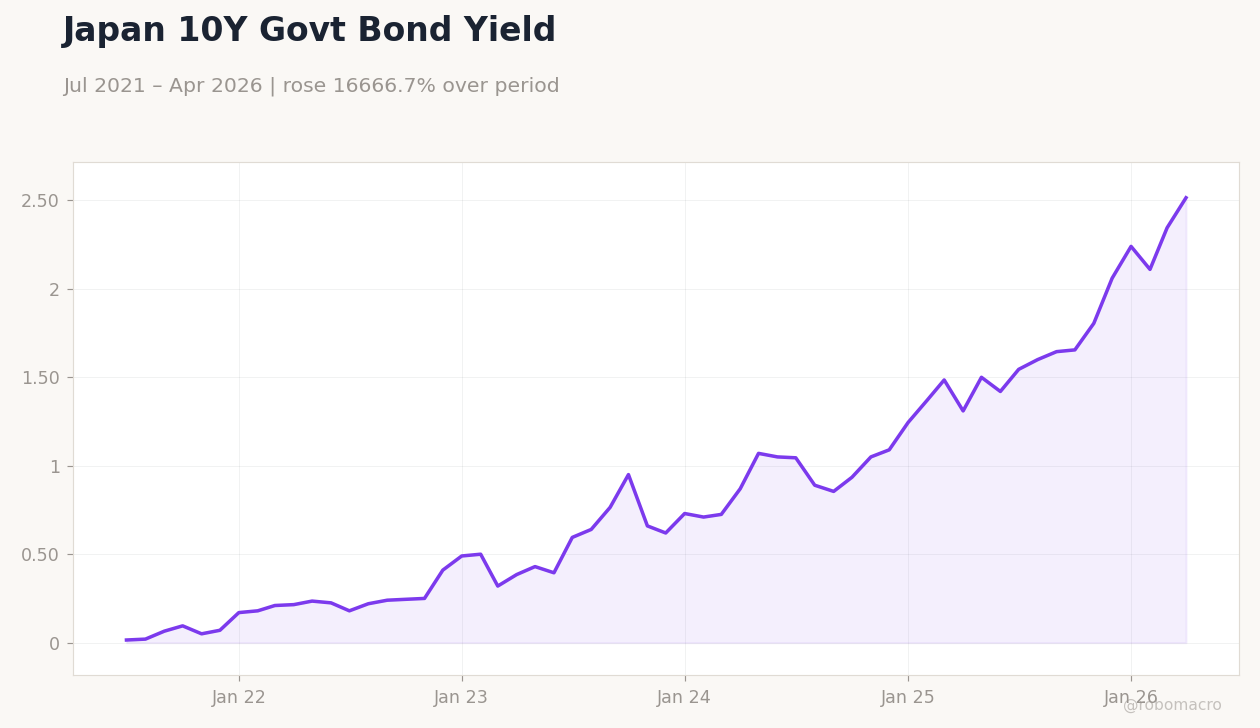
| Japan 10Y Govt Yield | 2.52% | +7.25% |
Prior Economic Events
| Data | Prior | Cons | Actual |
|---|---|---|---|
| No events available | |||
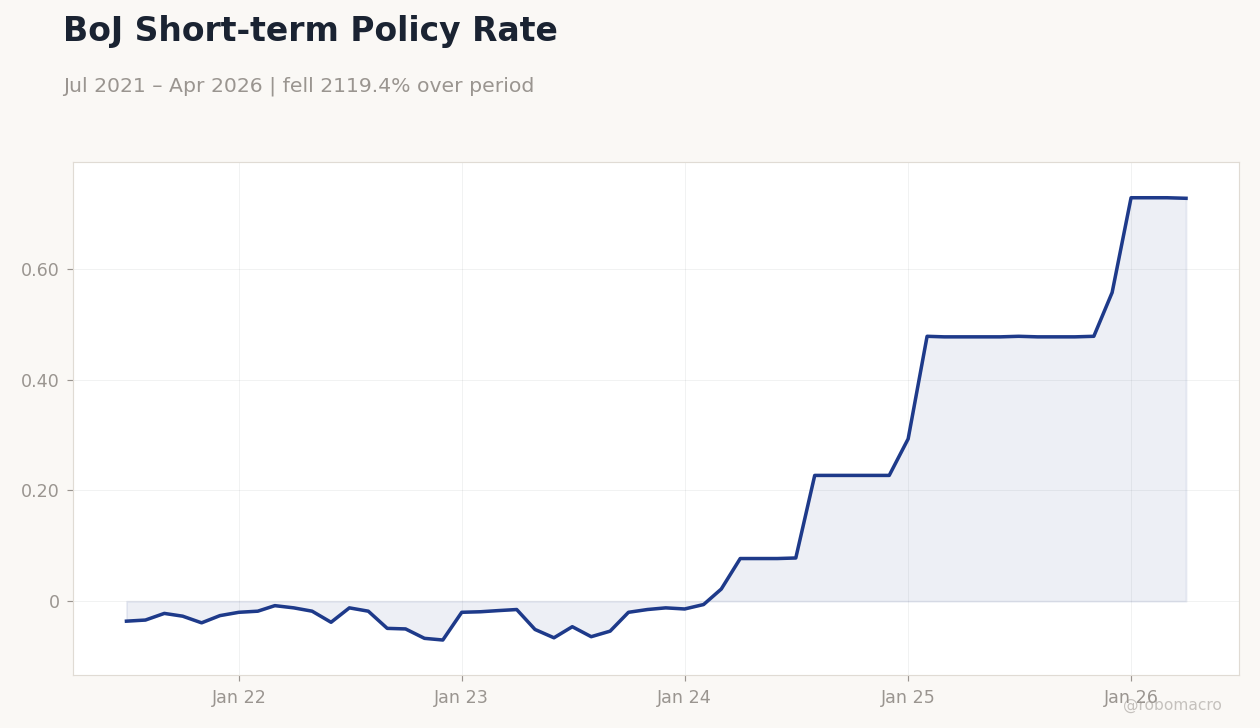 BoJ Short-term Policy Rate | Type: macro_line | Policy Rate %: 0.727 (2026-04-01) | Range: -0.07–0.728 | Trend(6pt): -0.036,-0.049,-0.015,0.293,0.728,0.727
Today's Economic Events
| Data | Prior | Cons | Time |
|---|---|---|---|
| No events available | |||
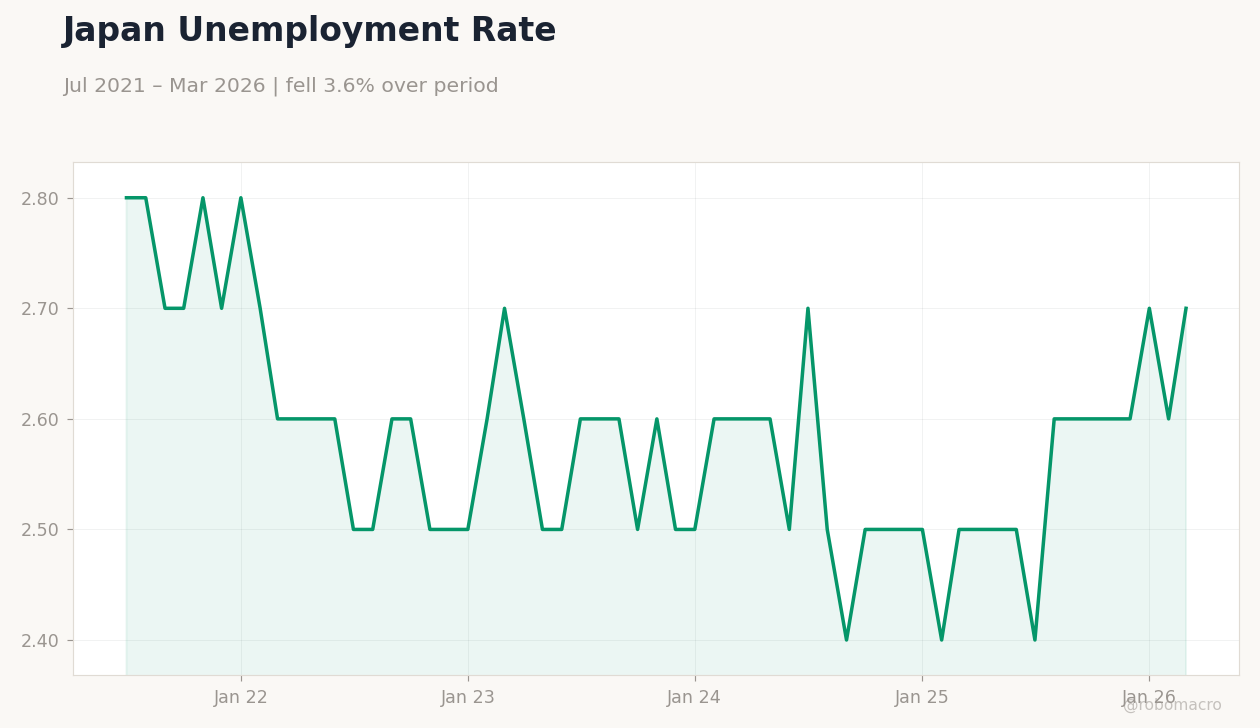
- Markets price BoJ rate path toward 1.0% amid yen weakness and inflation signals, with verified policy rate at 0.73% and CPI at -0.50% from 2021 baseline.
- Nikkei 225 falls 1.89% to 64,179.27 while USD/JPY holds at 160.53 on persistent pressure toward 162.
- Deputy Uchida takes spotlight with Governor Ueda hospitalized and absent from June policy meeting.
Yesterday's Recap
Equity markets sold off sharply as the Nikkei 225 dropped 1.89 percent to close at 64,179.27. The 10-year JGB yield rose to 2.52 percent while the 2-year yield eased to 0.73 percent. USD/JPY edged higher to 160.53 as yen flows deteriorated and intervention fears failed to provide lasting support.
Brent crude declined 4.31 percent to 89.09 amid softer global demand signals. Bitcoin rose 3.23 percent to 63,432.00 while gold advanced 3.06 percent to 4,233.80 on safe-haven demand. No domestic data releases occurred.
News flow centered on BoJ leadership changes and rate-hike speculation.
The Day Ahead
Markets await the June BoJ policy meeting without Governor Ueda. Deputy Governor Uchida will lead discussions amid speculation over the next rate move. No economic data prints are scheduled for Japan.
Yen volatility may increase on any hawkish language from the committee. Traders monitor USD/JPY for moves toward 162 as flows remain unfavorable. JGB yields could extend gains if normalization signals strengthen.
Other Economic Notes
Japan’s large manufacturers’ BSI slump raises downside risks for exports and corporate earnings. Persistent yen weakness near 160.50 continues to import inflation despite the verified policy rate of 0.73 percent. Prime Minister statements emphasize economic strengthening over direct FX intervention.
Fiscal burdens from economic securitization add pressure on public finances. Broader themes point to gradual BoJ tightening as inflation dynamics evolve from the 2021 baseline.
Global Macro News
US dollar strength keeps USD/JPY supported near 160.53 despite Tokyo’s verbal defense of the currency. Brent crude weakness at 89.09 reflects softer Chinese import data and global growth concerns. Gold’s 3.06 percent rally to 4,233.80 highlights safe-haven flows amid policy uncertainty.
<i>↓ p.2</i>