Japan Macro Daily(Beta Mode)
Yen Weakens Past 163 to 40-Year Low on Oil Surge
Market Snapshot
| Asset | Level | Change |
|---|---|---|
| Nikkei 225 | 66,115.60 | -0.18% |
| USD/JPY | 163.87 | +0.48% |
| EUR/JPY | 186.41 | +0.17% |
| GBP/JPY | 218.10 | -0.01% |
| Gold | 4,051.30 | -2.31% |
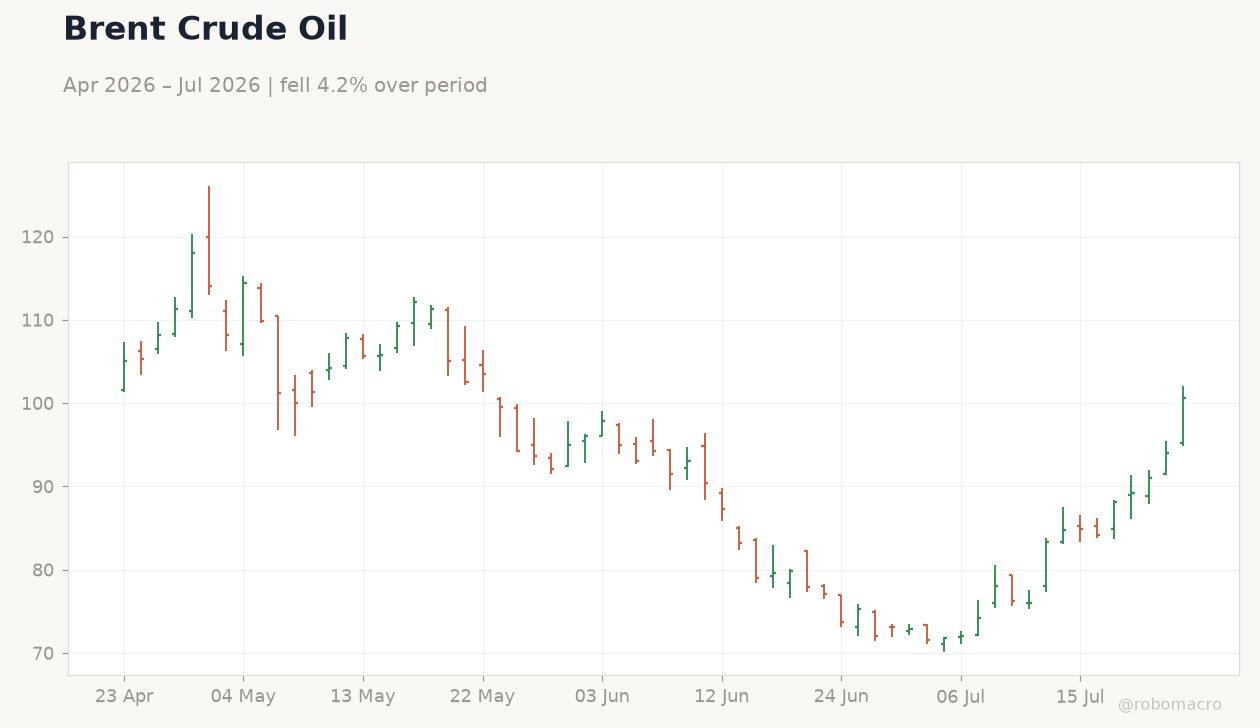
| Brent Crude | 100.57 | +6.91% |
| Bitcoin | 65,108.47 | -1.50% |
| Japan 2Y Govt Yield | 0.84% | +15.68% |
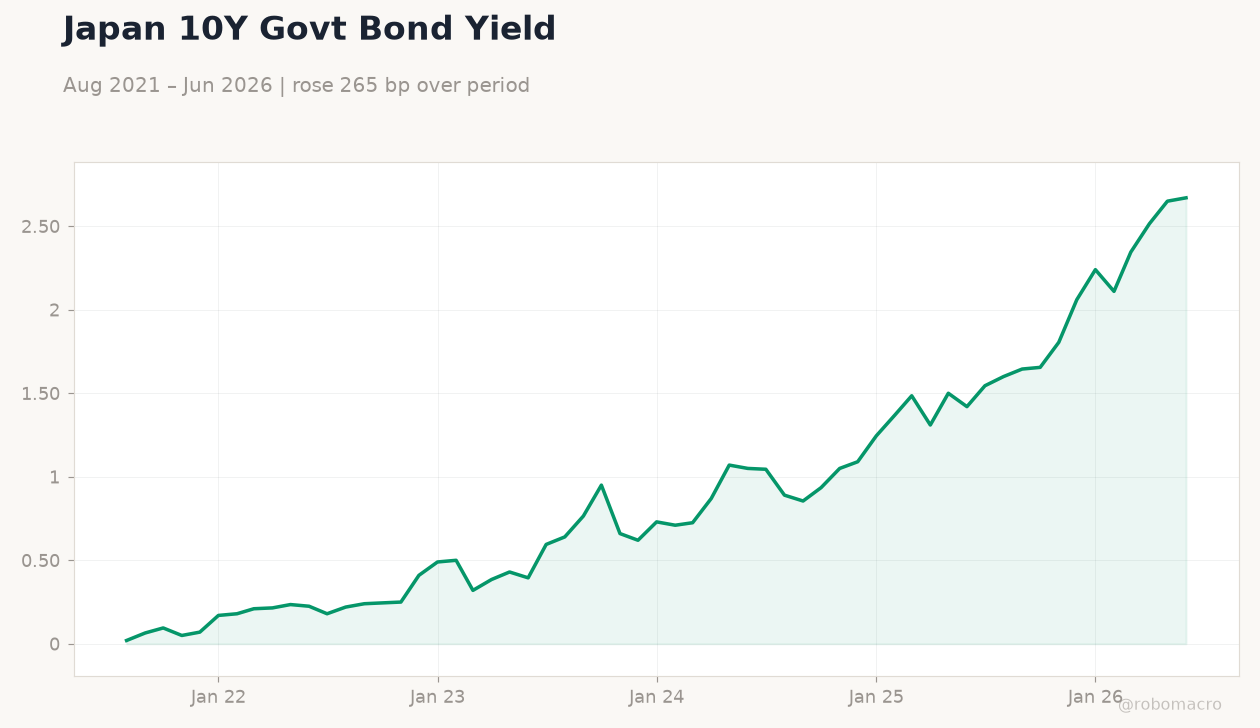
| Japan 10Y Govt Yield | 2.67% | +0.75% |
Prior Economic Events
| Data | Prior | Cons | Actual |
|---|---|---|---|
| Trade Balance | -391,800m | -120,000m | -406,900m |
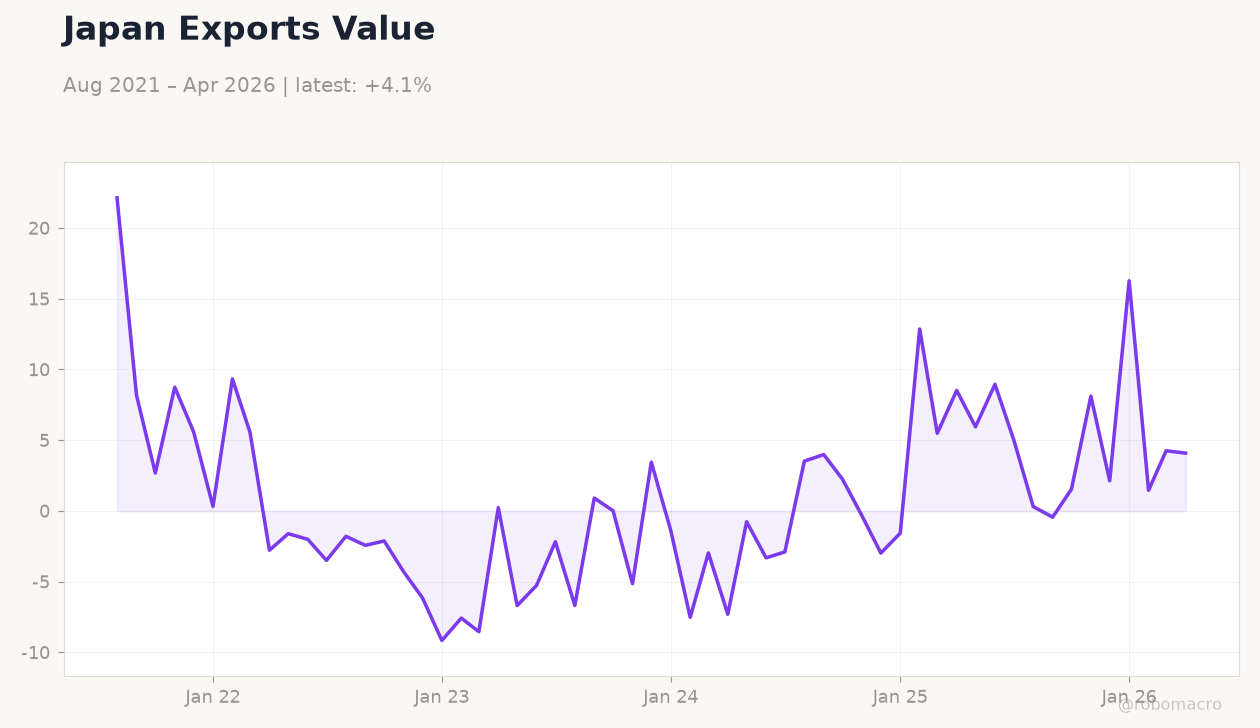
| Exports Year-over-Year | 16.80 | 18.60 | 19.30 |
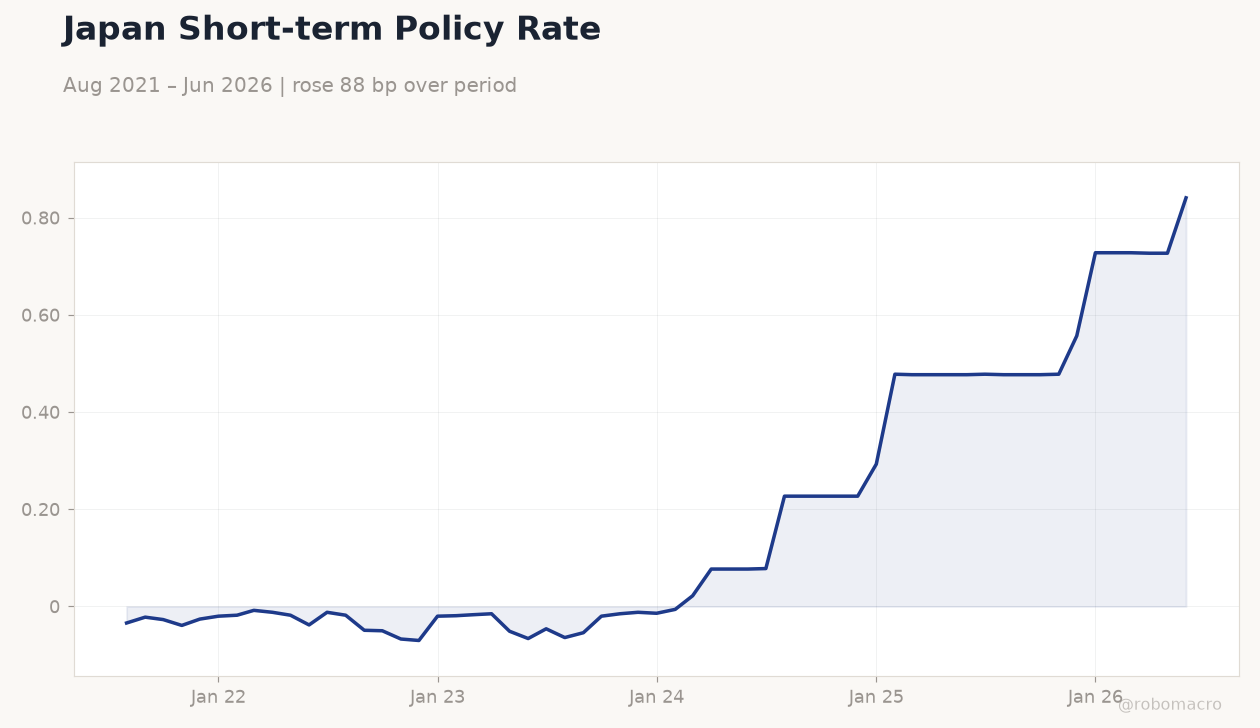 Japan Short-term Policy Rate | Type: macro_line | Policy Rate %: 0.841 (2026-06-01) | Range: -0.07–0.841 | Trend(6pt): -0.034,-0.05,-0.012,0.478,0.727,0.841
Today's Economic Events
| Data | Prior | Cons | Time |
|---|---|---|---|
| Inflation Rate Year-over-Year | 1.50 | - | 15:30 |
| Core Inflation Rate Year-over-Year | 1.40 | 1.60 | 15:30 |
| S&P Global Manufacturing PMI Flash | - | 54.50 | 16:30 |
| S&P Global Services PMI Flash | - | - | 16:30 |
- Yen falls to 40-year low past 163 versus dollar amid surging oil imports.
- June trade balance misses at -406.9 billion yen while exports beat at +19.3% y/y.
- Markets price intervention risk ahead of today's CPI and PMI prints.
Yesterday's Recap
Japan's June trade balance printed at -406.9 billion yen, wider than the -120 billion yen consensus, as imports hit a record high on elevated oil prices. Exports rose 19.3% year-over-year, topping the 18.6% forecast and reflecting AI-related demand alongside yen depreciation. The Nikkei 225 closed 0.18% lower at 66,115.60 while USD/JPY climbed 0.48% to 163.87.
The 2-year JGB yield rose 15.68% to 0.84% and the 10-year yield edged up 0.75% to 2.75%. Brent crude surged 6.91% to 100.57, amplifying import costs and widening the current-account pressure. Gold fell 2.31% to 4,051.30 as the dollar strengthened.
Yen weakness extended to multi-decade lows, prompting fresh speculation of official intervention.
The Day Ahead
Japan releases July CPI data at 15:30 ET, with the headline rate expected to hold near 1.50% and core inflation forecast at 1.60%. S&P Global flash manufacturing and services PMIs follow at 16:30 ET, offering early signals on third-quarter momentum. Traders will monitor any Ministry of Finance comments on currency levels after yen traded beyond 163.
The data flow arrives ahead of the next BoJ policy meeting, where markets assess further normalisation steps. Energy price volatility remains the dominant driver of import costs and external balances.
Other Economic Notes
Record import values complicate the BoJ's policy calculus by sustaining external deficits despite export gains. Prime Minister Takaichi's fiscal expansion faces market scrutiny as yen depreciation tests growth targets and debt sustainability. Higher oil prices transmit directly into headline inflation while eroding household purchasing power.
The combination of weak yen and elevated energy costs risks delaying the return to sustained 2% price stability. Domestic demand indicators will need to show resilience for the central bank to maintain its gradual tightening path.