Japan Macro Daily(Beta Mode)
BoJ Minutes Reinforce Gradual Normalisation
Market Snapshot
| Asset | Level | Change |
|---|---|---|
| Nikkei 225 | 63,957.53 | +0.32% |
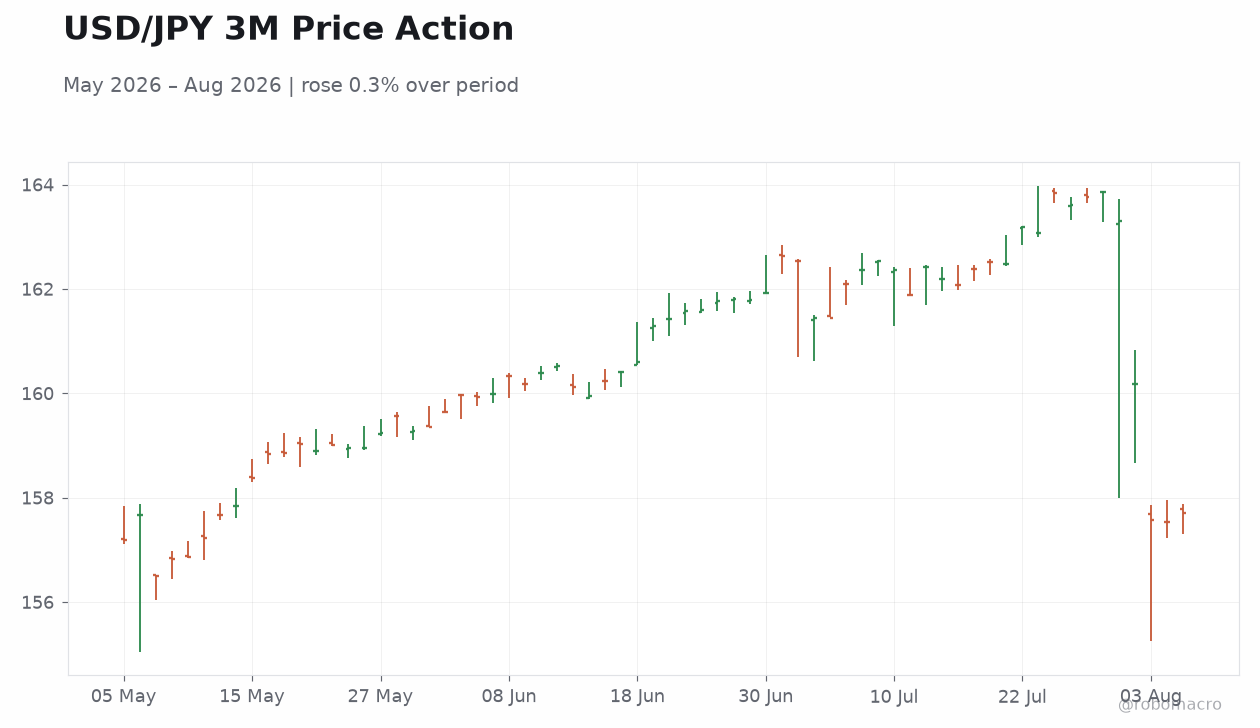
| USD/JPY | 157.71 | +0.01% |
| EUR/JPY | 182.22 | +0.20% |
| GBP/JPY | 212.35 | +0.39% |
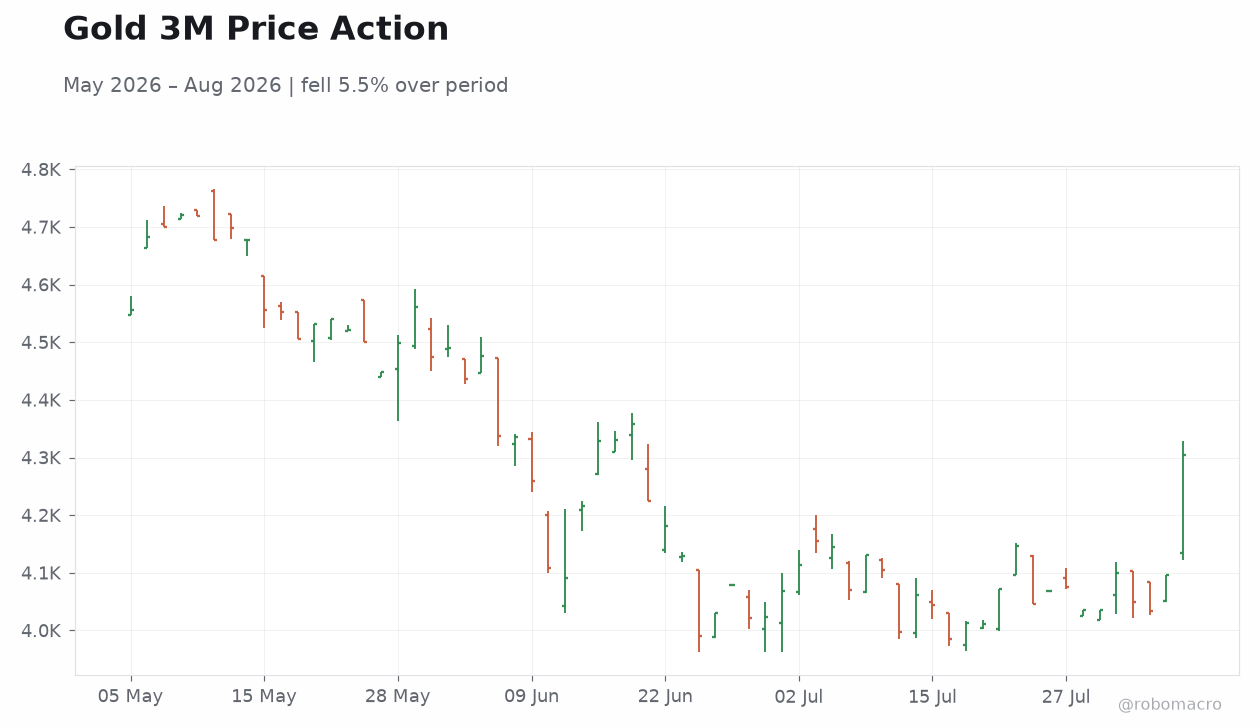
| Gold | 4,305.10 | +5.12% |
| Brent Crude | 79.28 | -0.10% |
| Bitcoin | 64,712.83 | +1.03% |
| Japan 2Y Govt Yield | 0.84% | +15.68% |
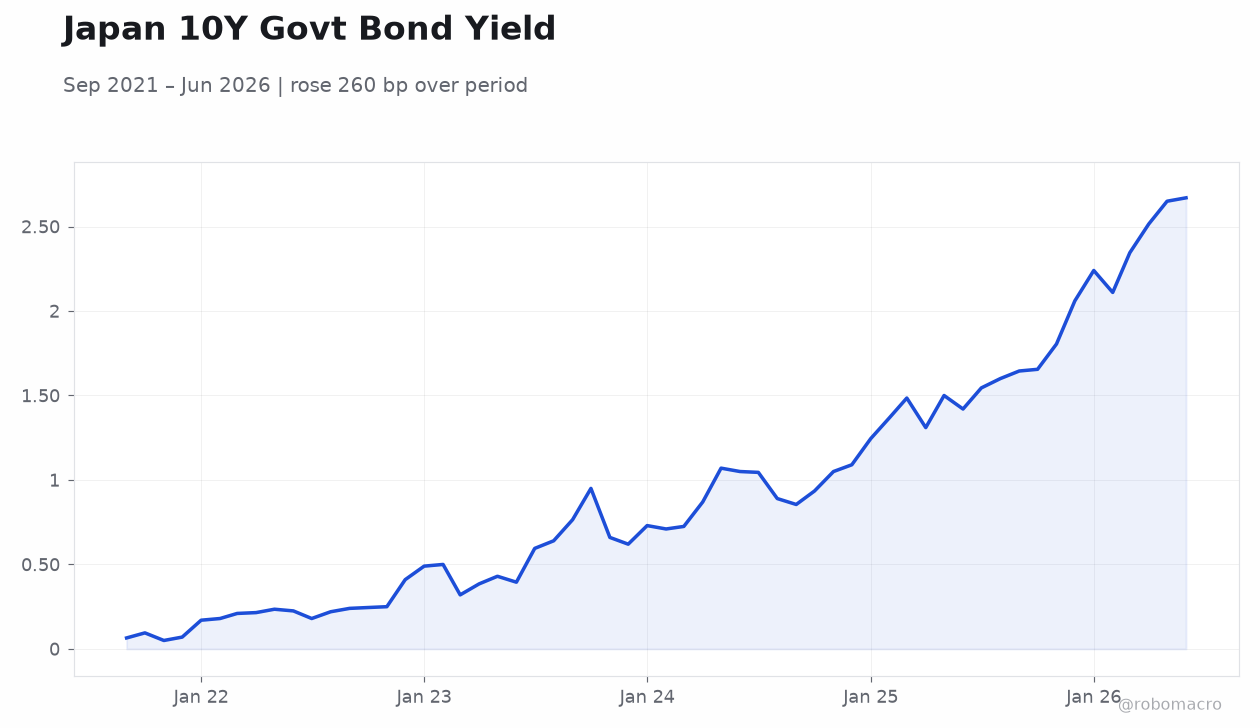
| Japan 10Y Govt Yield | 2.67% | +0.75% |
Prior Economic Events
| Data | Prior | Cons | Actual |
|---|---|---|---|
| BoJ Monetary Policy Meeting Minutes | - | - | - |
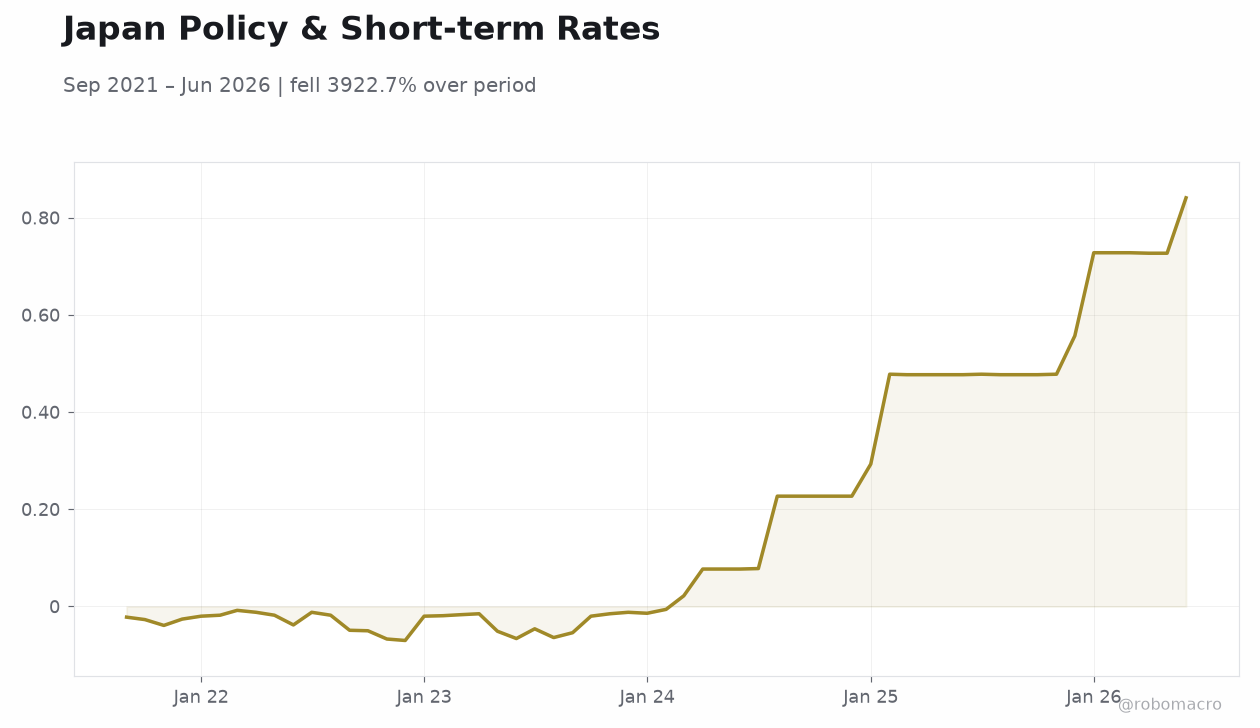 Japan Policy & Short-term Rates | Type: macro_line | Short-term Rate %: 0.841 (2026-06-01) | Range: -0.07–0.841 | Trend(6pt): -0.022,-0.067,-0.014,0.477,0.727,0.841
Today's Economic Events
| Data | Prior | Cons | Time |
|---|---|---|---|
| Thursday (2026-08-06) | |||
| Household Spending Month-over-Month | 3.70 | -3.10 | 15:30 |
| Household Spending Year-over-Year | -0.40 | 1 | 15:30 |
| Sunday (2026-08-09) | |||
| BoJ Summary of Opinions Level | - | - | 15:50 |
| Current Account Balance | 3,968,000m | - | 15:50 |
- BoJ July meeting minutes showed steady policy hold at 1.00% rate amid 1.70% CPI.
- Nikkei rose 0.32% to 63,957.53 while USD/JPY held near 157.71.
- Japan 10Y JGB yield reached 2.85% as 2Y yield jumped to 0.84%.
Yesterday's Recap
The Bank of Japan released minutes from its July monetary policy meeting, confirming the committee voted to maintain the 1.00% policy rate with no immediate changes to yield curve control parameters. Markets digested the release alongside a sharp move higher in short-term yields, with the Japan 2Y government bond yield climbing 15.68% to 0.84%. The Nikkei 225 advanced 0.32% to close at 63,957.53, supported by yen stability as USD/JPY edged up just 0.01% to 157.71.
Broader cross rates showed modest yen softness, with EUR/JPY rising 0.20% and GBP/JPY gaining 0.39%. The 10Y JGB yield finished at 2.85%, reflecting ongoing repricing of normalisation expectations. Gold prices surged 5.12% to 4,305.10 while Brent crude slipped 0.10% to 79.28.
Bitcoin gained 1.03% to 64,712.83 in a risk-on session that left Japanese equities resilient despite the yield volatility. Post-quake reconstruction in Kumamoto and extreme summer heat added background pressure, yet equity markets absorbed the data without major disruption.
The Day Ahead
Attention turns to Thursday’s household spending figures, with month-over-month expected to fall 3.1% after a 3.7% prior gain and year-over-year projected to rise 1.0% from a 0.4% decline. These releases will provide fresh insight into consumer resilience following the recent Kumamoto earthquake and extreme summer heat. On Sunday, the BoJ will publish its Summary of Opinions from the latest meeting alongside the current account balance data.
Market participants will scrutinise the opinions document for any shifts in tone on quantitative easing tapering or further rate adjustments. No other major domestic indicators are scheduled before the weekend. The substantial current account surplus continues to offer a buffer for yen stability amid external capital-flow influences.
Other Economic Notes
Japan’s economy continues to navigate post-quake reconstruction in Kumamoto prefecture while coping with record heat that has already killed three lions at a Tokyo zoo and strained tourism infrastructure. Public support for expanding foreign worker intake has slipped below 60%, raising questions about labour supply in an ageing economy with CPI still at 1.70%. <i>↓ p.2</i>