Korea Macro Daily(Beta Mode)
KOSPI Gains on Chip Rally
Market Snapshot
| Asset | Level | Change |
|---|---|---|
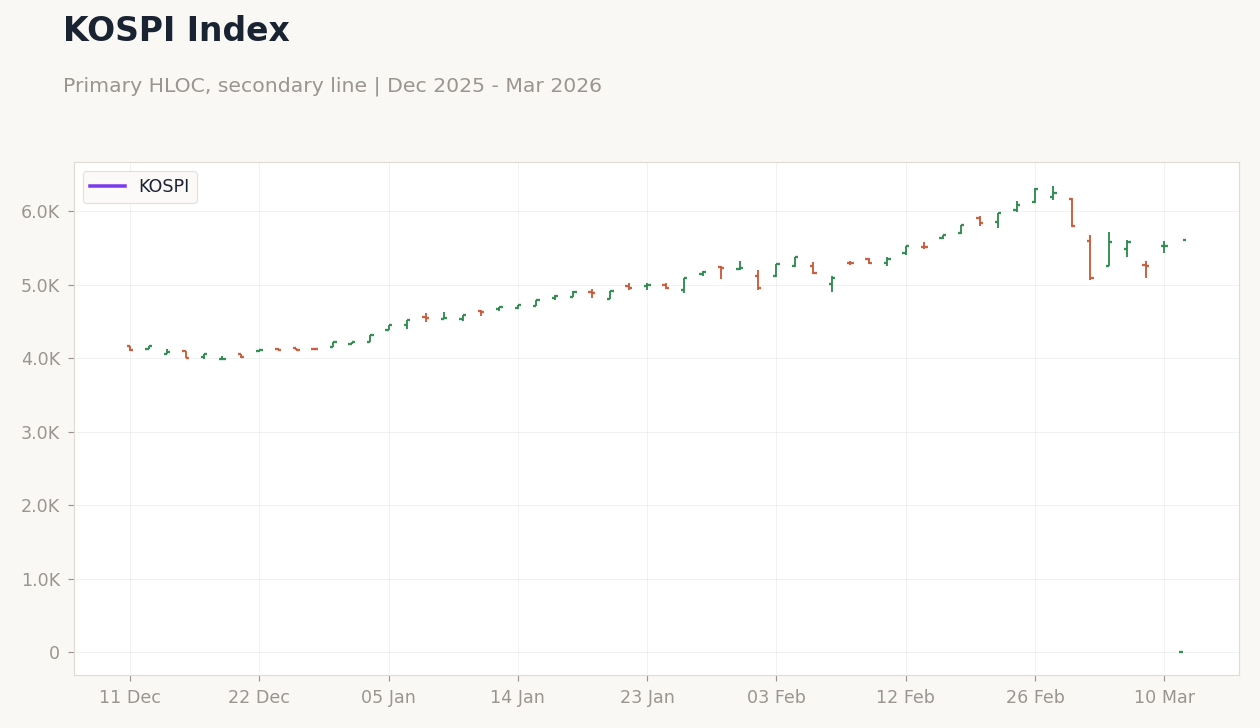
| KOSPI | 5,609.95 | +1.40% |
| KOSDAQ | 1,136.83 | -0.07% |
| USD/KRW | 1,476.59 | +0.83% |
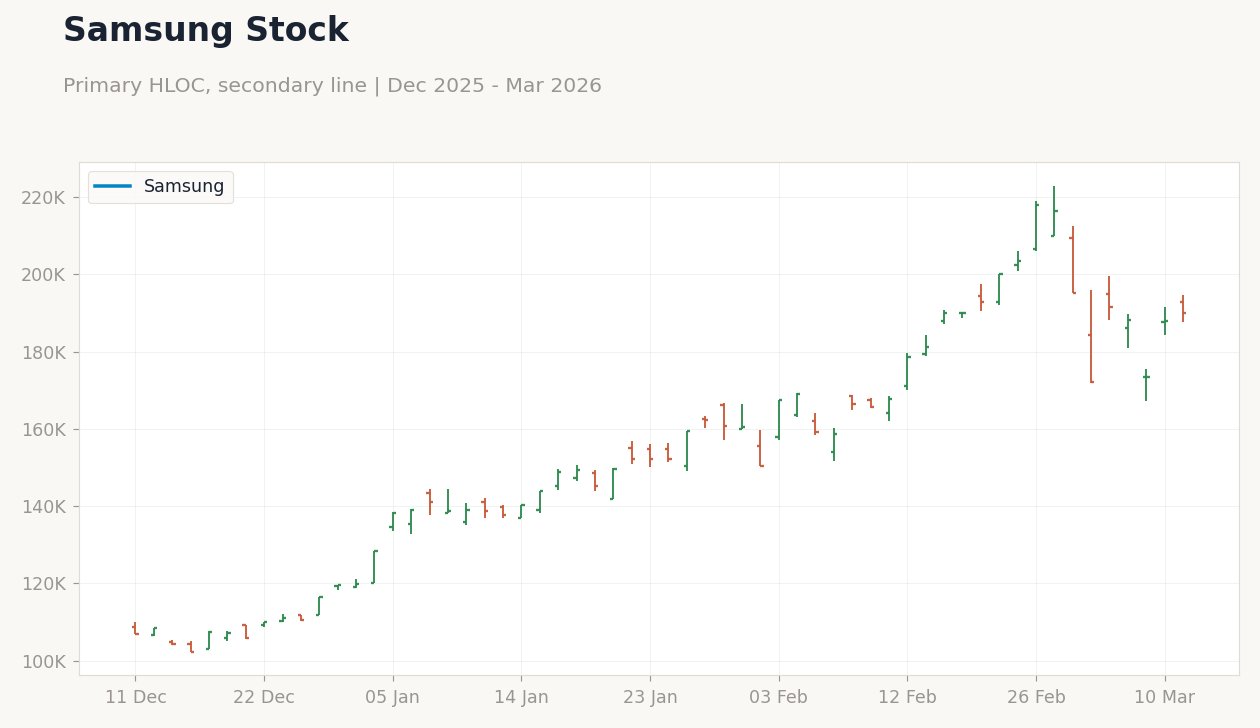
| Samsung | 193,200.00 | +2.82% |
| SK Hynix | 981,500.00 | +4.64% |
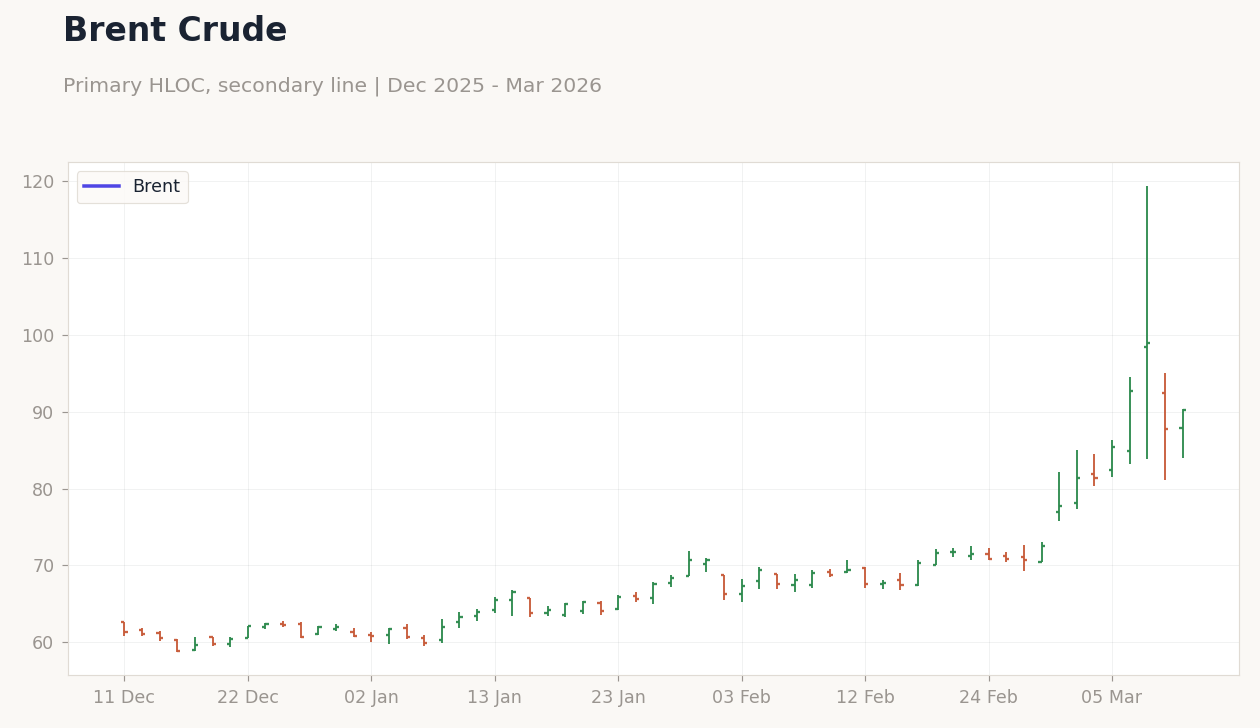
| Brent Crude | 90.33 | +2.88% |
| Gold | 5,185.10 | -0.85% |
| Bitcoin | 70,660.25 | +1.05% |
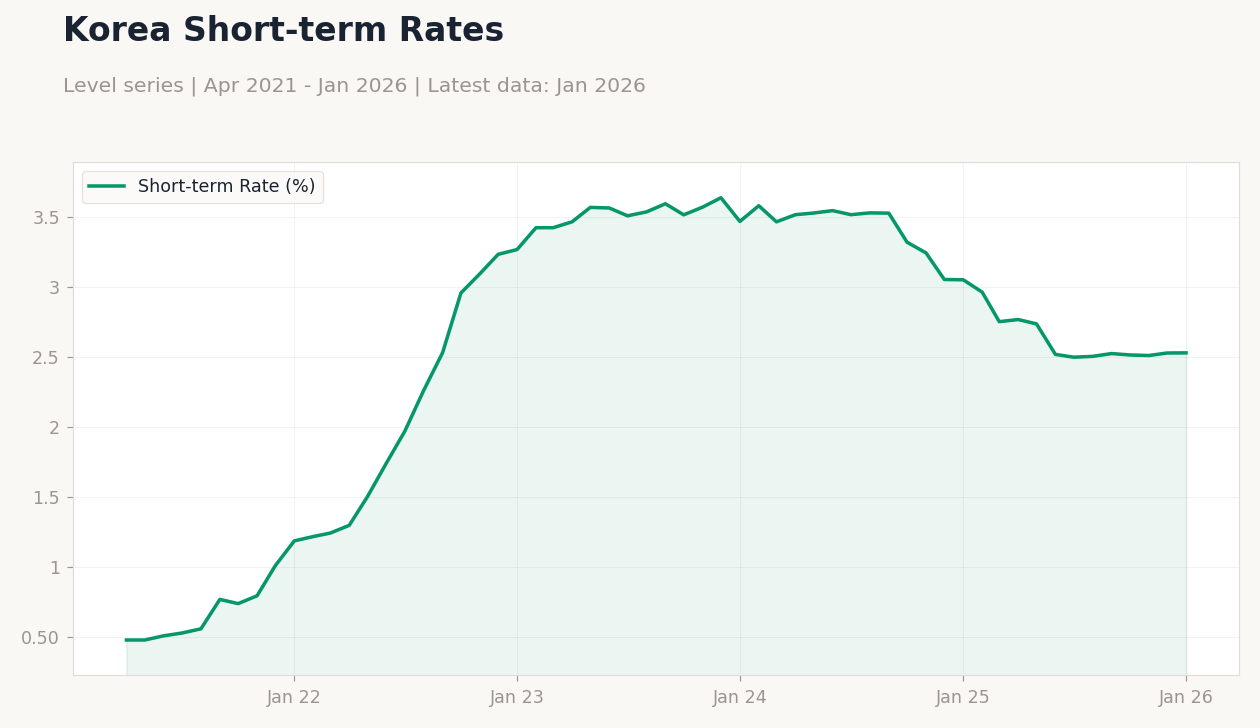
| Korea Short-term Rate | 2.53% | +0.04% |
| Korea Long-term Rate | 3.48% | +3.54% |
Prior Economic Events
| Data | Prior | Cons | Actual |
|---|---|---|---|
| No events available | |||
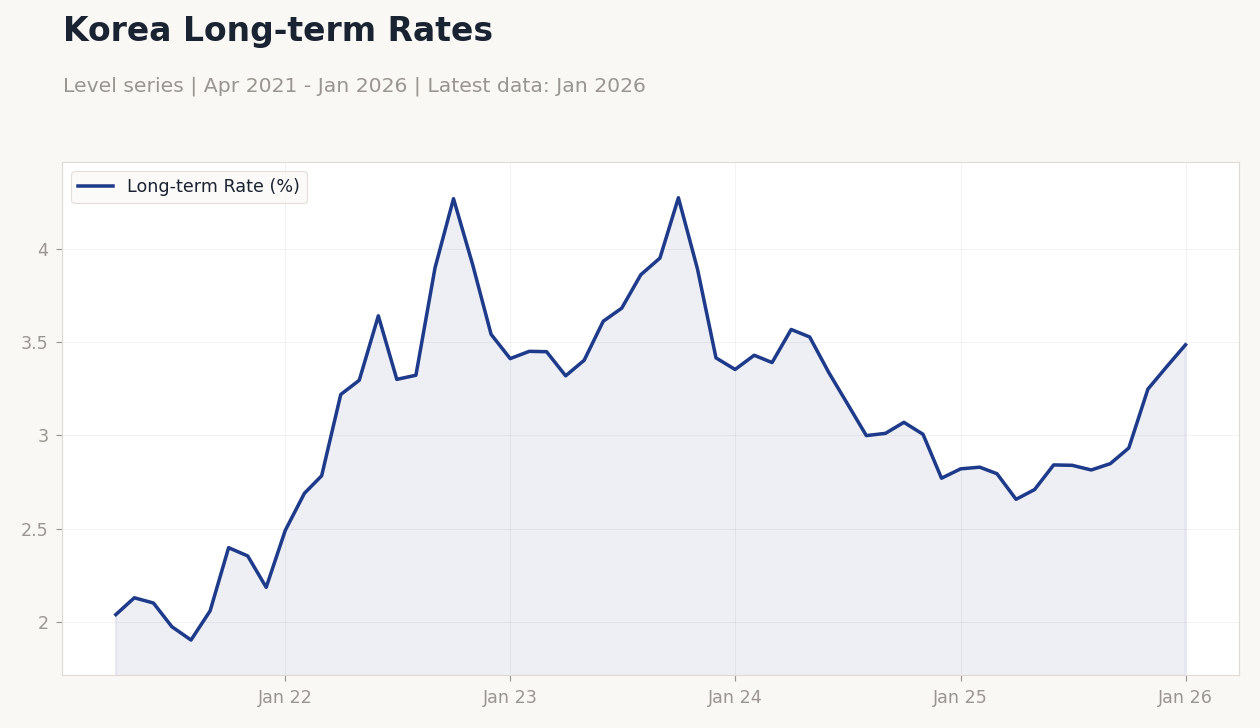 Korea Long-term Rates | Type: macro_line | Long-term Rate (%): 3.485 (2026-01-01) | Range: 1.905–4.272 | Trend(6pt): 2.041,3.64,3.86,3.07,3.366,3.485
Today's Economic Events
| Data | Prior | Cons | Time |
|---|---|---|---|
| Tuesday (2026-03-17) | |||
| Headline Unemployment Rate | 3 | - | 19:00 |
- KOSPI rose 1.40% amid semiconductor strength, while KOSDAQ dipped slightly.
- USD/KRW climbed 0.83% on global risk aversion from Iran tensions.
- Tech giants Samsung and SK Hynix surged, boosted by AI demand signals.
Yesterday's Recap
South Korean markets displayed resilience yesterday, with the KOSPI index closing at 5,609.95 after a 1.40% gain, propelled by robust performances in the semiconductor sector. KOSDAQ edged down 0.07% to 1,136.83, reflecting mixed sentiment in smaller tech firms amid broader volatility. USD/KRW appreciated 0.83% to 1,476.59, pressured by foreign capital outflows tied to escalating Middle East conflicts.
Samsung Electronics jumped 2.82% to 193,200.00, and SK Hynix soared 4.64% to 981,500.00, both benefiting from reports of surging AI chip demand. Korea's short-term rate ticked up 0.04% to 2.53%, while the long-term rate rose 3.54% to 3.48%, signaling market caution on inflation persistence. No major data releases occurred, but equity moves aligned with export-driven optimism in memory chips despite global energy disruptions.
The Day Ahead
Today's calendar remains light with no immediate South Korean economic releases scheduled. Attention turns to next week's headline unemployment rate data on March 17, expected to provide insights into labor market health amid manufacturing recovery. Consensus estimates are unavailable, but the previous reading of 3% suggests stability, potentially influencing Bank of Korea's policy outlook.
Markets may focus on any intraday updates from semiconductor firms, given ongoing AI sector momentum. Broader events could include reactions to global oil price fluctuations from Iran-related news.
Other Economic Notes
South Korea's economy continues to benefit from the AI boom, with semiconductor exports driving growth despite external shocks like energy supply risks from the Middle East. Rising Brent crude prices at 90.33, up 2.88%, pose inflationary pressures for import-dependent Korea, potentially complicating fiscal planning. The global microelectronics market is projected to surpass USD 1597.78 million by 2035, while the nanochip market is forecast to hit USD 27.39 billion by 2035, underscoring Korea's pivotal role in global tech supply chains.
Global Macro News
The escalating Iran war threatens global energy supplies, with Tehran halting oil flows and laying mines in the Strait of Hormuz, directly impacting Asian importers like South Korea. (cont...)