Korea Macro Daily(Beta Mode)
KOSPI Dips, Won Hits Crisis Lows
Market Snapshot
| Asset | Level | Change |
|---|---|---|
| KOSPI | 5,487.24 | -1.72% |
| KOSDAQ | 1,152.96 | +0.40% |
| USD/KRW | 1,499.99 | +2.00% |
| Samsung | 183,500.00 | -2.34% |
| SK Hynix | 910,000.00 | -2.15% |
| Brent Crude | 98.91 | -1.54% |
| Gold | 5,061.70 | -1.06% |
| Bitcoin | 71,732.13 | +0.73% |
| Korea Short-term Rate | 2.53% | +0.04% |
| Korea Long-term Rate | 3.48% | +3.54% |
Prior Economic Events
| Data | Prior | Cons | Actual |
|---|---|---|---|
| No events available | |||
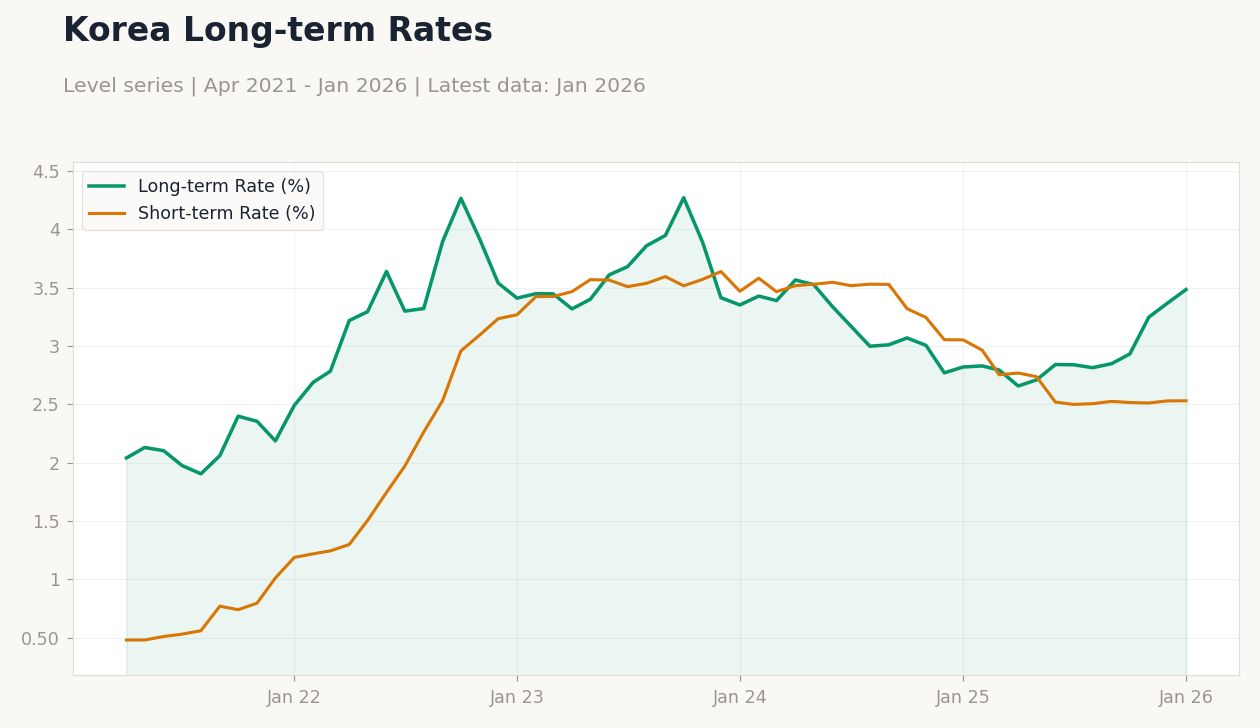
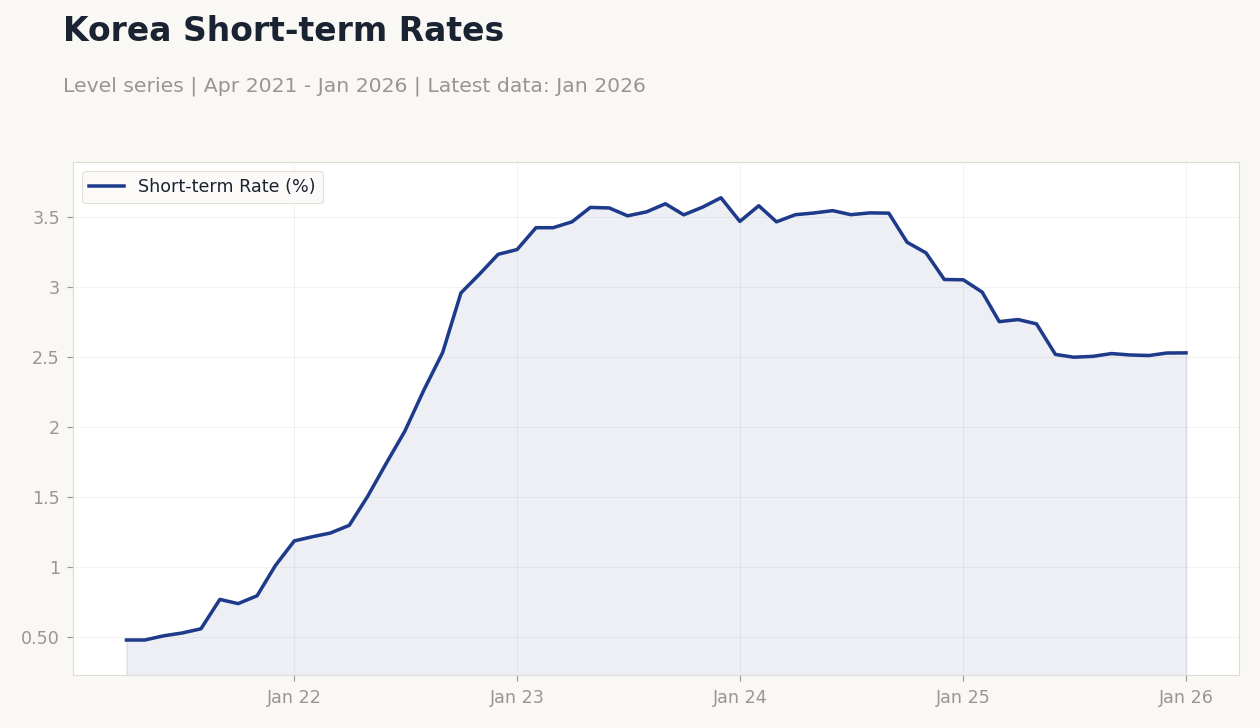 Korea Short-term Rates | Type: macro_line | Short-term Rate (%): 2.531 (2026-01-01) | Range: 0.48–3.639 | Trend(6pt): 0.48,1.745,3.538,3.321,2.53,2.531
Today's Economic Events
| Data | Prior | Cons | Time |
|---|---|---|---|
| Tuesday (2026-03-17) | |||
| Headline Unemployment Rate | 3 | - | 19:00 |
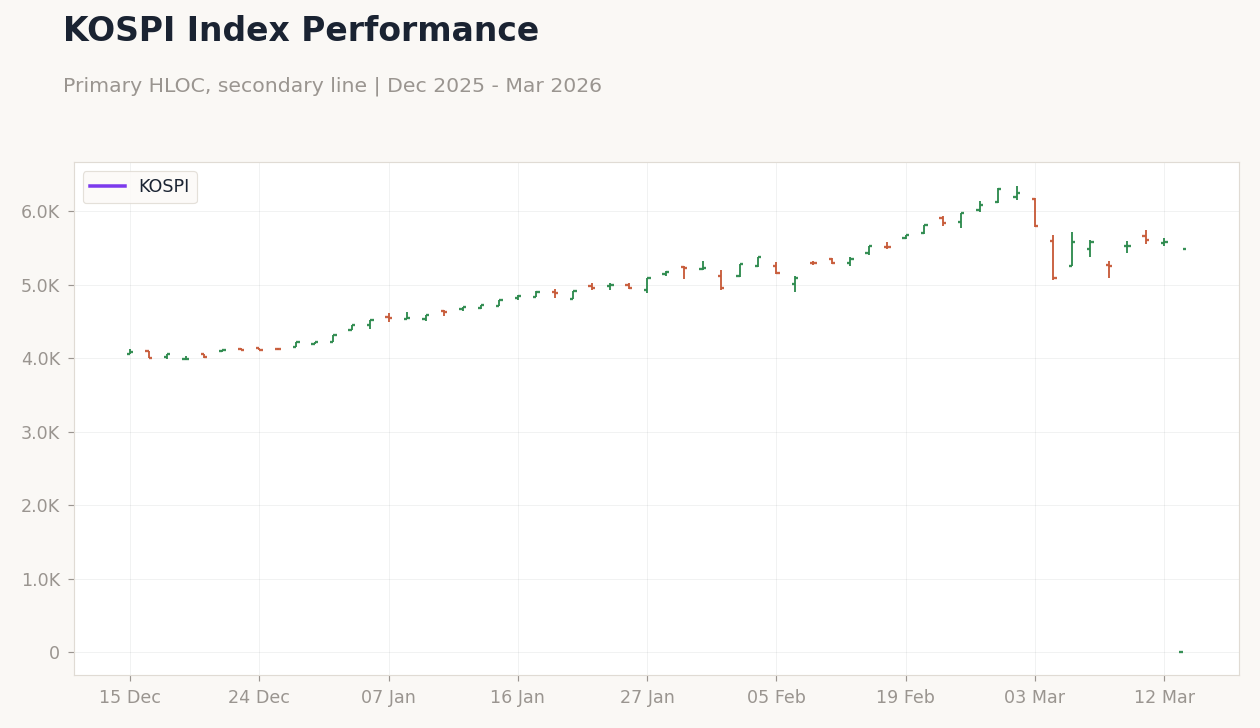
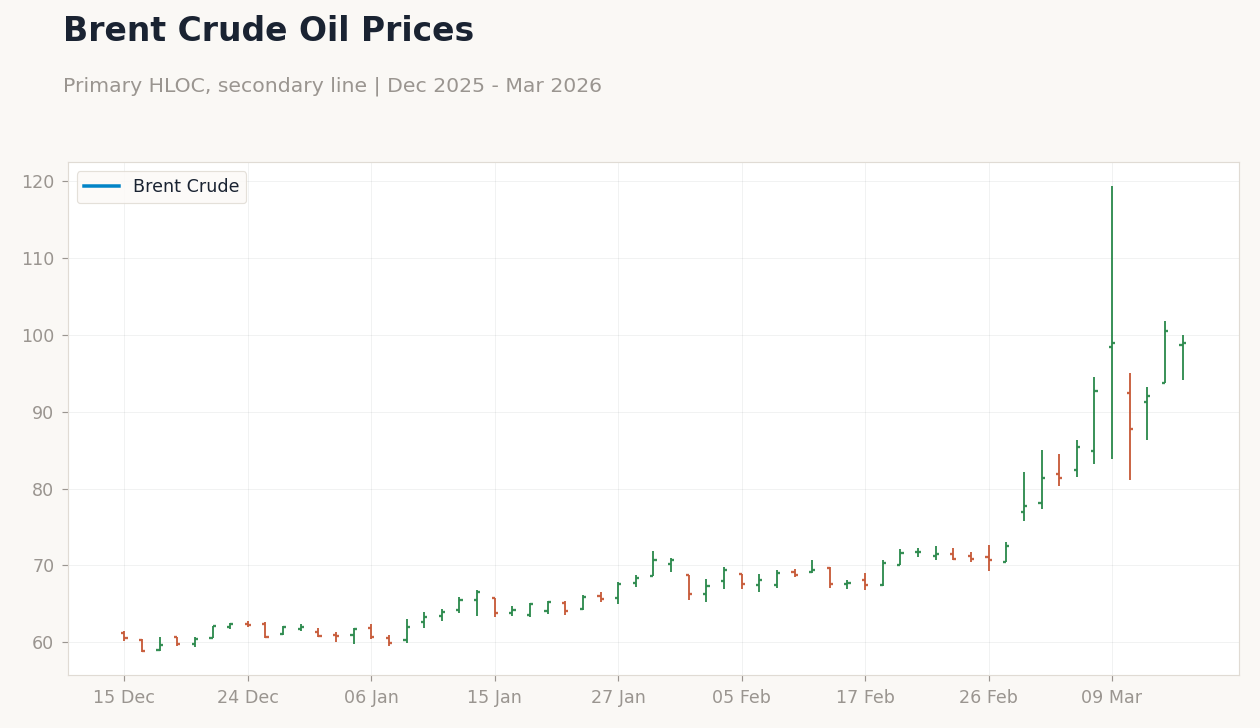
- KOSPI fell 1.72% amid Middle East tensions, while USD/KRW surged to near 1,500 on oil volatility.
- Authorities vigilant on won weakness, with crisis-era highs raising intervention prospects.
- BOK sees limited inflation from extra budget; January fiscal surplus aids stability.
Yesterday's Recap
South Korean markets showed mixed performance on March 14, influenced by Middle East conflicts and oil price fluctuations. The KOSPI index declined 1.72% to 5,487.24, pressured by global equity weakness and export concerns. Conversely, the KOSDAQ index rose 0.40% to 1,152.96, supported by gains in certain tech sectors.
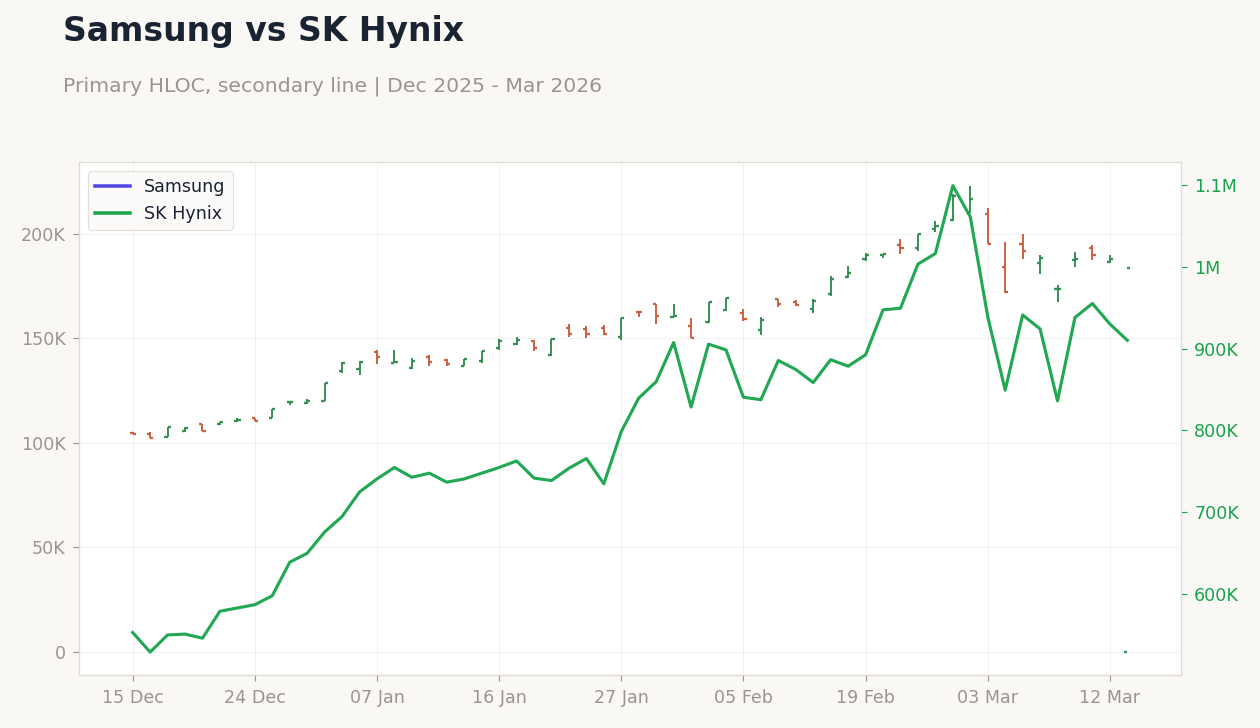
USD/KRW climbed 2.00% to 1,499.99, nearing the 1,500 threshold and drawing alerts from authorities on potential stabilizing actions. Major stocks weakened, with Samsung Electronics down 2.34% to 183,500.00 and SK Hynix dropping 2.15% to 910,000.00, amid semiconductor demand worries. Brent crude fell 1.54% to 98.91, while gold decreased 1.06% to 5,061.70 and Bitcoin gained 0.73% to 71,732.13.
Korea's short-term rate increased 0.04% to 2.53%, and the long-term rate rose 3.54% to 3.48%, reflecting inflation and risk concerns. No significant data releases occurred, but reports of a January fiscal surplus of 11.3 trillion won offered some positive sentiment.
The Day Ahead
Focus shifts to March 17, with South Korea's February headline unemployment rate scheduled for release at 19:00 ET. The previous figure was 3%, with no consensus available. This data may shed light on labor market strength amid geopolitical and export challenges.
Markets could react to any official comments on won stability, given recent volatility. Ongoing Middle East developments may influence oil prices and global sentiment. No events are listed for March 16, providing a brief pause before the unemployment figures.
Other Economic Notes
South Korea's economy is grappling with oil shocks from Middle East tensions, increasing costs for its energy-reliant sectors. The January fiscal surplus of 11.3 trillion won demonstrates fiscal discipline, helping to counter external vulnerabilities. Key exporters like Samsung and SK Hynix face risks from global demand fluctuations in semiconductors.
Regional instability, including North Korea's missile launches during US-South Korea drills, contributes to uncertainty and potential trade disruptions.