Korea Macro Daily(Beta Mode)
S. Korea Nominates BIS Veteran Shin for BoK
Market Snapshot
| Asset | Level | Change |
|---|---|---|
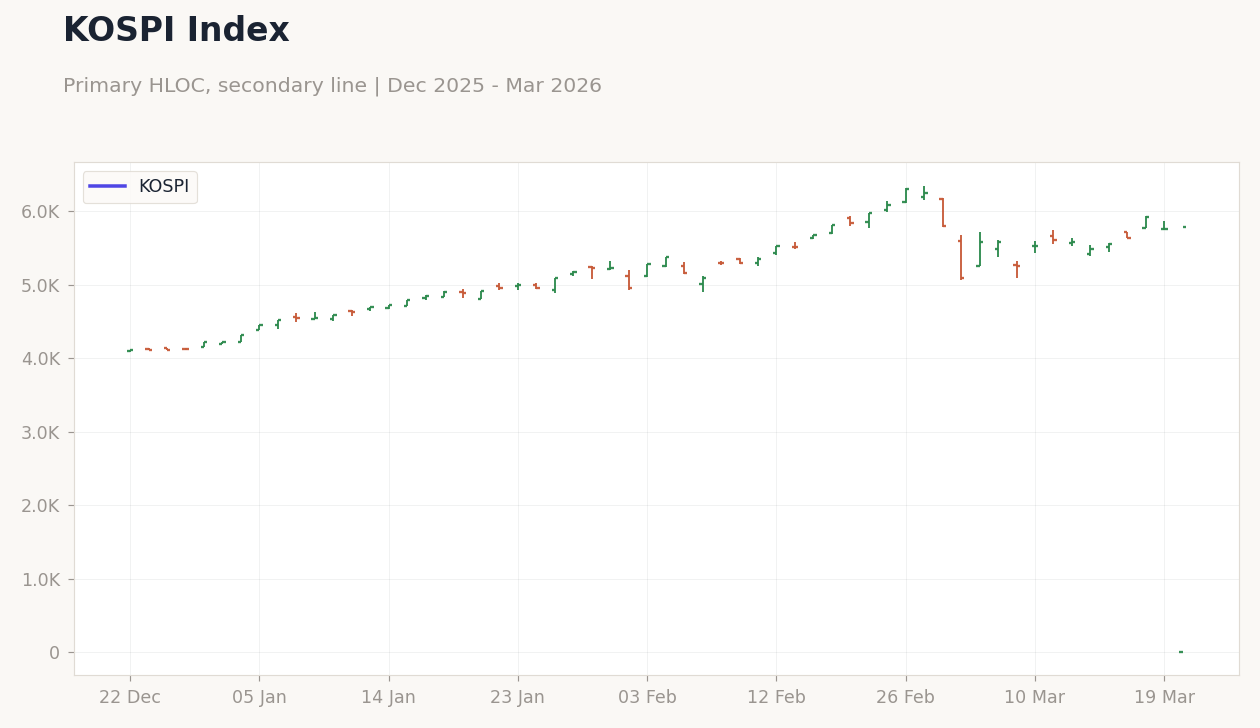
| KOSPI | 5,781.20 | +0.31% |
| KOSDAQ | 1,161.52 | +1.58% |
| USD/KRW | 1,503.94 | +0.95% |
| Samsung | 199,400.00 | -0.55% |
| SK Hynix | 1,007,000.00 | -0.59% |
| Brent Crude | 106.41 | -2.06% |
| Gold | 4,574.90 | -0.56% |
| Bitcoin | 68,131.38 | -0.84% |
| Korea Short-term Rate | 2.54% | +0.40% |
| Korea Long-term Rate | 3.61% | +3.64% |
Prior Economic Events
| Data | Prior | Cons | Actual |
|---|---|---|---|
| Headline Unemployment Rate | 3 | - | 2.90 |
 Korea Short-term Rates | Type: macro_line | Short-term Rate (%): 2.541 (2026-02-01) | Range: 0.48–3.639 | Trend(6pt): 0.48,1.745,3.538,3.321,2.53,2.541
Today's Economic Events
| Data | Prior | Cons | Time |
|---|---|---|---|
| No events available | |||
- South Korea nominates BIS economist Shin Hyun-song as next Bank of Korea governor, emphasizing a balanced approach to inflation and stability risks.
- Headline unemployment rate fell to 2.9% from 3%, highlighting labor market resilience amid economic volatility.
- KOSPI and KOSDAQ gained modestly, USD/KRW rose, while commodities dipped and domestic rates increased.
Yesterday's Recap
South Korea's headline unemployment rate declined to 2.9% from the previous 3%, surpassing expectations and indicating strong job growth in a resilient economy. The KOSPI advanced 0.31% to 5,781.20, bolstered by tech sector steadiness despite cautious market sentiment. KOSDAQ rose 1.58% to 1,161.52, fueled by gains in smaller-cap stocks.
USD/KRW increased 0.95% to 1,503.94, reflecting won depreciation against a stronger dollar. Samsung Electronics fell 0.55% to 199,400.00, and SK Hynix dropped 0.59% to 1,007,000.00, amid concerns over semiconductor exports. Korea's short-term rate rose 0.40% to 2.54%, while the long-term rate climbed 3.64% to 3.61%, pointing to tightening financial conditions.
The Day Ahead
No significant economic data releases are scheduled for today, allowing markets to absorb the recent unemployment data and global fluctuations. Investors will watch for any unscheduled updates on trade or fiscal policies, especially given export-led growth trends. Focus may turn to semiconductor developments from companies like Samsung and SK Hynix, potentially affecting KOSPI performance.
USD/KRW movements could respond to international currency shifts, with no central bank activities planned. Tomorrow also features no key events, maintaining emphasis on equity and interest rate dynamics. Trading is likely to remain subdued absent external disruptions from global news.
Other Economic Notes
South Korean workers' average annual pay exceeded 50 million won, signaling robust wage increases that may boost consumer spending but also heighten inflation risks. Ongoing KOSPI volatility sustains the 'Korea discount,' discouraging foreign inflows and highlighting needs for corporate governance improvements. Export industries, especially semiconductors, are crucial for economic expansion, with Samsung and SK Hynix managing variable global demand.
Global Macro News
Global central banks show policy divergence, with some cutting rates and others maintaining holds, fostering uncertainty for Korea's export-reliant economy. (cont...)