Korea Macro Daily(Beta Mode)
KOSPI Dives on Mideast Turmoil
Market Snapshot
| Asset | Level | Change |
|---|---|---|
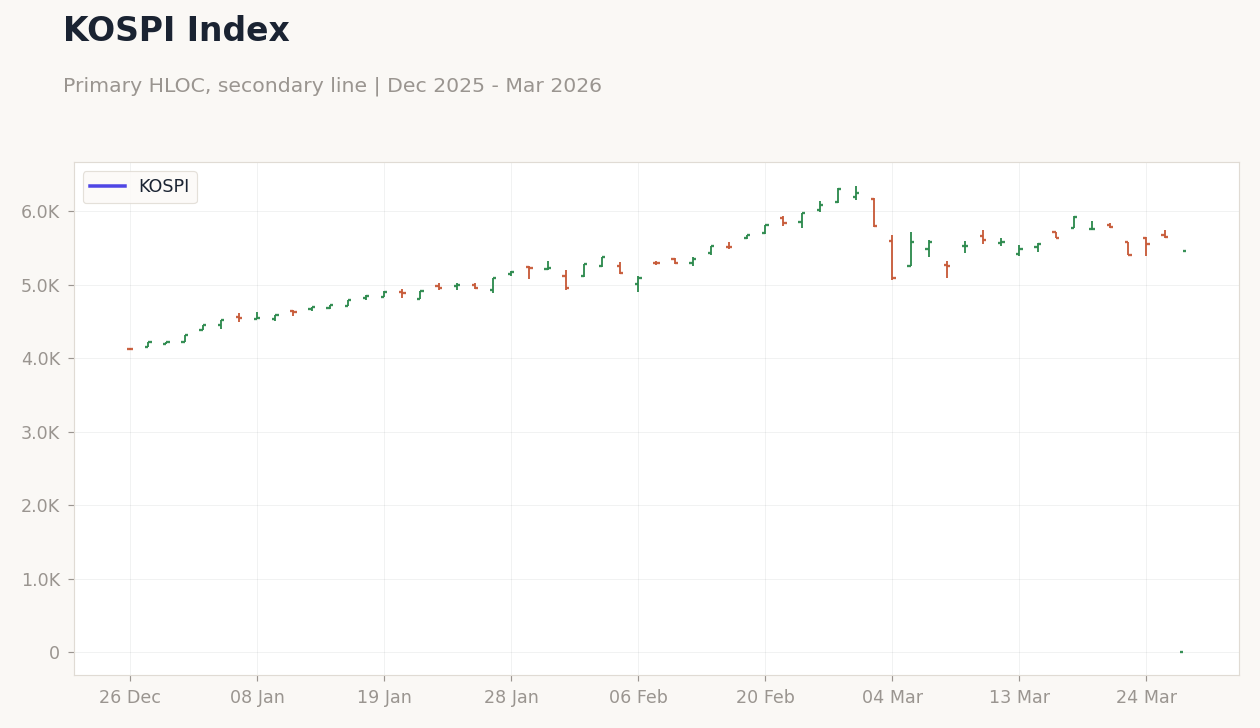
| KOSPI | 5,460.46 | -3.22% |
| KOSDAQ | 1,136.64 | -1.98% |
| USD/KRW | 1,507.13 | +0.66% |
| Samsung | 182,900.00 | -3.23% |
| SK Hynix | 949,000.00 | -4.62% |
| Brent Crude | 101.13 | -1.07% |
| Gold | 4,376.10 | -3.82% |
| Bitcoin | 68,890.75 | -3.39% |
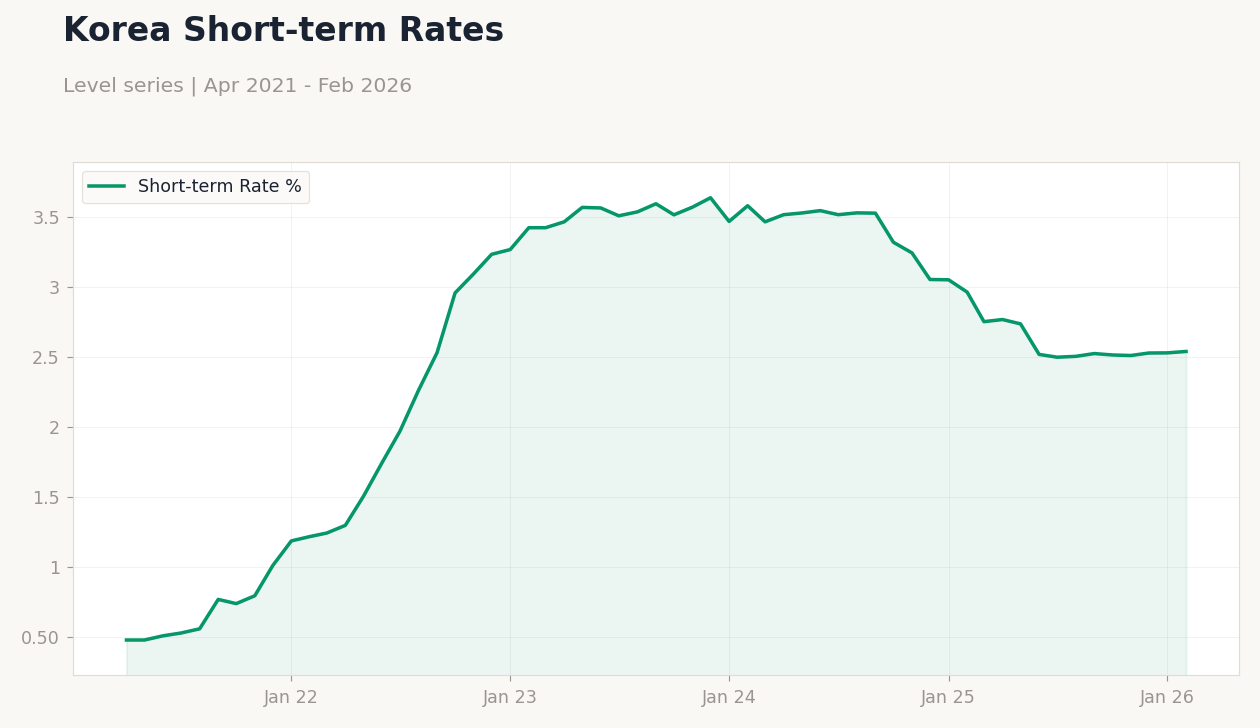
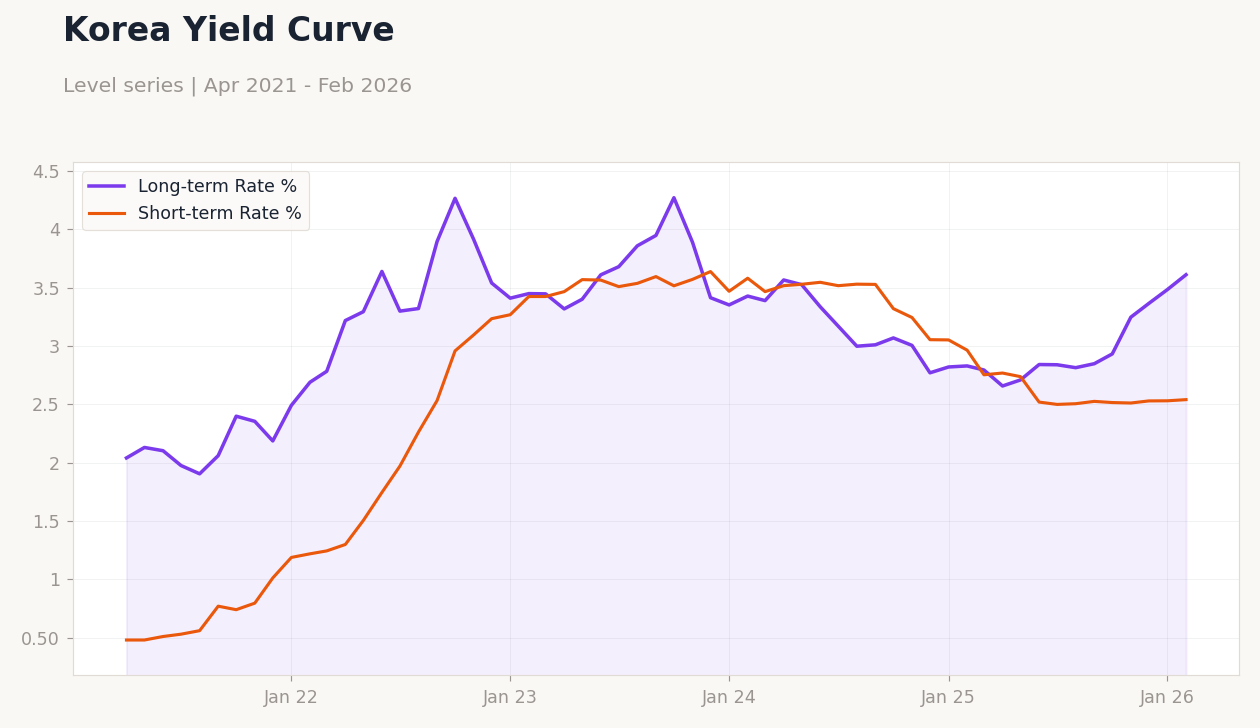
| Korea Short-term Rate | 2.54% | +0.40% |
| Korea Long-term Rate | 3.61% | +3.64% |
Prior Economic Events
| Data | Prior | Cons | Actual |
|---|---|---|---|
| Consumer Confidence Index | 112.10 | - | 107 |
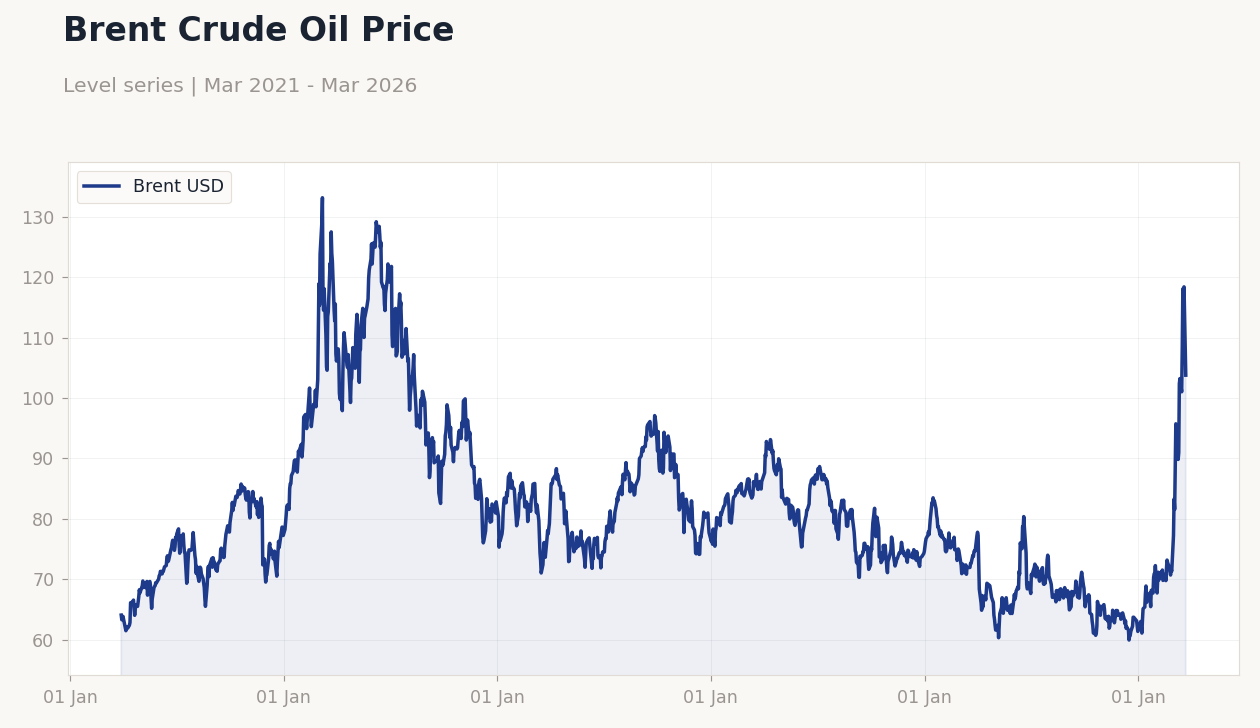 Brent Crude Oil Price | Type: macro_line | Brent USD: 103.8 (2026-03-23) | Range: 59.93–133.2 | Trend(5pt): 64.06,122.2,97.1,72.12,103.8
Today's Economic Events
| Data | Prior | Cons | Time |
|---|---|---|---|
| Business Confidence Index | 72 | - | 13:00 |
- South Korean markets tumbled amid escalating Middle East tensions, with KOSPI falling 3.22% and won hitting 17-year lows.
- Consumer confidence dropped sharply to 107.0, signaling economic unease from oil price spikes and geopolitical risks.
- Bank of Korea highlights inflation and growth threats, prompting bond buybacks for market stabilization.
Yesterday's Recap
South Korean equities faced heavy selling pressure as Middle East conflicts intensified, driving the KOSPI down 3.22% to 5,460.46, led by tech giants. KOSDAQ declined 1.98% to 1,136.64, reflecting broad risk aversion. USD/KRW rose 0.66% to 1,507.13, extending the won's losses to a 17-year low amid oil shock fears.
Samsung Electronics dropped 3.23% to 182,900.00 won, while SK Hynix fell 4.62% to 949,000.00 won, hit by energy cost concerns in semiconductors. Consumer Confidence Index plunged to 107.0 from 112.1, underscoring household worries over inflation from rising Brent crude prices, with Brent at 101.13 after a 1.07% drop. Korea's long-term rate surged 3.64% to 3.61%, signaling tighter financial conditions.
Short-term rate edged up 0.40% to 2.54%, aligning with BoK's base rate.
The Day Ahead
Investors eye the Business Confidence Index release at 13:00 ET, with previous at 72, as a gauge of corporate sentiment amid geopolitical strains. No consensus forecast is available, but a decline could pressure equities further given recent market volatility. The data may influence won dynamics, especially if it reflects export disruptions from Middle East trade routes.
Broader focus remains on any BoK commentary or government measures to counter oil-driven inflation. No other major Korean events are scheduled, shifting attention to global oil updates.
Other Economic Notes
Korea's export-driven economy faces heightened risks from Middle East spillovers, with oil import dependency amplifying inflation pressures. Financial exposure to real estate rose in 2025 but at a slower pace, per BoK, amid stabilizing property markets despite geopolitical headwinds. Government plans a 5 trillion won bond buyback to ensure net redemption and bolster bond market stability.
Global Macro News
Escalating Middle East conflicts, including US-Iran tensions, pushed Brent crude to 101.13 with a 1.07% drop, yet sustained high levels rattle Korea's energy imports. Gold fell 3.82% to 4,376.10 as safe-haven demand waned temporarily, while Bitcoin declined 3.39% to 68,890.75 amid global risk-off. (cont...)