Korea Macro Daily(Beta Mode)
KOSPI Dives on Iran War Jitters
Market Snapshot
| Asset | Level | Change |
|---|---|---|
| KOSPI | 5,277.30 | -2.97% |
| KOSDAQ | 1,107.05 | -3.02% |
| USD/KRW | 1,505.79 | -0.08% |
| Samsung | 169,600.00 | -3.80% |
| SK Hynix | 825,500.00 | -5.44% |
| Brent Crude | 103.26 | -8.44% |
| Gold | 4,698.70 | +3.82% |
| Bitcoin | 68,061.27 | +2.05% |
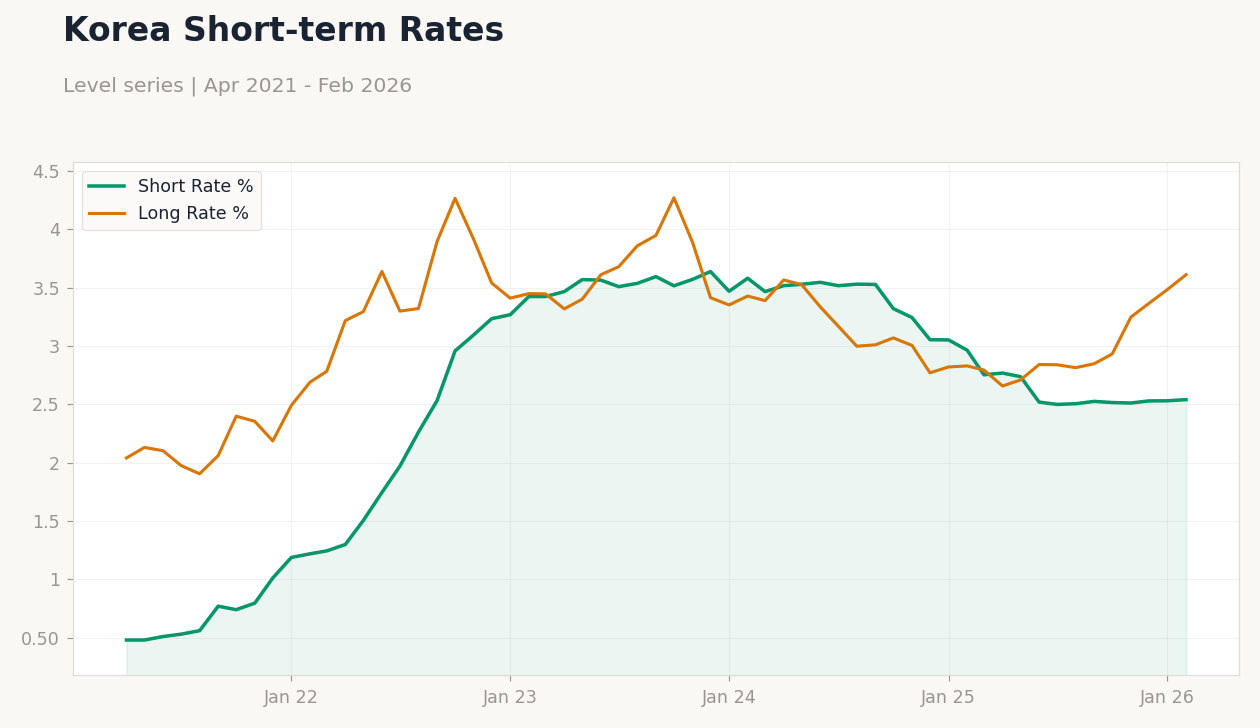
| Korea Short-term Rate | 2.54% | +0.40% |
| Korea Long-term Rate | 3.61% | +3.64% |
Prior Economic Events
| Data | Prior | Cons | Actual |
|---|---|---|---|
| No events available | |||
 Brent Crude Oil Price | Type: macro_line | Brent USD: 103.8 (2026-03-23) | Range: 59.93–133.2 | Trend(5pt): 63.85,119.8,96.64,72.12,103.8
Today's Economic Events
| Data | Prior | Cons | Time |
|---|---|---|---|
| No events available | |||
- Korean stocks plunged amid Iran conflict fears, with KOSPI down 2.97% to 5,277.30 and KOSDAQ off 3.02% to 1,107.05, hit by semiconductor declines.
- USD/KRW slipped 0.08% to 1,505.79; short-term rates rose 0.40% to 2.54%, long-term up 3.64% to 3.61%, signaling inflation concerns.
- South Korea eyes $17B energy budget and driving curbs to counter oil crunch from Middle East tensions.
Yesterday's Recap
Korean markets tumbled on March 30 amid escalating Iran war concerns, with the KOSPI closing at 5,277.30 after a 2.97% decline, driven by tech sector weakness over potential chip supply disruptions. KOSDAQ dropped 3.02% to 1,107.05, led by losses in Samsung Electronics, down 3.80% to 169,600.00, and SK Hynix, off 5.44% to 825,500.00, as reports warned of global microchip production risks. USD/KRW eased 0.08% to 1,505.79, limiting won weakness despite risk-off mood.
Short-term rates climbed 0.40% to 2.54%, and long-term rates surged 3.64% to 3.61%, reflecting bets on persistent high rates due to oil-driven inflation. No key data releases, but sentiment soured on South Korea's proposed $17 billion budget to mitigate energy costs from the conflict, with 72% of crude imports from the Middle East at risk. Export-heavy sectors faced pressure from supply chain threats.
The Day Ahead
No major economic releases are slated for March 31, shifting focus to global fallout from the Iran war, including oil supply and chip disruptions. Markets may react to updates on the $17 billion energy budget or proposed driving restrictions, impacting energy and auto sectors. Semiconductor stocks like Samsung and SK Hynix could stay volatile amid supply chain warnings.
The won and broader equities may fluctuate without domestic drivers. Eyes on Bank of Korea responses, including views from nominated governor Shin Hyun Song on navigating external pressures. Monitor for any fiscal or geopolitical announcements.
Other Economic Notes
South Korea's export-reliant economy is under strain from the Iran conflict, with 72% of crude oil sourced from the Middle East facing potential disruptions, leading to a $17 billion supplementary budget proposal. The semiconductor sector, vital for growth, risks a global crunch due to Gulf supply chain vulnerabilities, such as helium from Qatar. Rising AI demand and high-end packaging markets, projected to reach USD 134.90 billion by 2035, could intensify shortages.
Animal protein ingredients market growth to USD 15,566.54 million by 2032 highlights broader nutrition trends, but energy costs may weigh on related industries.