Korea Macro Daily(Beta Mode)
Exports Surge, Stocks Plunge
Market Snapshot
| Asset | Level | Change |
|---|---|---|
| KOSPI | 5,052.46 | -4.26% |
| KOSDAQ | 1,052.39 | -4.94% |
| USD/KRW | 1,512.98 | -0.21% |
| Samsung | 186,200.00 | +11.36% |
| SK Hynix | 882,000.00 | +9.29% |
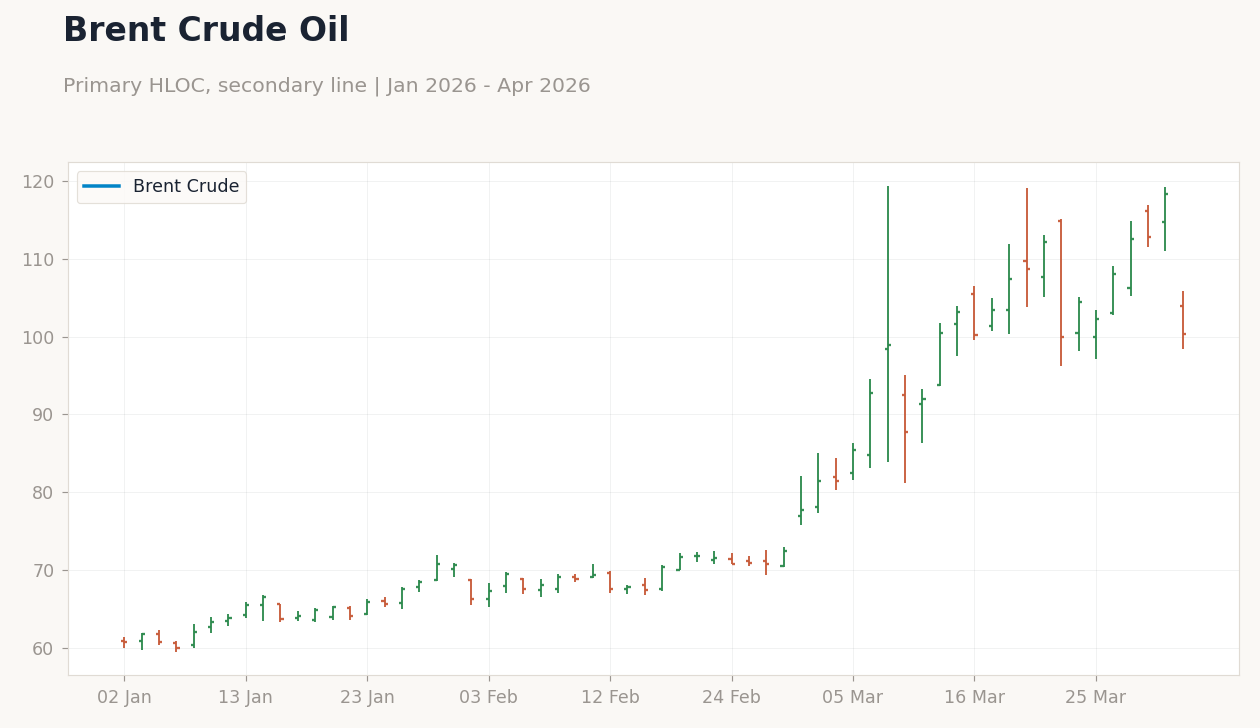
| Brent Crude | 100.32 | -15.23% |
| Gold | 4,782.90 | +2.91% |
| Bitcoin | 68,243.73 | +0.02% |
| Korea Short-term Rate | 2.54% | +0.40% |
| Korea Long-term Rate | 3.61% | +3.64% |
Prior Economic Events
| Data | Prior | Cons | Actual |
|---|---|---|---|
| Exports Year-over-Year | 28.70 | 44.90 | 48.30 |
| S&P Global Manufacturing PMI Index | 51.10 | - | 52.60 |
 Korea Short-term Rates | Type: macro_line | Short-term Rate (%): 2.541 (2026-02-01) | Range: 0.48–3.639 | Trend(6pt): 0.48,1.971,3.596,3.245,2.531,2.541
Today's Economic Events
| Data | Prior | Cons | Time |
|---|---|---|---|
| Inflation Rate Year-over-Year | 2 | 2.40 | 15:00 |
- Korean exports jumped 48.3% YoY in March, topping consensus of 44.9%, with PMI at 52.6 signaling manufacturing growth despite energy strains.
- KOSPI and KOSDAQ dropped 4.26% and 4.94% respectively, but Samsung and SK Hynix surged 11.36% and 9.29% on robust chip demand.
- USD/KRW fell 0.21% to 1,512.98, while short-term rate rose 0.40% to 2.54%, amid inflation concerns from Iran war disruptions.
Yesterday's Recap
South Korean exports expanded 48.3% year-over-year in March, surpassing the consensus of 44.9% and previous 28.7%, fueled by demand for semiconductors and electronics amid global supply adjustments. The S&P Global Manufacturing PMI increased to 52.6 from 51.1, showing sustained factory expansion despite elevated input costs from energy issues. However, Korean stocks sold off sharply, with the KOSPI ending at 5,052.46 after a 4.26% fall, driven by geopolitical volatility.
The KOSDAQ declined 4.94% to 1,052.39, as investors shunned small-cap tech exposed to material shortages. Semiconductor leaders defied the downturn: Samsung Electronics climbed 11.36% to 186,200.00 KRW, and SK Hynix advanced 9.29% to 882,000.00 KRW, supported by AI-related orders. The USD/KRW rate decreased 0.21% to 1,512.98, aided by export gains, while the short-term rate rose 0.40% to 2.54%, consistent with steady policy.
Long-term rates increased 3.64% to 3.61%, reflecting worries over imported inflation from energy prices.
The Day Ahead
South Korea's March inflation rate year-over-year releases at 15:00 ET, with consensus at 2.4% against previous 2%, which could shape Bank of Korea rate expectations if it varies notably. A stronger print might weigh on the won and postpone easing hopes, given fuel price hikes from the Iran conflict. No additional key data is slated, giving markets time to process yesterday's export and PMI positives.
Attention will focus on KOSPI and chip stock movements tied to oil price shifts. Watch for developments in chip supply chains, including South Korea's pivot to Russian naphtha.
Other Economic Notes
South Korea's export-reliant economy contends with Iran war fallout via Strait of Hormuz blockages, leading to reliance on Russian naphtha for petrochemicals and postponed coal plant closures for energy security. The semiconductor industry, key to growth, faces risks of a global microchip shortage from helium and material disruptions, yet companies like Samsung and SK Hynix demonstrate strength through AI demand. Government hints at fiscal support if growth dips below forecasts underscore export vigor but highlight debt risks with climbing rates.