Korea Macro Daily(Beta Mode)
Exports Surge, Inflation Softens
Market Snapshot
| Asset | Level | Change |
|---|---|---|
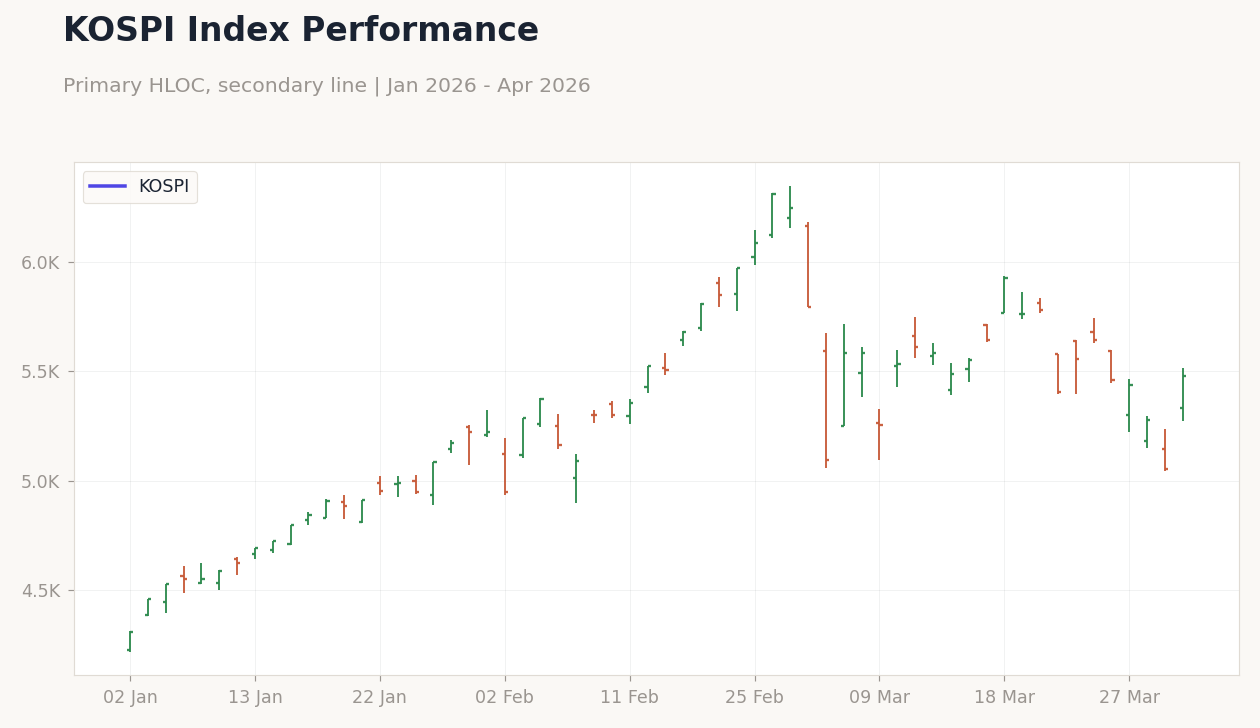
| KOSPI | 5,478.70 | +8.44% |
| KOSDAQ | 1,116.18 | +6.06% |
| USD/KRW | 1,509.86 | +0.43% |
| Samsung | 186,200.00 | +11.36% |
| SK Hynix | 882,000.00 | +9.29% |
| Brent Crude | 109.06 | +7.81% |
| Gold | 4,700.10 | -1.74% |
| Bitcoin | 66,948.02 | -1.66% |
| Korea Short-term Rate | 2.54% | +0.40% |
| Korea Long-term Rate | 3.61% | +3.64% |
Prior Economic Events
| Data | Prior | Cons | Actual |
|---|---|---|---|
| Exports Year-over-Year | 28.70 | 44.90 | 48.30 |
| S&P Global Manufacturing PMI Index | 51.10 | - | 52.60 |
| Inflation Rate Year-over-Year | 2 | 2.40 | 2.20 |
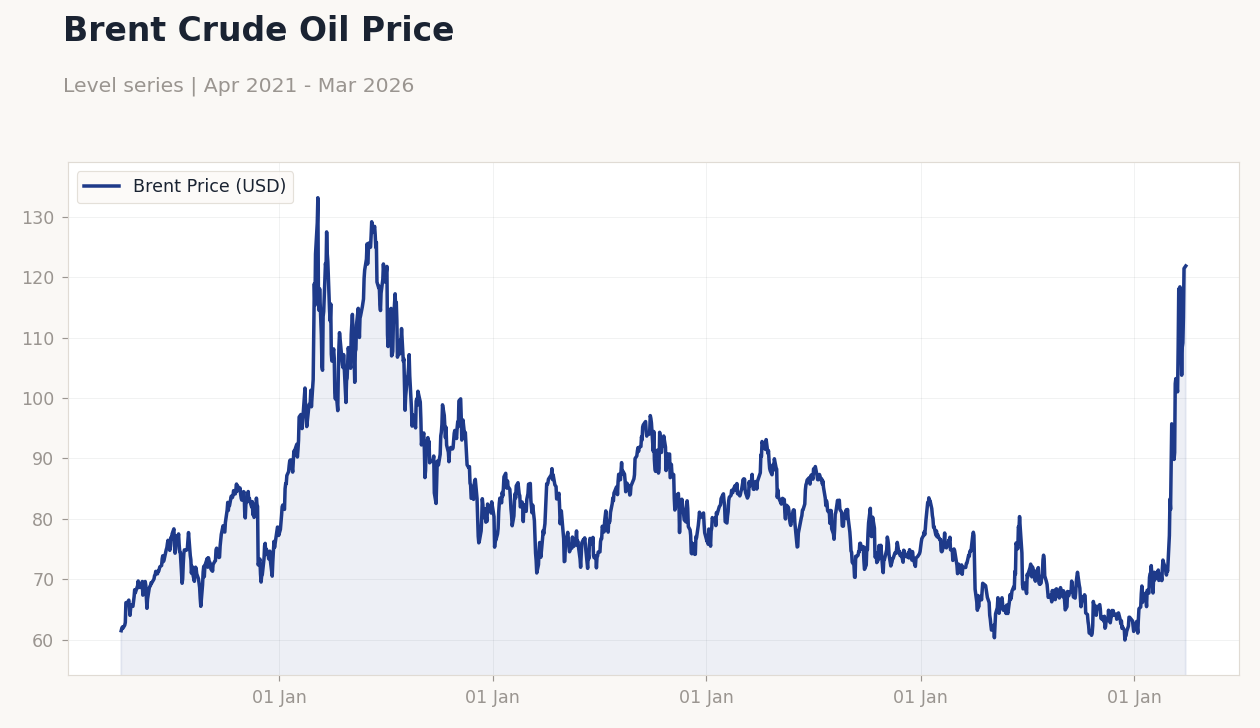 Brent Crude Oil Price | Type: macro_line | Brent Price (USD): 121.9 (2026-03-30) | Range: 59.93–133.2 | Trend(5pt): 61.47,121.8,94.46,74.58,121.9
Today's Economic Events
| Data | Prior | Cons | Time |
|---|---|---|---|
| No events available | |||
- Exports jumped 48.3% YoY, beating consensus of 44.9%, fueled by chip demand.
- Manufacturing PMI climbed to 52.6, indicating sector expansion.
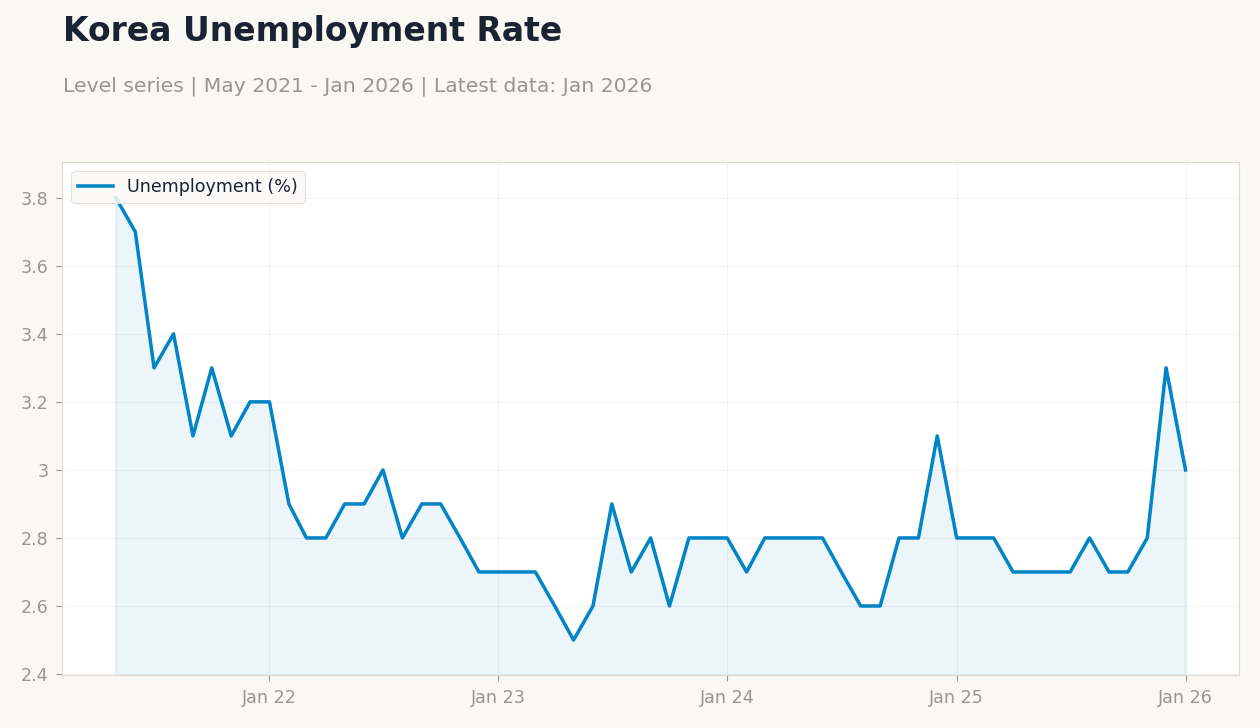
- Inflation rose to 2.2% YoY, below 2.4% expectations, easing policy pressure.
Yesterday's Recap
South Korea's exports surged 48.3% year-over-year, surpassing the consensus of 44.9% and previous 28.7%, driven by strong semiconductor shipments to markets like the US and China. The S&P Global Manufacturing PMI rose to 52.6 from 51.1, reflecting ongoing momentum in export sectors. Inflation increased to 2.2% year-over-year, under the 2.4% consensus but above the prior 2.0%, linked to Mideast energy shocks as per WSJ.
KOSPI advanced 8.44% to 5,478.70, boosted by tech leaders, while KOSDAQ rose 6.06% to 1,116.18 amid AI optimism. Samsung Electronics climbed 11.36% to 186,200.00, and SK Hynix gained 9.29% to 882,000.00, supported by export data. USD/KRW rose 0.43% to 1,509.86, marking won depreciation to levels not seen since 2009.
Korea's long-term rate increased 3.64% to 3.61%, and short-term rate rose 0.40% to 2.54%, amid inflation signals.
The Day Ahead
No significant economic data is due today, April 2, allowing markets to absorb yesterday's releases. Focus may turn to global factors like US-China trade talks, potentially affecting won movements. Tomorrow, April 3, also has no key events, but watch for any BoK statements on inflation.
Cross-border payment developments, such as the QRIS launch with Indonesia, could influence financial linkages. Traders may track semiconductor updates from companies like Samsung. The light calendar emphasizes reviewing recent export and inflation metrics.
Other Economic Notes
South Korea's growth is supported by strong chip exports and fiscal measures, according to ING analysis, helping navigate global challenges. Inclusion in the World Government Bond Index drew 4.4 trillion won in foreign bond buys, improving liquidity. The BoK's partnership with IBK Bank and GS Retail on digital currency payments advances fintech, alongside the QRIS system with Indonesia for cross-border efficiency.
Global Macro News
Markets responded to hints of reduced tensions between Trump and Iran, aiding KOSPI gains despite mixed signals, per Korea Times. However, won weakened to 2009 lows amid depreciation pressures, as noted in TradingView. (cont...)