Korea Macro Daily(Beta Mode)
Kospi Rallies Despite Iran War Fears
Market Snapshot
| Asset | Level | Change |
|---|---|---|
| KOSPI | 5,377.30 | +2.74% |
| KOSDAQ | 1,063.75 | +0.70% |
| USD/KRW | 1,510.54 | +0.09% |
| Samsung | 186,200.00 | +11.36% |
| SK Hynix | 882,000.00 | +9.29% |
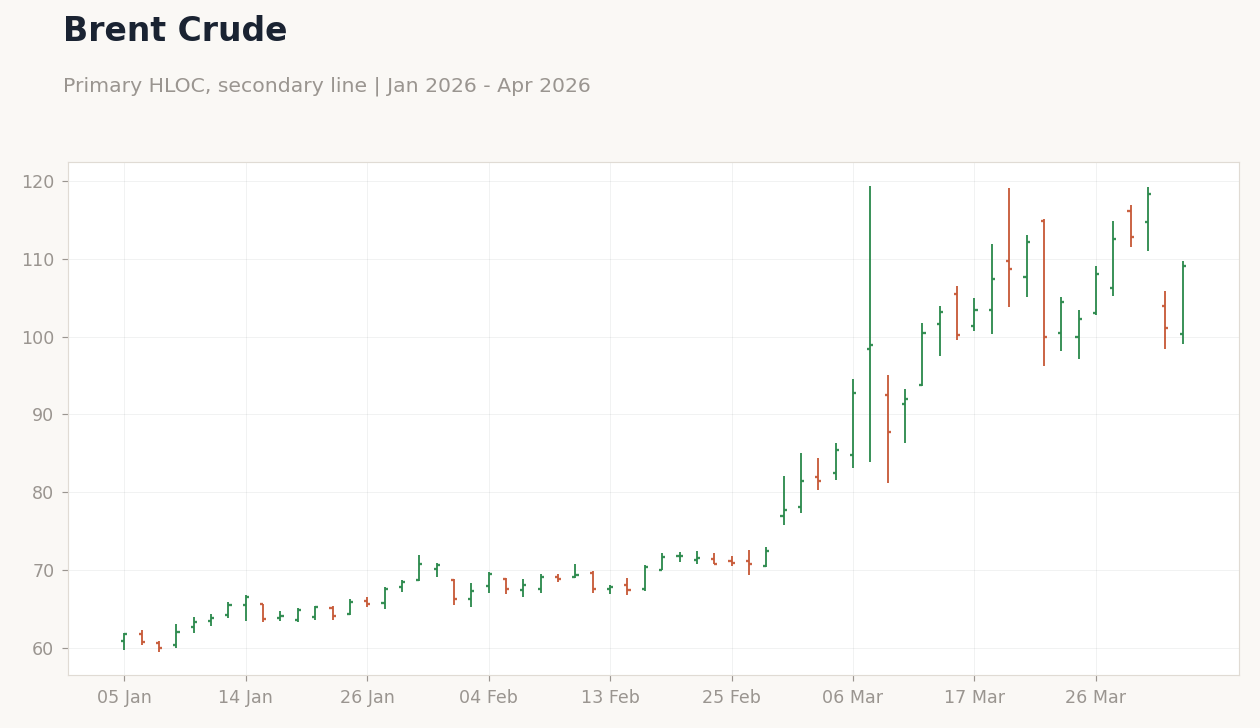
| Brent Crude | 109.05 | +7.80% |
| Gold | 4,702.70 | -1.68% |
| Bitcoin | 67,589.74 | +0.44% |
| Korea Short-term Rate | 2.54% | +0.40% |
| Korea Long-term Rate | 3.61% | +3.64% |
Prior Economic Events
| Data | Prior | Cons | Actual |
|---|---|---|---|
| No events available | |||
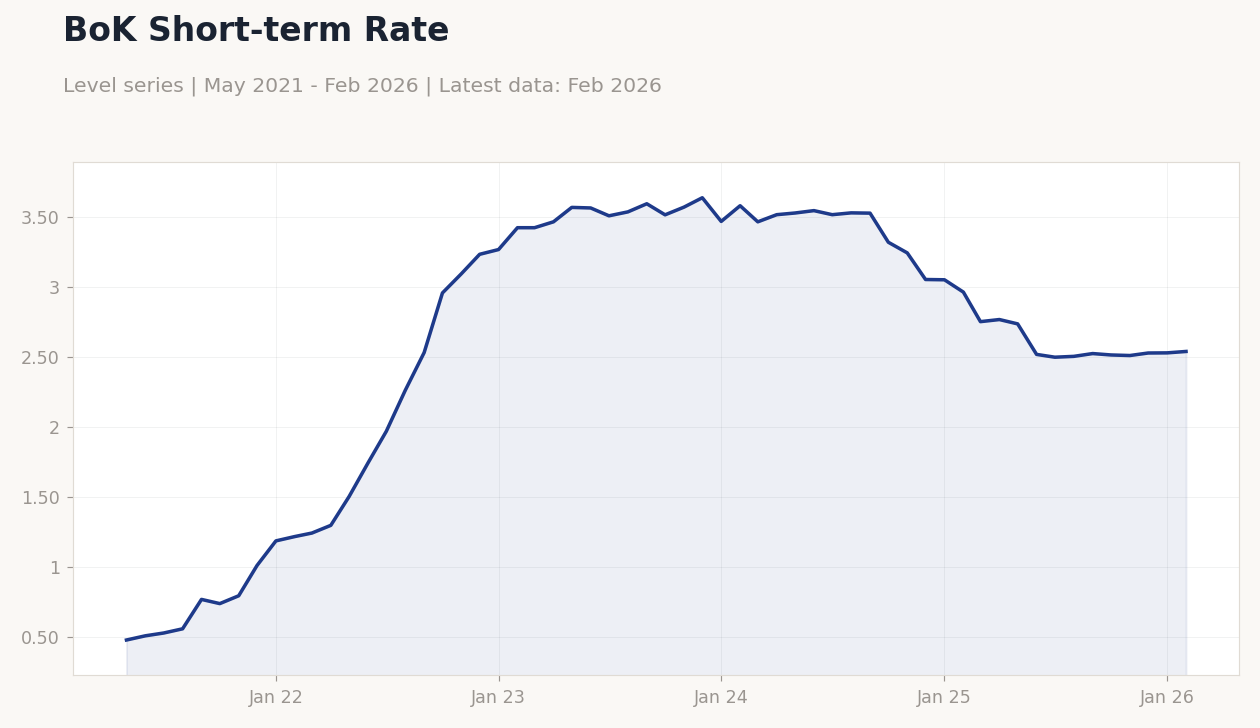 BoK Short-term Rate | Type: macro_line | Short-term Rate %: 2.541 (2026-02-01) | Range: 0.48–3.639 | Trend(6pt): 0.48,1.971,3.596,3.245,2.531,2.541
Today's Economic Events
| Data | Prior | Cons | Time |
|---|---|---|---|
| Friday (2026-04-10) | |||
| Central Bank Interest Rate Decision | 2.50 | - | 21:00 |
- Korean stocks surged, with KOSPI up 2.74% and tech leaders Samsung and SK Hynix posting double-digit gains, countering global sell-offs from Iran conflict.
- Foreign reserves dropped sharply in March, nudging USD/KRW higher, as BOK governor nominee's heavy foreign assets raise conflict-of-interest concerns.
- Calls for GCC energy security and rising mortgage costs underscore war's impact on Korean households and imports.
Yesterday's Recap
Korean markets defied global downturns with robust gains, as KOSPI closed at 5,377.30, up 2.74%, propelled by semiconductor momentum. KOSDAQ advanced to 1,063.75, up 0.70%, buoyed by tech small-caps. USD/KRW rose 0.09% to 1,510.54, amid pressure from reserve declines.
Samsung shares climbed 11.36% to 186,200.00, boosted by optimistic Q1 earnings previews, while SK Hynix gained 9.29% to 882,000.00 on AI chip demand. Korea's short-term rate rose 0.40% to 2.54%, and long-term rate increased 3.64% to 3.61%, indicating inflation concerns. The Bank of Korea noted March foreign reserves experienced the sharpest drop in about a year, linked to interventions and valuation changes.
No significant data releases happened, but markets shrugged off wider Asian declines tied to Iran war tensions.
The Day Ahead
Focus shifts to the Bank of Korea interest rate decision on April 9 at 21:00 ET, with medium impact anticipated and previous rate at 2.54%, though consensus remains unavailable. Traders expect hints on inflation amid war-fueled energy rises. No releases are scheduled today, but attention may turn to BOK nominee developments after asset scrutiny.
Global oil fluctuations could influence Korean imports. The decision's forward guidance might affect won dynamics and bond yields, with emphasis on financial stability given household debt strains.
Other Economic Notes
South Korea's export-reliant economy grapples with war-driven energy price hikes, as Brent crude rose 7.80% to 109.05, elevating import expenses. Indebted households face tighter conditions from increasing mortgage rates, heightening vulnerabilities in a high-debt landscape. The semiconductor sector's strength, evident in Samsung and SK Hynix advances, highlights Korea's technological advantage amid uncertainties.
Diplomatic efforts urge GCC envoys to ensure energy supplies, addressing supply chain disruptions for industries.