Korea Macro Daily(Beta Mode)
BoK Nominee Flags Inflation Risks
Market Snapshot
| Asset | Level | Change |
|---|---|---|
| KOSPI | 5,967.75 | +2.74% |
| KOSDAQ | 1,121.88 | +2.00% |
| USD/KRW | 1,475.06 | +0.38% |
| Samsung | 214,000.00 | +3.63% |
| SK Hynix | 1,159,000.00 | +5.08% |
| Brent Crude | 94.93 | +0.15% |
| Gold | 4,813.90 | -0.23% |
| Bitcoin | 74,808.80 | +0.85% |
| Korea Short-term Rate | 2.53% | -0.55% |
| Korea Long-term Rate | 3.73% | +3.21% |
Prior Economic Events
| Data | Prior | Cons | Actual |
|---|---|---|---|
| Headline Unemployment Rate | 2.90 | - | 2.70 |
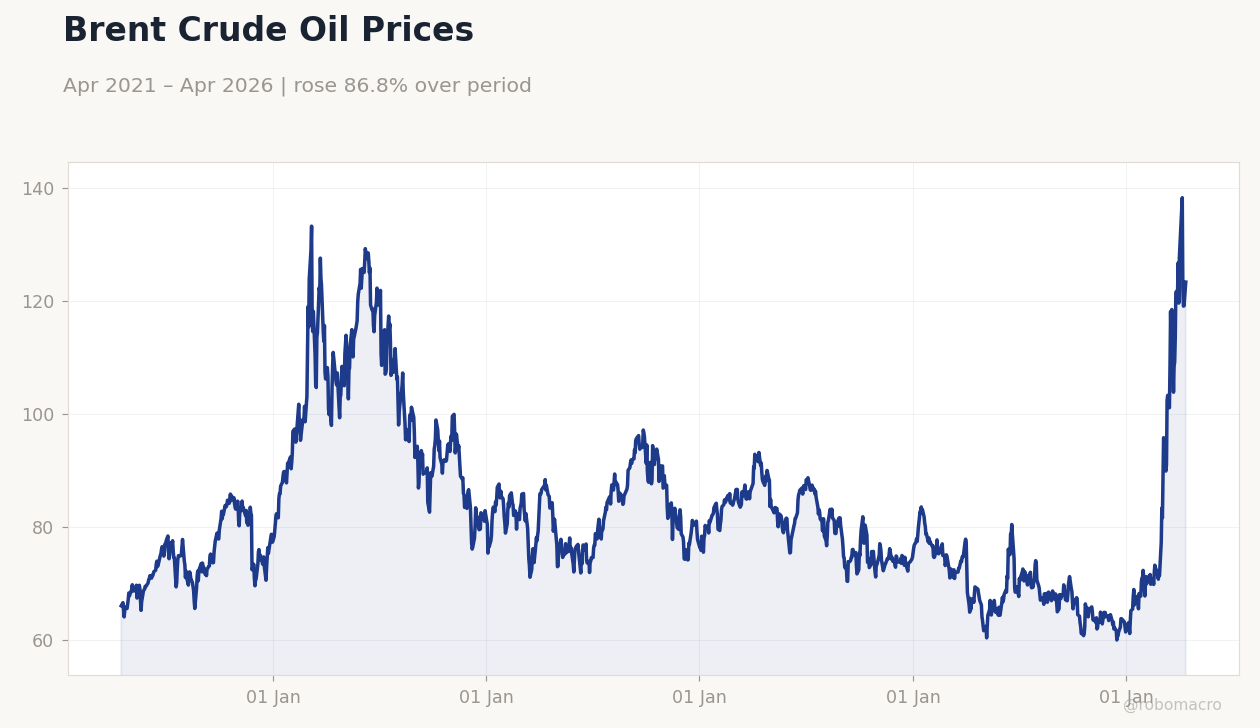 Brent Crude Oil Prices | Type: macro_line | Brent Price (USD): 123.3 (2026-04-13) | Range: 59.93–138.2 | Trend(5pt): 65.98,107.7,94.33,82.69,123.3
Today's Economic Events
| Data | Prior | Cons | Time |
|---|---|---|---|
| No events available | |||
- Unemployment rate fell to 2.7%, boosting market sentiment amid strong equity gains in KOSPI and KOSDAQ.
- BoK governor nominee Shin Hyun-song emphasized inflation fight and won volatility concerns during hearing.
- Korea secures alternative oil supplies amid Hormuz tensions, supporting export stability.
Yesterday's Recap
South Korea's headline unemployment rate dropped to 2.7% in March, beating the previous 2.9% and signaling labor market resilience despite global uncertainties. KOSPI surged 2.74% to 5,967.75, topping 6,000 intraday on optimism for a US-Iran deal easing Hormuz blockade risks. KOSDAQ climbed 2.00% to 1,121.88, driven by tech sector strength.
Samsung Electronics rose 3.63% to 214,000 won, while SK Hynix jumped 5.08% to 1,159,000 won, fueled by AI chip demand. USD/KRW edged up 0.38% to 1,475.06, reflecting mild won weakness amid volatility warnings. Korea's short-term rate fell 0.55% to 2.53%, contrasting with a 3.21% rise in long-term rates to 3.73%, indicating mixed bond market signals.
The Day Ahead
Today's economic calendar remains empty, with no major data releases or events scheduled for South Korea. Investors will monitor global oil dynamics and currency movements, given recent Hormuz tensions and won hedging efforts by the National Pension Service. Tomorrow also lacks key releases, shifting focus to broader Asian market trends and potential US economic updates.
Attention may turn to semiconductor export outlooks, as Samsung and SK Hynix momentum persists. Markets anticipate steady trading unless external shocks arise from Middle East developments.
Other Economic Notes
South Korea has secured 270 million barrels of oil from Kazakhstan, Oman, and Saudi Arabia via non-Hormuz routes, mitigating supply risks and supporting export-driven growth. The Export-Import Bank of Korea integrates AI into loan audits to accelerate productive finance, aiding corporate expansions in key sectors like cosmetics and shipbuilding. Korea Kolmar partnered with K-Sure and Woori Bank for 174 billion won in export financing, bolstering international trade.
National Pension Service expanded currency hedging to shore up the Korean won, helping steady the dollar-won rate amid volatility.
Global Macro News
Global oil markets stabilized with Brent crude up 0.15% to 94.93, as South Korea's alternative supply deals buffer Hormuz blockade impacts. (cont...)


