Korea Macro Daily(Beta Mode)
Unemployment Rises, Stocks Tumble
Market Snapshot
| Asset | Level | Change |
|---|---|---|
| KOSPI | 7,643.15 | -2.29% |
| KOSDAQ | 1,179.29 | -2.32% |
| USD/KRW | 1,489.75 | +1.04% |
| Samsung | 281,000.00 | +0.72% |
| SK Hynix | 1,928,000.00 | +5.07% |
| Brent Crude | 105.55 | -2.06% |
| Gold | 4,697.10 | +0.42% |
| Bitcoin | 79,380.71 | -1.36% |
| Korea Short-term Rate | 2.53% | -0.55% |
| Korea Long-term Rate | 3.73% | +3.21% |
Prior Economic Events
| Data | Prior | Cons | Actual |
|---|---|---|---|
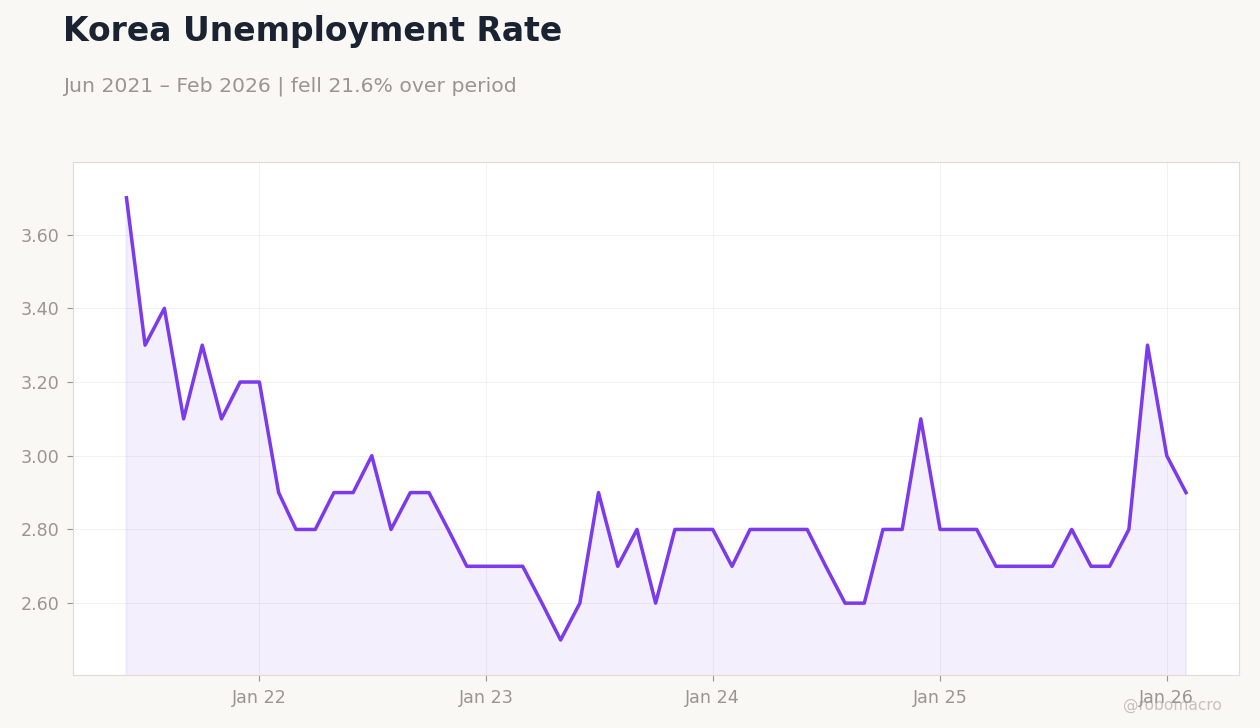
| Headline Unemployment Rate | 2.70 | - | 2.80 |
 Korea Long-term Rates | Type: macro_line | Long-term Rate (%): 3.728 (2026-03-01) | Range: 1.905–4.272 | Trend(6pt): 2.103,3.322,4.272,2.771,3.612,3.728
Today's Economic Events
| Data | Prior | Cons | Time |
|---|---|---|---|
| No events available | |||
- Headline unemployment rate climbed to 2.8% in April, hinting at labor market cooling amid export uncertainties.
- KOSPI and KOSDAQ dropped over 2%, with USD/KRW up 1.04% on risk-off mood.
- SK Hynix soared 5.07% on global tech demand, countering market weakness.
Yesterday's Recap
South Korea's headline unemployment rate rose to 2.8% in April from 2.7% prior, pointing to slight labor market easing despite strong chip sector performance. KOSPI ended at 7,643.15 after a 2.29% fall, hit by tech sector profit-taking and Samsung Electronics strike concerns. KOSDAQ slid 2.32% to 1,179.29, mirroring risk aversion in smaller stocks.
USD/KRW climbed 1.04% to 1,489.75, bolstered by dollar strength and Brent crude's 2.06% drop to 105.55. Samsung Electronics gained 0.72% to 281,000.00, supported by government efforts to ease labor tensions, while SK Hynix leaped 5.07% to 1,928,000.00 amid reports of major tech investment interest. Korea's short-term rate fell 0.55% to 2.53%, indicating policy stability, and the long-term rate increased 3.21% to 3.73% on inflation monitoring.
These shifts highlighted investor worries over export risks and domestic labor issues.
The Day Ahead
Today's economic schedule is blank, with no significant South Korean data or events planned. Focus may turn to corporate updates, including SK Hynix's chip deals and Samsung's labor negotiations. Markets might respond to progress in government-mediated talks, affecting KOSPI dynamics.
Global factors like oil prices and currency trends could influence sentiment. Tomorrow's calendar is equally quiet, with no major releases, likely leading to lower trading activity.
Other Economic Notes
South Korea's economy, reliant on exports, contends with shifting global demand, where chip sector resilience mitigates drags from other areas. News highlights intense interest from big tech in SK Hynix, emphasizing Korea's key position in AI supply chains. President Yoon's office continues backing chip industry initiatives to sustain growth despite labor softening.
DoubleDown Interactive reported a 12.7% revenue rise in Q1, signaling strength in gaming amid broader economic pressures.