Korea Macro Daily(Beta Mode)
Chip Rally Lifts KOSPI as Hawkish BoK Bets Rise
Market Snapshot
| Asset | Level | Change |
|---|---|---|
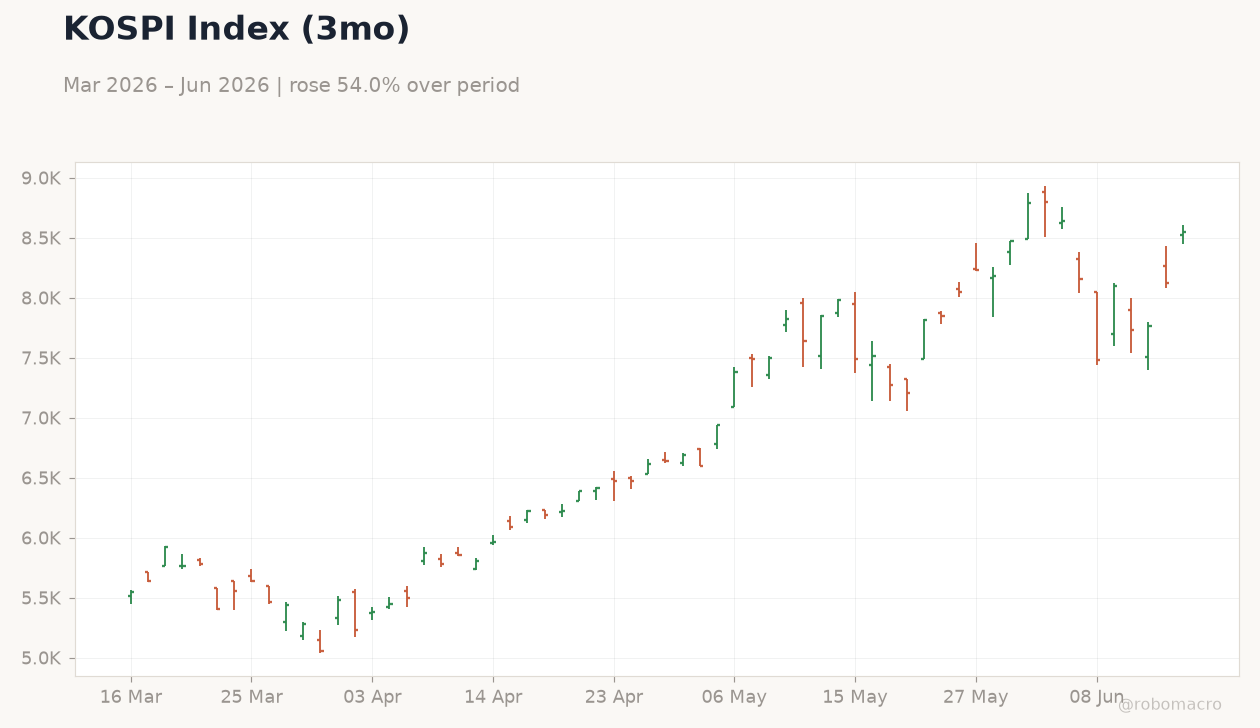
| KOSPI | 8,545.98 | +5.20% |
| KOSDAQ | 1,034.03 | +0.48% |
| USD/KRW | 1,508.46 | -0.07% |
| Samsung | 343,000.00 | +1.78% |
| SK Hynix | 2,382,000.00 | +4.11% |
| Brent Crude | 79.46 | -4.46% |
| Gold | 4,353.00 | +0.58% |
| Bitcoin | 65,692.74 | -0.90% |
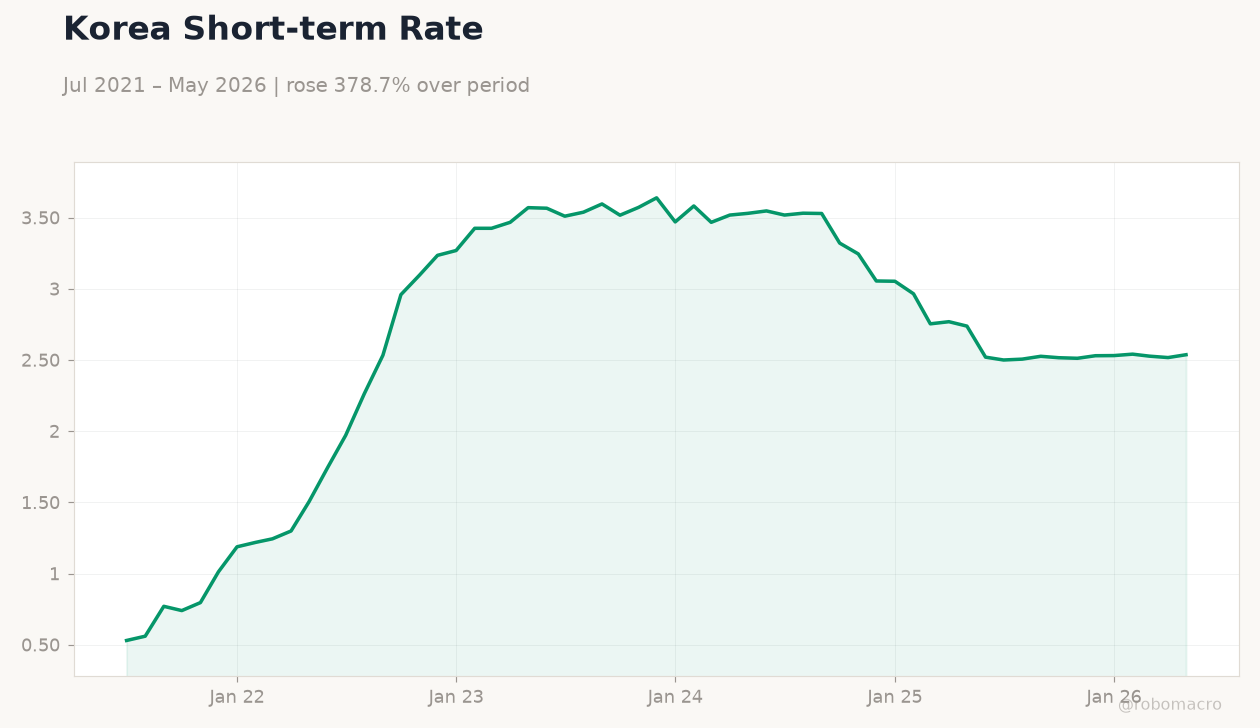
| Korea Short-term Rate | 2.54% | +0.79% |
| Korea Long-term Rate | 4.08% | +9.04% |
Prior Economic Events
| Data | Prior | Cons | Actual |
|---|---|---|---|
| No events available | |||
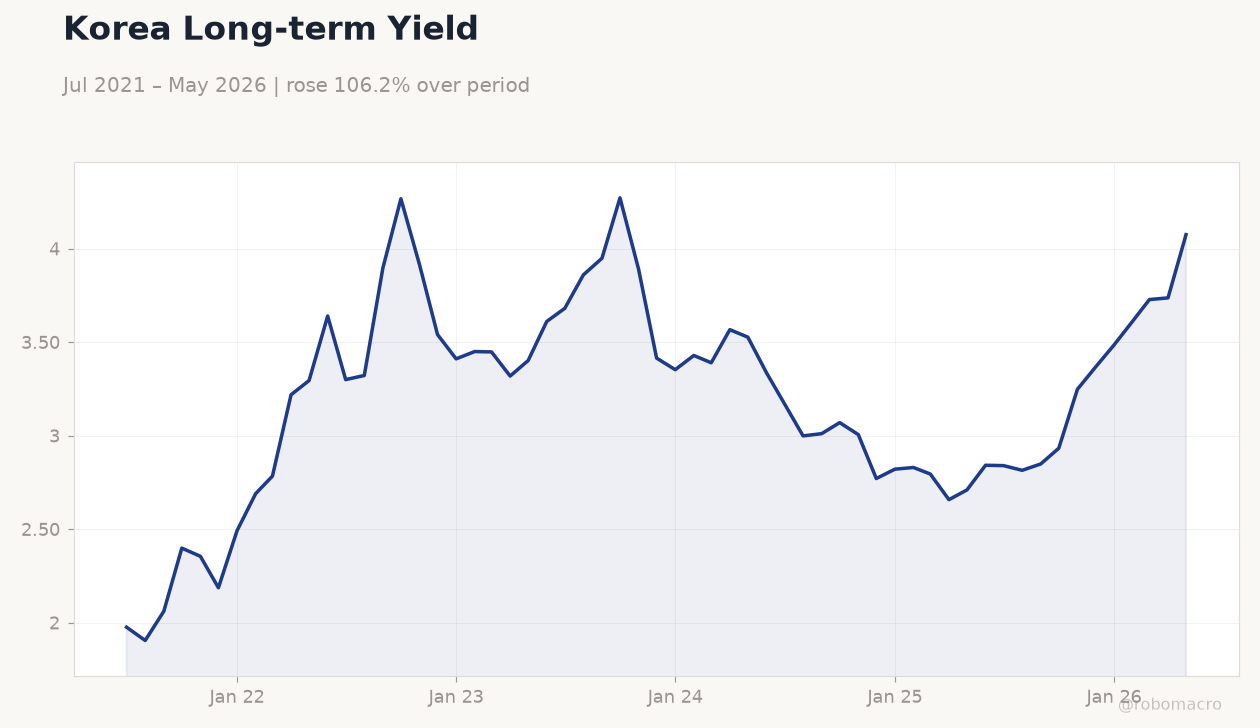 Korea Long-term Yield | Type: macro_line | 10Y Yield %: 4.075 (2026-05-01) | Range: 1.905–4.272 | Trend(6pt): 1.976,3.897,3.89,2.821,3.728,4.075
Today's Economic Events
| Data | Prior | Cons | Time |
|---|---|---|---|
| No events available | |||
- KOSPI surges 5.2% to 8,545.98 on semiconductor demand while USD/KRW stays near 1,508
- May money supply growth reaches 8.1%, lifting inflation risks and rate-hike odds
- Foreign investors withdraw record 48 trillion won from equities amid persistent won weakness
Yesterday's Recap
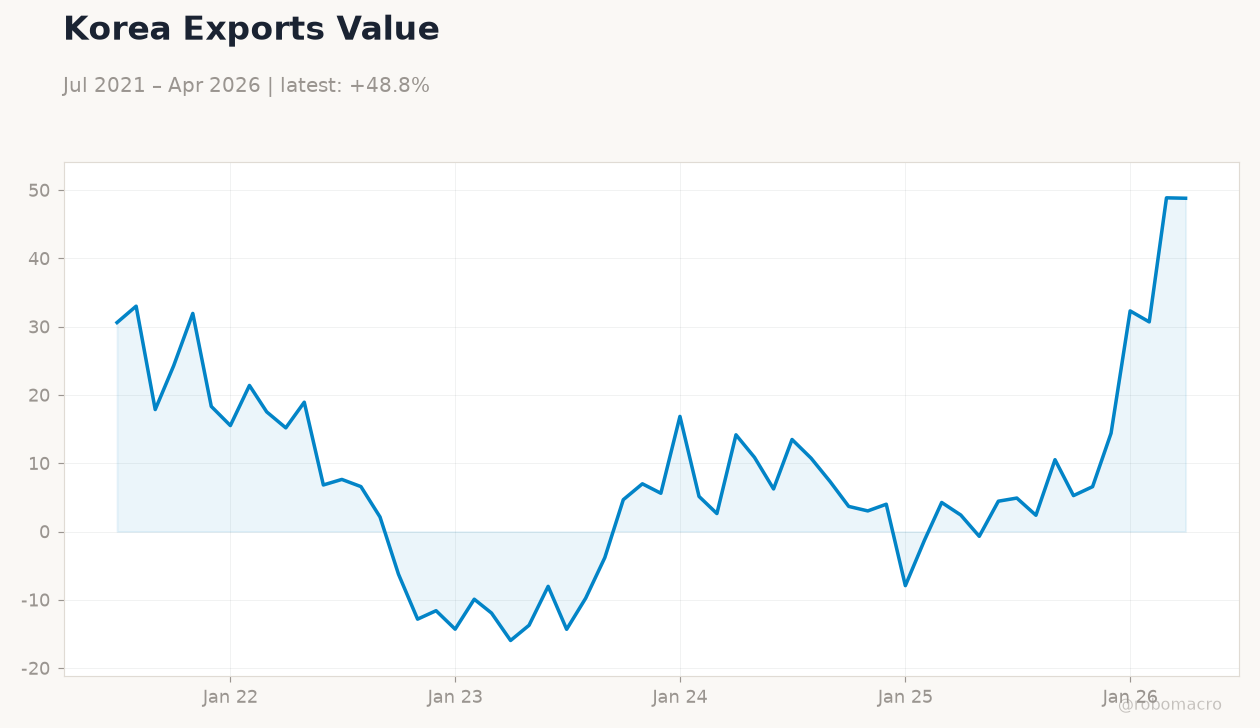
Korean equities advanced sharply as KOSPI climbed 5.20% and KOSDAQ rose 0.48%, supported by Samsung Electronics gaining 1.78% and SK Hynix jumping 4.11%. USD/KRW edged 0.07% lower to 1,508.46 while the short-term rate held at 2.54%. May trade surplus widened on robust chip exports, reinforcing won resilience despite broad foreign outflows.
Money supply expanded 8.1% year-on-year, prompting fresh inflation concerns. Nearly 39 trillion won left domestic financial markets last month. ICT exports hit a record high, driven by AI-related semiconductor shipments.
Korean stocks rebounded further after US-Iran peace developments eased some geopolitical risk premia.
The Day Ahead
Markets will monitor ongoing BoK communications for any shift in forward guidance after recent minutes highlighted inflation risks. Kakao Pay is scheduled to discuss Korean won stablecoin partnerships with local banks. South Korea and Indonesia continue coordinated measures to curb derivatives trading and defend currencies.
Mizuho Bank plans to support joint Japan-South Korea energy procurement projects. Investors also track global oil and gold moves for spillovers into won valuation and export competitiveness. No major data releases are listed for the session.
Other Economic Notes
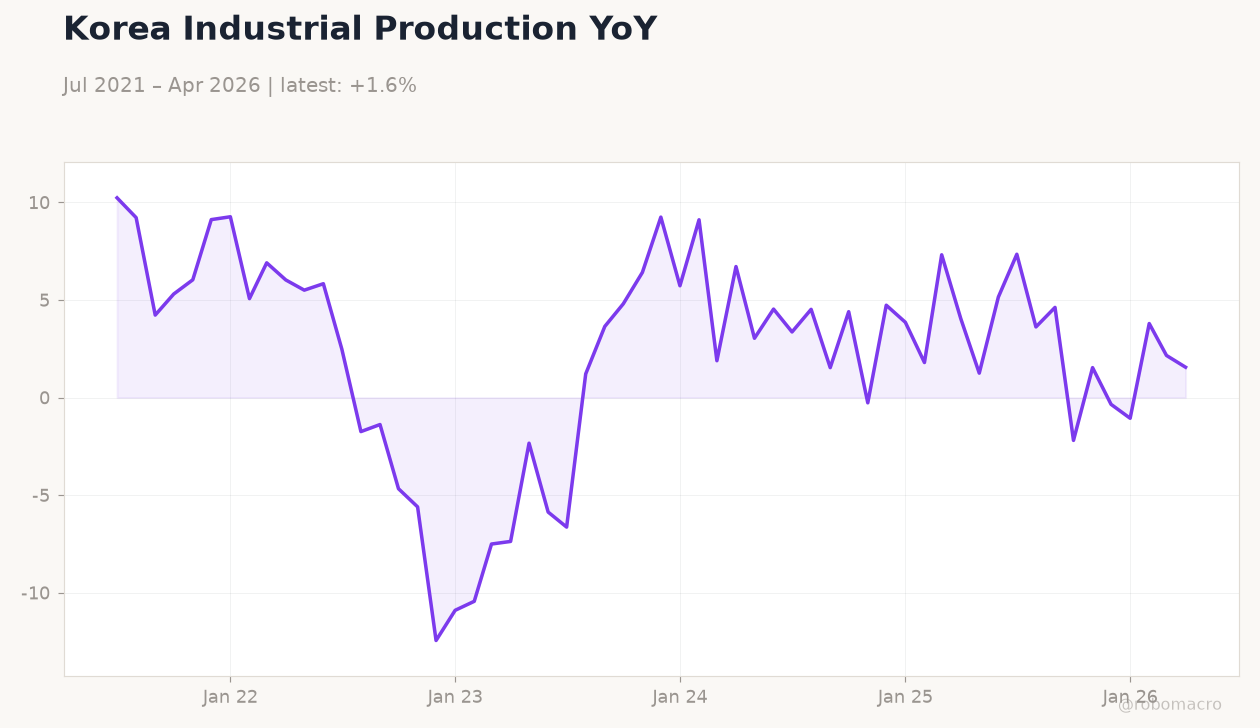
The economy displays a “hot iced americano” pattern of strong equity performance alongside a persistently weak won. Record ICT export strength has narrowed the output gap faster than earlier BoK projections. Outflows from both equities and funds underscore portfolio reallocation pressures linked to currency depreciation.
Dollar-denominated insurance demand has risen as households hedge FX exposure. These dynamics keep external vulnerability in focus even as semiconductor cycles provide a growth buffer.
Global Macro News
US-Iran peace news lifted regional risk sentiment and briefly supported the won before selling pressure resumed. <i>↓ p.2</i>