Korea Macro Daily(Beta Mode)
CPI Cools to 2.8%, KOSPI Slides 5%
Market Snapshot
| Asset | Level | Change |
|---|---|---|
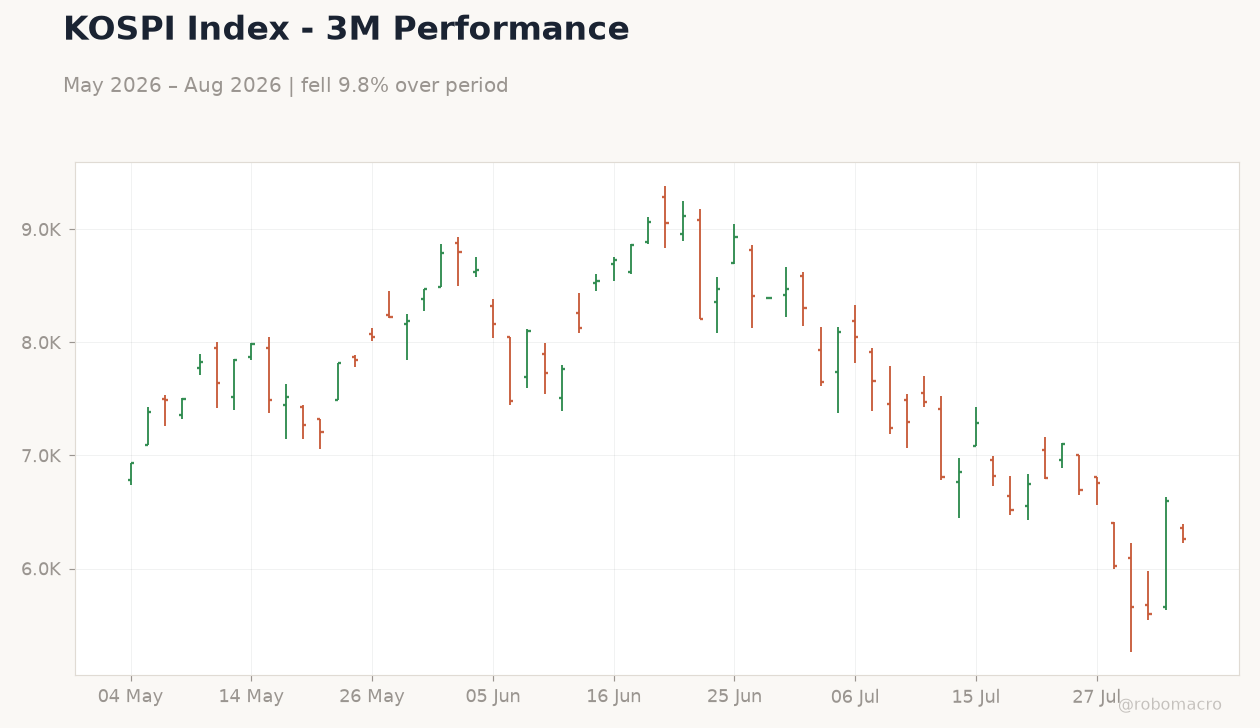
| KOSPI | 6,257.45 | -5.12% |
| KOSDAQ | 737.35 | +2.44% |
| USD/KRW | 1,429.48 | -0.43% |
| Samsung | 240,000.00 | +0.21% |
| SK Hynix | 1,577,000.00 | +0.64% |
| Brent Crude | 78.79 | -5.94% |
| Gold | 4,134.70 | +2.50% |
| Bitcoin | 64,260.01 | +1.26% |
| Korea Short-term Rate | 2.54% | +0.00% |
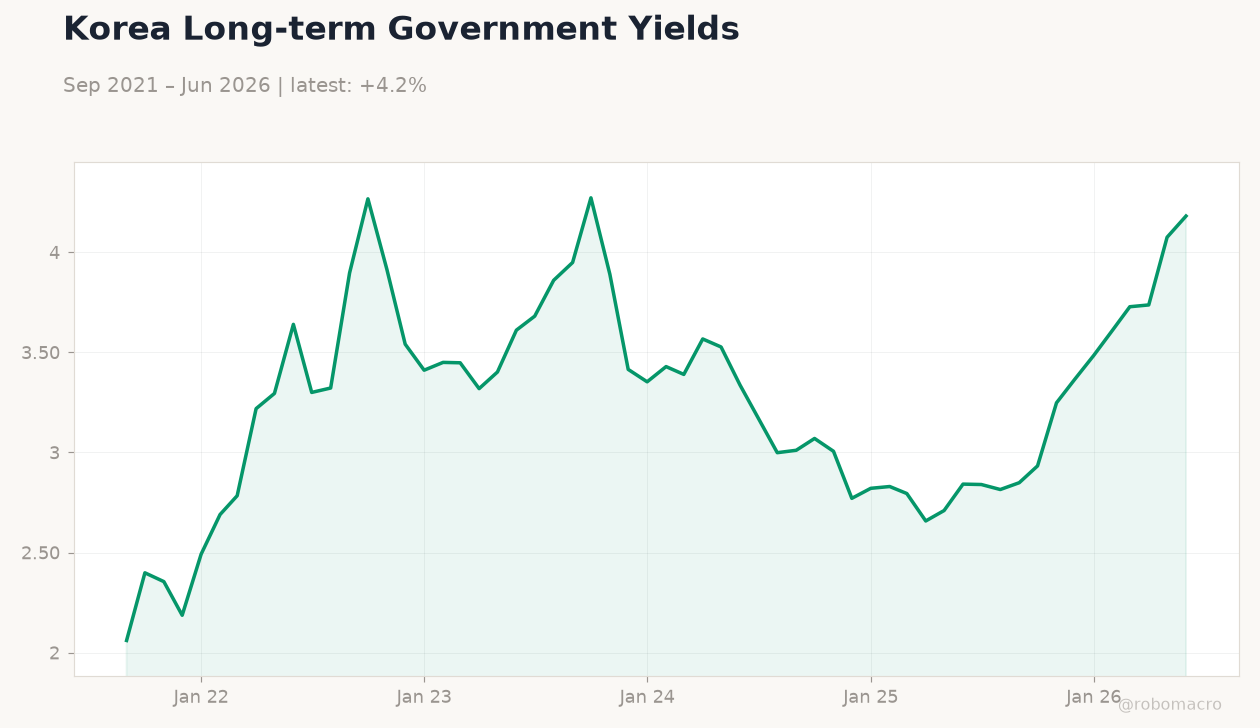
| Korea Long-term Rate | 4.18% | +2.60% |
Prior Economic Events
| Data | Prior | Cons | Actual |
|---|---|---|---|
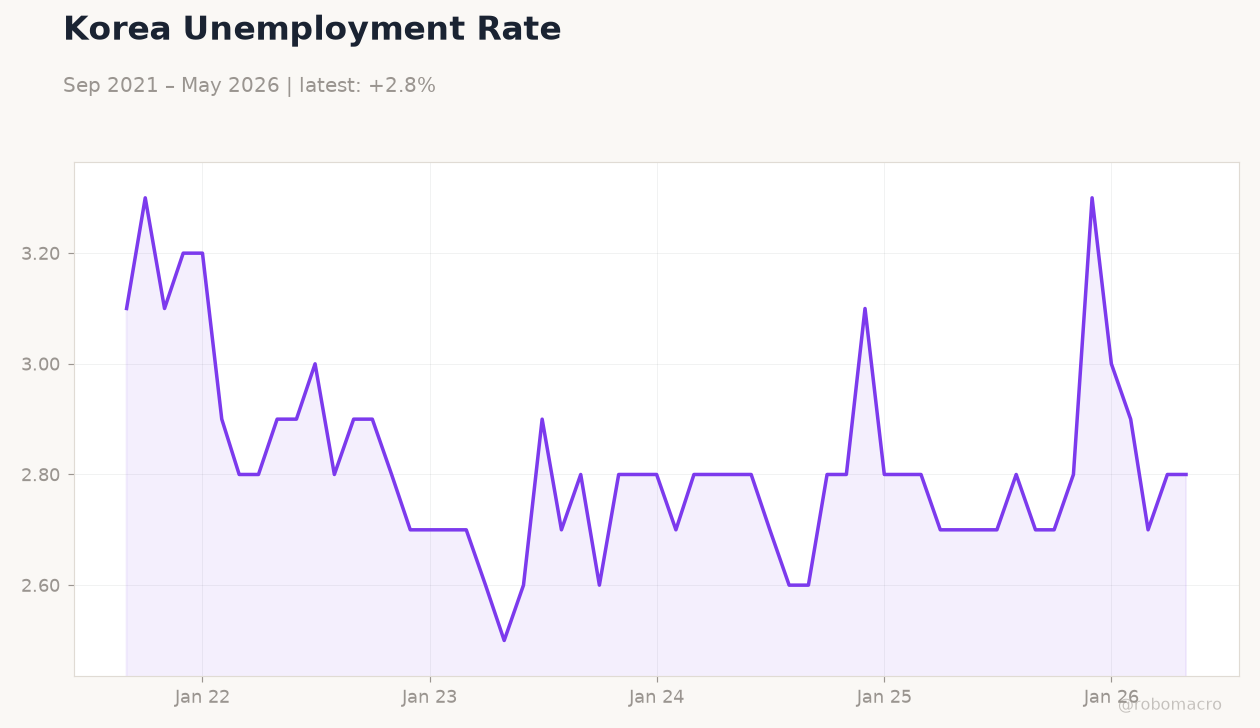
| Inflation Rate Year-over-Year | 3.20 | 3 | 2.80 |
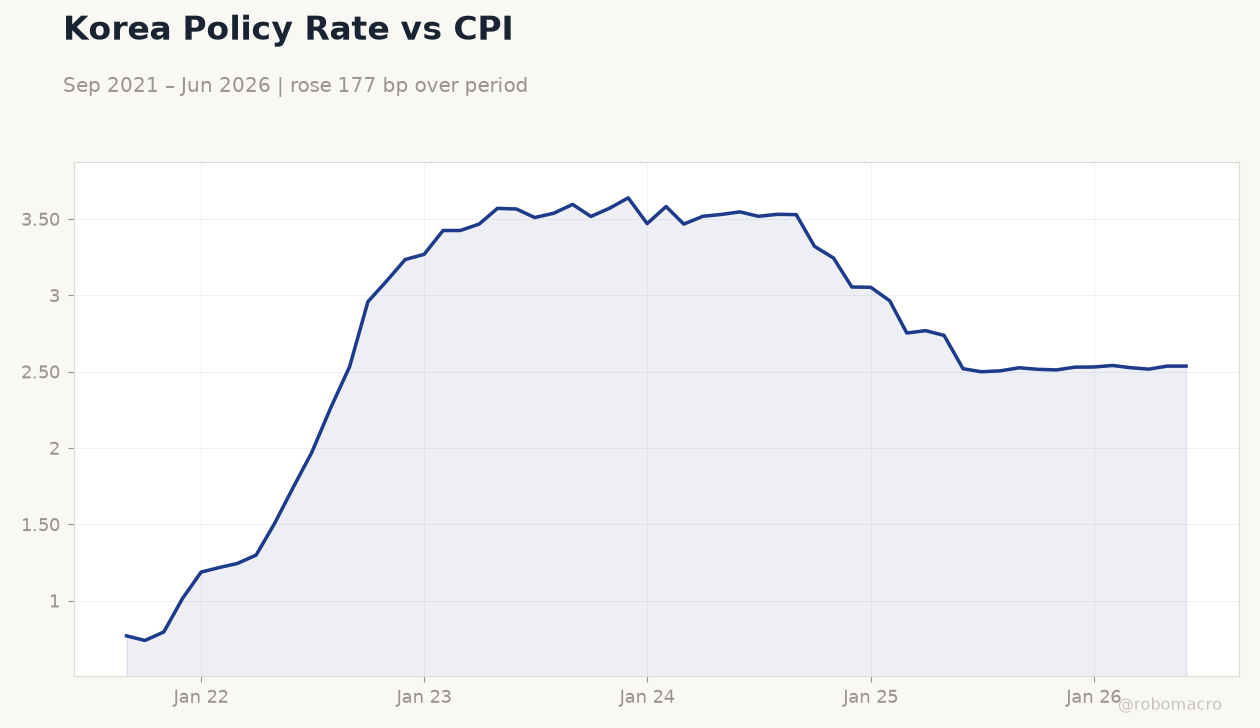 Korea Policy Rate vs CPI | Type: macro_line | Short-term Rate %: 2.537 (2026-06-01) | Range: 0.74–3.639 | Trend(5pt): 0.77,3.096,3.47,2.754,2.537
Today's Economic Events
| Data | Prior | Cons | Time |
|---|---|---|---|
| No events available | |||
- July inflation misses at 2.8% y/y versus 3.0% consensus
- KOSPI drops 5.12% while long-term yields jump 2.60%
- Won firms as USD/KRW falls 0.43% on softer price data
Yesterday's Recap
South Korea’s July inflation rate printed at 2.8% year-over-year, undershooting the 3.0% consensus and marking a clear deceleration from the prior 3.2% reading. The softer print arrived alongside a sharp equity sell-off that sent the KOSPI down 5.12% to 6,257.45, while the KOSDAQ advanced 2.44% to 737.35 on rotation into smaller tech names. USD/KRW eased 0.43% to 1,429.48 as the won benefited from lower inflation expectations.
Samsung rose 0.21% to 240,000 won and SK Hynix gained 0.64% to 1,577,000 won, limiting downside in the semiconductor sector. The Korea short-term rate held steady at the verified 2.54% level, but the long-term rate surged 2.60% to 4.18%, steepening the curve. Brent crude fell 5.94% to 78.79, adding to the disinflationary backdrop.
Market participants absorbed the data without immediate BoK commentary, leaving positioning for future policy moves largely intact. Gold rose 2.50% to 4,134.70 while Bitcoin gained 1.26% to 64,260.01, reflecting broader risk rotation.
The Day Ahead
No scheduled Korean data releases or Bank of Korea events appear on the calendar for August 4 or 5. Attention therefore shifts to external drivers, including any follow-through from recent Federal Reserve speeches on policy transmission and regulatory modernization. Global bond markets will continue to price the implications of cooler Korean inflation for emerging-market currencies and capital flows.
Equity traders will monitor semiconductor supply-chain updates and any shifts in foreign positioning after yesterday’s KOSPI decline. The absence of domestic prints leaves USD/KRW and KTB yields sensitive to overnight moves in U.S. yields and risk sentiment.
Brent crude and gold moves may also influence sentiment given their recent volatility.
Other Economic Notes
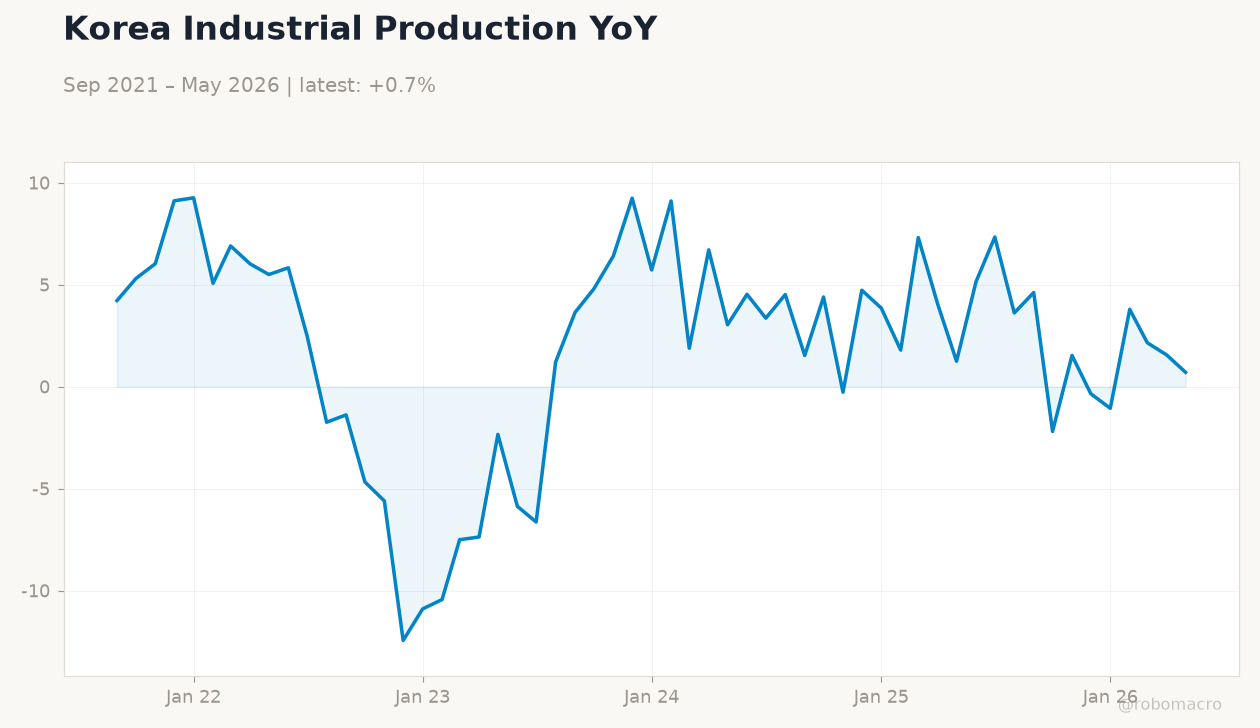
Export-oriented growth remains the dominant channel for Korean activity, with semiconductors continuing to offset softness in shipbuilding and autos. Lower headline inflation reduces one source of imported cost pressure and supports real household income, though the impact on consumption will depend on labor-market resilience. The verified BoK base rate of 2.54% and the June CPI reading of 3.16% provide the reference points against which the new 2.8% July outcome will be assessed for policy implications.
<i>↓ p.2</i>