Korea Macro Daily(Beta Mode)
CPI Undershoots as Chip Stocks Lift KOSPI
Market Snapshot
| Asset | Level | Change |
|---|---|---|
| KOSPI | 6,358.95 | +1.62% |
| KOSDAQ | 780.72 | +5.88% |
| USD/KRW | 1,421.53 | -0.49% |
| Samsung | 246,000.00 | +2.50% |
| SK Hynix | 1,668,000.00 | +5.77% |
| Brent Crude | 79.36 | +0.00% |
| Gold | 4,305.10 | +5.12% |
| Bitcoin | 64,723.41 | +1.04% |
| Korea Short-term Rate | 2.54% | +0.00% |
| Korea Long-term Rate | 4.18% | +2.60% |
Prior Economic Events
| Data | Prior | Cons | Actual |
|---|---|---|---|
| Inflation Rate Year-over-Year | 3.20 | 3 | 2.80 |
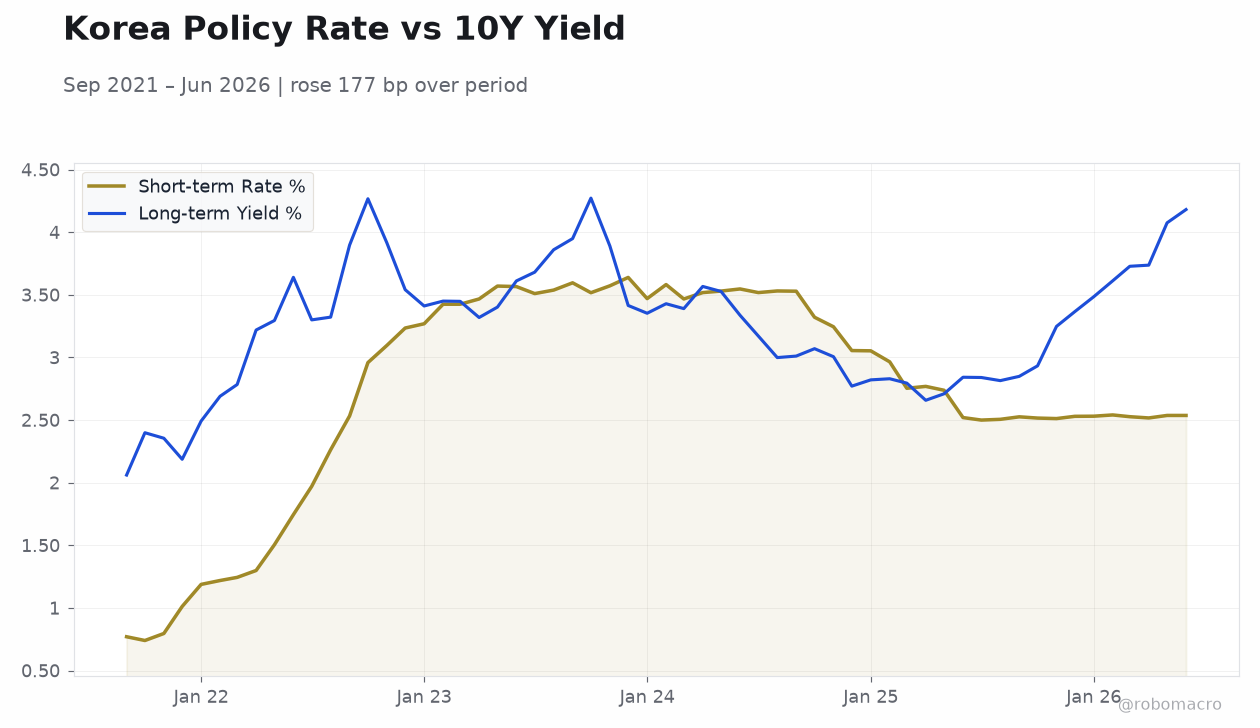 Korea Policy Rate vs 10Y Yield | Type: macro_line | Short-term Rate %: 2.537 (2026-06-01) | Range: 0.74–3.639 | Trend(5pt): 0.77,3.096,3.47,2.754,2.537 | Long-term Yield %: 4.181 (2026-06-01) | Range: 2.061–4.272 | Trend(6pt): 2.061,3.915,3.353,2.795,4.075,4.181
Today's Economic Events
| Data | Prior | Cons | Time |
|---|---|---|---|
| No events available | |||
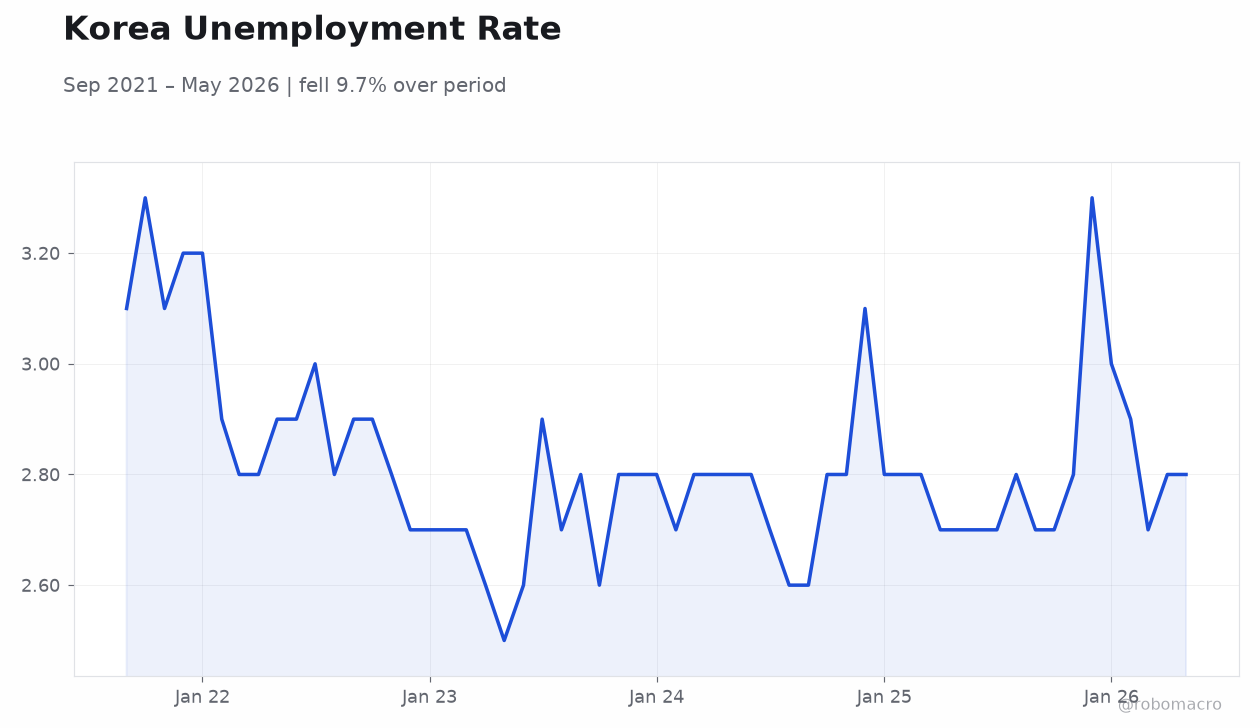
- Korea CPI YoY printed at 2.8%, below 3.0% consensus and prior 3.2%.
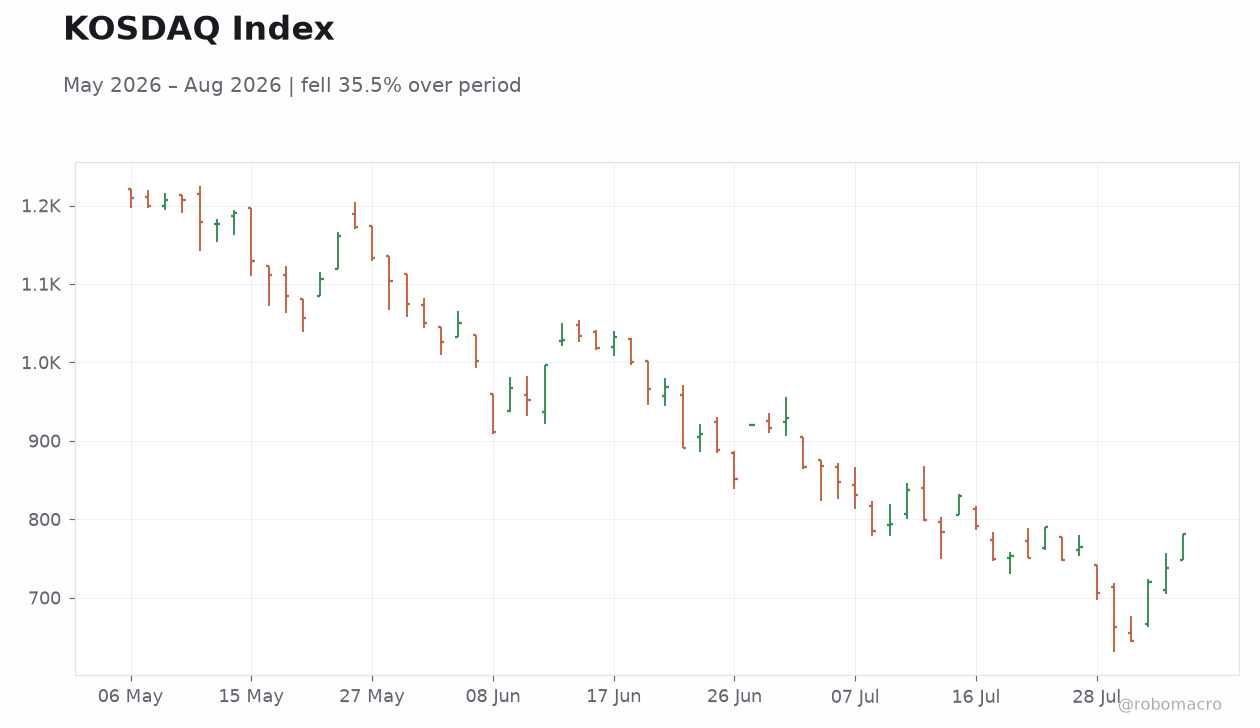
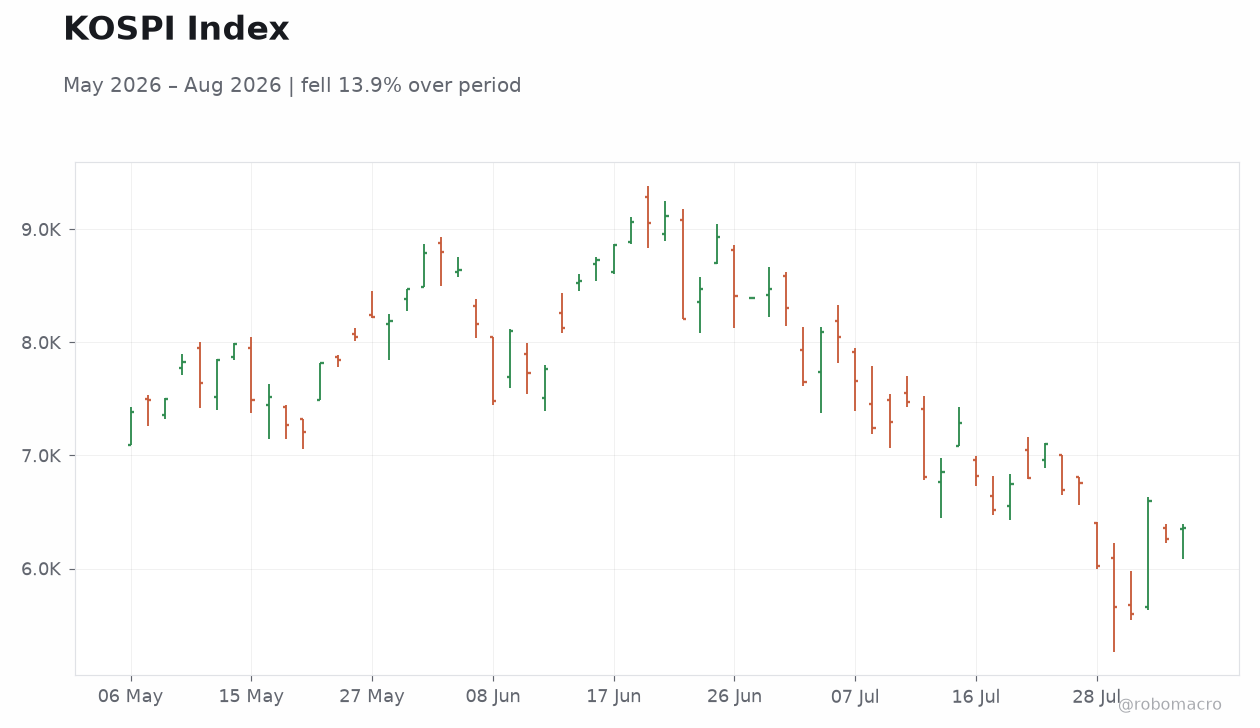
- KOSPI rose 1.62% to 6,358.95 while KOSDAQ surged 5.88%, led by Samsung and SK Hynix.
- USD/KRW fell 0.49% to 1,421.53 as the won strengthened alongside rising long-term yields.
Yesterday's Recap
South Korea’s July inflation rate came in at 2.8% year-over-year, undershooting both consensus and the prior print and confirming a continued disinflation trend. Equity markets responded positively, with the KOSPI advancing 1.62% to close at 6,358.95 and the KOSDAQ jumping 5.88% to 780.72. Semiconductor names drove gains, as Samsung rose 2.50% to 246,000 won and SK Hynix climbed 5.77% to 1,668,000 won.
The won appreciated 0.49% against the dollar, taking USD/KRW to 1,421.53. Korea’s short-term rate held steady at 2.54% while the long-term rate rose 2.60% to 4.18%. The heatwave gripping the peninsula, with temperatures reaching 42.5°C, added downside risks to near-term consumption but did not alter market pricing.
Overall, the combination of softer inflation and resilient chip demand supported risk assets and the currency.
The Day Ahead
No major data releases are scheduled for South Korea today or tomorrow, leaving markets to digest yesterday’s inflation surprise. Attention will likely remain on semiconductor supply-chain updates and any follow-through from the heatwave’s impact on household spending. Export order data and corporate earnings from downstream electronics firms could provide incremental color on external demand.
Currency traders will monitor USD/KRW flows for signs of intervention or further appreciation pressure. Bond markets may continue to price the long-end yield rise observed yesterday amid the softer CPI print.
Other Economic Notes
The 2.8% CPI reading reinforces the view that domestic price pressures are moderating faster than expected, supporting real income growth for households. Export-oriented sectors, particularly memory chips, continue to benefit from global AI-related demand despite broader geopolitical frictions. The 0.49% won appreciation helps contain imported inflation but could begin to weigh on exporter margins if sustained.
Long-term yields rising to 4.18% signal markets are adjusting to a less accommodative rate path even as the base rate remains at 2.54%. Heat-related disruptions to retail and tourism activity may shave a modest amount from third-quarter consumption figures.