Korea Macro Daily(Beta Mode)
Chip Gains Mask KOSPI Decline
Market Snapshot
| Asset | Level | Change |
|---|---|---|
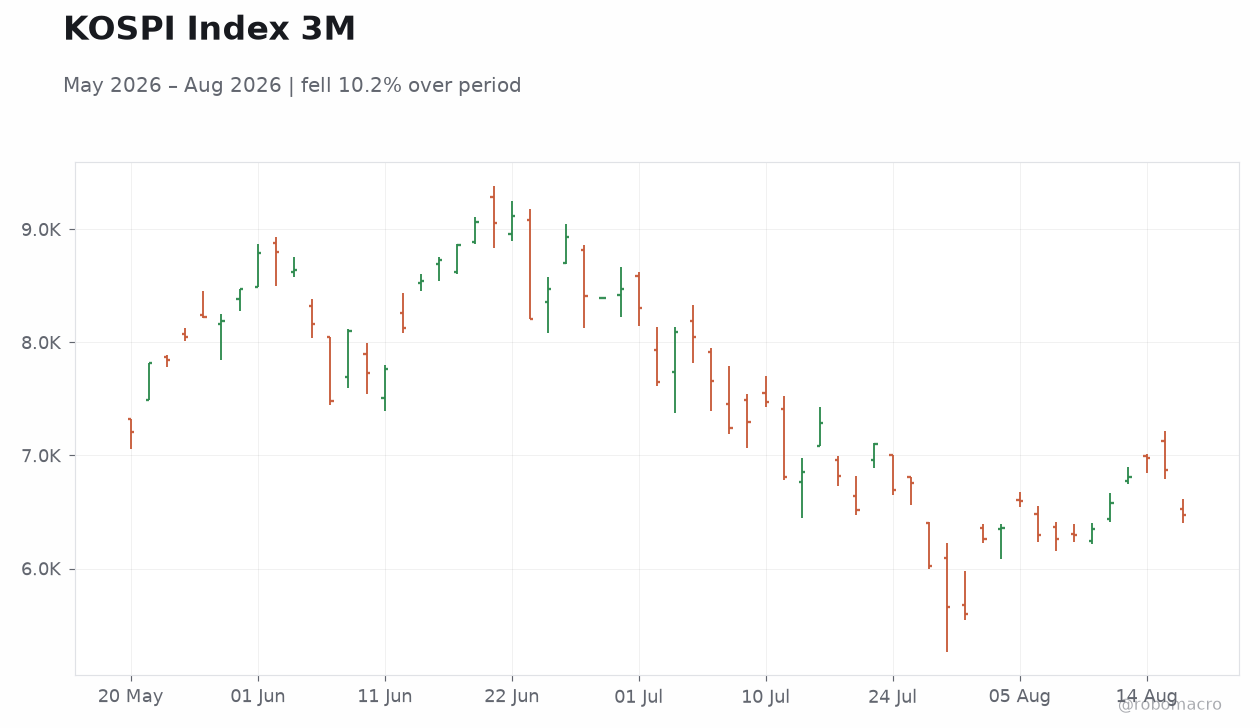
| KOSPI | 6,471.17 | -5.80% |
| KOSDAQ | 824.46 | -1.17% |
| USD/KRW | 1,393.81 | -1.40% |
| Samsung | 271,000.00 | +9.49% |
| SK Hynix | 1,691,000.00 | +12.73% |
| Brent Crude | 93.19 | +1.71% |
| Gold | 4,575.50 | +1.92% |
| Bitcoin | 72,555.74 | +4.75% |
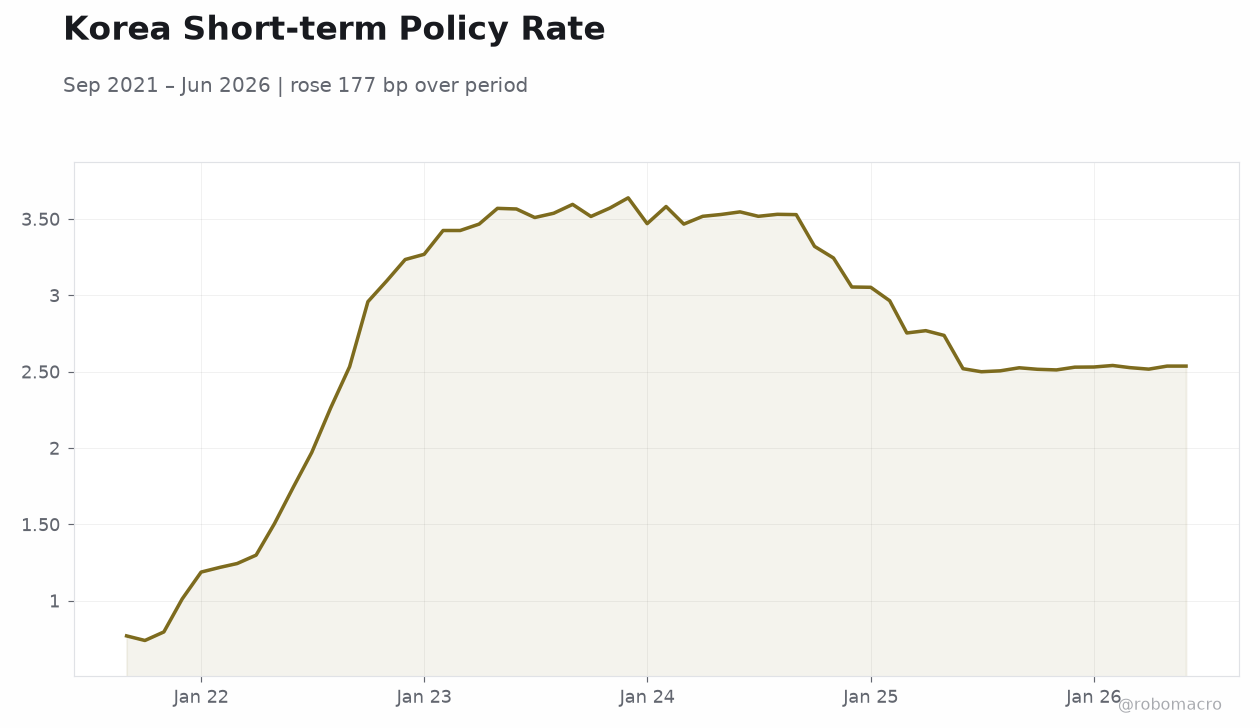
| Korea Short-term Rate | 2.54% | +0.00% |
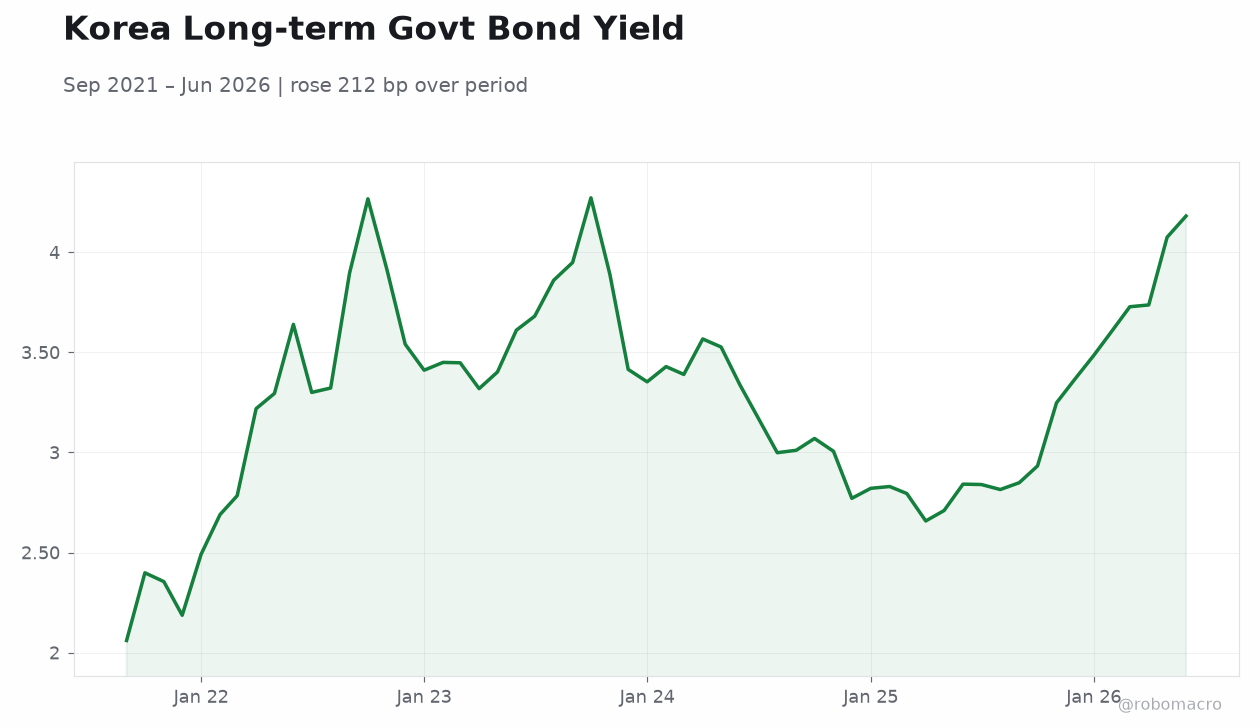
| Korea Long-term Rate | 4.18% | +2.60% |
Prior Economic Events
| Data | Prior | Cons | Actual |
|---|---|---|---|
| No events available | |||
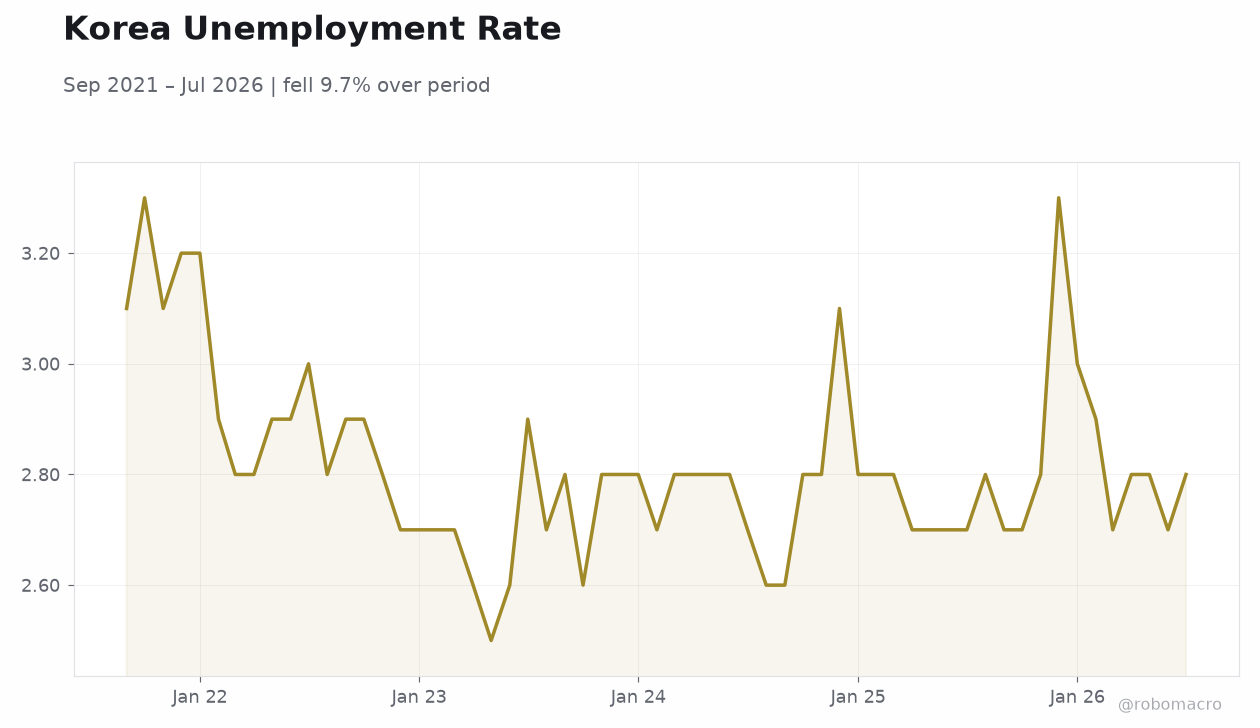 Korea Unemployment Rate | Type: macro_line | Unemployment %: 2.8 (2026-07-01) | Range: 2.5–3.3 | Trend(5pt): 3.1,2.8,2.8,2.8,2.8
Today's Economic Events
| Data | Prior | Cons | Time |
|---|---|---|---|
| No events available | |||
- KOSPI ends at 6,471.17 after a 5.80% decline while Samsung and SK Hynix post sharp gains
- USD/KRW falls 1.40% to 1,393.81 as the won leads Asian currency advances
- Bank of Korea appoints Kwon Min-soo as senior deputy governor to strengthen FX oversight
Yesterday's Recap
South Korean equities closed mixed despite broad semiconductor strength. The KOSPI finished at 6,471.17, down 5.80% on the session, while the KOSDAQ slipped 1.17% to 824.46. Samsung rose 9.49% to 271,000 won and SK Hynix jumped 12.73% to 1,691,000 won, reflecting continued AI-driven demand for memory chips.
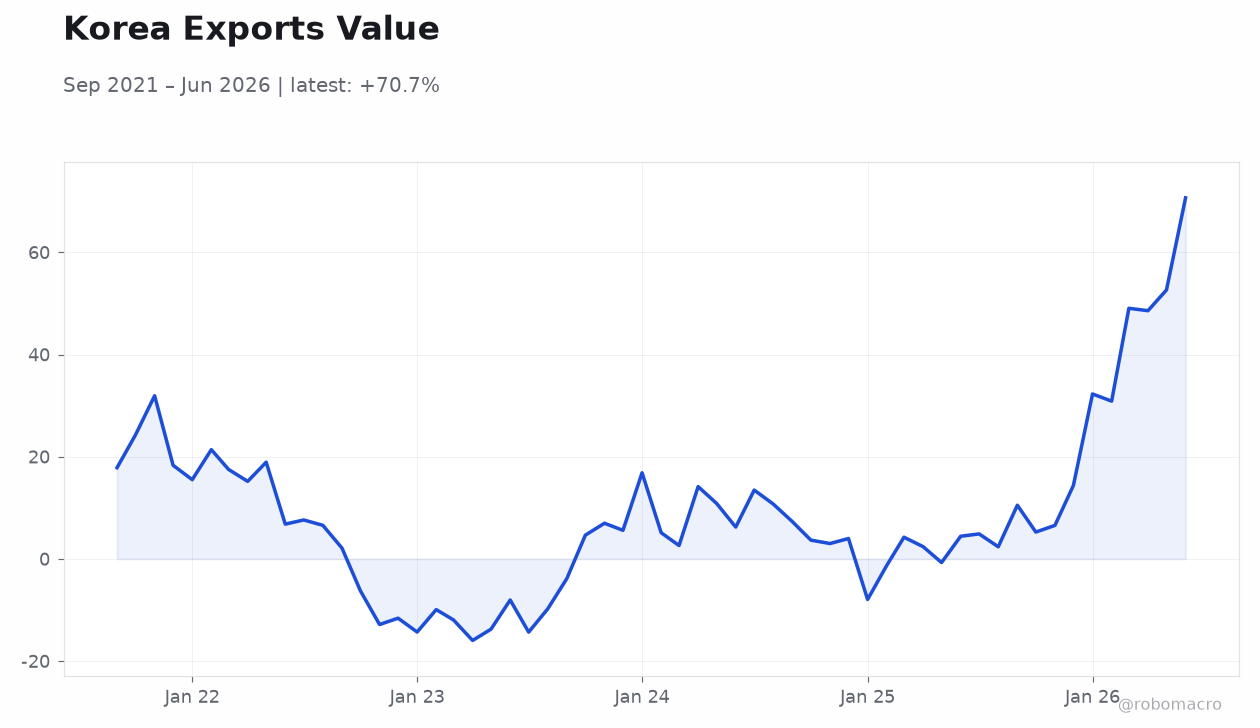
The won strengthened markedly, with USD/KRW dropping to 1,393.81. Korea’s long-term government bond yield rose 2.60% to 4.18% while the short-term rate held steady at 2.54%. News flow highlighted KDI’s upward revision of 2026 GDP growth to 3.2%, citing the chip export boom, alongside the central bank’s appointment of Kwon Min-soo to bolster international finance expertise.
Equity market gains prompted a historic contraction in the net international investment position.
The Day Ahead
Markets enter a data-light session with no major Korean releases scheduled. Attention will remain on follow-through in semiconductor names after yesterday’s outsized moves in Samsung and SK Hynix. Currency traders will monitor whether the won’s break below 1,400 sustains or invites intervention signals from authorities.
Global equity futures and U.S. Treasury yields will set the tone for risk sentiment into the Asian open. Any comments from the newly appointed deputy governor Kwon could provide early clues on foreign-exchange policy priorities.
Other Economic Notes
KDI’s 3.2% growth forecast exceeds the government’s 3.0% projection and underscores the narrow but powerful contribution of AI chip exports to the Korean economy. External asset data showed a historic contraction in net international investment position as equity market gains prompted valuation adjustments. Deposit insurance fee increases of 910 billion won annually will raise funding costs for banks, potentially feeding into lending spreads.
Financial crime losses at major banks reached a decade high, highlighting ongoing governance risks in the sector.