Mexico Macro Daily(Beta Mode)
Peso Strengthens, IPC Gains Modestly
Market Snapshot
| Asset | Level | Change |
|---|---|---|
| IPC Bolsa | 64,370.95 | +0.37% |
| USD/MXN | 17.85 | -0.50% |
| EUR/MXN | 20.69 | -0.25% |
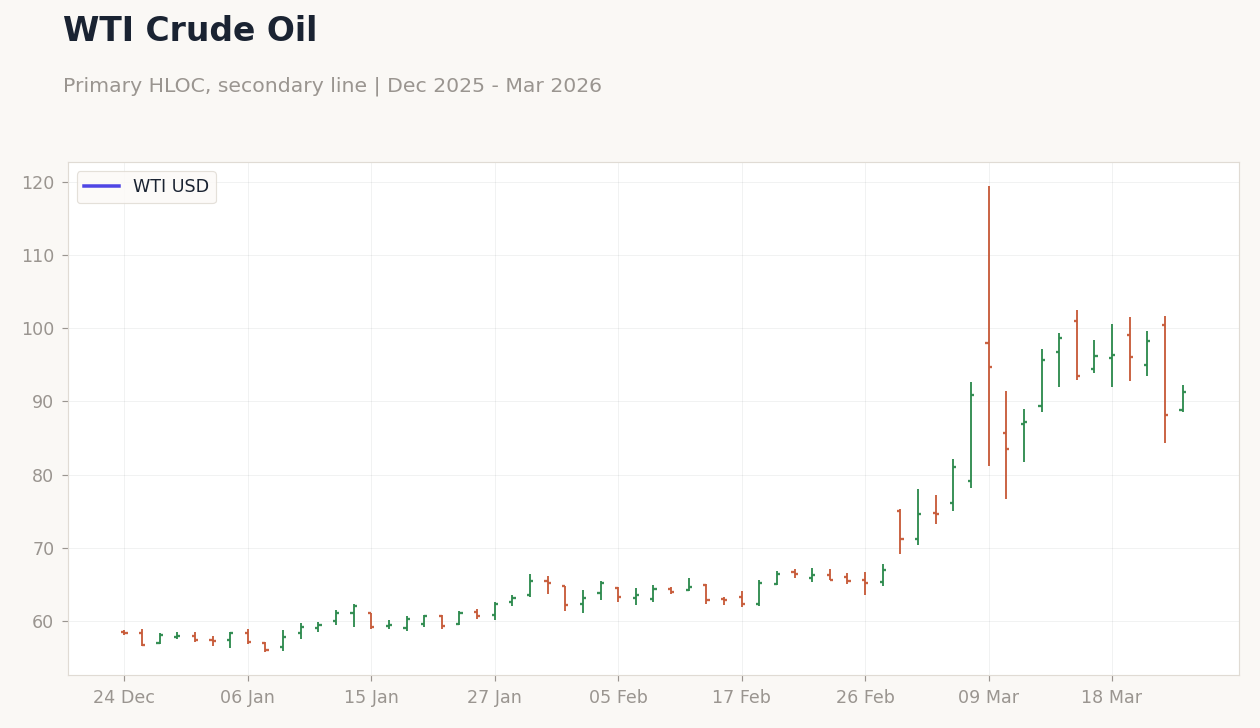
| WTI Crude | 90.59 | +2.79% |
| Silver | 70.26 | +1.75% |
| Gold | 4,421.20 | +0.39% |
| Brent Crude | 101.98 | +2.04% |
| Bitcoin | 71,120.37 | +0.29% |
| Mexico Short-term Rate | 5.56% | -1.24% |
| Mexico Long-term Rate | 8.74% | -5.10% |
Prior Economic Events
| Data | Prior | Cons | Actual |
|---|---|---|---|
| No events available | |||
 Mexico Long-term Interest Rates | Type: macro_line | Long-term Rate %: 8.74 (2026-02-01) | Range: 6.54–10.43 | Trend(5pt): 6.68,8.78,10.23,10.33,8.74
Today's Economic Events
| Data | Prior | Cons | Time |
|---|---|---|---|
| Thursday (2026-03-26) | |||
| Central Bank Interest Rate Decision | 7 | 7 | 11:00 |
| Friday (2026-03-27) | |||
| Trade Balance | -6,481m | - | 04:00 |
- Mexican equities rose modestly, with IPC Bolsa up 0.37% to 64,370.95 amid energy sector boosts.
- USD/MXN declined 0.50% to 17.85, supported by higher oil prices enhancing export prospects.
- Bond yields fell, with short-term rates at 5.56% (-1.24%) reflecting easing bets.
Yesterday's Recap
Mexican markets displayed resilience yesterday with no major data releases, as the IPC Bolsa index increased 0.37% to close at 64,370.95, propelled by gains in energy-related stocks on rising crude prices. The peso appreciated against the dollar, with USD/MXN decreasing 0.50% to 17.85, driven by positive risk sentiment and elevated oil revenues bolstering Mexico's trade stance. EUR/MXN slipped 0.25% to 20.69, aided by euro steadiness.
Bond markets advanced, with the short-term rate dropping to 5.56% (-1.24%) and long-term rate falling to 8.74% (-5.10%), as markets anticipated potential Banxico easing alongside global rate stability. Commodity strength contributed, with WTI Crude climbing 2.79% to 90.59 and Brent Crude advancing 2.04% to 101.98, strengthening Mexico's export profile. Precious metals offered varied backing, gold rising 0.39% to 4,421.20 and silver up 1.75% to 70.26, while Bitcoin gained 0.29% to 71,120.37 in a subdued session.
The Day Ahead
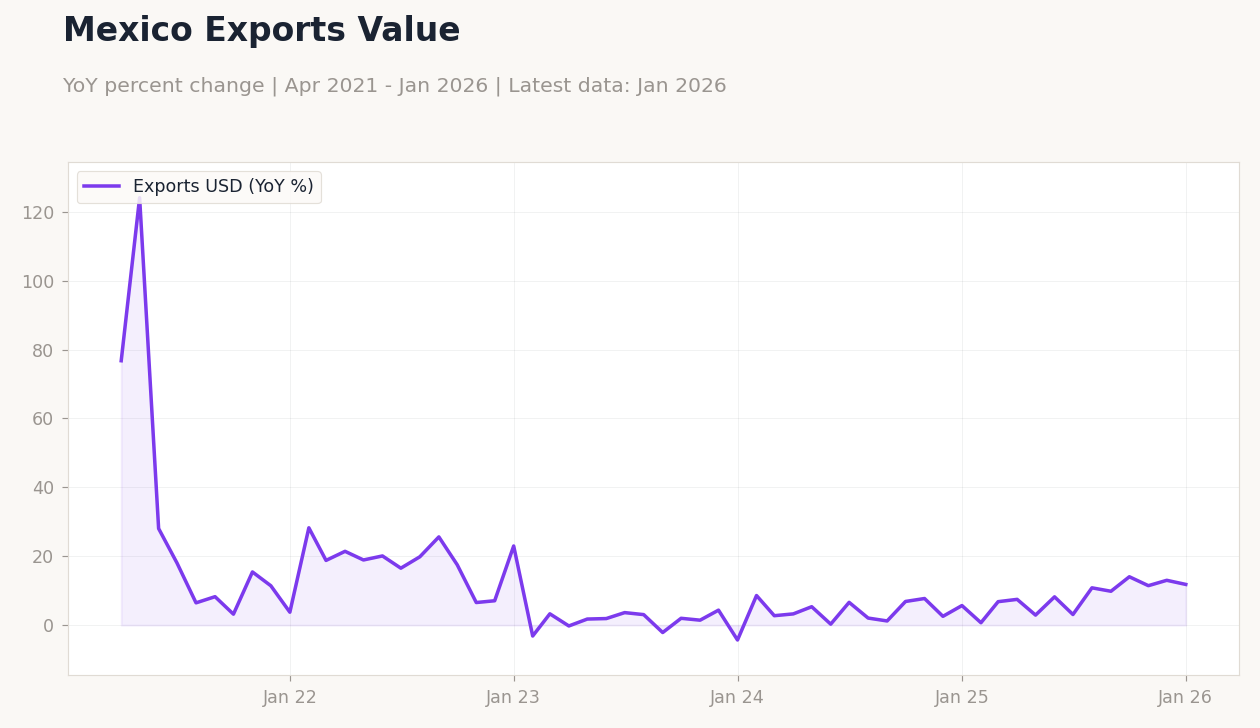
Focus shifts to Thursday's Banxico interest rate decision at 11:00 ET, with expectations for a hold at the current 5.56% level amid inflation oversight. Friday features the trade balance release at 4:00 ET, following a prior deficit of -6,481,000,000, with no consensus available, which may affect peso movements. These developments could influence sentiment, particularly if Banxico provides updates on guidance related to global oil dynamics.
Traders will monitor for trade data surprises that could underscore USMCA export patterns. Additional attention includes nearshoring progress, with ongoing US-Mexico trade discussions in play.
Other Economic Notes
Nearshoring continues to attract foreign investment to Mexico, especially in manufacturing centers like Monterrey, supporting industrial activity despite international slowdown concerns. Remittances provide a vital cushion for consumer expenditure, aiding retail amid currency fluctuations. Energy reforms encounter obstacles, with Pemex's prominence possibly hindering private investments essential for output expansion.
USMCA reviews persist, with tariff risks affecting automotive industries key to Mexican growth. Global commodity trends, including oil surges, enhance export revenues but pose inflation challenges domestically.