Mexico Macro Daily(Beta Mode)
IPC Rises Amid Peso Strength
Market Snapshot
| Asset | Level | Change |
|---|---|---|
| IPC Bolsa | 69,702.02 | +1.59% |
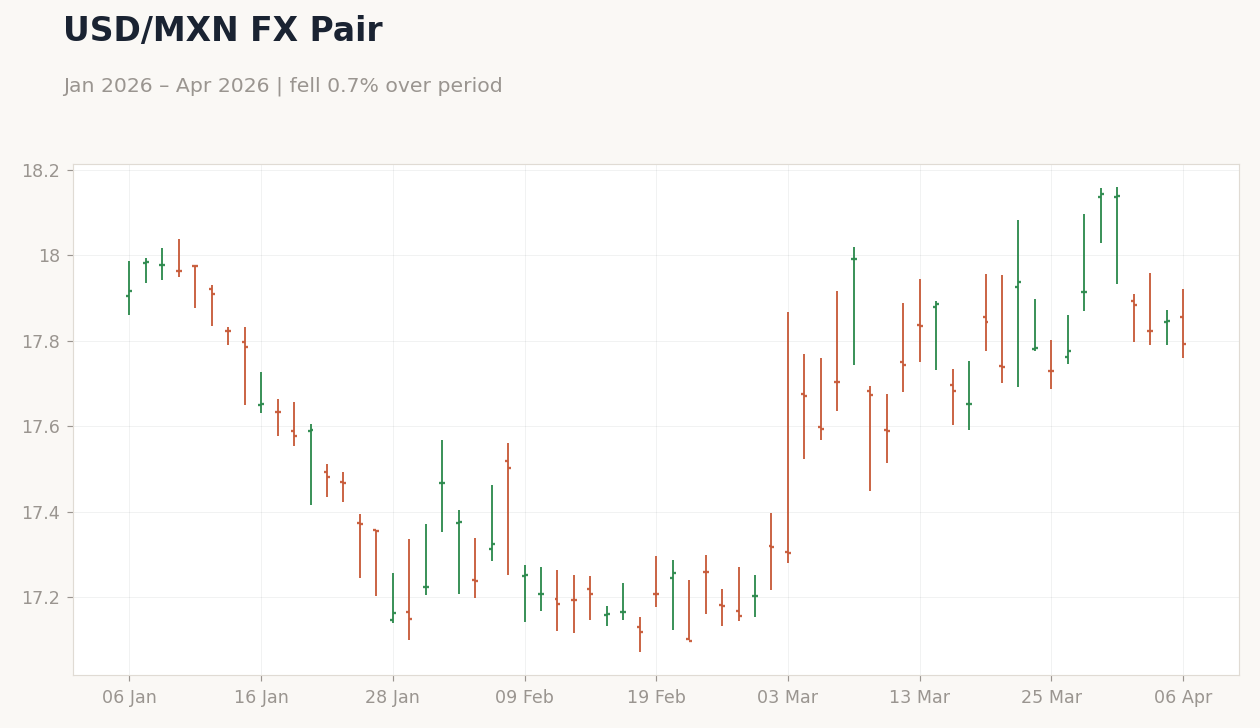
| USD/MXN | 17.80 | -0.28% |
| EUR/MXN | 20.55 | -0.27% |
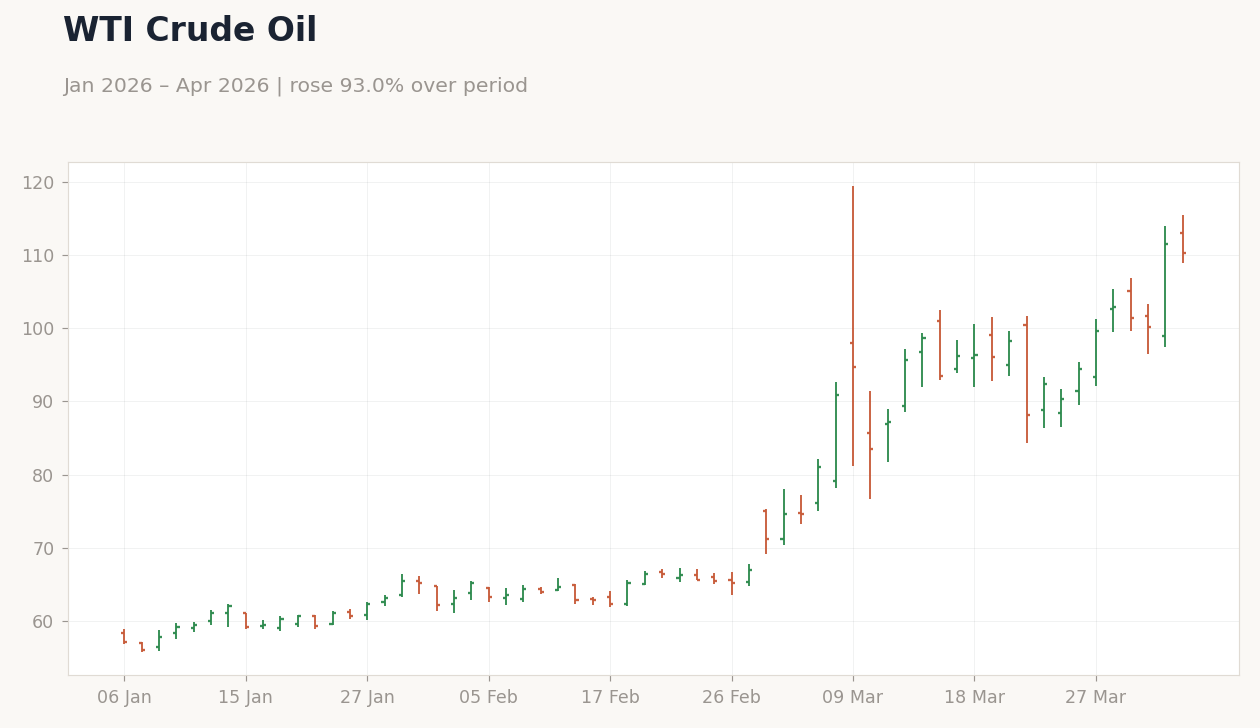
| WTI Crude | 110.19 | -1.21% |
| Silver | 73.40 | +0.92% |
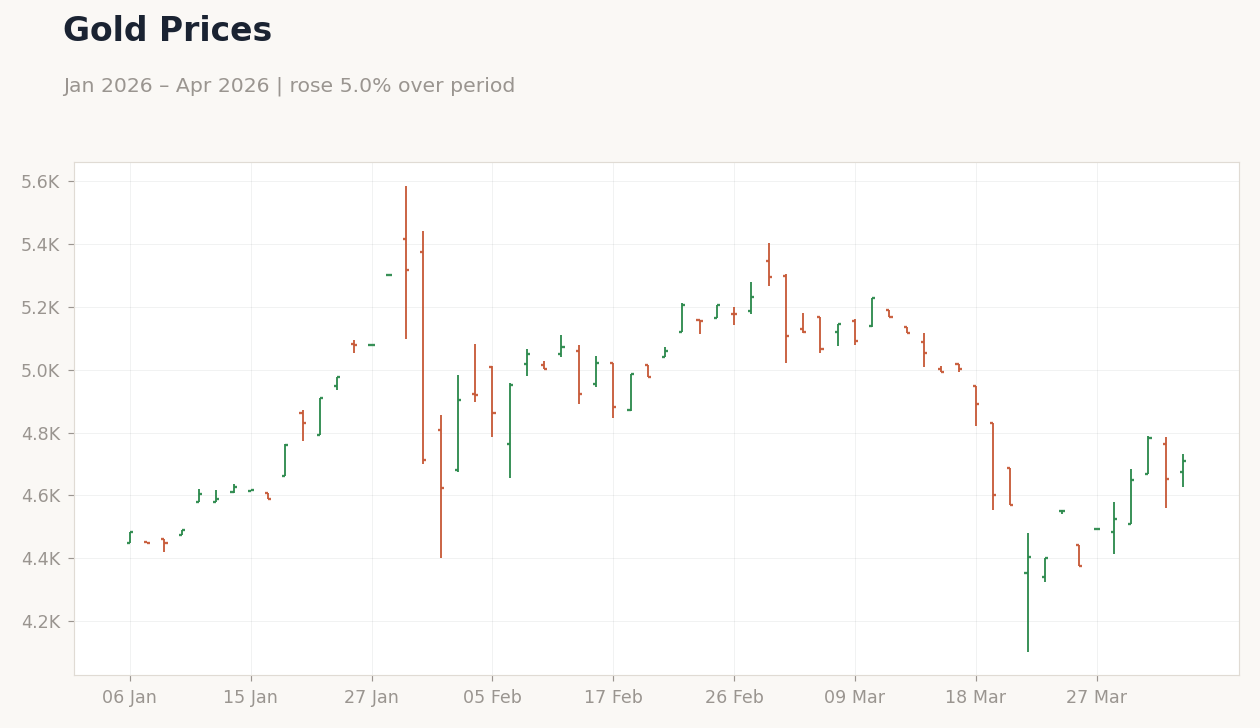
| Gold | 4,709.00 | +1.24% |
| Brent Crude | 108.80 | -0.21% |
| Bitcoin | 69,581.80 | +0.87% |
| Mexico Short-term Rate | 5.56% | -1.24% |
| Mexico Long-term Rate | 8.74% | -5.10% |
Prior Economic Events
| Data | Prior | Cons | Actual |
|---|---|---|---|
| No events available | |||
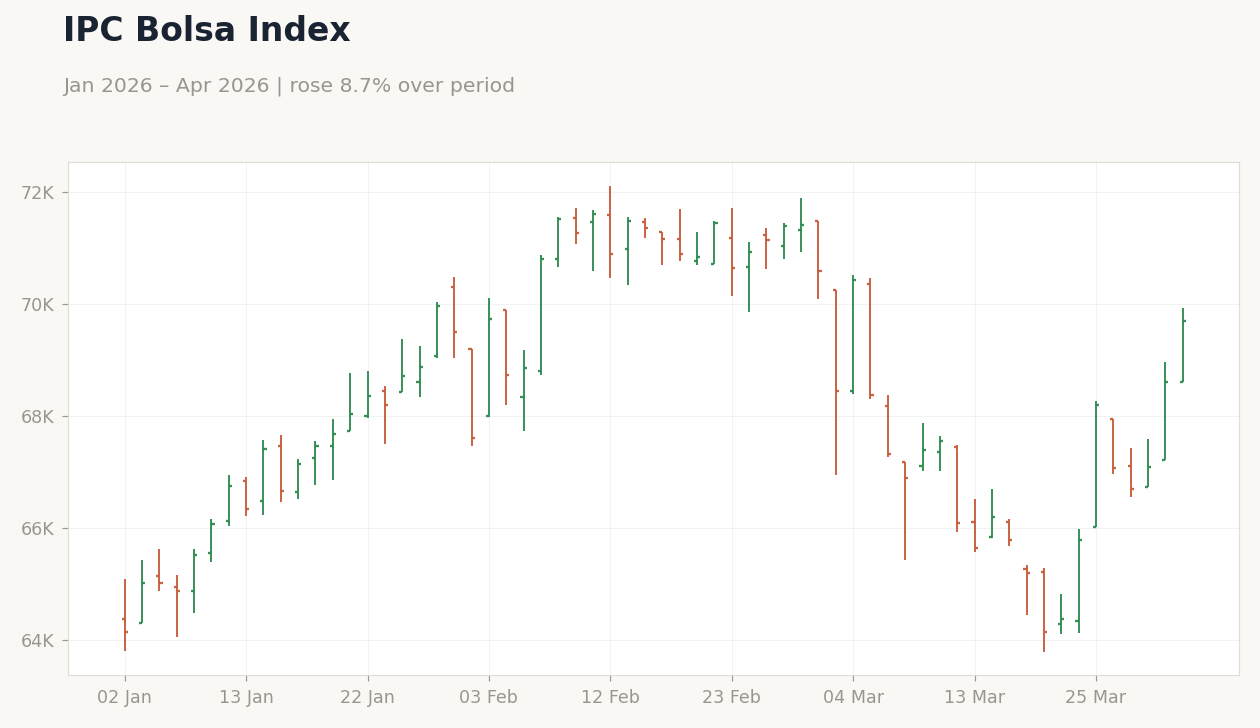 IPC Bolsa Index | Type: market_hloc | IPC Index: 6.97e+04 (2026-04-01) | Range: 6.413e+04–7.16e+04 | Trend(6pt): 6.414e+04,6.82e+04,7.135e+04,6.689e+04,6.861e+04,6.97e+04
Today's Economic Events
| Data | Prior | Cons | Time |
|---|---|---|---|
| Wednesday (2026-04-08) | |||
| Consumer Confidence Index | 44.40 | - | 08:00 |
| Thursday (2026-04-09) | |||
| Inflation Rate Month-over-Month | 0.50 | - | 08:00 |
| Inflation Rate Year-over-Year | 4.02 | - | 08:00 |
- Mexican stocks advanced on nearshoring optimism and rate declines, with IPC up 1.59%.
- Peso firmed versus USD and EUR, supported by trade and remittance flows.
- Commodities mixed: oil fell on inventories, metals rose on safe-haven demand.
Yesterday's Recap
Mexican markets displayed strength yesterday, with the IPC Bolsa index rising 1.59% to 69,702.02, fueled by nearshoring momentum in manufacturing linked to USMCA dynamics. The peso appreciated against key currencies, as USD/MXN declined 0.28% to 17.80 and EUR/MXN fell 0.27% to 20.55, aided by robust remittance inflows and positive trade war positioning. Bond yields dropped notably, with the Mexico short-term rate decreasing 1.24% to 5.56% and the long-term rate falling 5.10% to 8.74%, indicating expectations for Banxico policy easing amid easing inflation signals.
Commodity performance varied: WTI Crude decreased 1.21% to 110.19 and Brent Crude slipped 0.21% to 108.80 due to higher US inventories, while Silver increased 0.92% to 73.40 and Gold rose 1.24% to 4,709.00 on geopolitical safe-haven buying. Bitcoin advanced 0.87% to 69,581.80, reflecting broader risk appetite. No data releases occurred, but reports of Mexico benefiting from US-China trade shifts via supply chain rerouting supported exporter sentiment.
These trends highlighted Mexico's resilience in global trade, with stable peso movements.
The Day Ahead
Markets anticipate Mexican economic indicators this week, including the Consumer Confidence Index on April 8 at 08:00 ET, following a previous 44.4 reading, which may reflect consumer trends tied to nearshoring. On April 9, Inflation Rate Month-over-Month and Year-over-Year data release at 08:00 ET, with priors of 0.5% and 4.02%, key for assessing Banxico's inflation outlook. These could drive peso and IPC volatility if they show moderating pressures.
No events today or tomorrow, providing space to absorb global developments like US employment data. Focus remains on US-Mexico trade under USMCA, with potential nearshoring updates influencing stocks. Watch commodity prices, given Mexico's oil export exposure.
Other Economic Notes
Nearshoring continues to strengthen Mexico's economy, with reports positioning it as a beneficiary of US-China trade tensions through increased manufacturing shifts and USMCA advantages. Remittances provide consumption support, helping counter any tourism dips despite visa-free expansions boosting regional sectors like Brazil's. (cont...)