Mexico Macro Daily(Beta Mode)
IPC Dips, Peso Strengthens
Market Snapshot
| Asset | Level | Change |
|---|---|---|
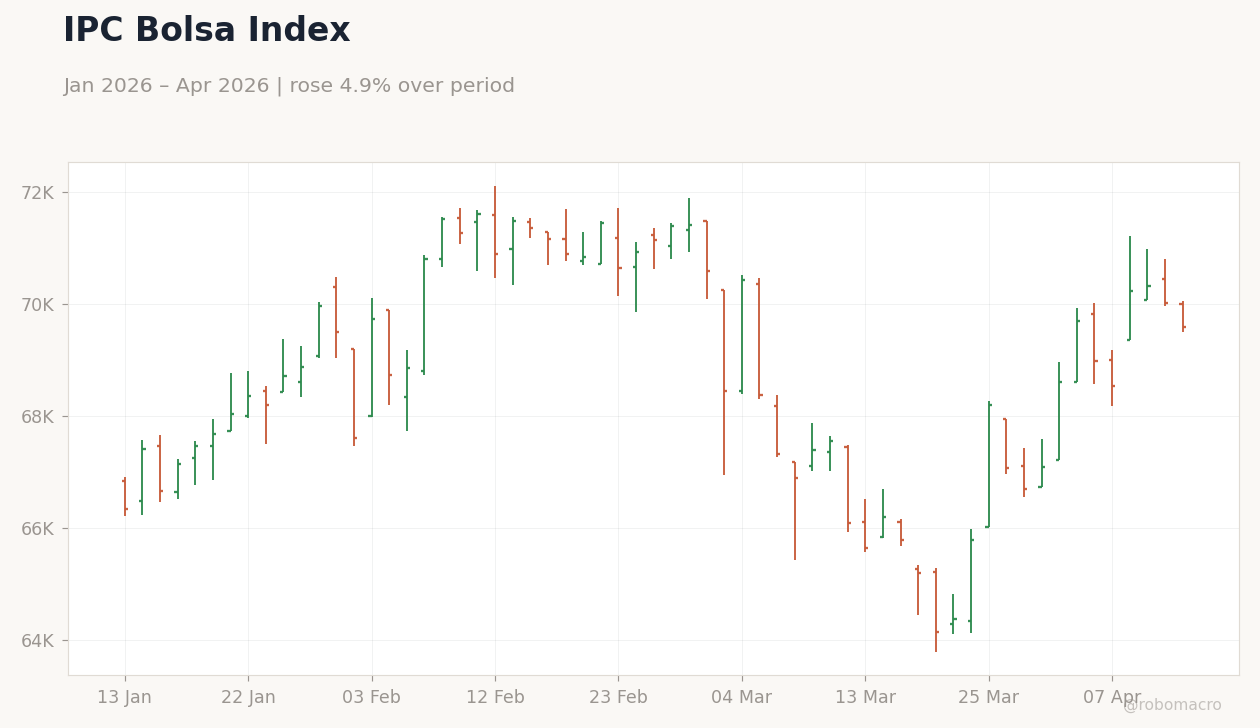
| IPC Bolsa | 69,573.22 | -0.64% |
| USD/MXN | 17.29 | -0.46% |
| EUR/MXN | 20.33 | +0.12% |
| WTI Crude | 97.67 | +1.14% |
| Silver | 75.66 | -0.87% |
| Gold | 4,762.90 | +0.02% |
| Brent Crude | 98.02 | +2.96% |
| Bitcoin | 72,373.86 | +2.29% |
| Mexico Short-term Rate | 5.56% | -1.24% |
| Mexico Long-term Rate | 8.74% | -5.10% |
Prior Economic Events
| Data | Prior | Cons | Actual |
|---|---|---|---|
| No events available | |||
 Mexico vs US 10Y Yields | Type: macro_line | Mexico 10Y %: 8.74 (2026-02-01) | Range: 6.54–10.43 | Trend(5pt): 6.54,9.1,9.39,9.85,8.74 | US 10Y %: 4.29 (2026-04-09) | Range: 1.19–4.98 | Trend(6pt): 1.64,2.96,4.78,4.67,4.33,4.29
Today's Economic Events
| Data | Prior | Cons | Time |
|---|---|---|---|
| No events available | |||
- Mexican equities softened with IPC Bolsa down 0.64% to 69,573.22 amid commodity swings.
- Peso firmed against dollar, USD/MXN dropping 0.46% to 17.29; EUR/MXN up 0.12% to 20.33.
- Bond yields fell notably, short-term rate at 5.56% (-1.24%), long-term at 8.74% (-5.10%).
Yesterday's Recap
Mexican markets ended mixed on April 12, as the IPC Bolsa index fell 0.64% to 69,573.22, weighed by global commodity fluctuations despite nearshoring support. The peso gained versus the dollar, with USD/MXN declining 0.46% to 17.29, aided by remittance strength and lower U.S. yields.
EUR/MXN increased slightly by 0.12% to 20.33, driven by euro gains from ECB cues. No significant data releases took place, shifting focus to external drivers like oil advances, with WTI Crude rising 1.14% to 97.67 and Brent Crude jumping 2.96% to 98.02. Precious metals varied, with gold up 0.02% to 4,762.90 and silver down 0.87% to 75.66.
Bond yields dropped, Mexico's short-term rate at 5.56% (-1.24%) and long-term at 8.74% (-5.10%), as markets eyed Banxico easing potential. Bitcoin advanced 2.29% to 72,373.86, contributing to selective risk appetite but failing to lift equities broadly.
The Day Ahead
April 13 features no planned Mexican economic releases or events, offering a subdued setting for absorbing global news. Traders may watch for impromptu Banxico statements or USMCA developments amid trade frictions. Broader Latin American data could sway peso moves.
Absent local drivers, U.S. yields and oil trends may spur volatility. Expect lighter trading unless geopolitical updates arise, with emphasis on upcoming inflation indicators.
Other Economic Notes
Nearshoring bolsters Mexican manufacturing through investments in electronics, aiding output amid global slowdown threats. Remittances provide peso stability and support consumption despite fiscal worries. Energy reforms draw investor caution, affecting Pemex debt and sentiment.
USMCA continuity offers trade reassurance, though tariff talks persist.
Global Macro News
Interest rate outlooks diverge globally, with Sweden's Riksbank eyeing potential hikes this year due to inflation, while India's RBI signals sustained low rates per Governor Malhotra. (cont...)