Mexico Macro Daily(Beta Mode)
IPC Gains as Rates Fall
Market Snapshot
| Asset | Level | Change |
|---|---|---|
| IPC Bolsa | 69,825.94 | +1.06% |
| USD/MXN | 17.34 | +0.53% |
| EUR/MXN | 20.40 | +0.38% |
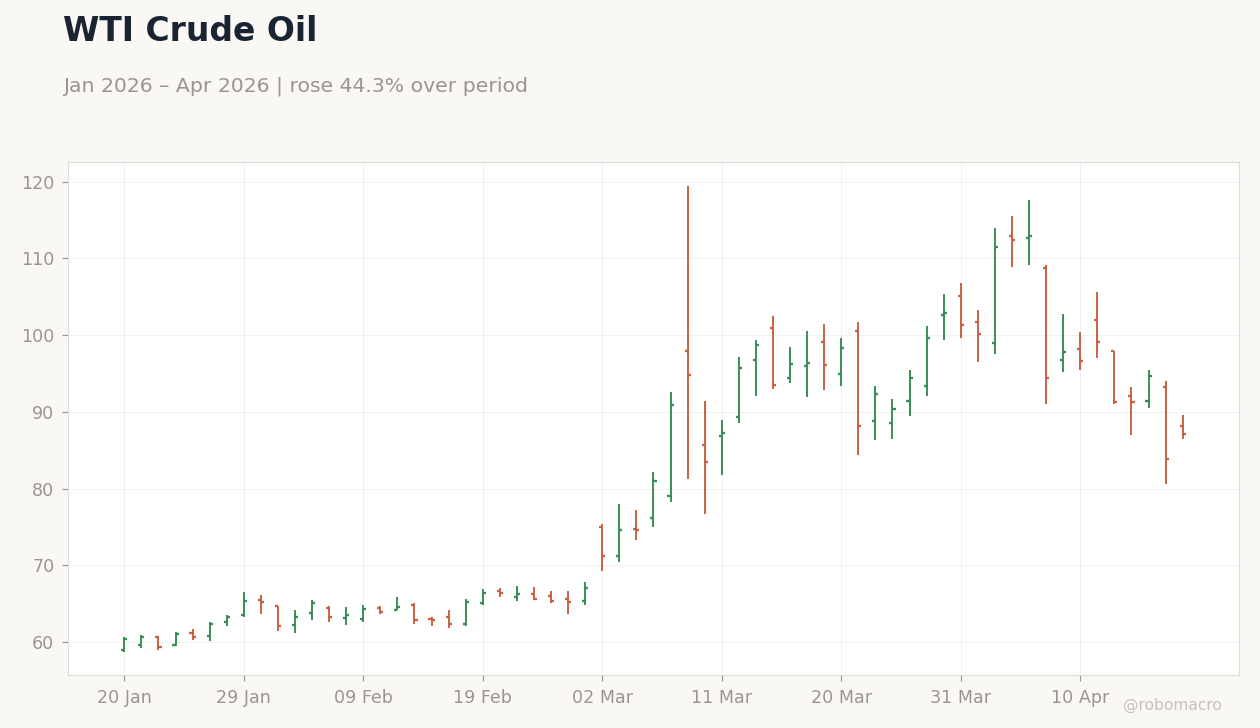
| WTI Crude | 87.48 | +4.33% |
| Silver | 79.43 | -2.82% |
| Gold | 4,811.30 | -0.95% |
| Brent Crude | 94.96 | +5.07% |
| Bitcoin | 75,165.27 | +1.77% |
| Mexico Short-term Rate | 5.52% | -0.72% |
| Mexico Long-term Rate | 8.74% | -5.10% |
Prior Economic Events
| Data | Prior | Cons | Actual |
|---|---|---|---|
| No events available | |||
 Mexico Short-Term Interest Rates | Type: macro_line | Short-Term Rate (%): 5.52 (2026-03-01) | Range: 3.05–8.79 | Trend(6pt): 3.08,5.18,8.45,8.1,5.63,5.52
Today's Economic Events
| Data | Prior | Cons | Time |
|---|---|---|---|
| No events available | |||
- IPC Bolsa rose 1.06% amid declining long-term rates, while peso weakened against USD and EUR.
- Oil prices surged, supporting Mexico's energy exports, as precious metals and gold declined.
- Quiet day with no data releases; focus on US-Mexico trade ties and global rate shifts.
Yesterday's Recap
Mexican markets displayed mixed results on April 19, with the IPC Bolsa index advancing 1.06% to 69,825.94, buoyed by positive sector momentum in a risk-on environment. The peso softened slightly, with USD/MXN climbing 0.53% to 17.34 and EUR/MXN up 0.38% to 20.40, driven by broader dollar resilience. Mexico's short-term rate decreased 0.72% to 5.52%, and the long-term rate fell 5.10% to 8.74%, indicating shifting expectations for monetary easing.
Commodities impacted trading, as WTI Crude rose 4.33% to 87.48 and Brent Crude gained 5.07% to 94.96, enhancing prospects for Pemex-linked revenues. Silver dropped 2.82% to 79.43, and gold eased 0.95% to 4,811.30, weighing on mining equities. Bitcoin increased 1.77% to 75,165.27, reflecting inflows into digital assets amid nearshoring activity.
No economic indicators were released, directing attention to internal market drivers and international headlines.
The Day Ahead
April 20 offers a subdued schedule with no planned Mexican economic data or events, providing space for markets to process recent global news. Investors will watch for any impromptu Banxico updates, given its emphasis on incoming data. US-Mexico trade discussions may draw focus, with analyses pointing to strengthened ties under USMCA frameworks.
Regional diplomacy, such as Mexico's involvement in Cuba's humanitarian talks alongside Spain and Brazil, could shape broader sentiment. Peso movements may hinge on oil price momentum, where WTI and Brent advances could attract energy-related capital. Anticipate minimal volatility absent unforeseen global disruptions.
Other Economic Notes
Foreign investment in Mexico's retail sector is expanding, exemplified by lululemon's e-commerce rollout and planned store growth, which enhance consumer engagement and nearshoring appeal. Fiscal practices are adapting to a stricter tax landscape, with firms like Santamarina + Steta bolstering expertise through key hires. Diplomatic relations remain stable, as President Sheinbaum downplayed any crisis with Spain over historical issues.
(cont...)