Mexico Macro Daily(Beta Mode)
Peso Weakens as IPC Edges Higher
Market Snapshot
| Asset | Level | Change |
|---|---|---|
| IPC Bolsa | 68,555.63 | +0.22% |
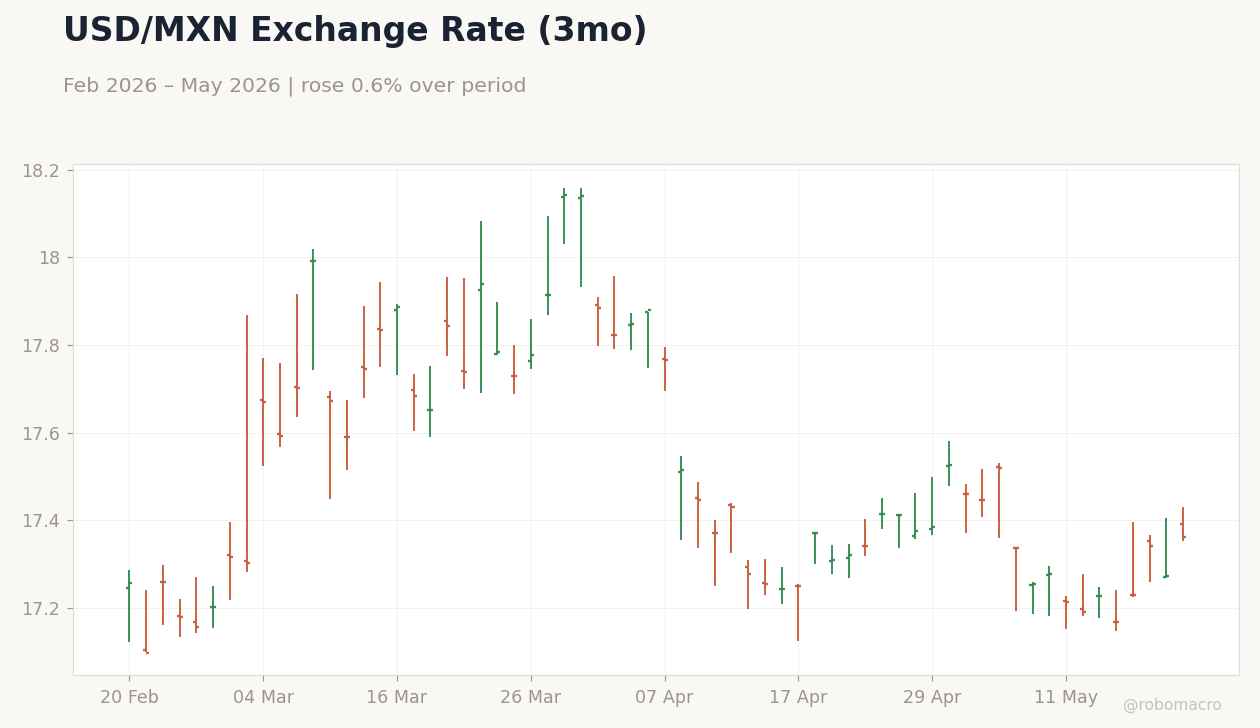
| USD/MXN | 17.37 | +0.57% |
| EUR/MXN | 20.15 | +0.12% |
| WTI Crude | 102.62 | -4.78% |
| Silver | 75.97 | +1.53% |
| Gold | 4,494.20 | -0.27% |
| Brent Crude | 109.24 | -1.83% |
| Bitcoin | 77,310.32 | +0.73% |
| Mexico Short-term Rate | 5.43% | -1.63% |
| Mexico Long-term Rate | 8.88% | +1.60% |
Prior Economic Events
| Data | Prior | Cons | Actual |
|---|---|---|---|
| No events available | |||
 Mexico 10Y Government Bond Yield | Type: macro_line | %: 8.88 (2026-04-01) | Range: 6.54–10.43 | Trend(5pt): 6.54,9.1,9.39,9.85,8.88
Today's Economic Events
| Data | Prior | Cons | Time |
|---|---|---|---|
| No events available | |||
- IPC Bolsa rose 0.22% to 68,555.63 on selective equity buying.
- USD/MXN increased 0.57% to 17.37 amid mild dollar strength.
- Mexico short-term rate stayed at 5.43% while long-term yields climbed.
Yesterday's Recap
Mexican markets delivered a quiet session with equities posting modest gains while the peso softened against the dollar. The IPC Bolsa closed at 68,555.63, up 0.22%, as investors favored nearshoring-exposed names amid steady foreign inflows. USD/MXN advanced to 17.37, a 0.57% rise that reflected position adjustments ahead of global data.
WTI Crude dropped 4.78% to 102.62, weighing on energy-related Mexican assets, while silver advanced 1.53% to 75.97 and offered partial offset. The short-term policy rate held at 5.43% and long-term yields rose to 8.88%, producing a steeper curve. No domestic data releases occurred, so price action stemmed mainly from cross-border flows and commodity moves.
Bitcoin added 0.73% to 77,310.32, providing limited spillover into local risk sentiment.
The Day Ahead
With the calendar empty of scheduled releases, markets will focus on external signals that shape capital flows into Mexico. Traders are monitoring US inflation prints and Fed commentary for clues on the dollar’s near-term direction. Equity desks will track IPC constituent updates tied to USMCA supply chains.
Commodity volatility, especially in oil and precious metals, remains a key driver for peso and equity positioning. Participants also watch any fresh developments in US-Mexico trade consultations that could affect nearshoring momentum. Overall sentiment stays data-dependent and sensitive to global rate differentials.
Other Economic Notes
Private-label strategies are becoming central to Mexican retail growth as chains expand own-brand offerings to defend margins. Remittances continue to underpin household consumption and the current account despite limited new figures yesterday. Nearshoring investment persists in northern states, with auto-supplier expansions reinforcing manufacturing output.
Energy policy maintains a balance between state priority and private renewables participation, supporting long-term supply stability. These structural factors keep the economy resilient even as monetary policy remains on hold.