Mexico Macro Daily(Beta Mode)
Mexico Trade Surplus Beats Forecasts
Market Snapshot
| Asset | Level | Change |
|---|---|---|
| IPC Bolsa | 68,261.17 | -0.11% |
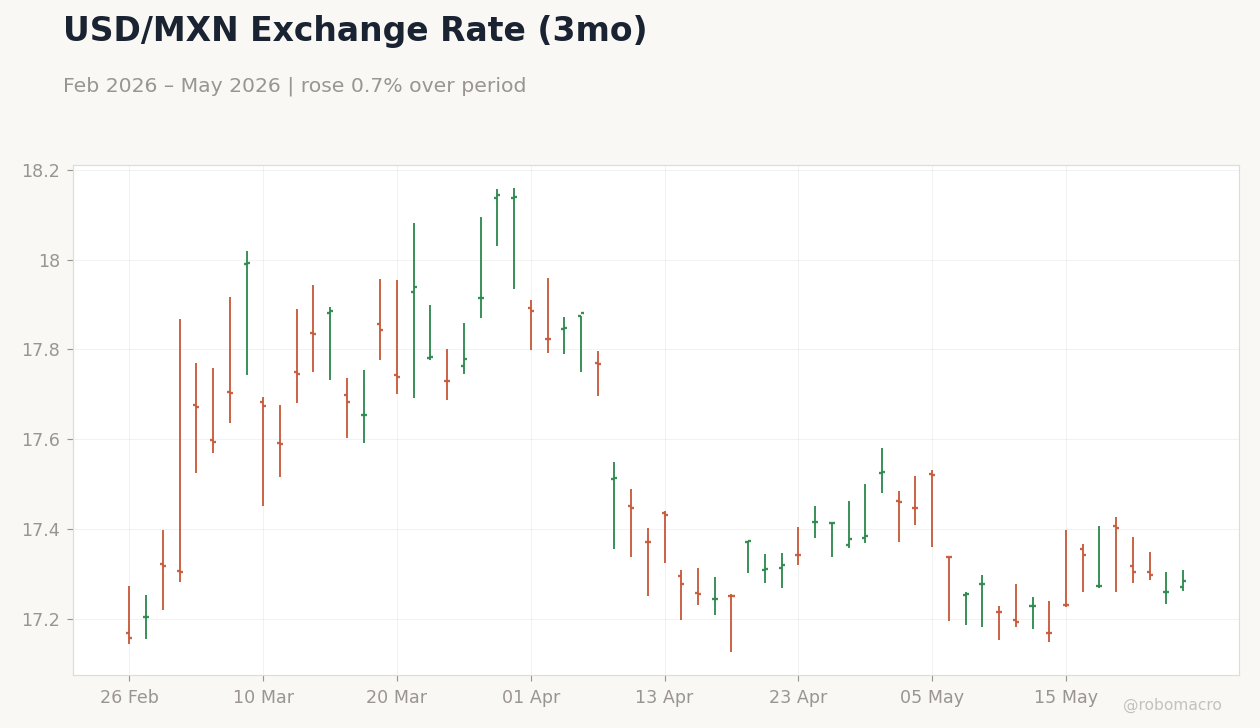
| USD/MXN | 17.28 | +0.11% |
| EUR/MXN | 20.10 | +0.05% |
| WTI Crude | 92.66 | -4.08% |
| Silver | 76.46 | +0.75% |
| Gold | 4,521.40 | +0.01% |
| Brent Crude | 96.03 | -7.25% |
| Bitcoin | 77,022.17 | -0.33% |
| Mexico Short-term Rate | 5.43% | -1.63% |
| Mexico Long-term Rate | 8.88% | +1.60% |
Prior Economic Events
| Data | Prior | Cons | Actual |
|---|---|---|---|
| Trade Balance | 5,932m | 1,410m | 4,520m |
 Mexico Short-term Policy Rate | Type: macro_line | % per annum: 5.43 (2026-04-01) | Range: 3.05–8.79 | Trend(6pt): 3.05,5.5,8.53,8.05,5.56,5.43
Today's Economic Events
| Data | Prior | Cons | Time |
|---|---|---|---|
| No events available | |||
- April trade surplus hit $4.52 billion, beating $1.41 billion consensus.
- IPC Bolsa fell 0.11% to 68,261.17; USD/MXN rose 0.11% to 17.28.
- Short-term rate steady at 5.43%; long-term rate rose 1.60% to 8.88%.
Yesterday's Recap
Mexico reported a sharply wider April trade surplus of $4.52 billion versus the $1.41 billion consensus, driven by record exports. The outcome narrowed the prior month’s $5.93 billion surplus yet still signaled resilient external demand. IPC Bolsa closed 0.11% lower at 68,261.17 amid modest profit-taking.
USD/MXN edged 0.11% higher to 17.28 while EUR/MXN gained 0.05% to 20.10. WTI crude fell 4.08% to $92.66 and Brent dropped 7.25% to $96.03, weighing on energy-linked assets. Mexico’s short-term rate remained at 5.43% while the long-term rate rose to 8.88%.
Markets showed limited reaction to the data print, with peso volatility contained.
The Day Ahead
No Mexican data releases or central-bank events are scheduled for the next two sessions. Attention will turn to external drivers including U.S. growth prints and global oil dynamics.
The absence of domestic indicators leaves USD/MXN and Mbono yields sensitive to Fed rhetoric and commodity swings. Traders will monitor any follow-through from the Mexico-EU interim trade agreement on agricultural quotas. Thin calendars typically amplify moves in the peso on external headlines.
Other Economic Notes
The Mexico-EU interim deal locks in agricultural liberalisation with cheese quotas and meat phase-outs plus 568 protected foods. Nearshoring momentum persists as new auto-component investments target northern states. Record April exports underscore supply-chain integration under USMCA despite stalled energy-reform talks in Congress.
Remittances continue to provide a steady current-account buffer. Broader inflation trends remain the key anchor for Banxico’s gradual policy path.
Global Macro News
Oil prices retreated sharply after OPEC+ signals and softer Chinese PMI data, pressuring Mexico’s energy revenues. The ECB’s Isabel Schnabel called for a June hike even if Middle East tensions ease, supporting higher global yields. South Africa’s GDP beat expectations while several Asian central banks raised rates to defend currencies.
<i>↓ p.2</i>