Mexico Macro Daily(Beta Mode)
Peso Hits Six-Week High Ahead of Banxico
Market Snapshot
| Asset | Level | Change |
|---|---|---|
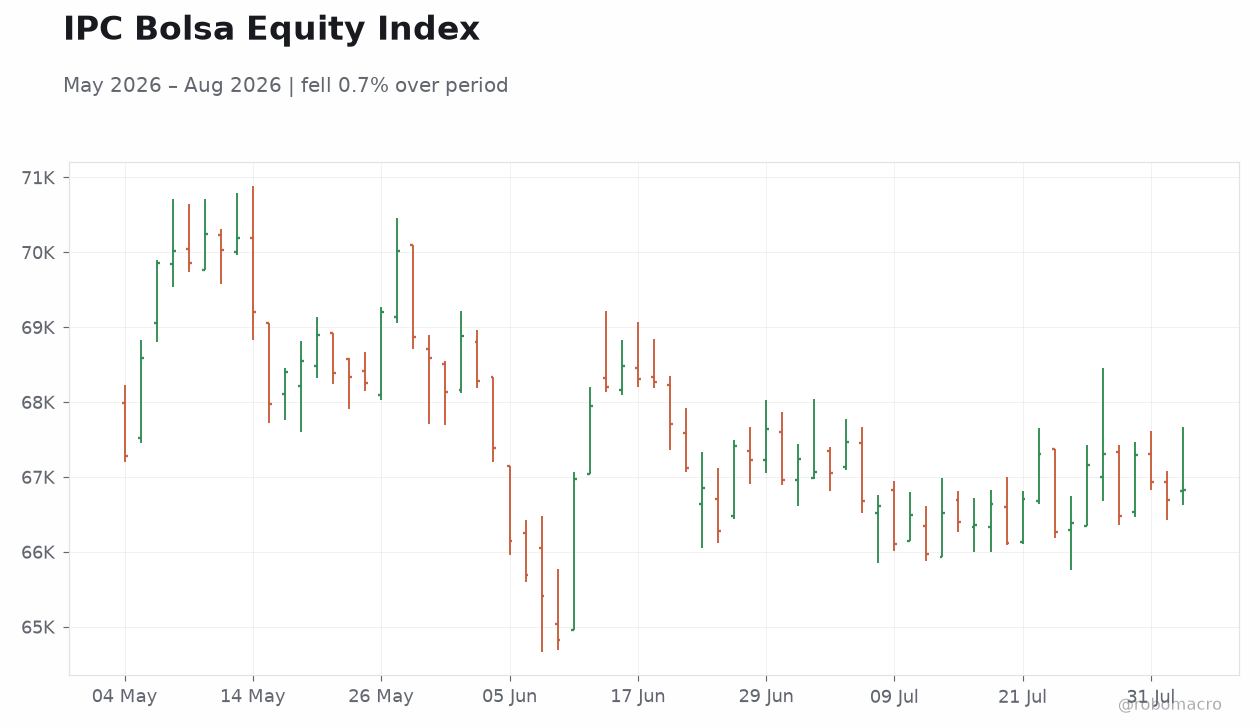
| IPC Bolsa | 66,833.16 | +0.20% |
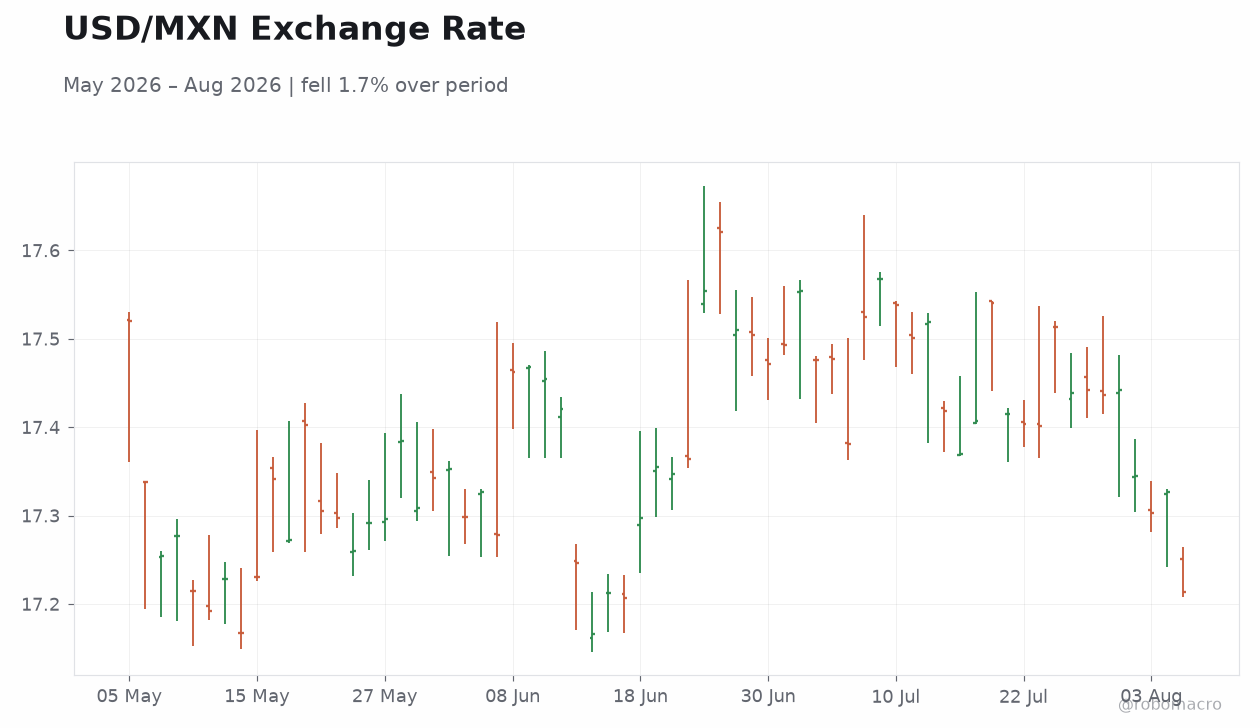
| USD/MXN | 17.21 | -0.66% |
| EUR/MXN | 19.89 | -0.23% |
| WTI Crude | 76.16 | +0.51% |
| Silver | 62.19 | +3.55% |
| Gold | 4,246.90 | +3.70% |
| Brent Crude | 80.24 | +1.11% |
| Bitcoin | 64,017.53 | -0.06% |
| Mexico Short-term Rate | 5.19% | -3.17% |
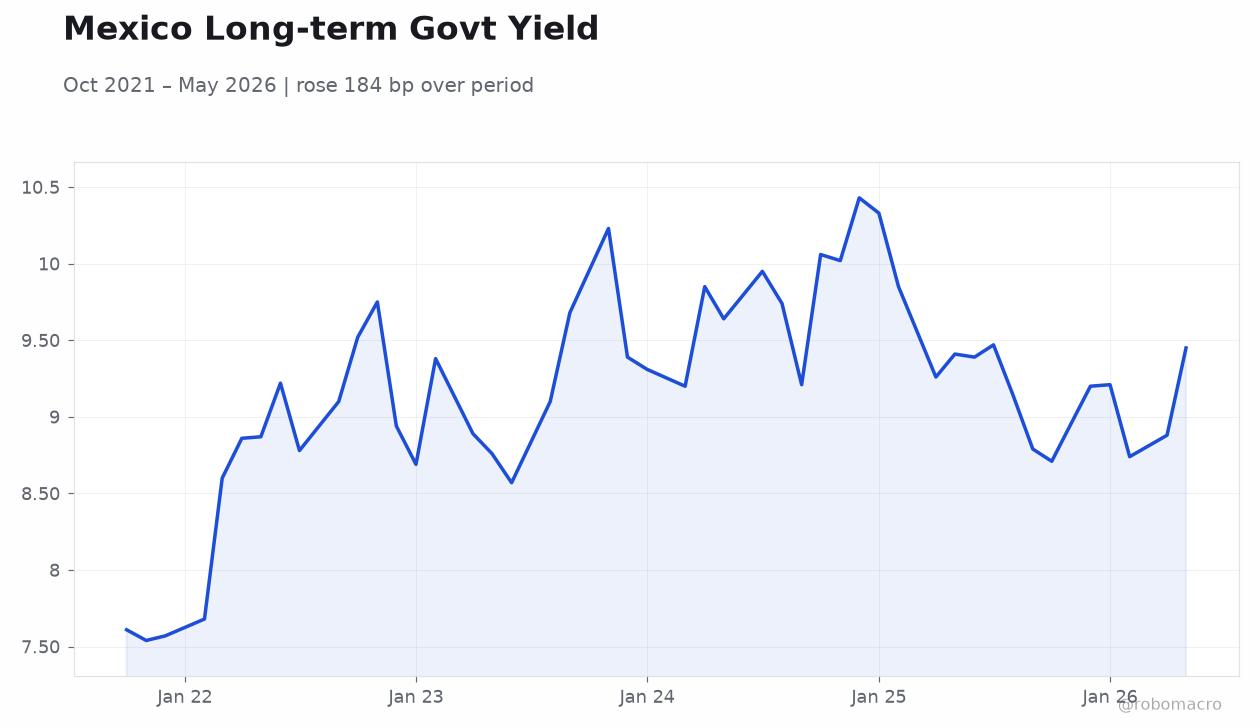
| Mexico Long-term Rate | 9.45% | +6.42% |
Prior Economic Events
| Data | Prior | Cons | Actual |
|---|---|---|---|
| Business Confidence | 48 | - | 48 |
| Consumer Confidence Index | 43.80 | - | 45 |
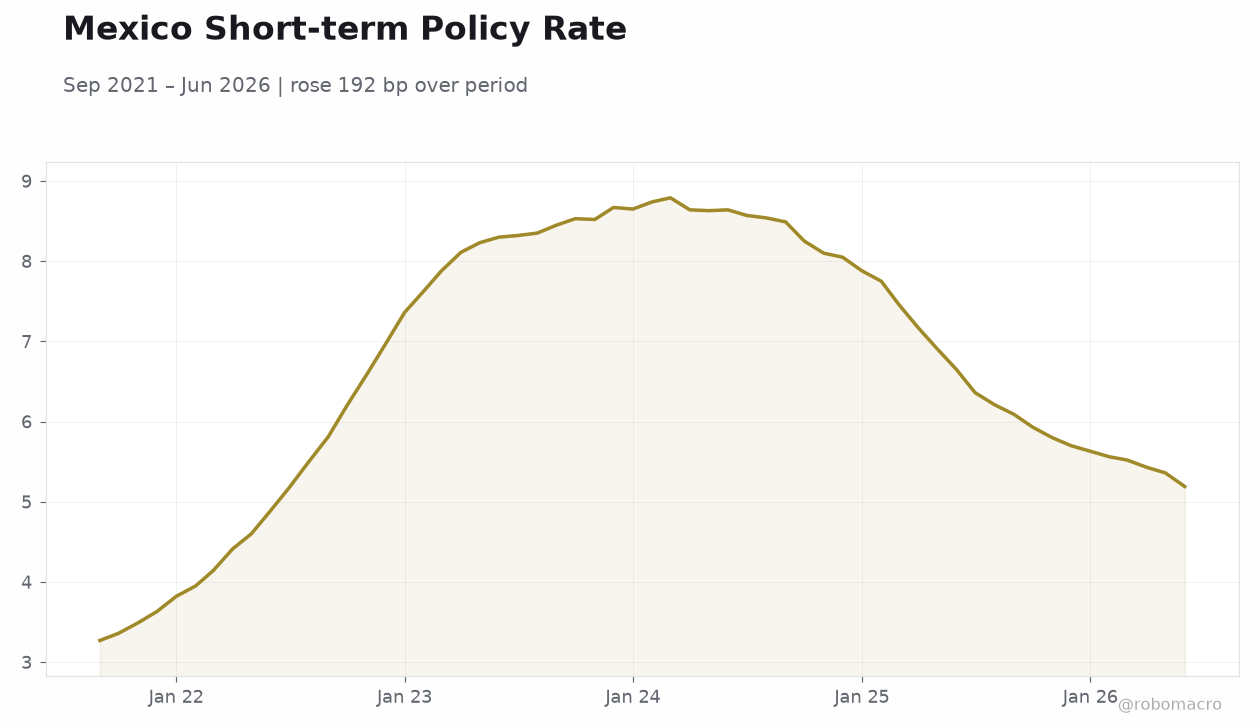 Mexico Short-term Policy Rate | Type: macro_line | %: 5.19 (2026-06-01) | Range: 3.27–8.79 | Trend(6pt): 3.27,6.58,8.65,7.46,5.36,5.19
Today's Economic Events
| Data | Prior | Cons | Time |
|---|---|---|---|
| Thursday (2026-08-06) | |||
| Central Bank Interest Rate Decision | 6.50 | 6.50 | 11:00 |
| Friday (2026-08-07) | |||
| Inflation Rate Month-over-Month | -0.27 | 0.03 | 04:00 |
| Inflation Rate Year-over-Year | 3.37 | 3.12 | 04:00 |
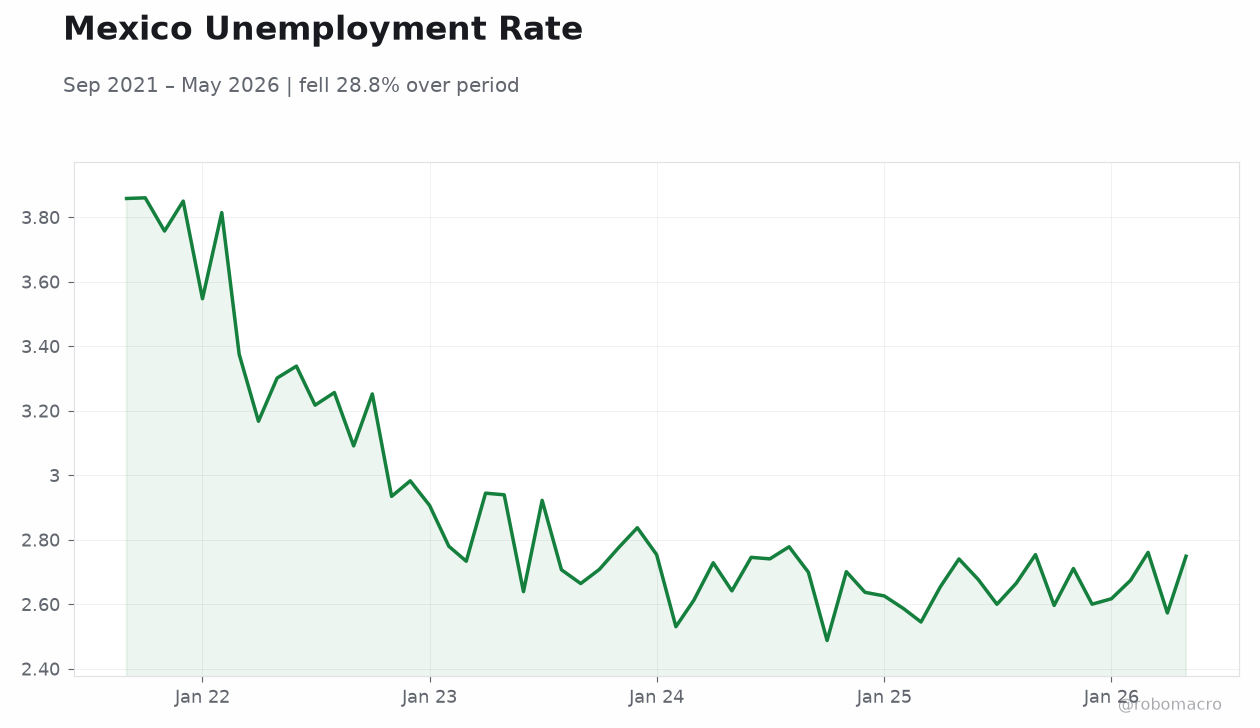
- Consumer confidence rises to 45 while business confidence holds steady at 48.
- USD/MXN falls 0.66% to 17.21 on Hormuz reopening speculation and stronger risk appetite.
- IPC Bolsa gains 0.20% as markets price limited volatility ahead of the Banxico decision.
Yesterday's Recap
Mexico’s consumer confidence index climbed to 45 from 43.8, signaling modest improvement in household sentiment, while business confidence remained unchanged at 48. The Mexican peso strengthened sharply against the dollar, closing at 17.21 after a 0.66% gain driven by speculation that US-Iran talks could reopen the Strait of Hormuz and ease global energy prices. Equity markets followed the currency higher, with the IPC Bolsa advancing 0.20% to 66,833.16 amid improved carry-trade flows into emerging-market assets.
Short-term Mexican rates eased 3.17% to 5.19%, while long-term yields rose 6.42% to 9.45%, reflecting a modest steepening of the curve. Oil prices supported the peso, with WTI crude up 0.51% at 76.16 and Brent gaining 1.11% to 80.24. Broader risk appetite also lifted precious metals, with gold surging 3.70% and silver rising 3.55%.
The peso’s outperformance versus the dollar occurred even as the greenback showed broad strength, underscoring Mexico-specific drivers ahead of the central bank meeting.
The Day Ahead
Banxico is scheduled to announce its policy rate decision at 11:00 ET on 6 August, with consensus pointing to a hold at 6.5%. Markets will scrutinize the statement for any shift in forward guidance given the latest inflation print of 3.37% year-over-year. On 7 August, Mexico will release inflation data for July, including month-over-month and year-over-year readings, with consensus forecasts at 0.03% and 3.12% respectively.
Traders will also monitor any updates on USMCA implementation and nearshoring flows that could influence peso volatility. The combination of the rate decision and inflation release is expected to set the tone for Mexican fixed-income and FX markets through the end of the week.
Other Economic Notes
Nearshoring momentum continues to reshape Mexico’s industrial landscape, with cross-border freight demand rising as US firms diversify supply chains away from Asia. USMCA compliance requirements are prompting consolidation in sourcing networks, particularly in automotive and electronics sectors that rely on integrated North American production. <i>↓ p.2</i>