Mexico Macro Daily(Beta Mode)
Peso Slips on US-Canada Trade Pressure
Market Snapshot
| Asset | Level | Change |
|---|---|---|
| IPC Bolsa | 63,999.26 | +0.10% |
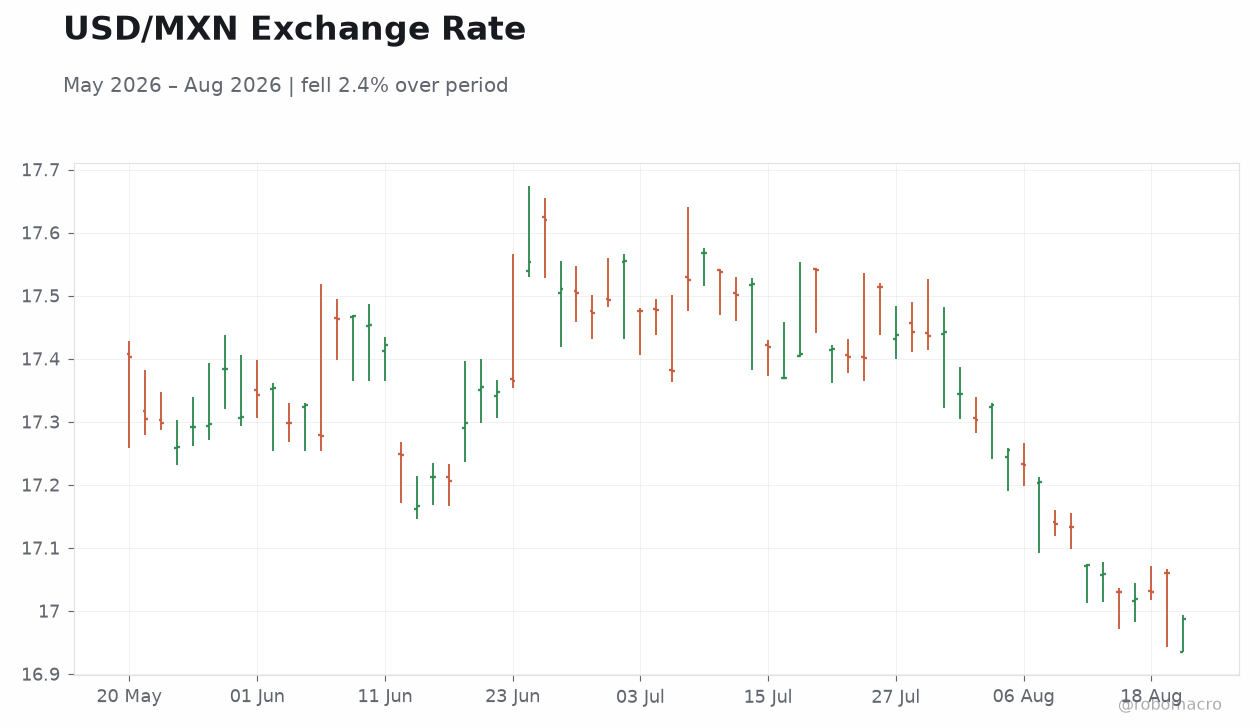
| USD/MXN | 17.06 | +0.18% |
| EUR/MXN | 19.75 | +0.12% |
| WTI Crude | 87.21 | +1.61% |
| Silver | 66.47 | +1.13% |
| Gold | 4,526.00 | +0.82% |
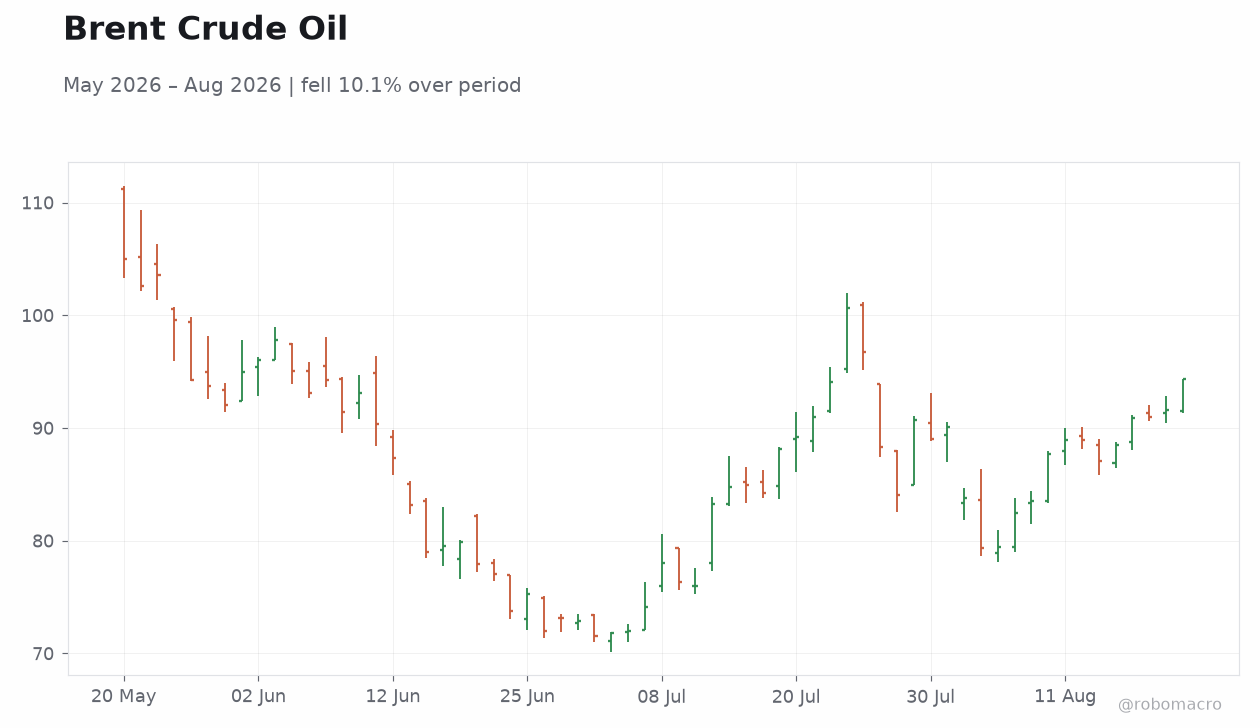
| Brent Crude | 94.35 | +2.98% |
| Bitcoin | 71,868.15 | +3.76% |
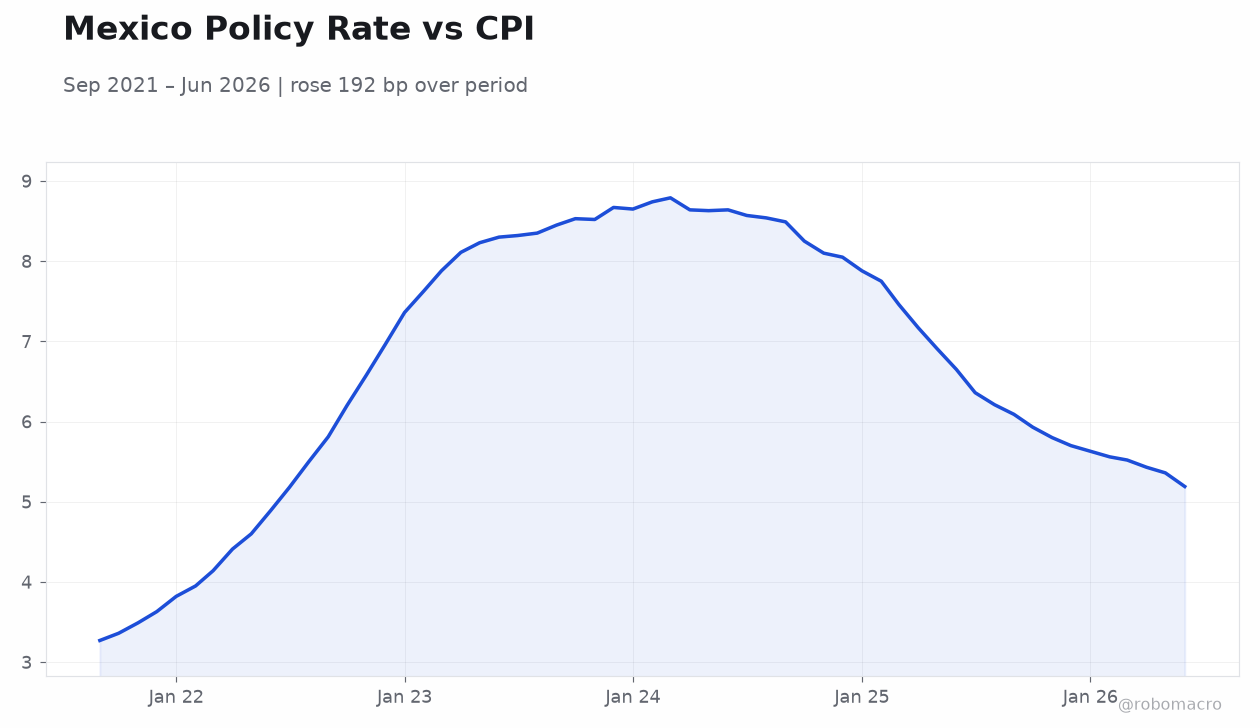
| Mexico Short-term Rate | 5.19% | -3.17% |
| Mexico Long-term Rate | 9.45% | +6.42% |
Prior Economic Events
| Data | Prior | Cons | Actual |
|---|---|---|---|
| No events available | |||
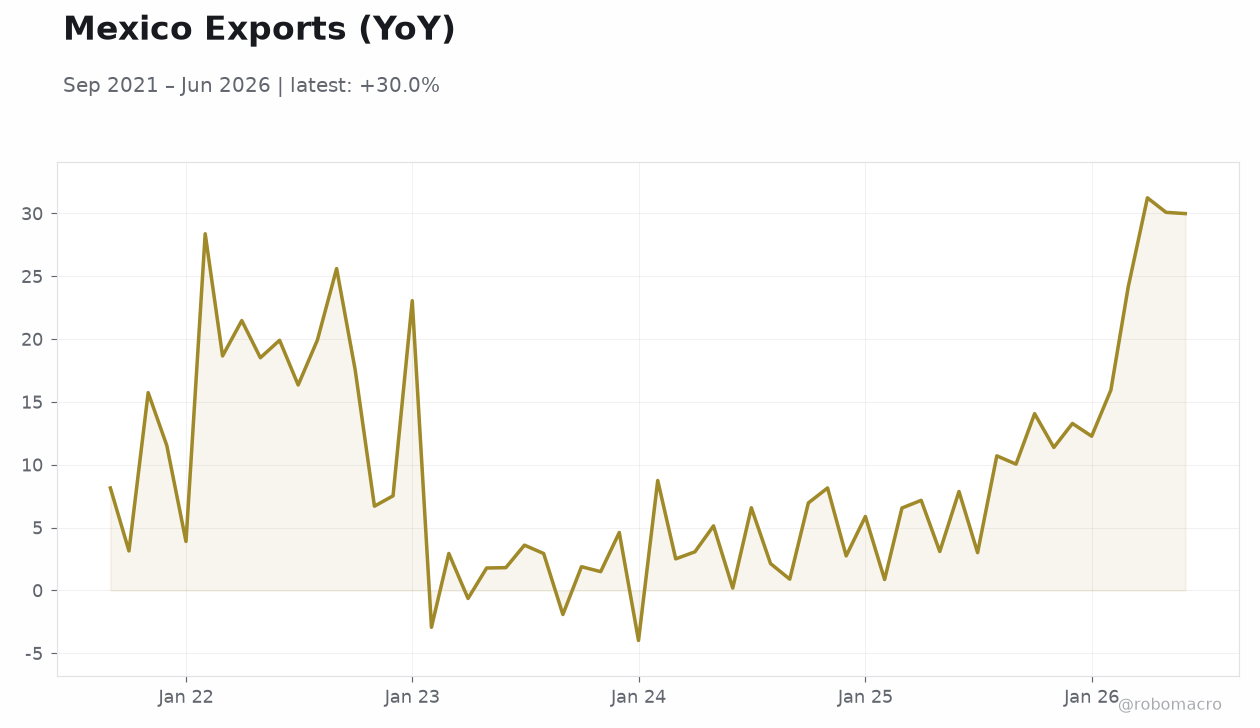 Mexico Exports (YoY) | Type: macro_line | Exports YoY %: 29.99 (2026-06-01) | Range: -3.983–31.24 | Trend(6pt): 8.153,6.704,-3.983,6.56,30.09,29.99
Today's Economic Events
| Data | Prior | Cons | Time |
|---|---|---|---|
| No events available | |||
- USD/MXN rose 0.18% to 17.06 as US-Canada trade draft raises USMCA concerns for Mexico.
- IPC Bolsa gained 0.10% to 63,999.26 while long-term rates jumped 6.42% to 9.45%.
- Banxico policy rate holds at 6.50% with CPI at 3.12% y/y, keeping easing expectations limited.
Yesterday's Recap
Mexico markets saw modest equity gains alongside peso depreciation amid fresh US-Canada trade developments. IPC Bolsa closed at 63,999.26, up 0.10%, supported by nearshoring industrials despite limited local catalysts. USD/MXN advanced 0.18% to 17.06 while EUR/MXN increased 0.12% to 19.75, reflecting broader dollar strength.
The Mexico long-term rate surged 6.42% to 9.45%, steepening the curve, as the short-term rate fell 3.17% to 5.19%. WTI crude rose 1.61% to 87.21 and Brent gained 2.98% to 94.35, lifting energy-linked sentiment. Silver climbed 1.13% to 66.47 and gold advanced 0.82% to 4,526.00 on safe-haven flows, while Bitcoin jumped 3.76% to 71,868.15.
No economic releases occurred, leaving market moves driven by external trade signals and commodity flows. The peso underperformed regional peers on uncertainty over matching US-Canada terms.
The Day Ahead
No Mexico data releases or Banxico events are scheduled. Attention will center on external trade negotiations and any follow-through from the US-Canada draft that could affect USMCA automotive rules. Market participants will monitor peso volatility and Mbono yields for signs of shifting rate expectations.
Nearshoring announcements from Chihuahua suppliers may provide incremental support to equities. Global commodity moves, particularly in crude and metals, will influence MXN crosses given Mexico’s export linkages.
Other Economic Notes
Mexico’s apparel imports from China fell 41%, highlighting deeper textile supply-chain shifts toward nearshoring. Two semiconductor suppliers expanded operations in Chihuahua, reinforcing industrial momentum under USMCA. Remittances continued to provide steady external support, while energy reform discussions in Congress remained stalled with Pemex output guidance unchanged.
These developments underscore resilient manufacturing ties with the US even as bilateral trade talks introduce fresh uncertainty.