Nordics Macro Daily(Beta Mode)
Nordic Stocks Dip, Brent Surges
Market Snapshot
| Asset | Level | Change |
|---|---|---|
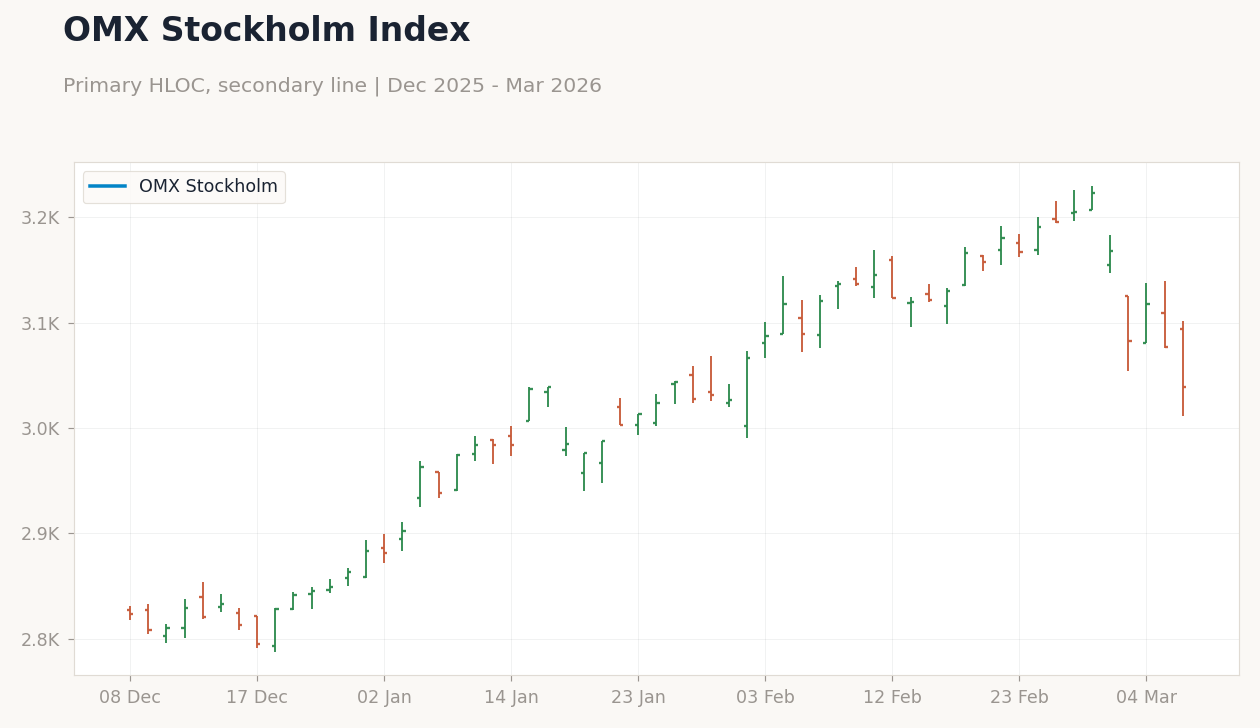
| OMX Stockholm 30 | 3,038.55 | -1.26% |
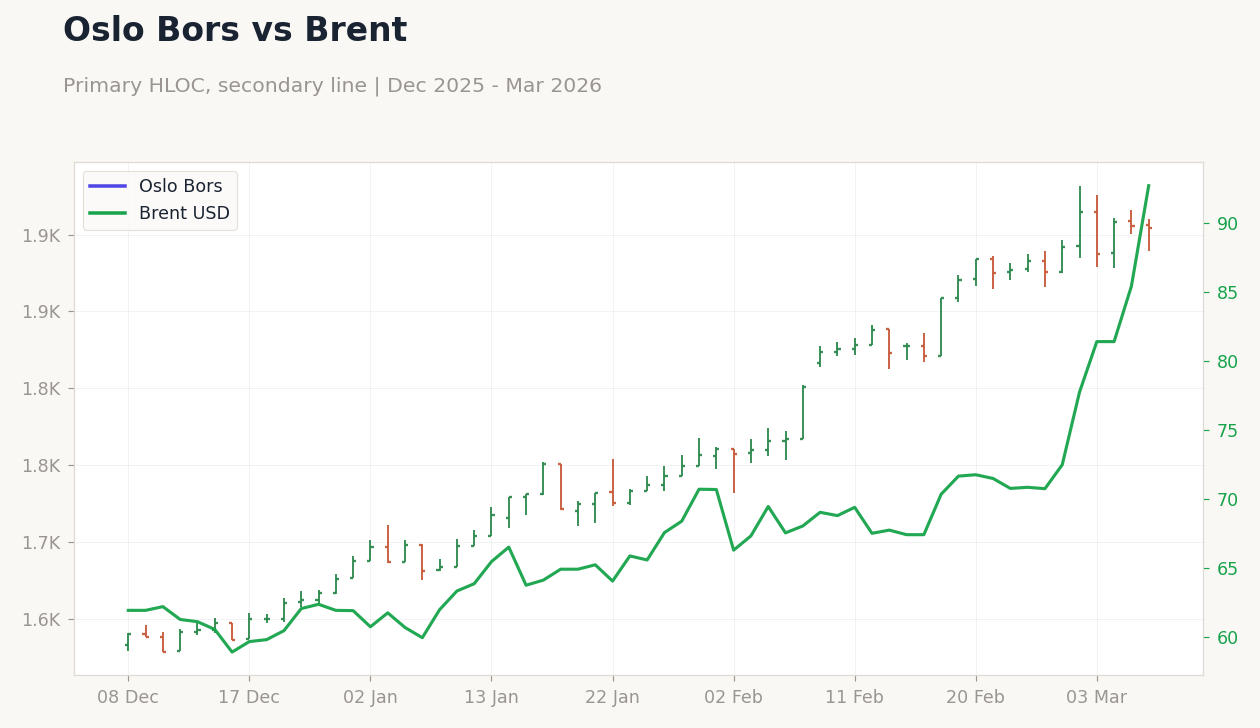
| Oslo Bors | 1,904.18 | -0.08% |
| OMX Copenhagen 25 | 1,693.41 | -1.55% |
| OMX Helsinki 25 | 5,945.02 | -0.52% |
| USD/SEK | 9.22 | +0.55% |
| USD/NOK | 9.64 | -0.30% |
| EUR/SEK | 10.69 | -0.15% |
| EUR/NOK | 11.22 | +0.21% |
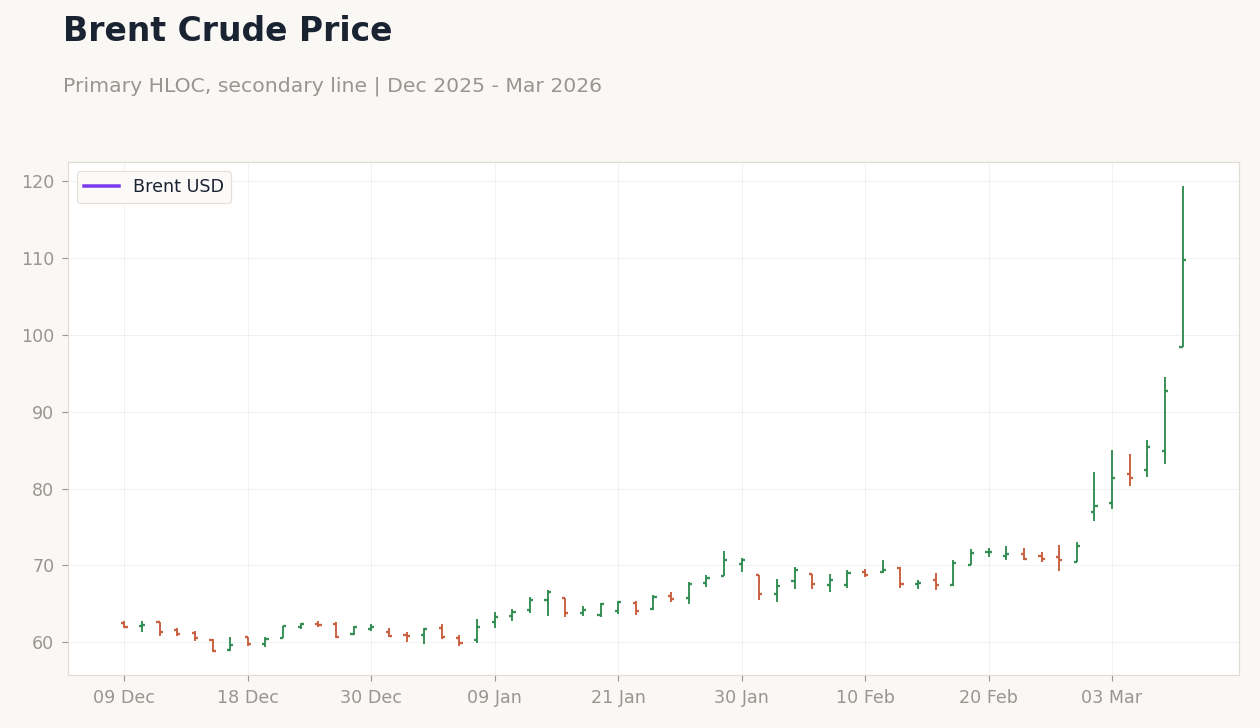
| Brent Crude | 107.98 | +16.50% |
| Gold | 5,113.10 | -0.64% |
| Bitcoin | 67,334.40 | +2.07% |
| Sweden 10Y Govt Yield | 2.80% | -0.75% |
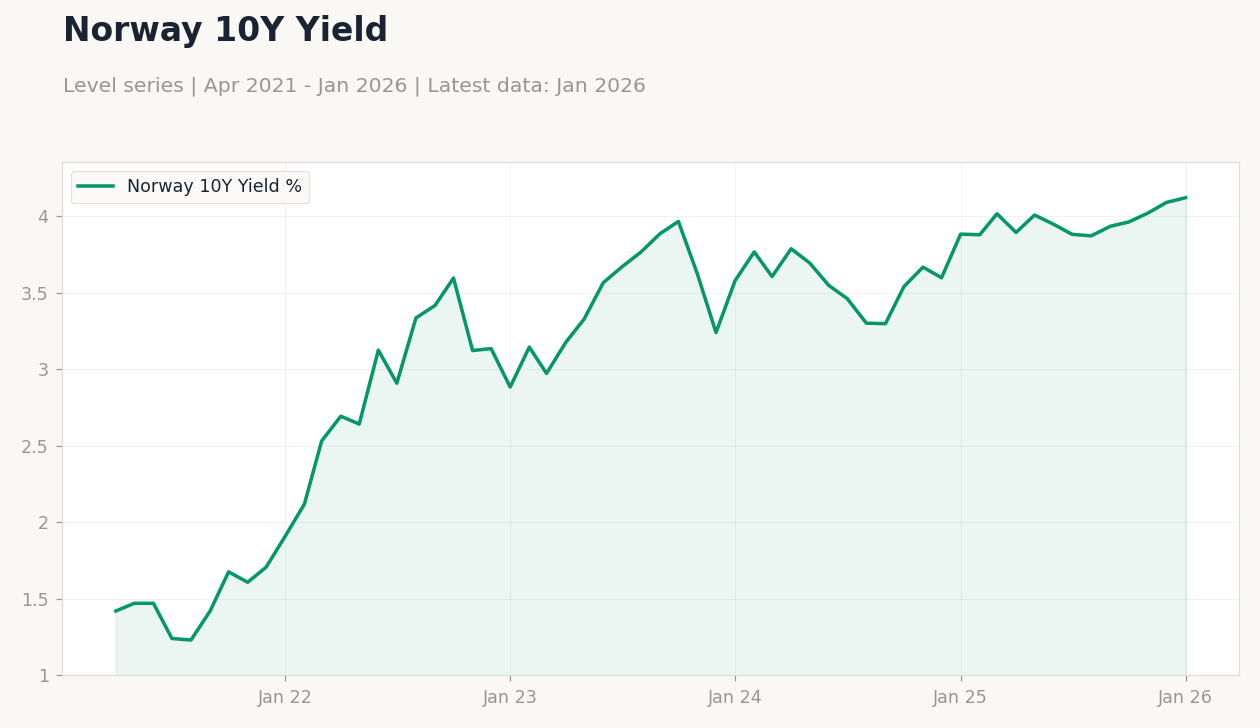
| Norway 10Y Govt Yield | 4.12% | +0.75% |
Prior Economic Events
| Data | Prior | Cons | Actual |
|---|---|---|---|
| No events available | |||
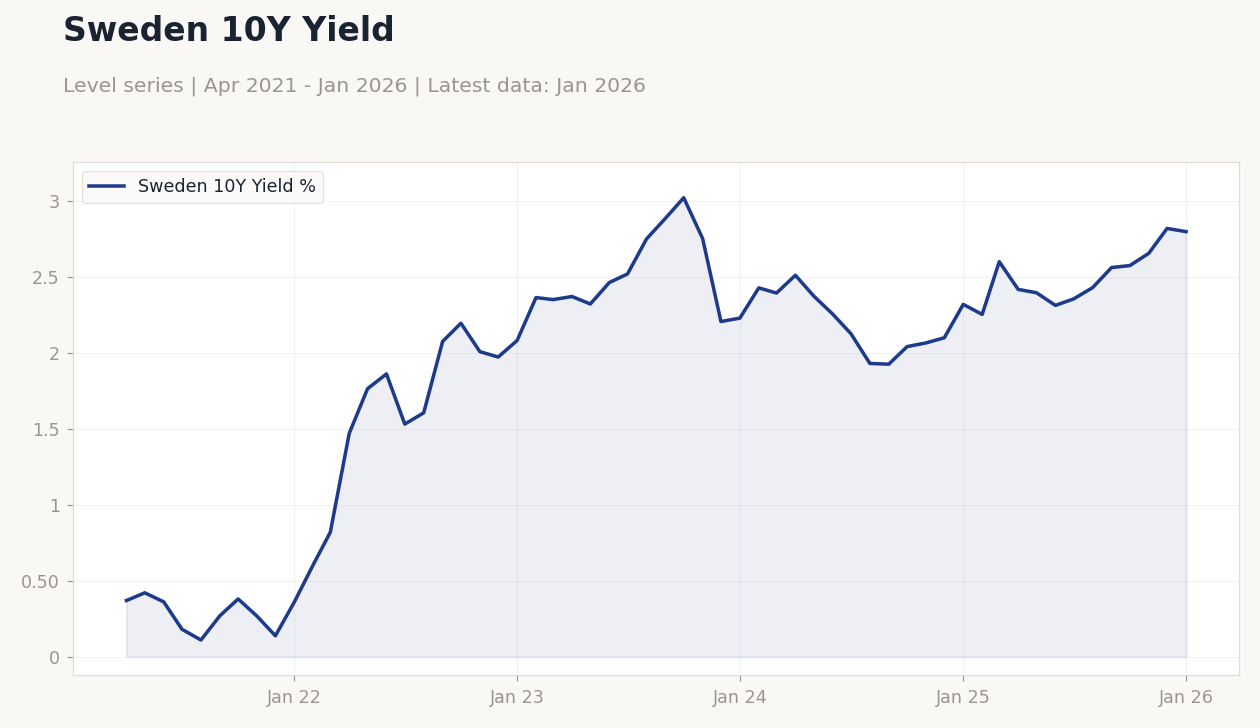 Sweden 10Y Yield | Type: macro_line | Sweden 10Y Yield %: 2.8 (2026-01-01) | Range: 0.1101–3.024 | Trend(6pt): 0.3702,1.863,2.752,2.043,2.822,2.8
Today's Economic Events
| Data | Prior | Cons | Time |
|---|---|---|---|
| No events available | |||
- Nordic equities mostly declined amid global volatility, with Sweden's OMX Stockholm 30 down 1.26% and Denmark's OMX Copenhagen 25 off 1.55%.
- Brent crude jumped 16.50% to $107.98, aiding Norway's outlook despite Oslo Bors slipping 0.08%.
- Currencies varied: USD/SEK rose 0.55% to 9.22, while Sweden's 10Y yield dropped 0.75 percentage points to 2.80%.
Yesterday's Recap
Nordic markets saw widespread equity declines due to global risk aversion, with Sweden's OMX Stockholm 30 ending down 1.26% at 3,038.55, affected by export sectors amid currency shifts. Norway's Oslo Bors dipped 0.08% to 1,904.18, though Brent crude's 16.50% increase to $107.98 offered support for energy firms and the krone as an oil exporter. Denmark's OMX Copenhagen 25 decreased 1.55% to 1,693.41, pressured by manufacturing and healthcare under the euro-pegged krone.
Finland's OMX Helsinki 25 fell 0.52% to 5,945.02, hit by eurozone policy uncertainties. Currency movements were uneven, with USD/SEK up 0.55% to 9.22 and EUR/SEK down 0.15% to 10.69, while USD/NOK fell 0.30% to 9.64 on oil strength, and EUR/NOK rose 0.21% to 11.22. Bond yields split: Sweden's 10Y government yield decreased 0.75 percentage points to 2.80% amid softening inflation expectations, while Norway's 10Y yield increased 0.75 percentage points to 4.12% linked to commodity gains.
No significant macroeconomic data was released yesterday in the Nordics, directing attention to these market shifts.
The Day Ahead
The calendar is empty today with no planned economic data or events in Sweden, Norway, Denmark, or Finland, giving markets time to process global trends. Watch for any impromptu Nordic central bank statements, especially on Denmark's EUR/DKK peg maintenance. Finland may feel eurozone influences via ECB ties.
Tomorrow also lacks events, suggesting subdued volatility absent external disruptions. Keep an eye on global commodity impacts on Norway's oil economy. In general, the data void could heighten sensitivity to pairs like USD/SEK and EUR/NOK.
Other Economic Notes
Key Nordic trends include Sweden's manufacturing strength despite krona swings, with talks of euro adoption resurfacing amid global strains. Norway's finances improve from high Brent prices, bolstering oil revenues even as equities soften. Denmark and Finland contend with eurozone challenges, such as unemployment at 6.70%, highlighting labor market reform needs.