Nordics Macro Daily(Beta Mode)
Nordic Stocks Mixed, SEK Gains
Market Snapshot
| Asset | Level | Change |
|---|---|---|
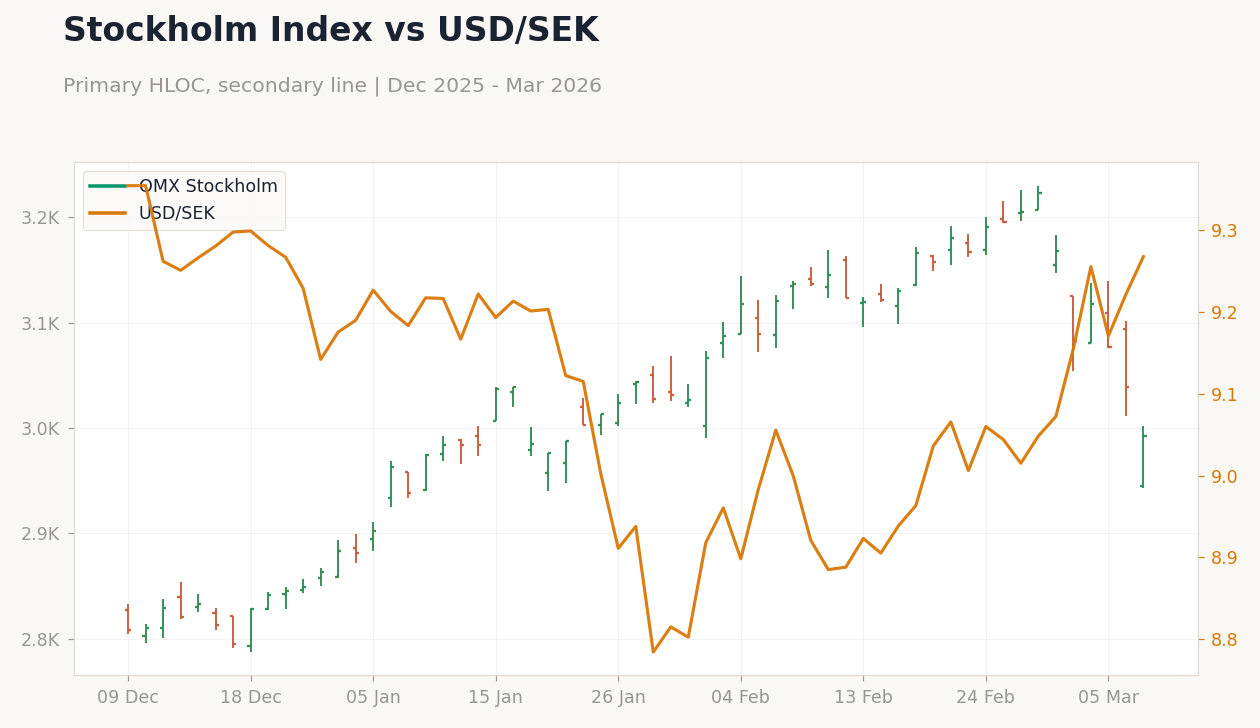
| OMX Stockholm 30 | 2,992.86 | -1.50% |
| Oslo Bors | 1,910.10 | +0.31% |
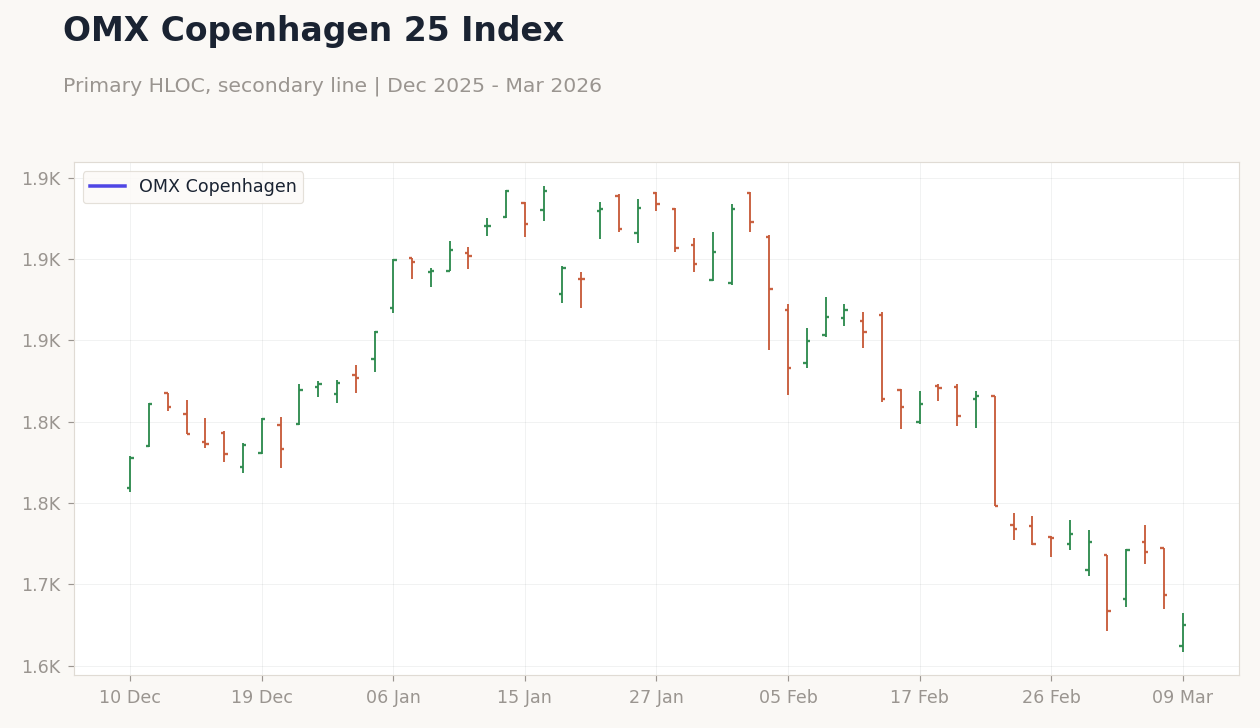
| OMX Copenhagen 25 | 1,675.23 | -1.07% |
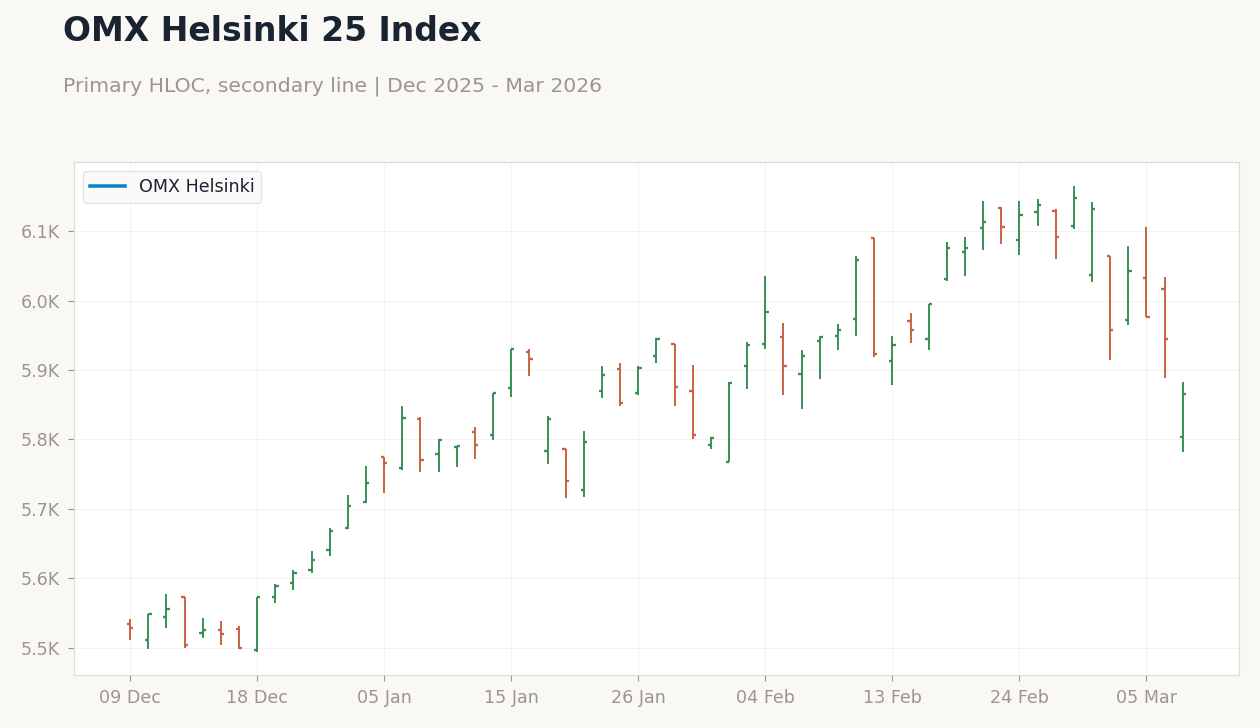
| OMX Helsinki 25 | 5,865.48 | -1.34% |
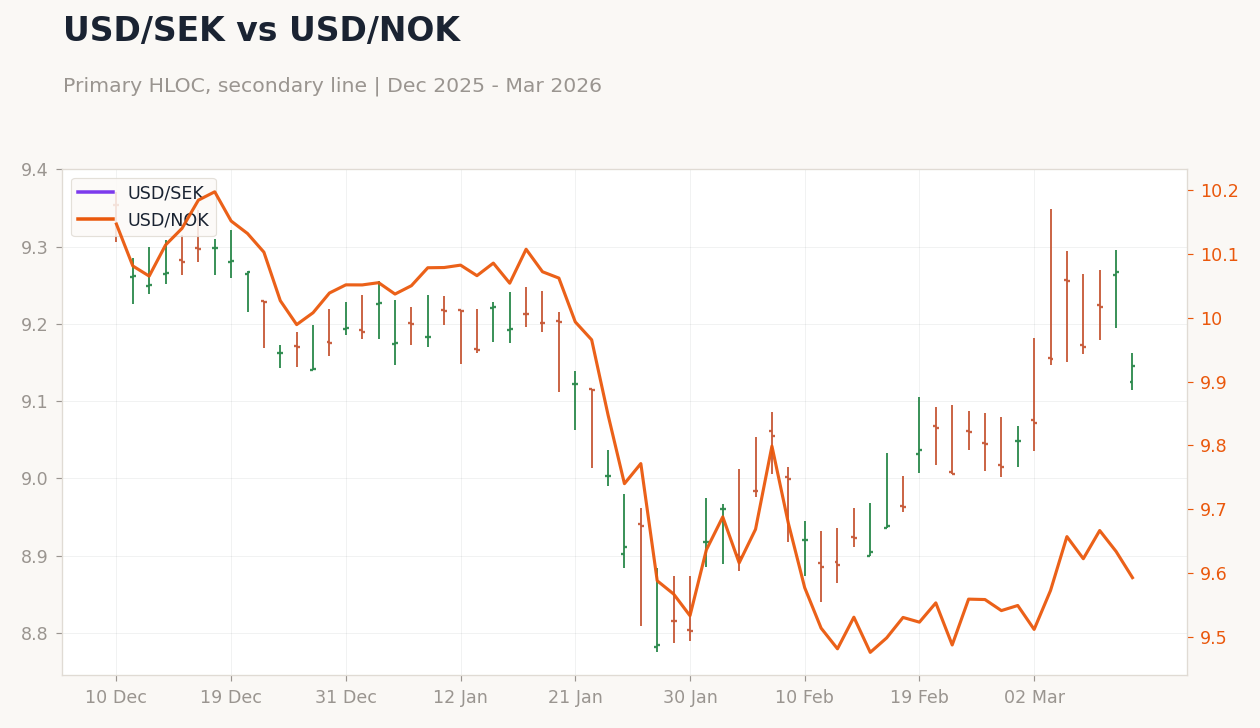
| USD/SEK | 9.14 | -1.32% |
| USD/NOK | 9.63 | -0.34% |
| EUR/SEK | 10.62 | -0.50% |
| EUR/NOK | 11.14 | +0.37% |
| Brent Crude | 94.65 | +2.11% |
| Gold | 5,171.90 | +0.50% |
| Bitcoin | 70,227.30 | +6.45% |
| Sweden 10Y Govt Yield | 2.80% | -0.75% |
| Norway 10Y Govt Yield | 4.12% | +0.75% |
Prior Economic Events
| Data | Prior | Cons | Actual |
|---|---|---|---|
| No events available | |||
 Sweden vs Norway 10Y Yields | Type: macro_line | Sweden 10Y %: 2.8 (2026-01-01) | Range: 0.1101–3.024 | Trend(6pt): 0.3702,1.863,2.752,2.043,2.822,2.8 | Norway 10Y %: 4.122 (2026-01-01) | Range: 1.23–4.122 | Trend(6pt): 1.42,3.126,3.767,3.541,4.092,4.122
Today's Economic Events
| Data | Prior | Cons | Time |
|---|---|---|---|
| No events available | |||
- Nordic equities showed mixed results, with Sweden's OMX Stockholm 30 down 1.50% and Finland's OMX Helsinki 25 off 1.34%, while Norway's Oslo Bors rose 0.31%.
- The Swedish krona strengthened against the dollar, with USD/SEK dropping 1.32% to 9.14, amid falling bond yields as Sweden's 10Y government yield eased 0.75% to 2.80%.
- Brent crude climbed 2.11% to $94.65, supporting Norwegian markets, while gold rose 0.50% to $5,171.90 and Bitcoin surged 6.45% to $70,227.30.
Yesterday's Recap
Nordic markets displayed mixed performance on March 9, influenced by global volatility and commodity shifts. Sweden's OMX Stockholm 30 index fell 1.50% to 2,992.86, weighed down by export sectors amid a stronger krona, with USD/SEK declining 1.32% to 9.14 and EUR/SEK dropping 0.50% to 10.62. Norway's Oslo Bors index gained 0.31% to 1,910.10, aided by a 2.11% rise in Brent crude to $94.65, which supported energy stocks despite USD/NOK falling 0.34% to 9.63 and EUR/NOK increasing 0.37% to 11.14.
Denmark's OMX Copenhagen 25 decreased 1.07% to 1,675.23, aligning with European trends, while Finland's OMX Helsinki 25 dropped 1.34% to 5,865.48, affected by eurozone factors. Bond yields diverged: Sweden's 10Y yield fell to 2.80% on disinflation signs, while Norway's 10Y yield rose to 4.12%. No significant data releases occurred, but the krona's appreciation emphasized Sweden's trade dynamics, and Norway's oil reliance provided fiscal uplift.
The session highlighted policy differences, with Finland and Denmark linked to ECB actions.
The Day Ahead
March 10 features a sparse Nordic calendar, with no economic data releases or central bank activities in Sweden, Norway, Denmark, or Finland. Attention will shift to global influences, such as U.S. inflation updates or commodity price changes, which could affect pairs like USD/SEK and EUR/NOK.
Norway's oil sensitivity suggests monitoring Brent crude movements for impacts on the krone and Oslo Bors. Without domestic drivers, markets may track eurozone news relevant to Denmark's currency peg and Finland's policy alignment. Trading could remain subdued unless external events intervene, allowing time to evaluate recent trends ahead of potential later announcements.
The day serves as a pause amid ongoing volatility.
Other Economic Notes
Nordic economies demonstrate export resilience, with Sweden and Denmark gaining from manufacturing amid global slowdown threats. (cont...)