Nordics Macro Daily(Beta Mode)

March 13, 2026 robomacro.com

Sweden Jobless Rate Falls Amid Oil Drop

Market Snapshot

AssetLevelChange
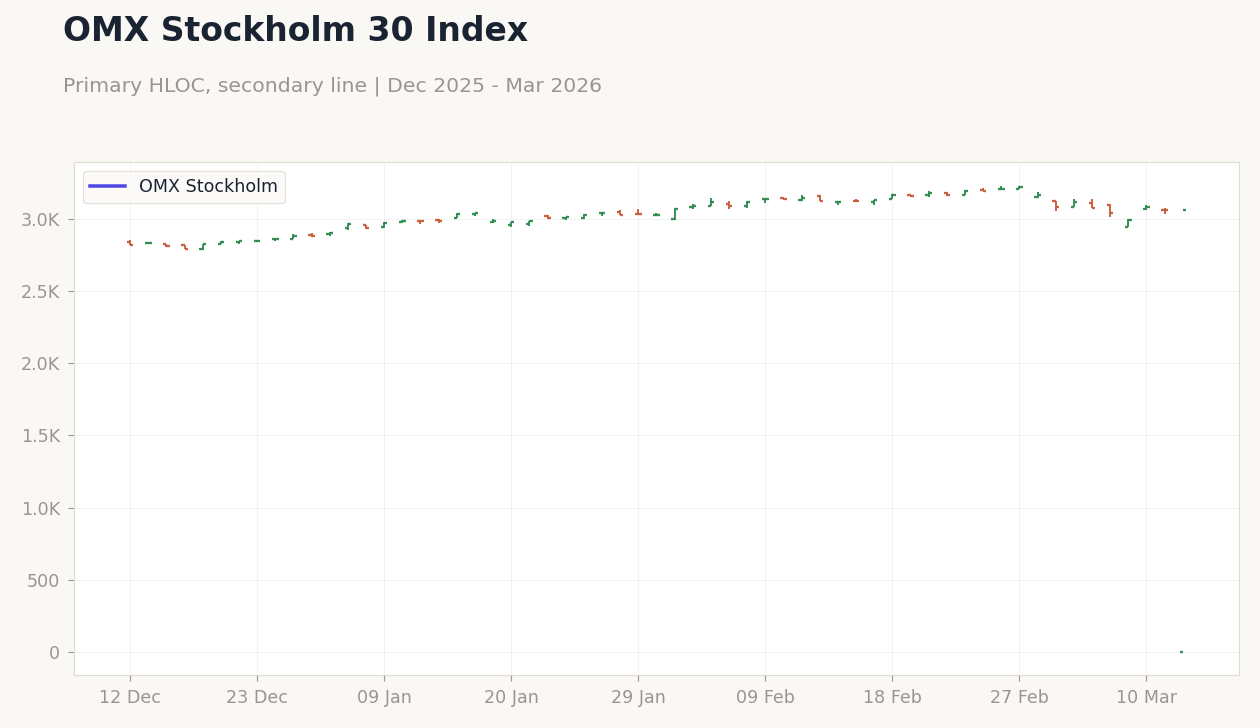
OMX Stockholm 303,063.09+0.13%
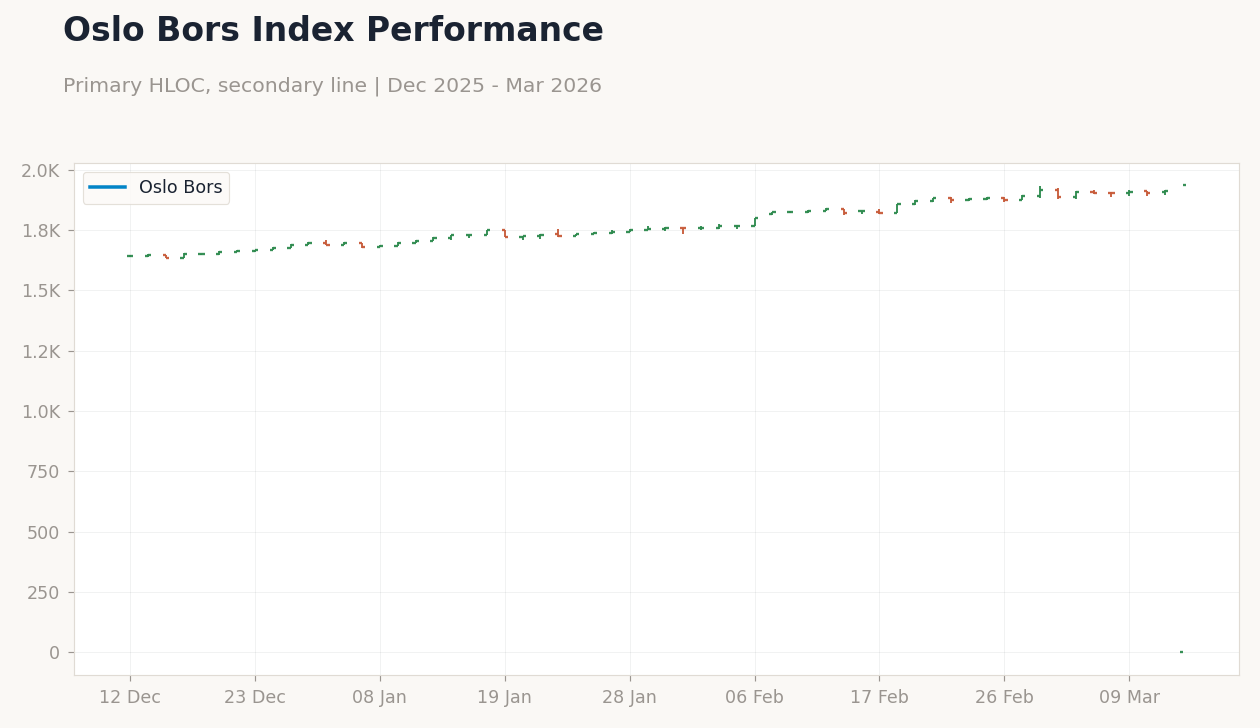
Oslo Bors1,937.55+1.22%
OMX Copenhagen 251,667.41-1.01%
OMX Helsinki 256,049.47+1.44%
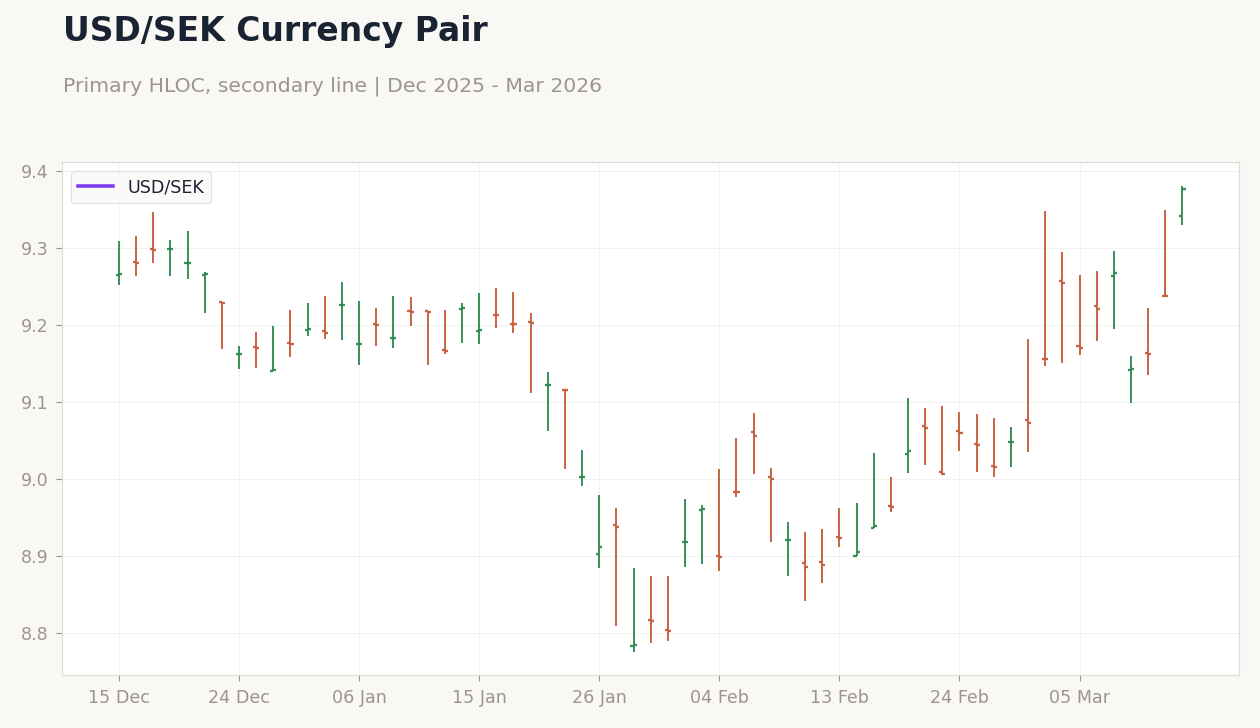
USD/SEK9.37+1.49%
USD/NOK9.73+0.64%
EUR/SEK10.77+1.08%
EUR/NOK11.18+0.22%
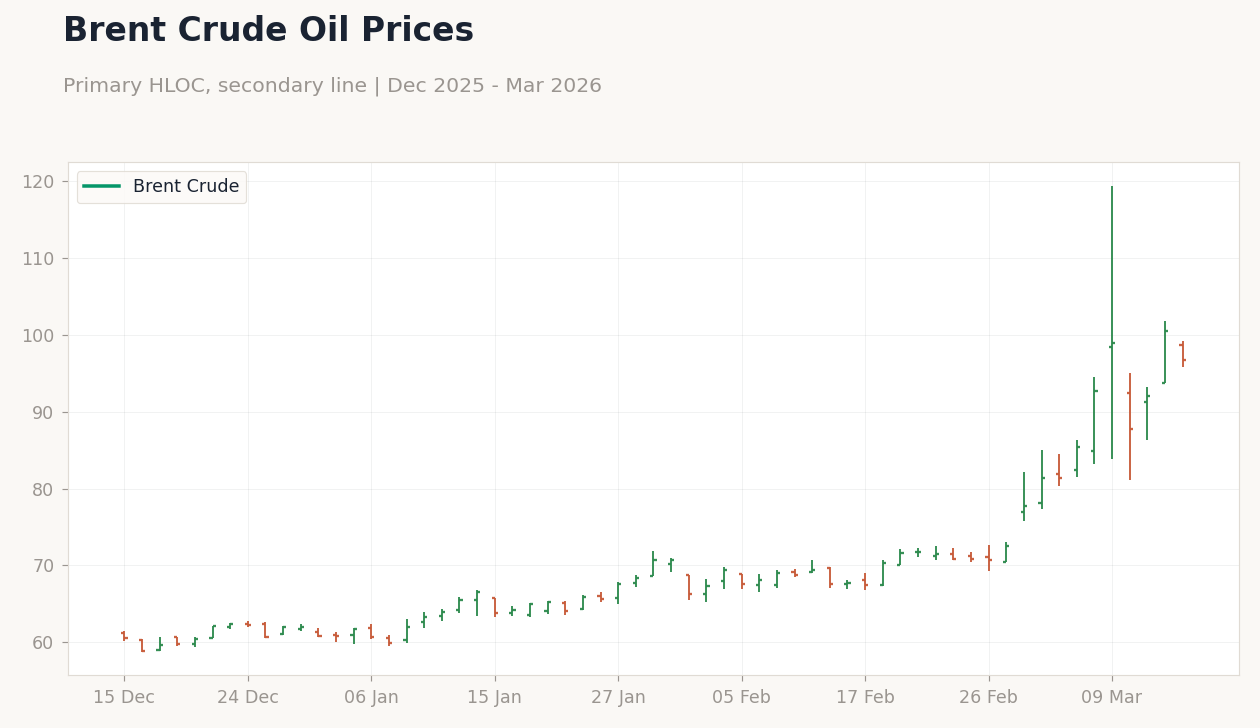
Brent Crude96.30-4.14%
Gold5,100.00-0.31%
Bitcoin71,287.56+1.54%
Sweden 10Y Govt Yield2.80%-0.75%
Norway 10Y Govt Yield4.12%+0.75%

Prior Economic Events

Data Prior Cons Actual
No events available
Sweden 10Y Yield vs CPISweden 10Y Yield vs CPI | Type: macro_line | Sweden 10Y Yield (%): 2.8 (2026-01-01) | Range: 0.1101–3.024 | Trend(6pt): 0.3702,1.863,2.752,2.043,2.822,2.8

Today's Economic Events

Data Prior Cons Time
Riksbank Rate Decision1.75-04:30
  • Swedish unemployment declined to lowest since late 2023, though rising layoff notices and Iran war risks temper optimism.
  • Nordic equities mixed with Oslo Bors up 1.22% despite Brent crude's 4.14% plunge to 96.30 amid global tensions.
  • Currencies weakened as USD/SEK rose 1.49% to 9.37 and USD/NOK up 0.64% to 9.73, reflecting hawkish bets from oil volatility.

Yesterday's Recap

Nordic markets showed mixed results on March 12, 2026, amid global volatility from energy price swings and geopolitical tensions. Sweden's OMX Stockholm 30 rose 0.13% to 3,063.09, supported by modest sector gains despite broader uncertainties. Norway's Oslo Bors climbed 1.22% to 1,937.55, driven by non-oil stocks even as Brent crude dropped 4.14% to 96.30, highlighting resilience in diversified sectors.

Denmark's OMX Copenhagen 25 fell 1.01% to 1,667.41, pressured by concerns over global demand following weak US jobs data. Finland's OMX Helsinki 25 advanced 1.44% to 6,049.47, buoyed by tech and forestry recoveries. Currency markets reflected risk aversion, with USD/SEK up 1.49% to 9.37 and USD/NOK gaining 0.64% to 9.73, while EUR/SEK increased 1.08% to 10.77 and EUR/NOK rose 0.22% to 11.18.

In Sweden, unemployment fell to its lowest level since the end of 2023, but increasing layoff notices and potential economic fallout from the Iran war introduced caution. Bond yields varied: Sweden's 10-year government yield decreased 0.75% to 2.80% on safe-haven demand, while Norway's 10-year yield rose 0.75% to 4.12% amid adjustments to lower oil revenues. Commodities were volatile, with gold dipping 0.31% to 5,100.00 and Bitcoin rising 1.54% to 71,287.56.

The Day Ahead

The Nordic economic calendar is quiet on March 13, 2026, with no major data releases, shifting focus to global developments and upcoming events. Markets will monitor the Riksbank rate decision on March 19, where the previous rate was 1.75%, amid absent consensus but ongoing inflation concerns from energy disruptions. Norway faces scrutiny on krone stability, potentially affected by Brent crude movements and fiscal implications.

Denmark's euro peg under ERM II may prompt attention to ECB cues, while Finland follows eurozone trends directly. Weekend protests on immigration laws are planned in nearly 30 Swedish locations, possibly influencing sentiment in labor and export sectors. Traders should watch for updates on the Iran conflict, which could spur further oil volatility and impact Nordic energy importers.

Overall, geopolitical risks remain key, with potential for ad-hoc announcements affecting market directions.

Page 1

Nordics Macro Daily(Beta Mode)

March 13, 2026 robomacro.com
Brent Crude Oil Prices Brent Crude Oil Prices | Type: market_hloc | Brent Crude: 96.75 (2026-03-13) | Range: 58.92–100.5 | Trend(5pt): 60.56,59.96,70.71,71.76,96.75
USD/SEK Currency Pair USD/SEK Currency Pair | Type: market_hloc | USD/SEK: 9.377 (2026-03-13) | Range: 8.784–9.377 | Trend(6pt): 9.266,9.2,8.784,8.963,9.162,9.377
Oslo Bors Index Performance Oslo Bors Index Performance | Type: market_hloc | Oslo Bors: 1938 (2026-03-12) | Range: 1636–1938 | Trend(5pt): 1643,1697,1760,1884,1938
OMX Stockholm 30 Index OMX Stockholm 30 Index | Type: market_hloc | OMX Stockholm: 3063 (2026-03-12) | Range: 2795–3223 | Trend(6pt): 2821,2975,3031,3166,3083,3063

Other Economic Notes

Nordic economies display labor market contrasts, with Sweden's unemployment drop highlighting resilience, yet rising layoff notices signal caution amid global uncertainties. In Norway, cost-of-living pressures are evident, as 4 in 10 residents consider extra work to manage bills, compounded by oil dependency vulnerabilities from Brent's decline. Denmark and Sweden emphasize manufacturing exports, facing headwinds from global slowdown indicators like weak US jobs.

Finland, integrated into the eurozone, notes unemployment at 6.70% as of early 2023, but shares exposure to energy price shocks altering trade balances. Broader themes include crisis preparedness, with Sweden's central bank urging cash hoarding for war scenarios and Norway's reports indicating gaps in major crisis readiness. These factors underscore the need for adaptive policies amid fluctuating commodity prices and international tensions.

Global Macro News

The Iran war continues to roil global markets, with Brent crude's 4.14% fall to 96.30 prompting nations to release oil reserves to ease economic pressures. Iran's threats to disrupt the global economy, potentially via the Strait of Hormuz, heighten volatility, reshaping impacts on regions like Kenya and South Africa through elevated oil prices. US February jobs data showed a loss of 92,000 positions, below expectations, signaling cooling demand that could affect Nordic exports in tech and manufacturing.

Positive notes include Poland's booming economy and Saudi Arabia's 4.5% growth in 2025, contrasting with broader risks. The dollar strengthened near 2026 highs, spurred by oil-driven hawkish central bank expectations, pressuring Nordic currencies. Gold eased 0.31% to 5,100.00 as a safe haven, while Bitcoin gained 1.54% to 71,287.56.

In Norway, a Tax Administration website glitch and rising birth rates were noted, alongside arrests in a US Embassy blast probe. Sweden saw spring arriving earlier due to climate shifts and an Indian entrepreneur's deportation affecting a hydroponics startup. These events amplify inflation risks for Nordic policymakers, especially in oil-linked Norway.

Nordic Central Banks Watch

Sweden's Riksbank holds its policy rate at 1.75% ahead of the March 19 decision, balancing krona weakness and inflation from energy shocks, with urgings to hoard cash for war preparedness. Norway's Norges Bank manages oil revenue volatility, potentially maintaining a hawkish stance to bolster the krone amid Brent declines. Danmarks Nationalbank mirrors ECB policy to sustain the EUR/DKK peg under ERM II, aligning with the ECB deposit rate of 2.00% and ready to intervene against volatility from the Iran conflict.

Finland's Bank of Finland adheres to ECB directives, noting eurozone unemployment at 6.70% as of early 2023, but lacks independent tools against energy disruptions. (cont...)

Sponsored by Arbitrage Search
Page 2

Nordics Macro Daily(Beta Mode)

March 13, 2026 robomacro.com

Continuation

Nordic Central Banks Watch (continued)

Policy differences highlight Sweden and Norway's flexibility versus Denmark's peg constraints and Finland's ECB integration, all amid heightened geopolitical risks influencing trade and inflation outlooks.

Sponsored by Arbitrage Search
Page 3