Nordics Macro Daily(Beta Mode)
Sweden Proposes Fuel Tax Cut, NOK Weakens
Market Snapshot
| Asset | Level | Change |
|---|---|---|
| OMX Stockholm 30 | 2,892.19 | +0.96% |
| Oslo Bors | 1,948.83 | -0.90% |
| OMX Copenhagen 25 | 1,627.43 | +0.22% |
| OMX Helsinki 25 | 5,815.02 | -0.38% |
| USD/SEK | 9.34 | +0.60% |
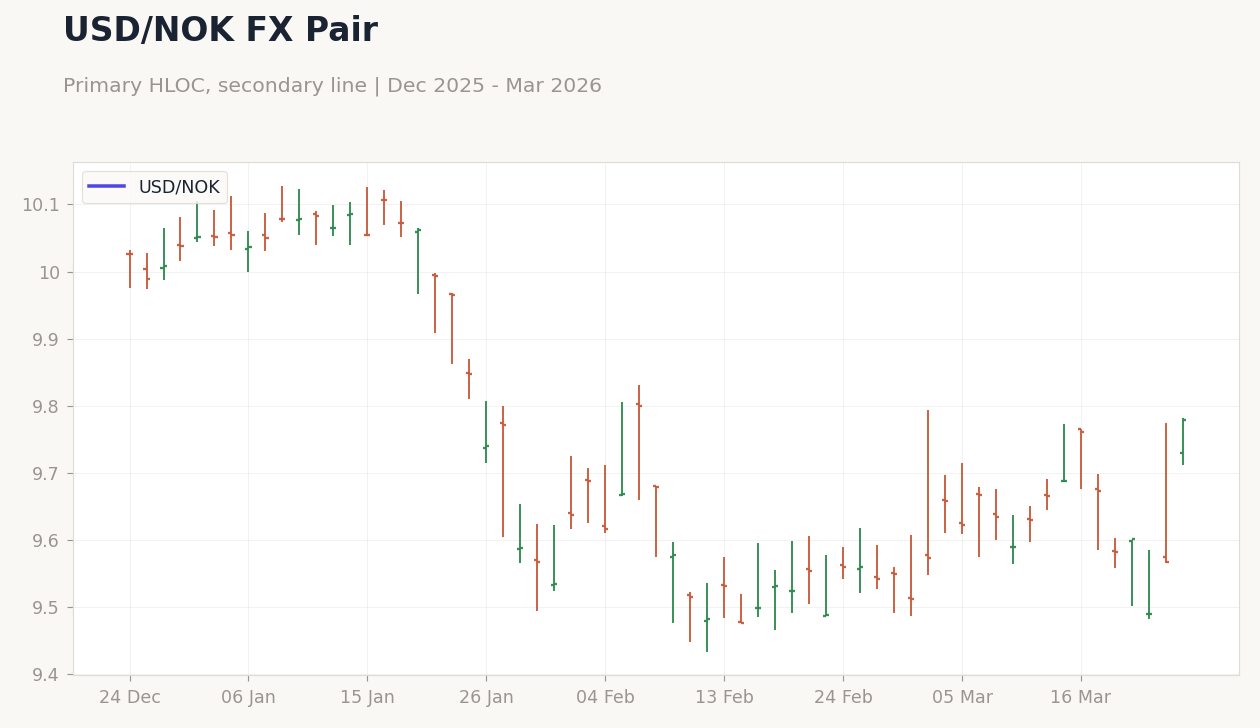
| USD/NOK | 9.78 | +2.23% |
| EUR/SEK | 10.86 | +0.55% |
| EUR/NOK | 11.32 | +2.39% |
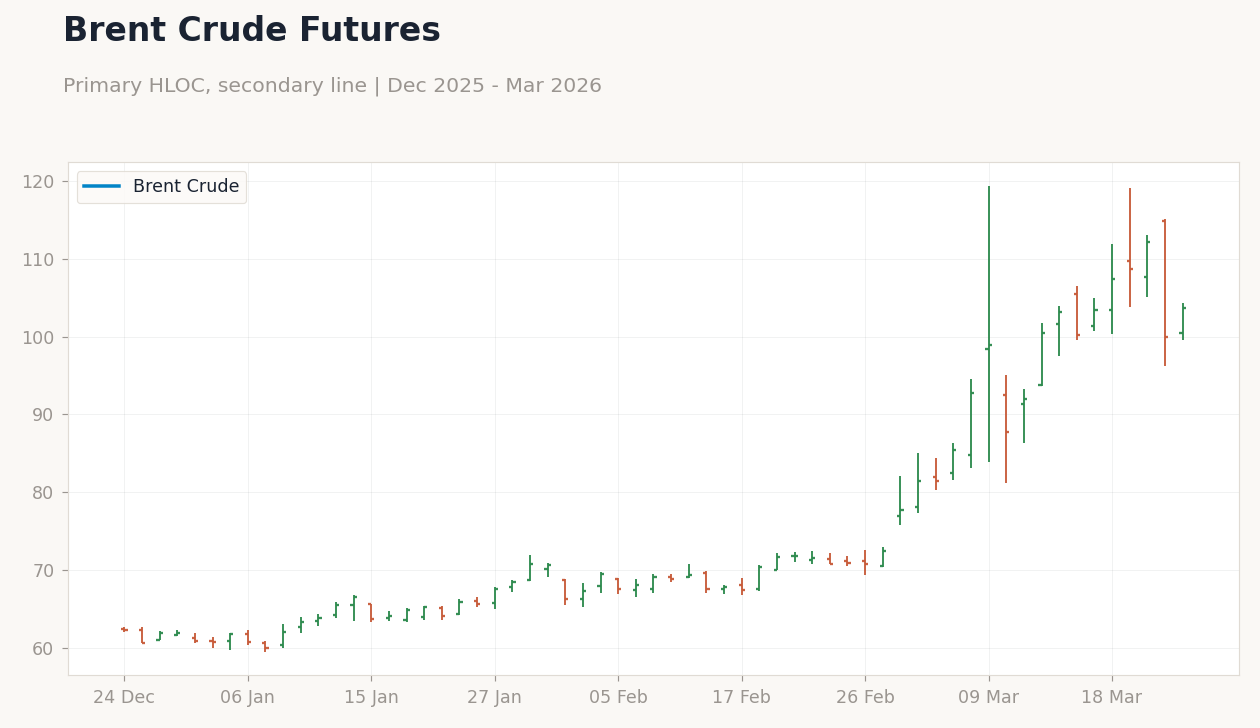
| Brent Crude | 103.83 | +3.89% |
| Gold | 4,341.00 | -1.43% |
| Bitcoin | 70,240.44 | +3.53% |
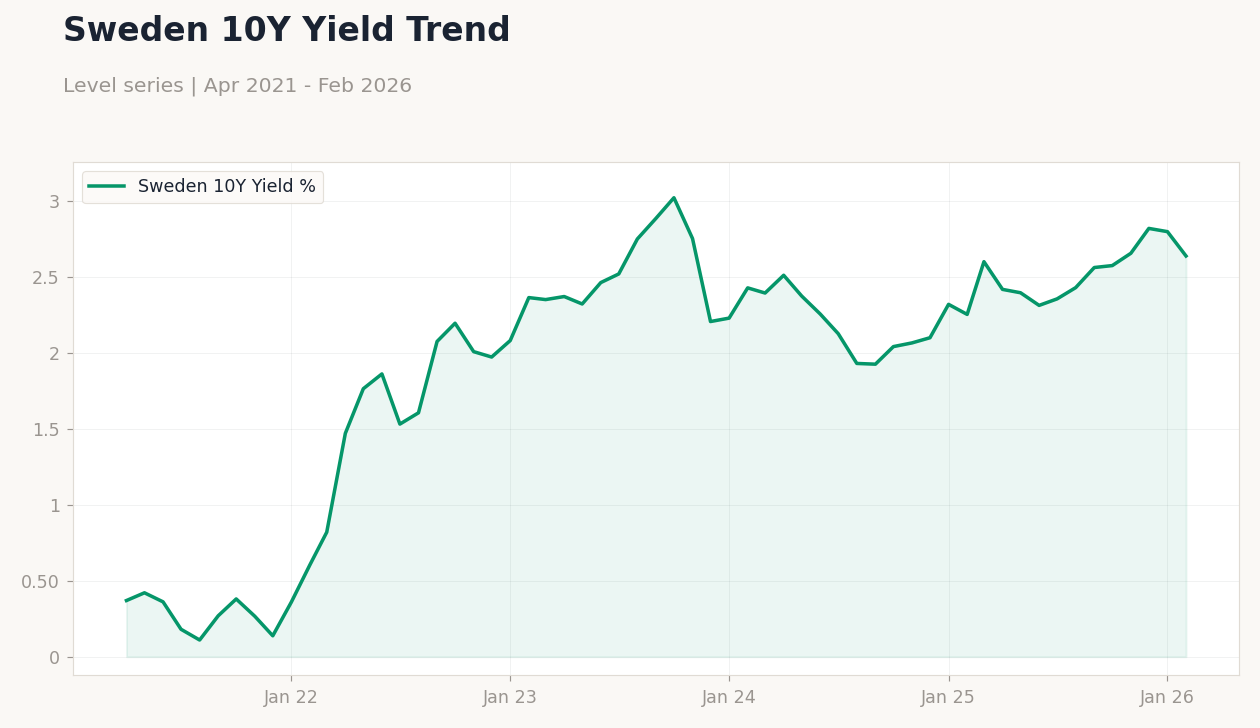
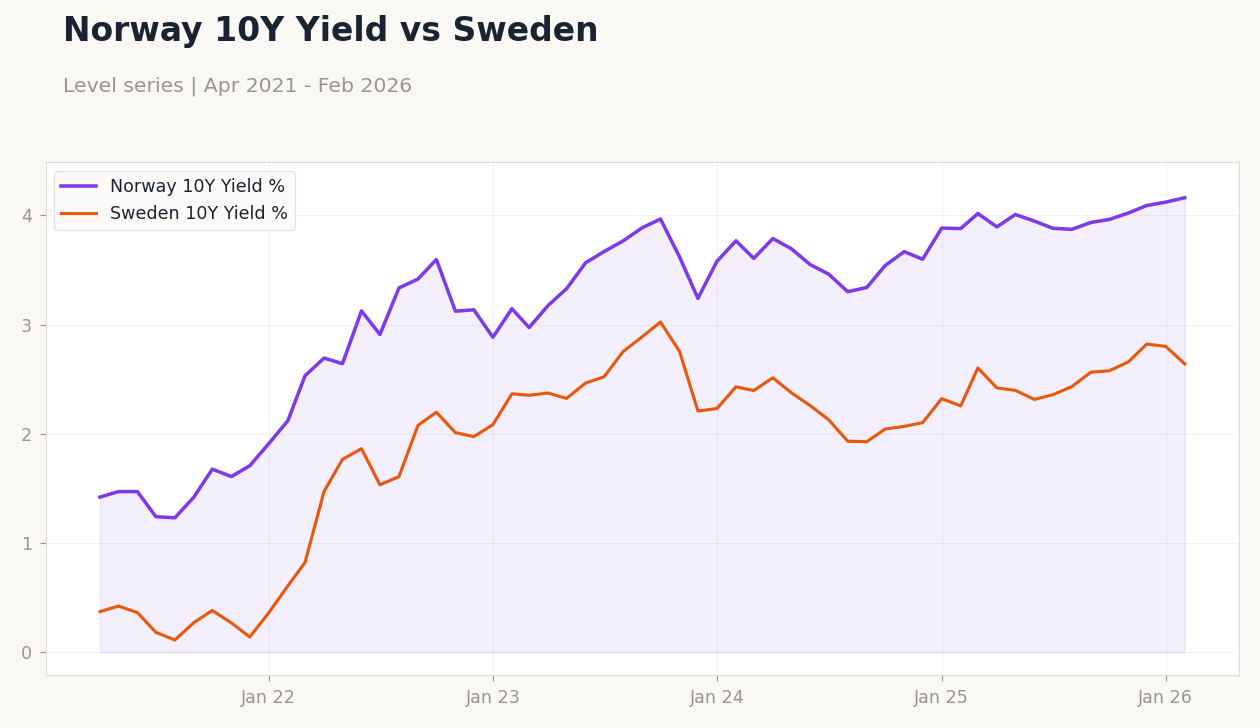
| Sweden 10Y Govt Yield | 2.64% | -5.73% |
| Norway 10Y Govt Yield | 4.16% | +0.98% |
Prior Economic Events
| Data | Prior | Cons | Actual |
|---|---|---|---|
| No events available | |||
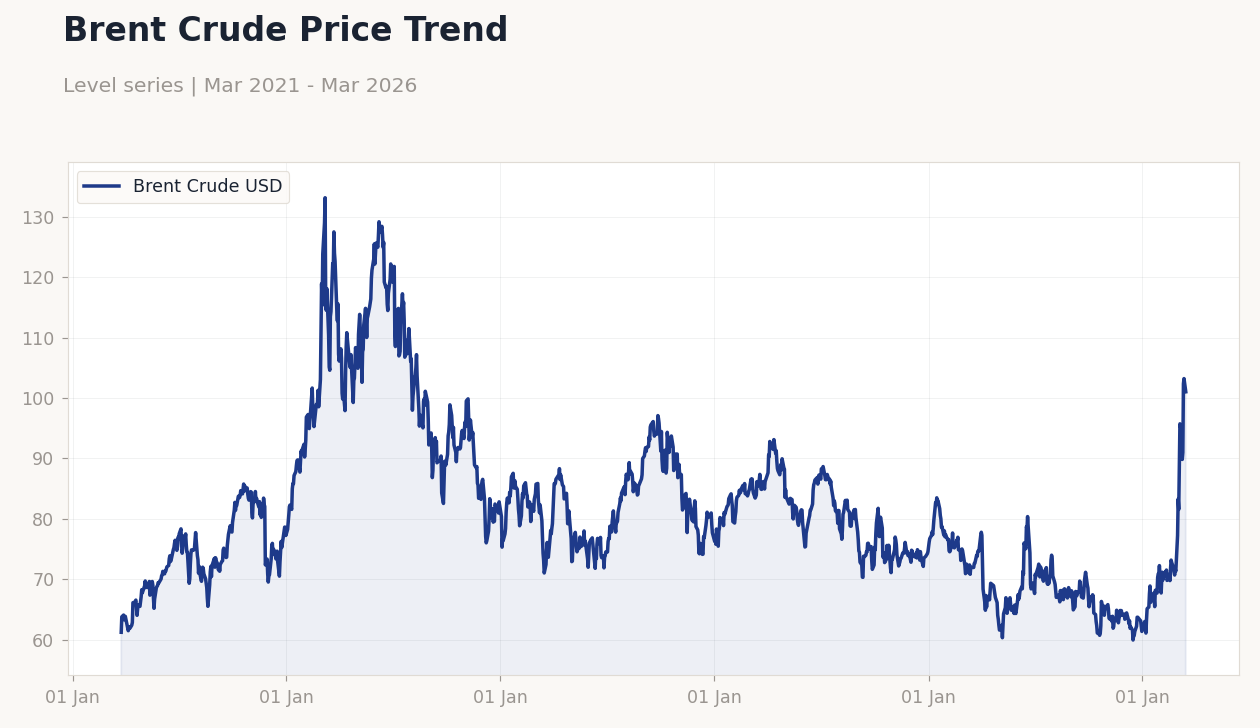 Brent Crude Price Trend | Type: macro_line | Brent Crude USD: 101 (2026-03-16) | Range: 59.93–133.2 | Trend(5pt): 61.21,114.5,93.7,74.3,101
Today's Economic Events
| Data | Prior | Cons | Time |
|---|---|---|---|
| Norges Bank Interest Rate Decision | 4 | 4 | 05:00 |
- Sweden proposes temporary fuel tax cuts to offset war-driven energy inflation, supporting consumers before elections.
- Norwegian krone depreciates sharply as Brent prices rise and wage negotiations begin, straining fiscal balances.
- Nordic stocks mixed: Stockholm advances on defensives, Oslo declines on energy sector pressures.
Yesterday's Recap
Nordic markets displayed mixed performance amid global volatility, with Sweden's OMX Stockholm 30 rising 0.96% to 2,892.19, bolstered by resilient banking stocks despite risk aversion. Norway's Oslo Bors dropped 0.90% to 1,948.83, pressured by oil-linked equities even as Brent crude climbed 3.89% to 103.83, enhancing revenue potential. Denmark's OMX Copenhagen 25 increased 0.22% to 1,627.43, driven by pharmaceutical strength, while Finland's OMX Helsinki 25 fell 0.38% to 5,815.02 due to tech weakness.
Currencies shifted notably: USD/SEK advanced 0.60% to 9.34 and USD/NOK surged 2.23% to 9.78, indicating krone weakening from oil dynamics and inflation concerns. EUR/SEK gained 0.55% to 10.86, with EUR/NOK up 2.39% to 11.32, underscoring Norway's commodity exposure. Bond yields diverged, with Sweden's 10Y falling 5.73% to 2.64% on safe-haven demand, while Norway's 10Y rose 0.98% to 4.16% amid expectations of steady rates.
No significant data releases took place, but Sweden's fuel tax cut proposal headlined news, targeting Middle East war effects on fuel prices.
The Day Ahead
Focus shifts to Norway's ongoing wage negotiations, which started on March 23 and may shape inflation paths, with results anticipated over the next weeks. The Norges Bank interest rate decision is set for March 26, with consensus for a hold at 4.00%, though krone softness could lead to hawkish remarks. Denmark and Finland have no planned releases, but ECB-related updates might indirectly influence via the euro peg and joint policy.
Sweden's consumer trends bear watching amid tax relief plans. Nordic attention includes tracking Brent crude fluctuations, vital for Norway's budget. Tomorrow features no events, but global oil instability may affect markets.
Other Economic Notes
Sweden's fuel tax cut proposal highlights fiscal measures to protect export-focused industries from energy shocks tied to the Middle East war, possibly bolstering retail sales. Norway's new cruise tax of 100 kroner per passenger seeks to increase tourism income while tackling environmental issues in areas like Lofoten. Finland's eurozone connections link it to ECB discussions on AI's economic impact, potentially transforming labor markets amid eurozone unemployment at 6.70%.