Nordics Macro Daily(Beta Mode)
Norges Bank Holds, Brent Dives
Market Snapshot
| Asset | Level | Change |
|---|---|---|
| OMX Stockholm 30 | 2,889.81 | -1.82% |
| Oslo Bors | 1,988.05 | +0.40% |
| OMX Copenhagen 25 | 1,662.47 | +1.23% |
| OMX Helsinki 25 | 5,883.91 | -0.79% |
| USD/SEK | 9.42 | +0.73% |
| USD/NOK | 9.68 | -0.01% |
| EUR/SEK | 10.87 | +0.55% |
| EUR/NOK | 11.17 | -0.17% |
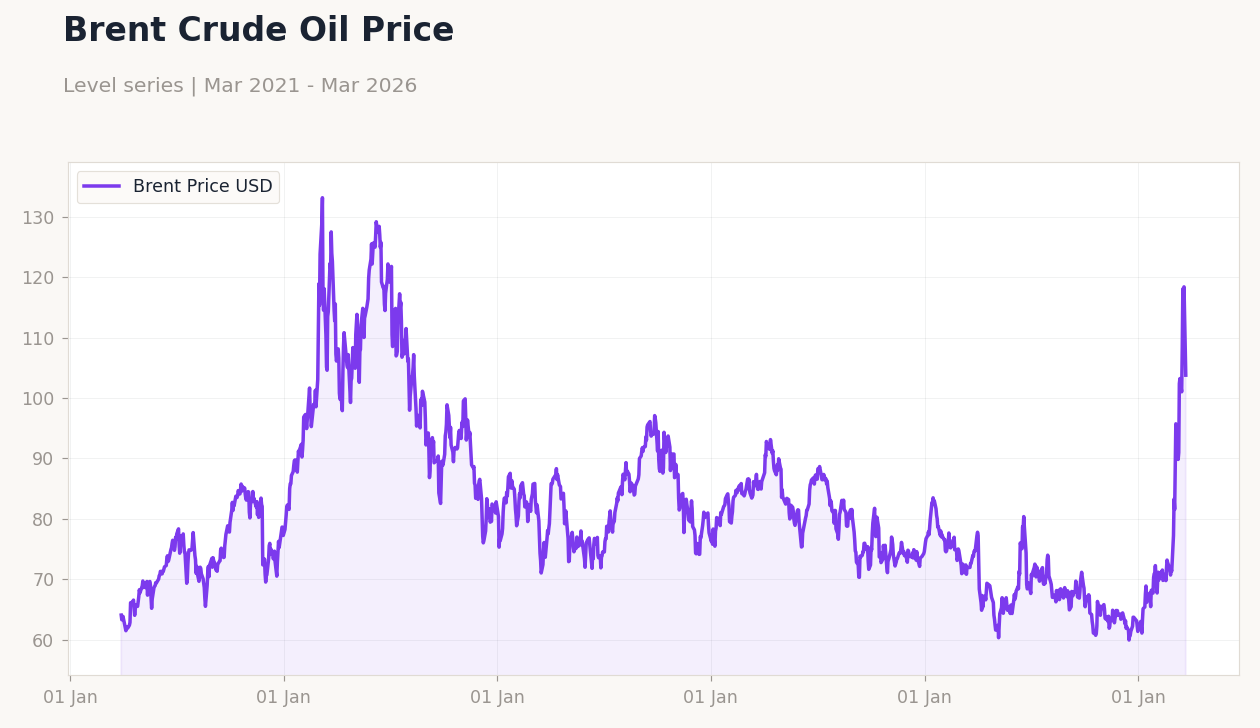
| Brent Crude | 101.22 | -6.29% |
| Gold | 4,441.80 | +1.52% |
| Bitcoin | 68,517.91 | -3.92% |
| Sweden 10Y Govt Yield | 2.64% | -5.73% |
| Norway 10Y Govt Yield | 4.16% | +0.98% |
Prior Economic Events
| Data | Prior | Cons | Actual |
|---|---|---|---|
| Norges Bank Interest Rate Decision | 4 | 4 | 4 |
 Norway 10Y Yield | Type: macro_line | Norway 10Y Yield %: 4.162 (2026-02-01) | Range: 1.23–4.162 | Trend(6pt): 1.42,3.126,3.767,3.541,4.092,4.162
Today's Economic Events
| Data | Prior | Cons | Time |
|---|---|---|---|
| No events available | |||
- Norges Bank kept rates steady at 4%, aligning with consensus amid stable inflation and oil volatility.
- Nordic equities mixed: Oslo Bors up 0.40% on energy resilience, while OMX Stockholm fell 1.82% on export fears.
- Brent crude plunged 6.29% to $101.22, pressuring Norway's fiscal outlook despite rate hold.
Yesterday's Recap
Norges Bank held its key policy rate at 4% as expected, citing balanced risks from wage growth and cooling global demand, with no immediate signals for cuts amid Norway's oil-dependent economy. Norwegian equities edged higher, with Oslo Bors rising 0.40% to 1,988.05, supported by modest gains in non-energy sectors despite Brent's sharp decline. In Sweden, the OMX Stockholm 30 dropped 1.82% to 2,889.81, reflecting concerns over export slowdowns highlighted in local forecasts amid Middle East tensions.
Denmark's OMX Copenhagen 25 advanced 1.23% to 1,662.47, driven by healthcare strength, while Finland's OMX Helsinki 25 slipped 0.79% to 5,883.91 on tech weakness. Currency moves were subdued: USD/NOK dipped 0.01% to 9.68, holding steady post-rate decision, while USD/SEK rose 0.73% to 9.42 on broader dollar strength. Sweden's 10Y government yield fell 5.73% to 2.64%, signaling disinflation bets, contrasting Norway's 10Y yield up 0.98% to 4.16%.
Overall, markets reflected caution on global growth cracks, with Norway's oil exposure amplifying Brent's impact.
The Day Ahead
The Nordic calendar remains light today with no major data releases or events scheduled across Sweden, Norway, Denmark, or Finland. Traders will monitor any follow-up commentary from Norges Bank's rate decision, potentially influencing NOK pairs amid ongoing oil price volatility. Attention may shift to broader eurozone indicators, given Finland's ECB ties and Denmark's peg, though no direct Nordic prints are due.
Tomorrow's agenda is similarly quiet, allowing focus on global cues like U.S. recession signals. Expect currency and equity flows to track Brent movements and any Middle East developments.
Housing market updates from Sweden could emerge informally, but no official figures are slated.
Other Economic Notes
Swedish export conditions face headwinds from Middle East conflicts and trade policy uncertainties, as noted in recent forecasts, potentially curbing growth in manufacturing-dependent sectors. Norway's fiscal buffers from oil revenues provide resilience, but Brent's drop underscores vulnerability to global energy shifts. Broader Nordic themes include rising domestic concerns, such as Sweden's violence impacting sentiment and Norway's fuel subsidy debates amid inflation risks.