Nordics Macro Daily(Beta Mode)
Nordic Stocks Rise, Brent Slumps
Market Snapshot
| Asset | Level | Change |
|---|---|---|
| OMX Stockholm 30 | 2,890.29 | +0.92% |
| Oslo Bors | 2,037.84 | +2.84% |
| OMX Copenhagen 25 | 1,665.30 | +1.66% |
| OMX Helsinki 25 | 5,825.59 | +1.08% |
| USD/SEK | 9.48 | +0.57% |
| USD/NOK | 9.74 | +0.05% |
| EUR/SEK | 10.89 | +0.20% |
| EUR/NOK | 11.18 | -0.12% |
| Brent Crude | 107.18 | -4.97% |
| Gold | 4,594.20 | +1.51% |
| Bitcoin | 67,508.38 | +2.36% |
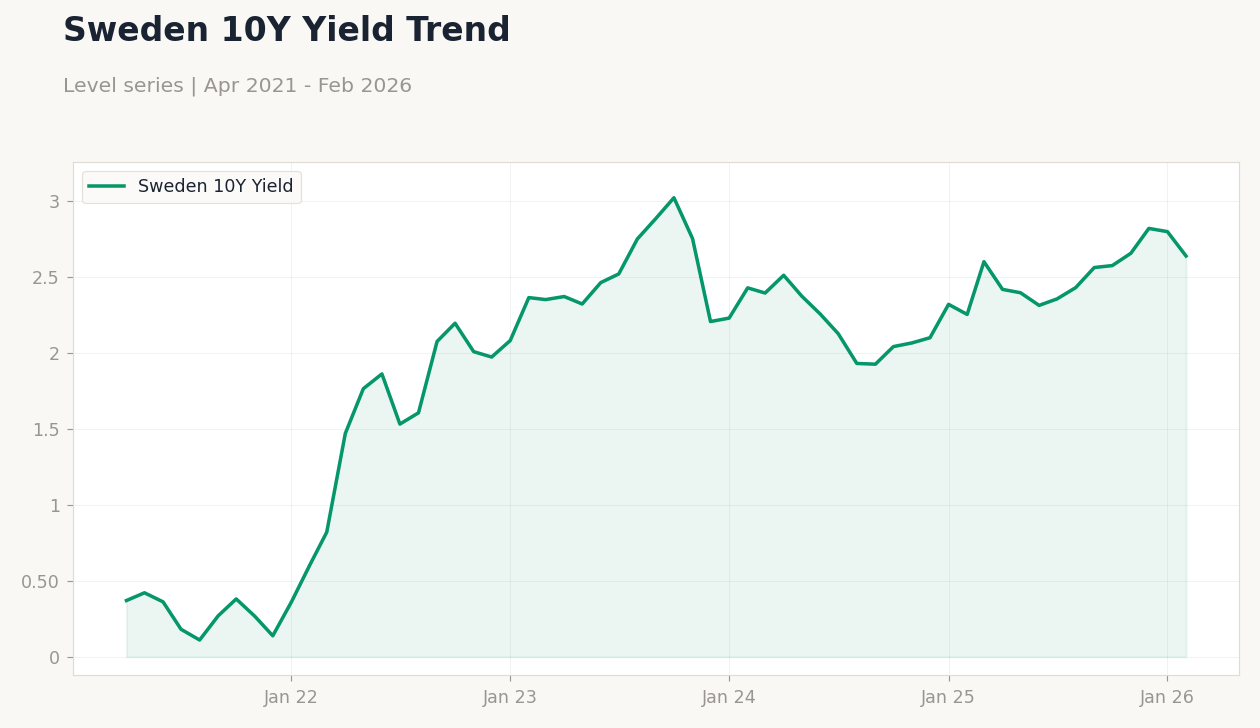
| Sweden 10Y Govt Yield | 2.64% | -5.73% |
| Norway 10Y Govt Yield | 4.16% | +0.98% |
Prior Economic Events
| Data | Prior | Cons | Actual |
|---|---|---|---|
| No events available | |||
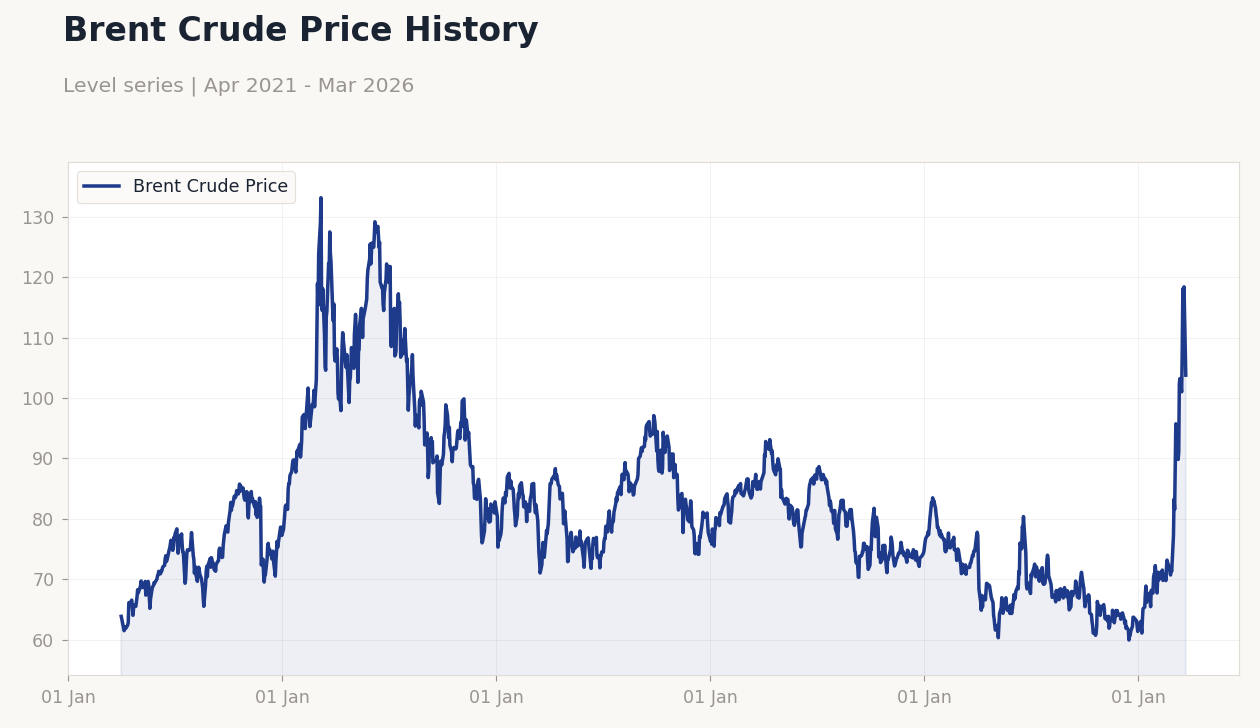 Brent Crude Price History | Type: macro_line | Brent Crude Price: 103.8 (2026-03-23) | Range: 59.93–133.2 | Trend(5pt): 63.85,119.8,96.64,72.12,103.8
Today's Economic Events
| Data | Prior | Cons | Time |
|---|---|---|---|
| No events available | |||
- Nordic equities advanced amid mixed global cues, with Oslo Bors leading gains at +2.84%.
- Brent crude fell sharply by -4.97%, pressuring Norway's oil-dependent economy and krone stability.
- Sweden's government proposed fuel tax cuts to counter Iran war-driven inflation, supporting consumer spending.
Yesterday's Recap
Nordic markets showed resilience with equities posting gains across the board despite a sharp drop in Brent crude prices. Sweden's OMX Stockholm 30 rose 0.92% to 2,890.29, buoyed by export sectors amid a weakening SEK, as USD/SEK climbed 0.57% to 9.48. Norway's Oslo Bors surged 2.84% to 2,037.84, reflecting optimism in non-oil industries even as Brent's -4.97% decline to 107.18 weighed on energy stocks and fiscal projections.
Denmark's OMX Copenhagen 25 increased 1.66% to 1,665.30, supported by eurozone ties and ECB policy continuity. Finland's OMX Helsinki 25 gained 1.08% to 5,825.59, aided by eurozone integration. Bond yields diverged, with Sweden's 10Y dropping -5.73% to 2.64% on safe-haven flows, while Norway's rose 0.98% to 4.16% amid oil volatility.
EUR/SEK rose 0.20% to 10.89, and EUR/NOK fell -0.12% to 11.18. Gold climbed 1.51% to 4,594.20, and Bitcoin gained 2.36% to 67,508.38. Overall, the lack of major data releases kept focus on commodity moves and Sweden's proposed fuel tax reduction to mitigate war-related price pressures.
The Day Ahead
With no scheduled economic releases across the Nordics, markets will likely monitor global commodity trends, particularly Brent crude's trajectory given Norway's exposure. Attention may turn to any updates on Sweden's fuel tax cut proposal, which could influence inflation expectations ahead of elections. Denmark and Finland, tied to eurozone dynamics, might see limited volatility unless ECB commentary emerges.
Traders should watch for potential FX interventions by Danmarks Nationalbank to maintain the EUR/DKK peg amid broader euro movements. Norway's krone could face pressure if oil prices extend losses, impacting Norges Bank's outlook. Overall, a quiet day positions Nordic assets to track U.S.
and European market sentiment.
Other Economic Notes
Broader Nordic themes highlight diverging fiscal pressures, with Norway's oil revenues buffering against global energy volatility while Sweden grapples with import-driven inflation from the Iran war. Housing markets remain a concern in Sweden, where elevated mortgage rates could slow recovery despite export strength in manufacturing. Finland's eurozone integration supports steady growth, though high energy costs pose risks to its trade balance.
(cont...)