Nordics Macro Daily(Beta Mode)
Nordic Stocks Rise, Brent Plunges
Market Snapshot
| Asset | Level | Change |
|---|---|---|
| OMX Stockholm 30 | 2,929.33 | +1.35% |
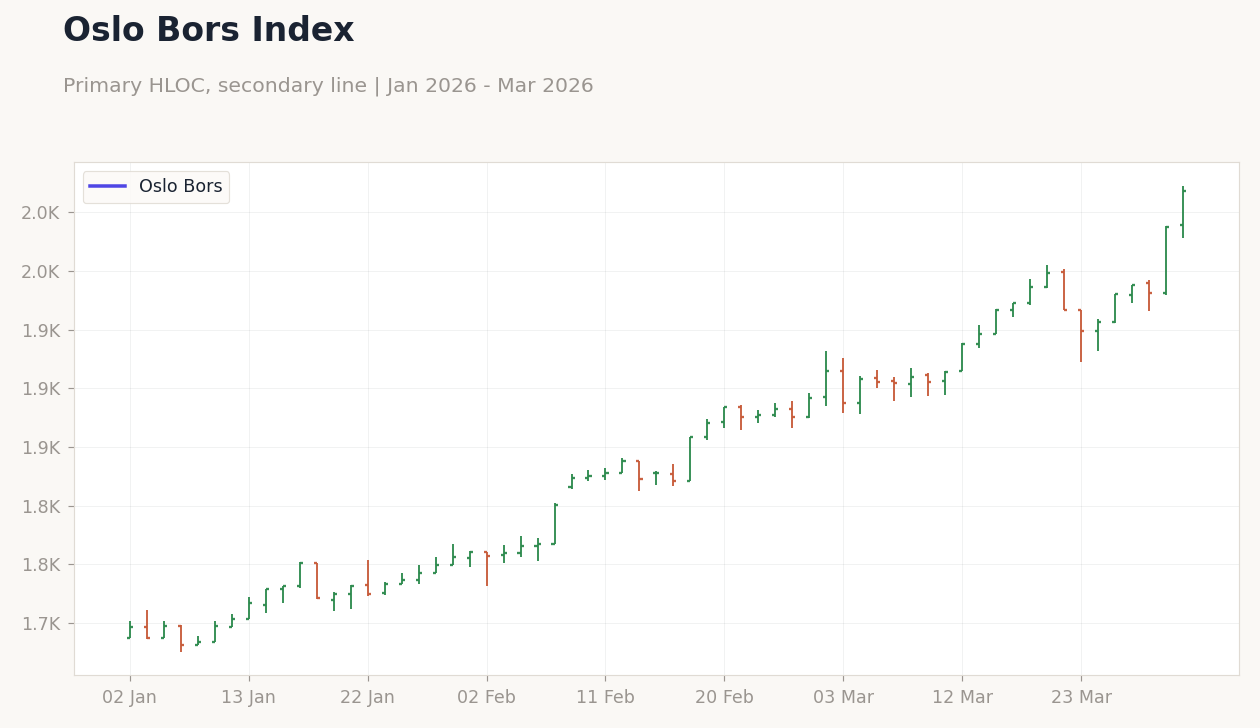
| Oslo Bors | 2,067.97 | +1.48% |
| OMX Copenhagen 25 | 1,680.97 | +0.94% |
| OMX Helsinki 25 | 5,843.98 | +0.32% |
| USD/SEK | 9.45 | -1.11% |
| USD/NOK | 9.67 | -0.56% |
| EUR/SEK | 10.93 | -0.21% |
| EUR/NOK | 11.19 | +0.39% |
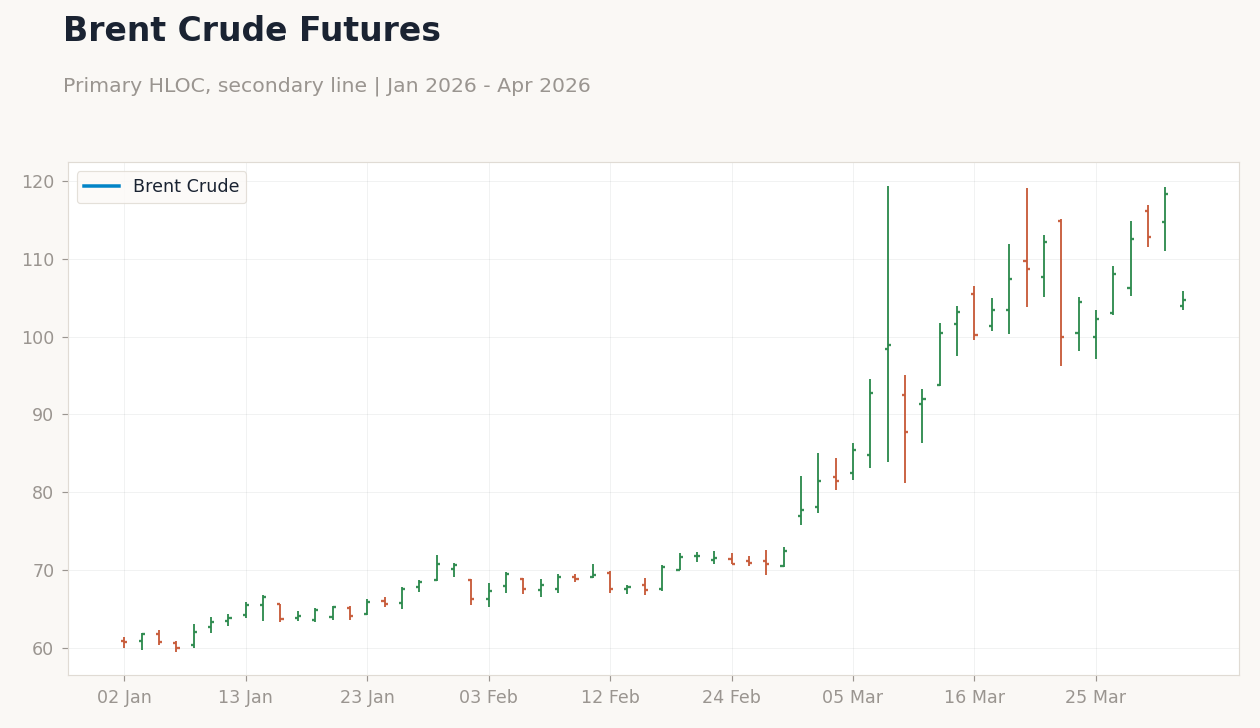
| Brent Crude | 104.98 | -11.30% |
| Gold | 4,700.80 | +1.14% |
| Bitcoin | 68,114.73 | +2.13% |
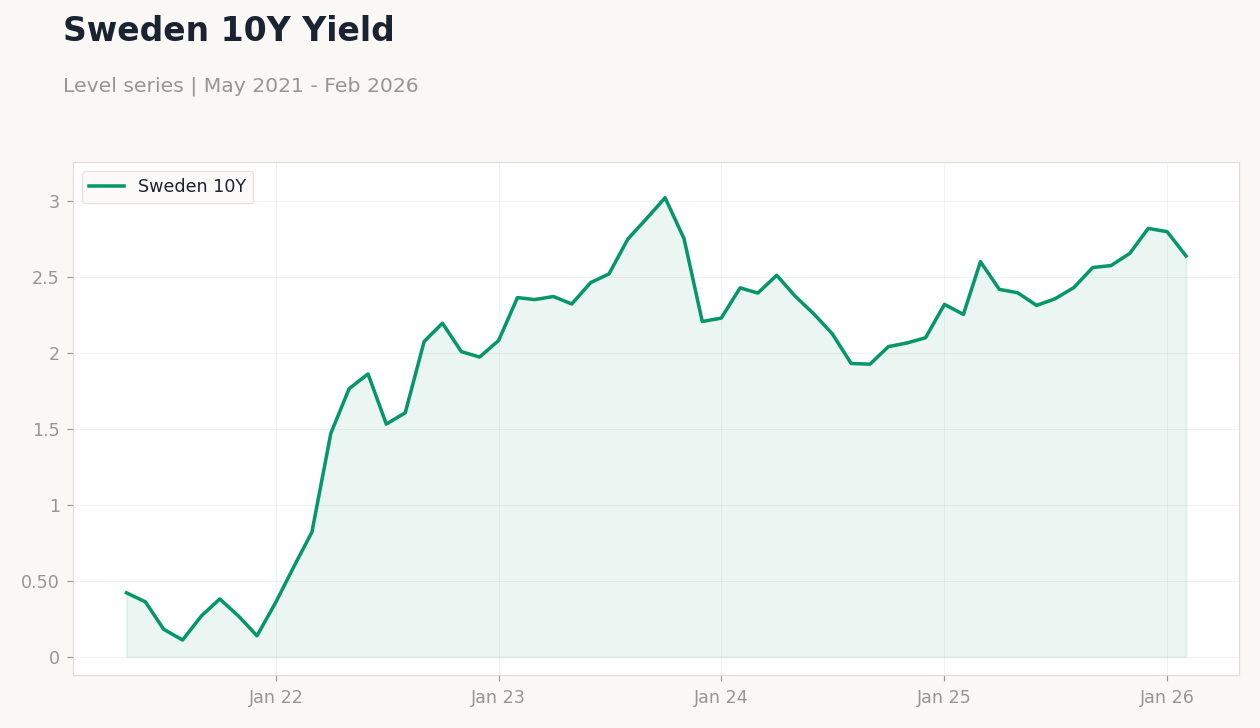
| Sweden 10Y Govt Yield | 2.64% | -5.73% |
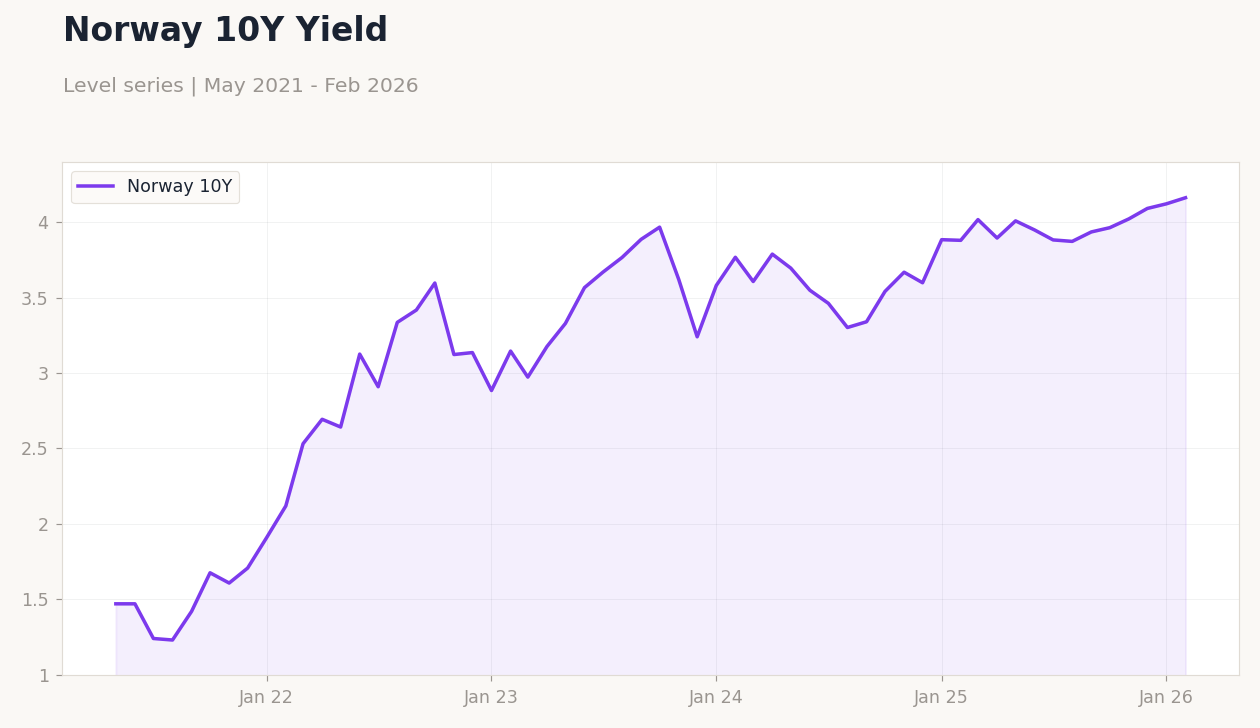
| Norway 10Y Govt Yield | 4.16% | +0.98% |
Prior Economic Events
| Data | Prior | Cons | Actual |
|---|---|---|---|
| No events available | |||
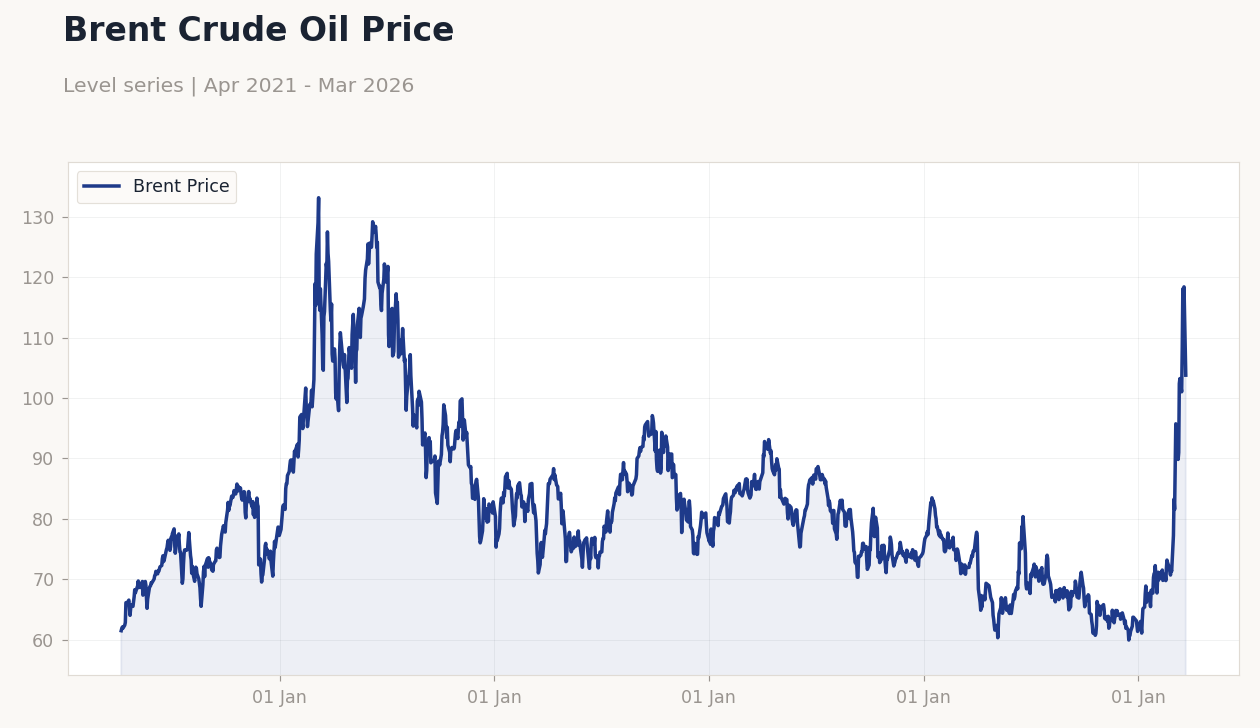 Brent Crude Oil Price | Type: macro_line | Brent Price: 103.8 (2026-03-23) | Range: 59.93–133.2 | Trend(5pt): 61.47,119.2,95.86,73.5,103.8
Today's Economic Events
| Data | Prior | Cons | Time |
|---|---|---|---|
| No events available | |||
- Nordic equities gained amid FX volatility, with Brent's sharp decline weighing on Norway.
- Sweden eyes fuel tax cuts to offset Iran war inflation before elections.
- Yields mixed, highlighting regional policy splits.
Yesterday's Recap
Nordic markets displayed strength yesterday, with equities advancing despite global uncertainties. Sweden's OMX Stockholm 30 rose 1.35% to 2,929.33, driven by export sectors benefiting from a softer SEK. Norway's Oslo Bors climbed 1.48% to 2,067.97, though tempered by Brent crude's 11.30% drop to 104.98, underscoring oil reliance.
Denmark's OMX Copenhagen 25 gained 0.94% to 1,680.97, supported by manufacturing resilience, while Finland's OMX Helsinki 25 increased 0.32% to 5,843.98 amid eurozone cues. FX movements varied: USD/SEK declined 1.11% to 9.45 and USD/NOK fell 0.56% to 9.67, but EUR/SEK dipped 0.21% to 10.93 and EUR/NOK rose 0.39% to 11.19, signaling ECB influences. Sweden's government proposed temporary fuel duty reductions to counter Iran war-related price pressures, targeting voter relief six months from elections.
No significant data releases took place, shifting attention to commodity dynamics.
The Day Ahead
The calendar is empty today, with no Nordic economic indicators due, giving markets time to absorb Brent's fall and its effects on Norway's finances. Watch for developments on Sweden's fuel tax plan, which may shape Riksbank views on inflation. Denmark could see EUR/DKK peg scrutiny if euro fluctuations intensify.
Finland's ECB linkage might transmit wider eurozone moods. Global oil prices will be key for NOK movements. Expect a subdued day absent major external events.
Other Economic Notes
Nordic economies exhibit durability in export-heavy areas like Sweden and Denmark, where manufacturing signals sustained expansion despite international challenges. Norway's oil linkage poses risks, as Brent's slide could erode budget income and strain the krone. Finland's eurozone integration provides steadiness but restricts tailored actions against domestic housing softness.
Global Macro News
Markets worldwide responded to Iran war escalations, boosting gold 1.14% to 4,700.80 as a haven, aiding Nordic asset mixes. Brent's 11.30% tumble to 104.98 reflects supply worries, hitting Norway's exports and possibly softening the NOK versus the euro. Bitcoin climbed 2.13% to 68,114.73, serving as an uncertainty hedge, though Nordic oversight flags its swings.
(cont...)