Nordics Macro Daily(Beta Mode)
Nordic Stocks Mixed, Brent Surges
Market Snapshot
| Asset | Level | Change |
|---|---|---|
| OMX Stockholm 30 | 2,965.69 | -1.35% |
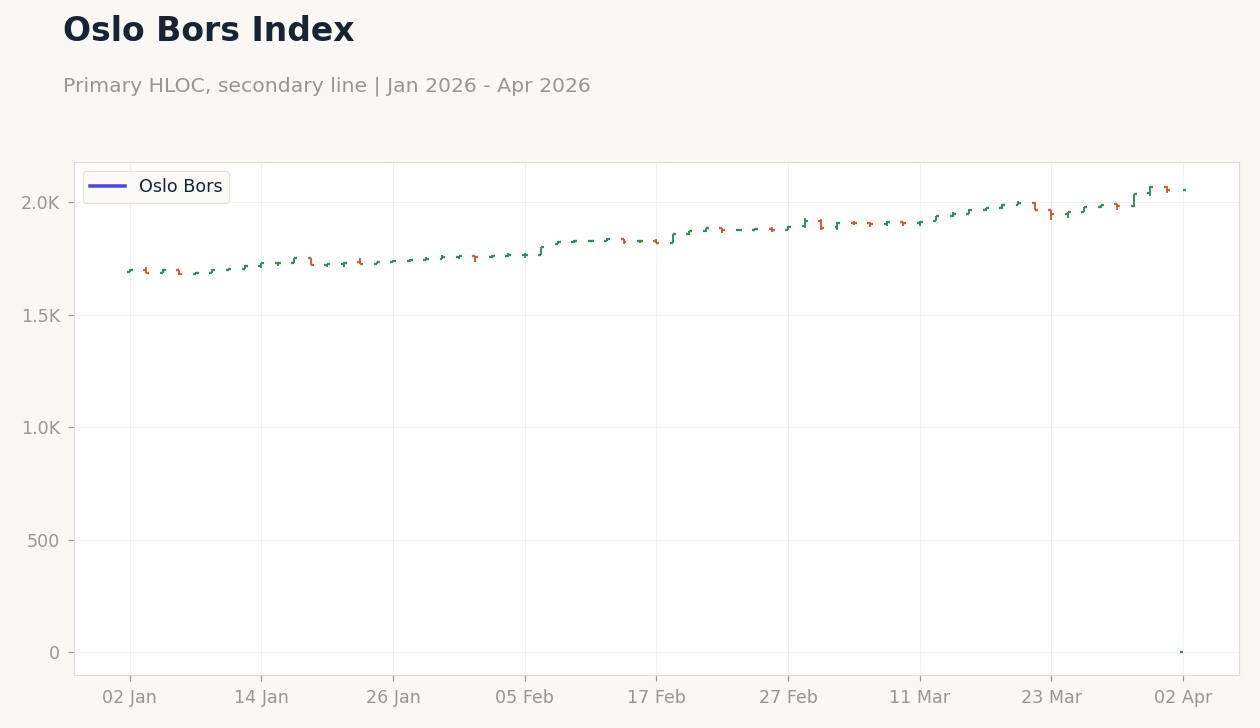
| Oslo Bors | 2,053.05 | +0.00% |
| OMX Copenhagen 25 | 1,709.95 | +1.72% |
| OMX Helsinki 25 | 5,980.64 | +0.46% |
| USD/SEK | 9.43 | +0.31% |
| USD/NOK | 9.73 | +0.16% |
| EUR/SEK | 10.88 | -0.19% |
| EUR/NOK | 11.23 | -0.28% |
| Brent Crude | 109.03 | +7.78% |
| Gold | 4,651.50 | -2.75% |
| Bitcoin | 66,640.01 | -2.11% |
| Sweden 10Y Govt Yield | 2.64% | -5.73% |
| Norway 10Y Govt Yield | 4.16% | +0.98% |
Prior Economic Events
| Data | Prior | Cons | Actual |
|---|---|---|---|
| No events available | |||
 Sweden 10Y Yield Trends | Type: macro_line | Sweden 10Y Yield: 2.64 (2026-02-01) | Range: 0.1101–3.024 | Trend(6pt): 0.4212,1.533,2.888,2.067,2.8,2.64
Today's Economic Events
| Data | Prior | Cons | Time |
|---|---|---|---|
| No events available | |||
- Nordic equities diverged, with Sweden's OMX Stockholm down 1.35% amid krona weakness, while Denmark's OMX Copenhagen rose 1.72% on export optimism.
- Brent crude surged 7.78% to $109.03, supporting Norway's fiscal outlook and stabilizing the krone.
- Bond yields varied, with Sweden's 10Y dropping 5.73% to 2.64% on easing inflation bets, contrasting Norway's slight 0.98% rise to 4.16%.
Yesterday's Recap
Nordic markets showed mixed results on April 2, with Sweden's OMX Stockholm 30 declining 1.35% to 2,965.69, pressured by a weakening SEK as USD/SEK increased 0.31% to 9.43 amid global risk aversion. Norway's Oslo Bors remained flat at 2,053.05, bolstered by rising Brent prices that improved oil revenue prospects, though EUR/NOK fell 0.28% to 11.23. Denmark's OMX Copenhagen 25 advanced 1.72% to 1,709.95, aided by euro-pegged stability and positive manufacturing sentiment.
Finland's OMX Helsinki 25 rose 0.46% to 5,980.64, tracking broader eurozone gains despite no major data releases. The lack of key economic indicators shifted focus to commodity movements, with Brent's rally aiding Norway while Sweden faced yield declines indicating softer rate cut expectations. Housing markets in Sweden stayed subdued, with ongoing concerns over high mortgage rates but no new data.
Trade balances were unreported, yet export sectors in Denmark and Finland displayed resilience.
The Day Ahead
The Nordic calendar is light on April 3, featuring no major data releases for Sweden, Norway, Denmark, or Finland, enabling markets to process recent global volatility. Investors will watch for Brent surge spillovers, especially in Norway's energy sector and krone movements. ECB commentary could affect Denmark's peg and Finland's outlook due to their euro links.
Broader European PMI data may offer indirect Nordic insights. Trading is expected to be quiet unless geopolitical tensions drive oil prices higher. The day positions for consolidation before busier periods.
Other Economic Notes
Nordic economies exhibit divergence, with Norway's oil reliance contrasting Sweden's manufacturing emphasis amid ongoing inflation pressures. Housing affordability persists as an issue in Sweden, where elevated interest rates curb demand despite yield softening. Regional trade ties foster resilience, but global supply chain disruptions challenge export-reliant Denmark and Finland.