Nordics Macro Daily(Beta Mode)
Nordic Stocks Mixed, Oil Rises
Market Snapshot
| Asset | Level | Change |
|---|---|---|
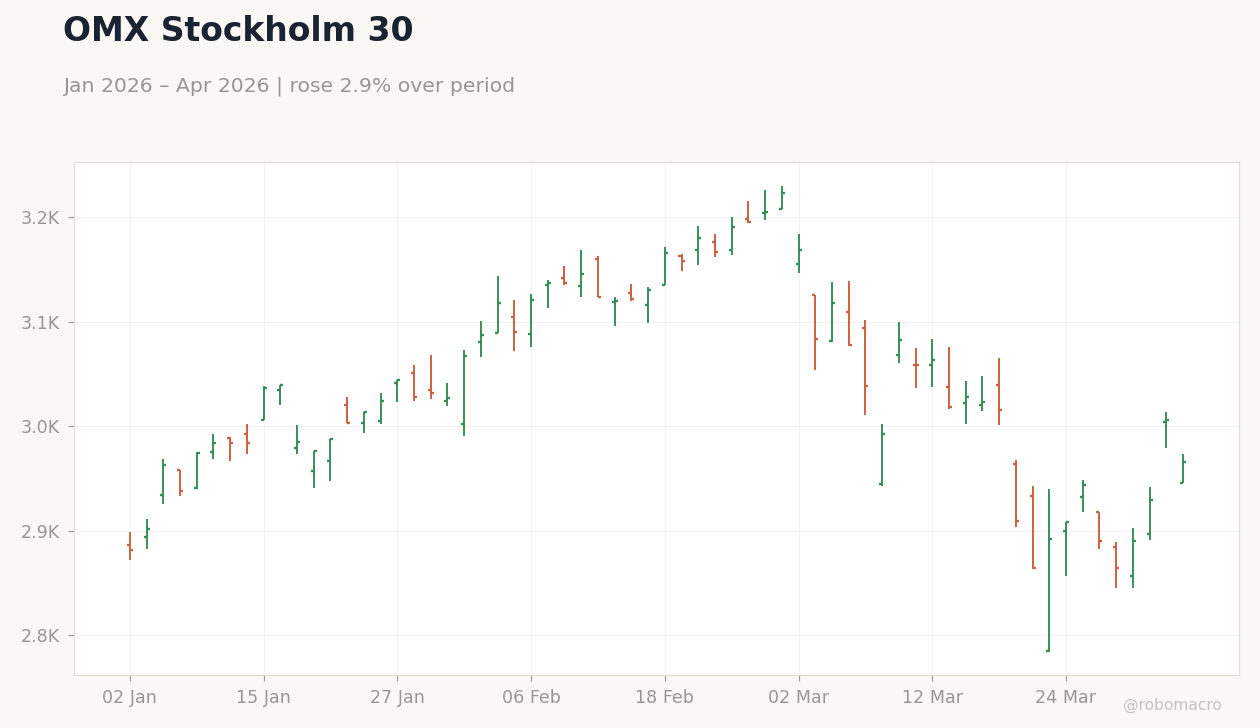
| OMX Stockholm 30 | 2,965.69 | -1.35% |
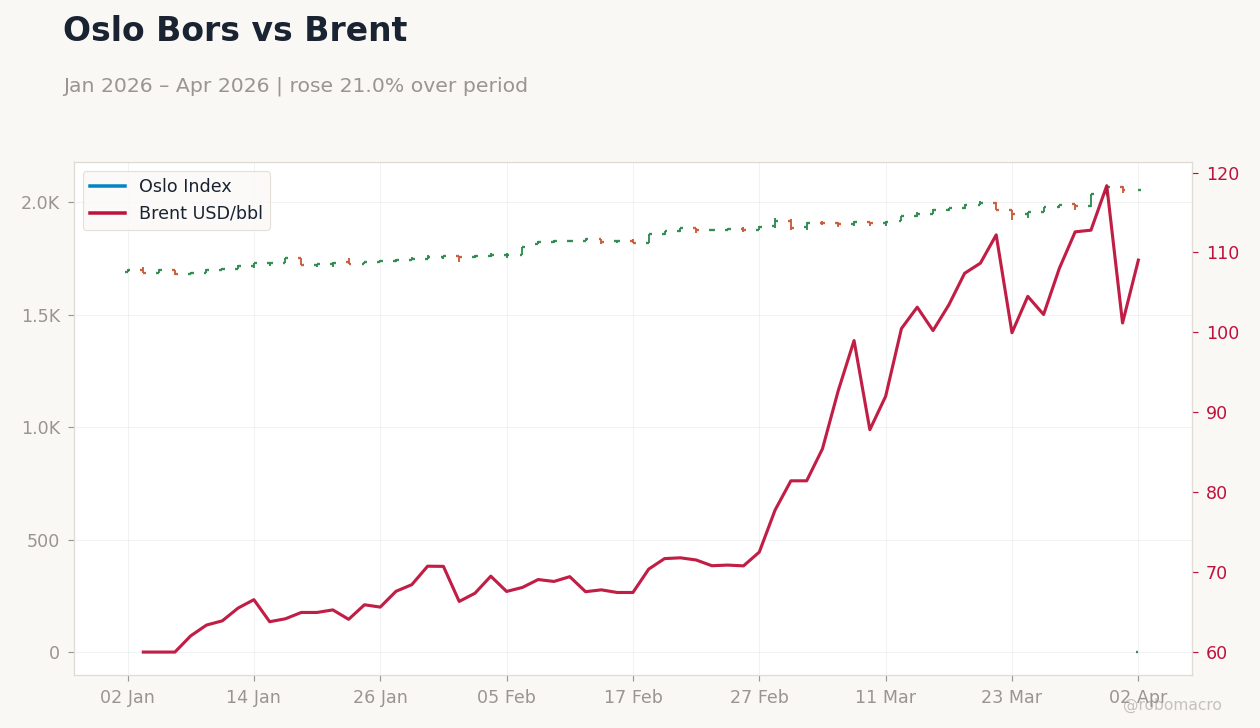
| Oslo Bors | 2,053.05 | +0.00% |
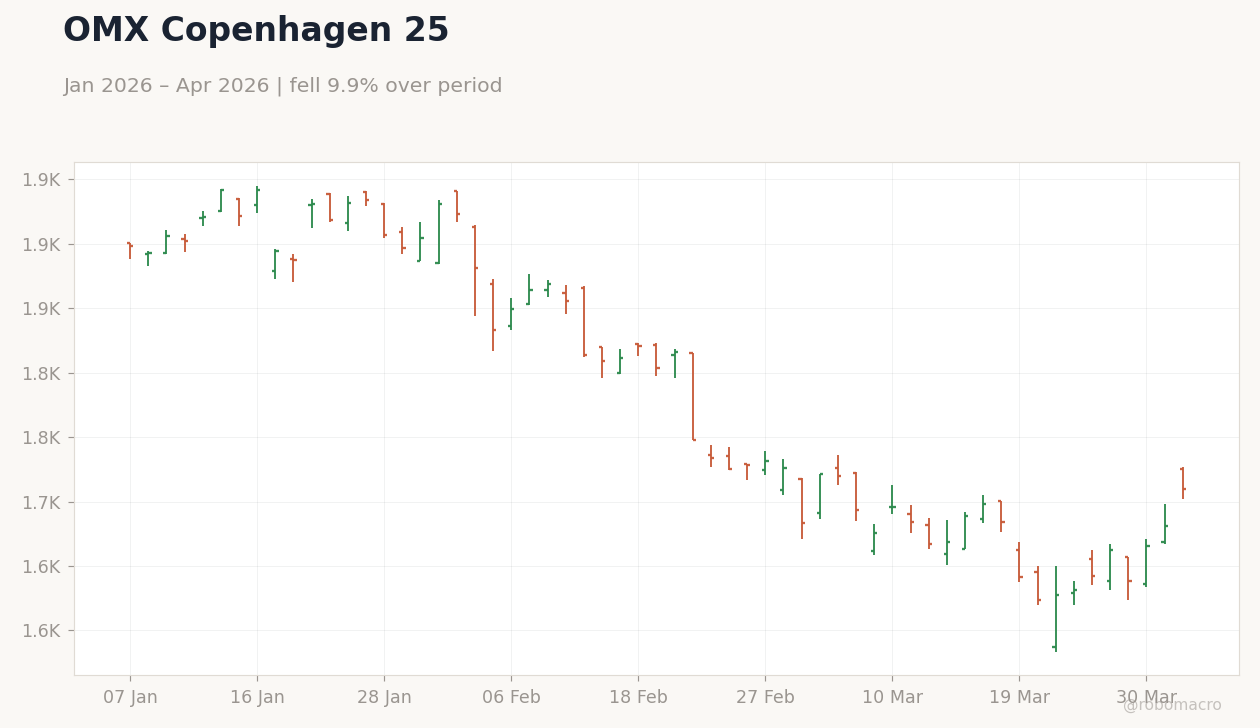
| OMX Copenhagen 25 | 1,709.95 | +1.72% |
| OMX Helsinki 25 | 5,980.64 | +0.46% |
| USD/SEK | 9.46 | -0.13% |
| USD/NOK | 9.70 | -0.58% |
| EUR/SEK | 10.92 | +0.12% |
| EUR/NOK | 11.19 | -0.32% |
| Brent Crude | 111.11 | +1.22% |
| Gold | 4,686.50 | +0.64% |
| Bitcoin | 68,815.29 | -0.24% |
| Sweden 10Y Govt Yield | 2.64% | -5.73% |
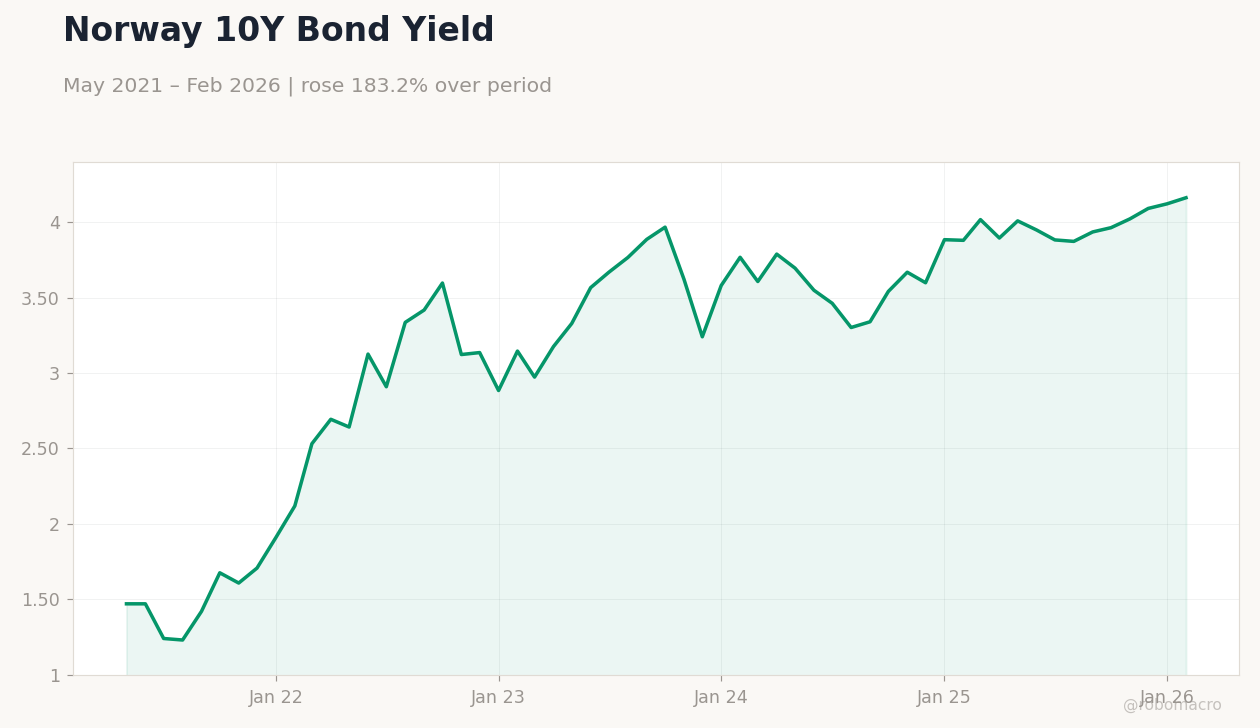
| Norway 10Y Govt Yield | 4.16% | +0.98% |
Prior Economic Events
| Data | Prior | Cons | Actual |
|---|---|---|---|
| No events available | |||
 Sweden 10Y Bond Yield | Type: macro_line | Yield %: 2.64 (2026-02-01) | Range: 0.1101–3.024 | Trend(6pt): 0.4212,1.533,2.888,2.067,2.8,2.64
Today's Economic Events
| Data | Prior | Cons | Time |
|---|---|---|---|
| No events available | |||
- Nordic equities diverged, with Copenhagen and Helsinki gaining amid global risk sentiment, while Stockholm fell on European weakness.
- Krone and krona firmed against USD on oil strength, though euro pairs showed mixed moves reflecting policy differences.
- Bond yields split: Swedish 10Y dropped sharply on safe-haven demand, while Norwegian yields edged higher tied to commodities.
Yesterday's Recap
Nordic markets closed mixed on Monday, with the OMX Stockholm 30 declining 1.35% to 2,965.69 amid European profit-taking in industrials. Oslo Bors remained unchanged at 2,053.05, buoyed by energy resilience as Brent crude advanced 1.22% to 111.11. OMX Copenhagen 25 rose 1.72% to 1,709.95, supported by export firms amid euro stability.
OMX Helsinki 25 increased 0.46% to 5,980.64, driven by tech and materials sectors. Currencies leaned stronger versus the dollar: USD/SEK eased 0.13% to 9.46, and USD/NOK fell 0.58% to 9.70, aided by oil gains. EUR/SEK ticked up 0.12% to 10.92, while EUR/NOK declined 0.32% to 11.19, underscoring divergent central bank outlooks.
In bonds, Sweden's 10Y yield dropped 5.73% to 2.64% on recession concerns, contrasting Norway's 0.98% rise to 4.16% linked to commodity support. Gold climbed 0.64% to 4,686.50, and Bitcoin dipped 0.24% to 68,815.29.
The Day Ahead
Tuesday features a quiet Nordic calendar, with no scheduled economic releases in Sweden, Norway, Denmark, or Finland. Markets may watch for any ad-hoc comments from Riksbank or Norges Bank on oil volatility. Danmarks Nationalbank could provide updates on the EUR/DKK peg amid euro moves.
Finland remains influenced by broader eurozone dynamics under ECB policy. Corporate news, including potential earnings outlooks from major firms, may drive sentiment. Expect range-bound trading unless global energy or geopolitical developments intervene.
Other Economic Notes
Nordic economies display varied resilience, with export-heavy sectors in Denmark and Finland holding up despite global headwinds. Sweden grapples with manufacturing slowdowns from shifting demand, while Norway benefits from Brent's uptick, potentially alleviating fiscal strains but stoking inflation worries. Finland's eurozone integration highlights labor market steadiness, with unemployment at 6.70%.
Overall, regional themes emphasize adaptation to energy shocks and trade exposures, with policy tools aimed at stability.