Nordics Macro Daily(Beta Mode)
Soft SE Inflation Weighs on Riksbank
Market Snapshot
| Asset | Level | Change |
|---|---|---|
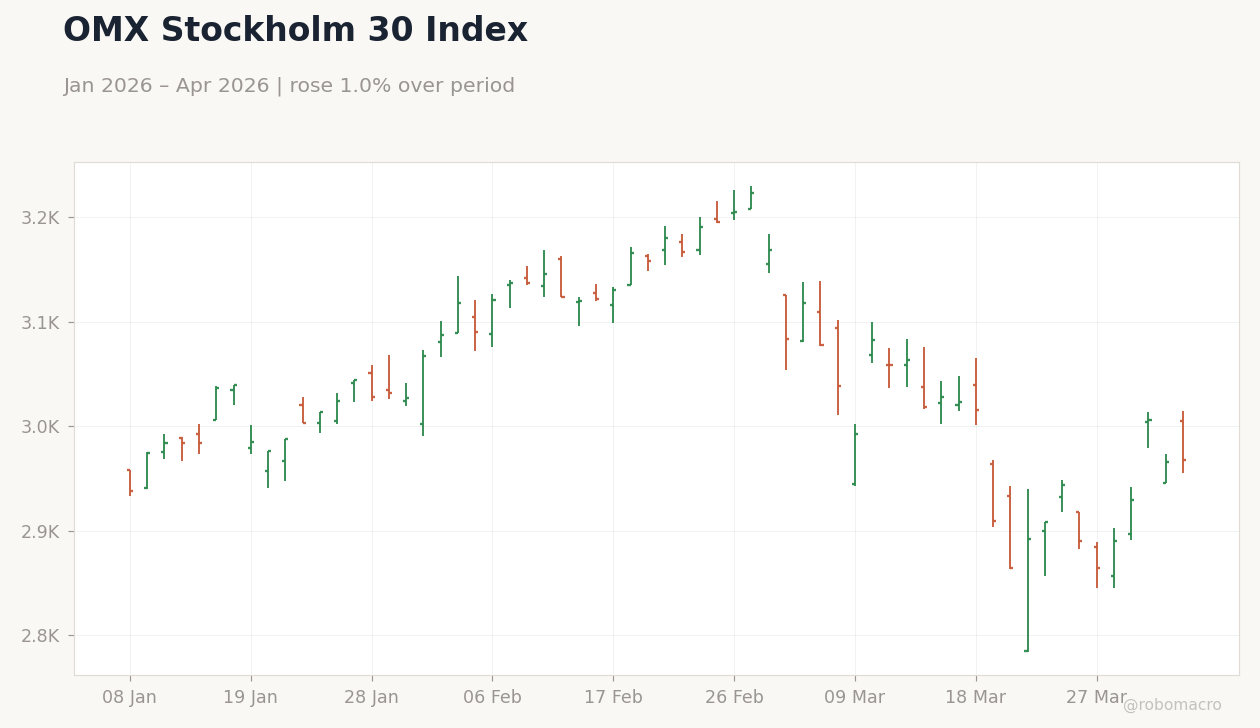
| OMX Stockholm 30 | 2,967.92 | +0.08% |
| Oslo Bors | nan | +nan% |
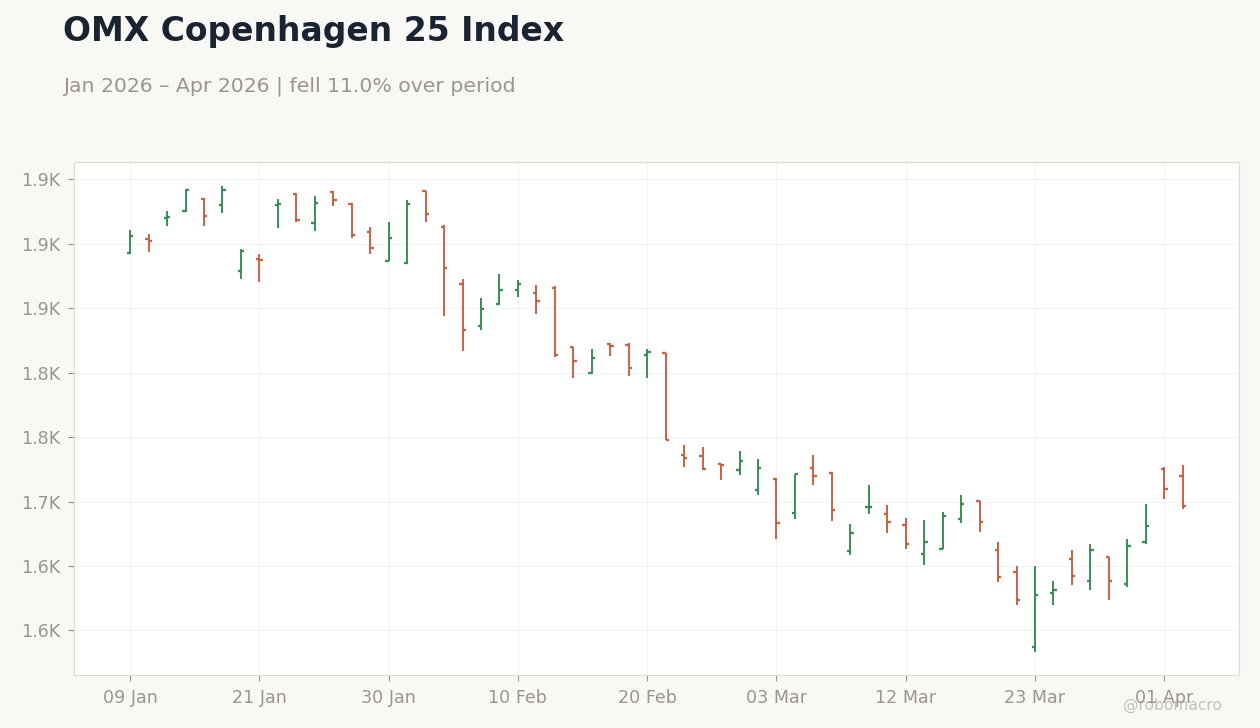
| OMX Copenhagen 25 | 1,696.90 | -0.76% |
| OMX Helsinki 25 | 5,941.90 | -0.65% |
| USD/SEK | 9.33 | -0.04% |
| USD/NOK | 9.58 | -1.27% |
| EUR/SEK | 10.88 | -0.26% |
| EUR/NOK | 11.17 | -0.26% |
| Brent Crude | 97.26 | +2.65% |
| Gold | 4,745.30 | -0.09% |
| Bitcoin | 70,840.84 | -1.53% |
| Sweden 10Y Govt Yield | 2.64% | -5.73% |
| Norway 10Y Govt Yield | 4.16% | +0.98% |
Prior Economic Events
| Data | Prior | Cons | Actual |
|---|---|---|---|
| No events available | |||
 Brent Crude Oil Price | Type: macro_line | USD per Barrel: 127.6 (2026-04-02) | Range: 59.93–133.2 | Trend(5pt): 62.38,114,91.37,77.84,127.6
Today's Economic Events
| Data | Prior | Cons | Time |
|---|---|---|---|
| No events available | |||
- Swedish inflation cooled unexpectedly, raising doubts on Riksbank hike timing amid TD Securities warnings.
- Nordic equities mixed; Brent rally lifts Norway outlook despite NOK gains.
- Global ceasefire hopes ease oil shock fears, supporting Nordic export sentiment.
Yesterday's Recap
Nordic markets showed mixed performance amid softer Swedish inflation data and a Brent crude rally. Sweden's OMX Stockholm 30 edged up 0.08% to 2,967.92, supported by defensive sectors despite inflation printing lower than expected, which TD Securities noted could delay Riksbank rate hikes. Norway's USD/NOK fell 1.27% to 9.58 as Brent crude surged 2.65% to 97.26, bolstering the oil exporter's fiscal position and krone strength.
Denmark's OMX Copenhagen 25 dropped 0.76% to 1,696.90, reflecting export-oriented caution from global war assessments, while Finland's OMX Helsinki 25 declined 0.65% to 5,941.90 under ECB-linked pressures. Swedish 10Y yields fell 5.73% to 2.64%, signaling dovish bets, contrasting Norway's 10Y yield rise of 0.98% to 4.16% on oil gains. EUR/SEK eased 0.26% to 10.88 and EUR/NOK eased 0.26% to 11.17, highlighting krona resilience.
USD/SEK dipped 0.04% to 9.33. Gold edged down 0.09% to 4,745.30, while Bitcoin fell 1.53% to 70,840.84. Overall, Sweden dominated macro news with inflation undershooting, while Norway benefited from energy dynamics.
The Day Ahead
The Nordic calendar remains light with no major data releases scheduled for today. Investors will monitor any follow-up commentary from Riksbank officials on yesterday's soft inflation figures, potentially influencing SEK trades. Norway's market focus shifts to oil price movements post-Brent rally, with implications for Norges Bank's oil revenue assessments.
Denmark and Finland may see indirect ECB ripple effects from eurozone updates, though no local events are slated. Broader attention turns to global ceasefire developments, which could sway Nordic export currencies. Expect quiet trading unless unexpected central bank statements emerge.
Other Economic Notes
Broader Nordic themes highlight divergence in export dependencies, with Norway's oil exposure contrasting Sweden's manufacturing base amid global slowdown risks flagged by the IMF. Housing markets in Sweden remain under watch, as softer inflation could ease mortgage pressures but delay policy normalization. Finland's eurozone ties expose it to ECB inflation pressures from oil shocks, while Denmark's peg maintains stability despite external volatility.