Nordics Macro Daily(Beta Mode)
Sweden Presents Spring Budget
Market Snapshot
| Asset | Level | Change |
|---|---|---|
| OMX Stockholm 30 | 3,102.73 | -0.23% |
| Oslo Bors | 2,048.99 | +0.26% |
| OMX Copenhagen 25 | 1,743.86 | -0.66% |
| OMX Helsinki 25 | 6,265.75 | +1.13% |
| USD/SEK | 9.19 | -1.49% |
| USD/NOK | 9.44 | -0.97% |
| EUR/SEK | 10.80 | -0.79% |
| EUR/NOK | 11.10 | -0.25% |
| Brent Crude | 98.10 | -1.27% |
| Gold | 4,785.20 | +0.90% |
| Bitcoin | 74,323.30 | +5.05% |
| Sweden 10Y Govt Yield | 2.64% | -5.73% |
| Norway 10Y Govt Yield | 4.16% | +0.98% |
Prior Economic Events
| Data | Prior | Cons | Actual |
|---|---|---|---|
| No events available | |||
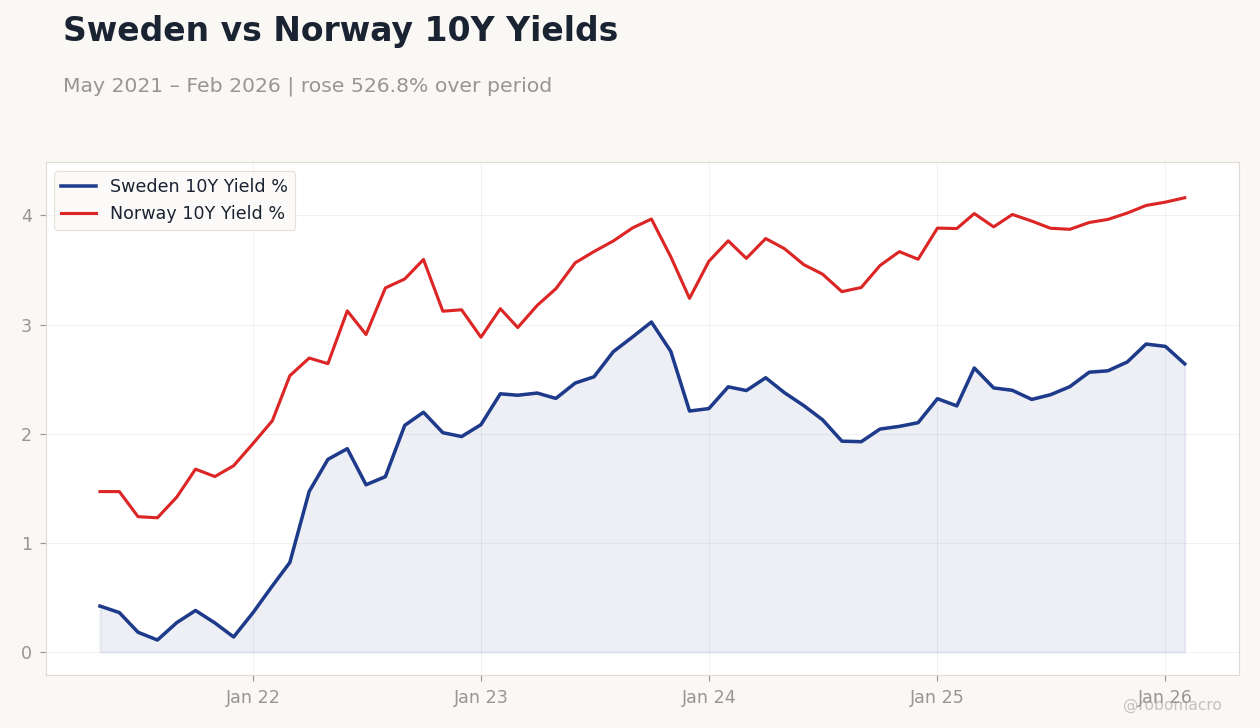 Sweden vs Norway 10Y Yields | Type: macro_line | Sweden 10Y Yield %: 2.64 (2026-02-01) | Range: 0.1101–3.024 | Trend(6pt): 0.4212,1.533,2.888,2.067,2.8,2.64 | Norway 10Y Yield %: 4.162 (2026-02-01) | Range: 1.23–4.162 | Trend(6pt): 1.47,2.909,3.887,3.669,4.122,4.162
Today's Economic Events
| Data | Prior | Cons | Time |
|---|---|---|---|
| No events available | |||
- Sweden's 2026 spring budget offers tax breaks on fuel and electricity, summer jobs, and language programs, aiding households and foreigners.
- Nordic markets show mixed performance with Stockholm and Copenhagen declining, Helsinki rising, amid weakening USD against local currencies.
- Global oil price drop and central bank warnings on energy shocks underscore stagflation risks for import-dependent Nordic economies.
Yesterday's Recap
Sweden's Finance Minister Elisabeth Svantesson presented the 2026 spring budget bill, including tax breaks on fuel and electricity, new summer jobs, and 'language breakfasts' to boost children's Swedish skills, targeting household support and integration for foreigners. This news came amid mixed Nordic equity moves: the OMX Stockholm 30 closed at 3,102.73 (-0.23%), reflecting caution in manufacturing despite fiscal optimism. Norway's Oslo Bors rose to 2,048.99 (+0.26%), supported by energy sectors even as Brent crude fell -1.27% to 98.10.
Denmark's OMX Copenhagen 25 dropped to 1,743.86 (-0.66%), hit by European weakness, while Finland's OMX Helsinki 25 climbed to 6,265.75 (+1.13%), aided by tech strength. Nordic currencies strengthened against the USD, with USD/SEK at 9.19 (-1.49%) and USD/NOK at 9.44 (-0.97%), signaling improved investor sentiment; EUR/SEK stood at 10.80 (-0.79%) and EUR/NOK at 11.10 (-0.25%). Bond yields varied: Sweden's 10Y government yield fell to 2.64% (-5.73% change), suggesting safe-haven demand, while Norway's 10Y yield rose to 4.16% (+0.98%) amid oil fluctuations.
Gold rose +0.90% to 4,785.20, Bitcoin surged +5.05% to 74,323.30, providing some commodity offset. No major economic data releases occurred across the Nordics, leaving budget details as the key driver balancing global pressures.
The Day Ahead
The Nordic calendar remains empty for economic releases or events today, shifting focus to Sweden's budget implications and global oil trends affecting Norway. Parliamentary talks on Sweden's citizenship reforms could emerge, potentially impacting labor markets. Denmark and Finland may track eurozone signals, including ECB commentary, during this quiet period.
Equity volatility could arise in indices like the Oslo Bors due to Brent's recent drop. International factors, such as US-Iran tensions influencing energy prices, may sway sentiment. The day should allow markets to consolidate post-budget announcements without fresh data catalysts.
Other Economic Notes
Sweden's budget measures, like tax incentives, could bolster housing demand in an economy vulnerable to global slowdowns via exports. Norway faces fiscal challenges from Brent's decline, potentially squeezing oil revenues despite robust production. (cont...)


