Nordics Macro Daily(Beta Mode)
Nordic Stocks Mixed, Yields Rise
Market Snapshot
| Asset | Level | Change |
|---|---|---|
| OMX Stockholm 30 | 3,120.75 | +0.08% |
| Oslo Bors | 2,017.43 | -0.10% |
| OMX Copenhagen 25 | 1,773.80 | -0.03% |
| OMX Helsinki 25 | 6,235.88 | +0.35% |
| USD/SEK | 9.19 | +0.41% |
| USD/NOK | 9.36 | -0.26% |
| EUR/SEK | 10.82 | +0.15% |
| EUR/NOK | 11.02 | -0.50% |
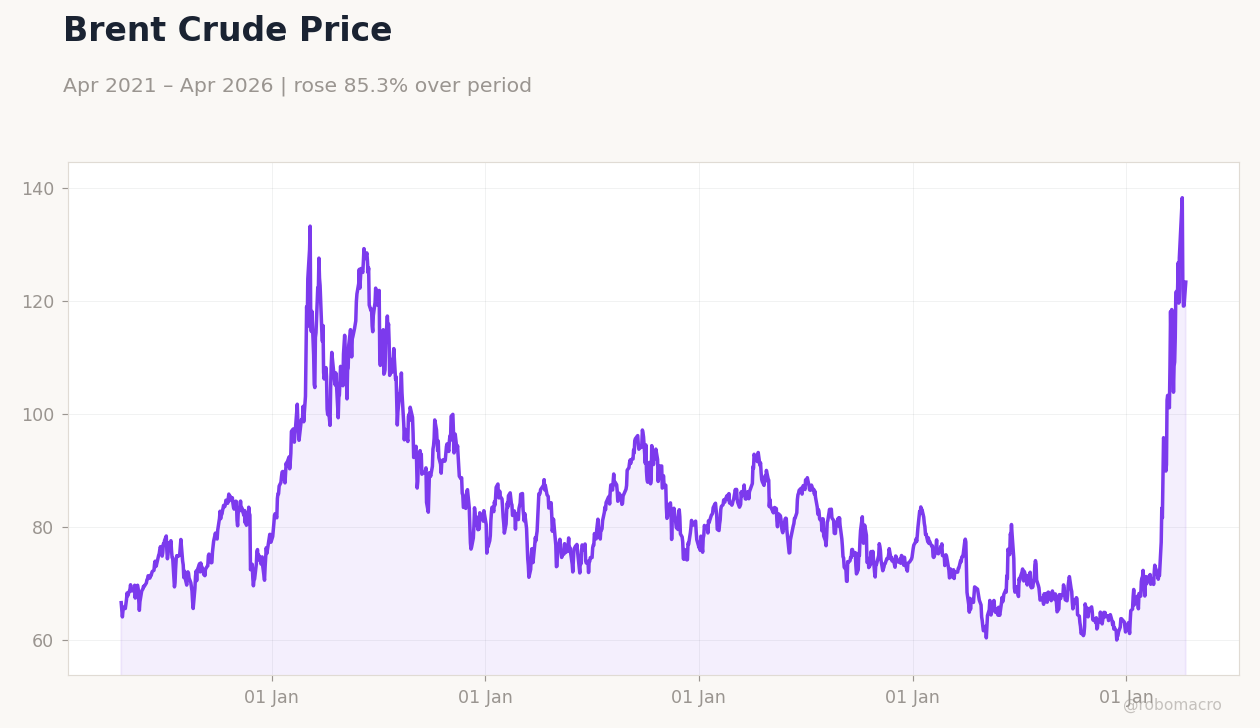
| Brent Crude | 98.18 | -1.22% |
| Gold | 4,812.60 | +0.57% |
| Bitcoin | 74,776.21 | -0.04% |
| Sweden 10Y Govt Yield | 2.76% | +4.55% |
| Norway 10Y Govt Yield | 4.25% | +1.99% |
Prior Economic Events
| Data | Prior | Cons | Actual |
|---|---|---|---|
| No events available | |||
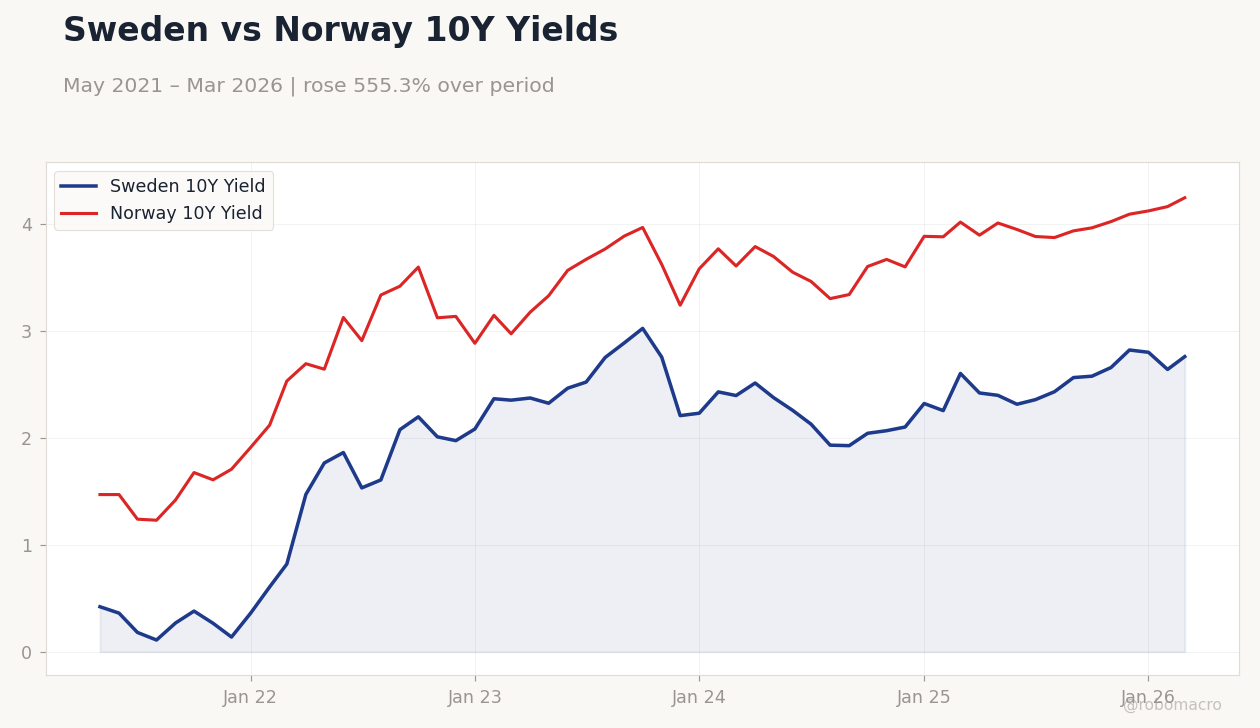 Sweden vs Norway 10Y Yields | Type: macro_line | Sweden 10Y Yield: 2.76 (2026-03-01) | Range: 0.1101–3.024 | Trend(6pt): 0.4212,1.533,2.888,2.067,2.8,2.76 | Norway 10Y Yield: 4.245 (2026-03-01) | Range: 1.23–4.245 | Trend(6pt): 1.47,2.909,3.887,3.669,4.122,4.245
Today's Economic Events
| Data | Prior | Cons | Time |
|---|---|---|---|
| No events available | |||
- Nordic equities showed mixed performance with Finland leading gains, while Brent crude declined amid global supply concerns.
- Government bond yields rose in Sweden and Norway, reflecting inflation worries; currencies had varied moves against the USD.
- Norwegian oil revenues hit record highs in March, boosting fiscal outlook despite softer labor data.
Yesterday's Recap
Nordic markets displayed varied movements on April 16, with the OMX Stockholm 30 edging up 0.08% to 3,120.75, supported by modest gains in industrials amid falling Swedish unemployment reported in recent news. Oslo Bors dipped 0.10% to 2,017.43, pressured by a 1.22% drop in Brent crude to 98.18, which weighed on energy stocks given Norway's oil export reliance. OMX Copenhagen 25 slipped 0.03% to 1,773.80, reflecting subdued trading in Denmark with no major data releases.
OMX Helsinki 25 rose 0.35% to 6,235.88, buoyed by tech sector strength in Finland. Currency pairs saw USD/SEK rise 0.41% to 9.19 and USD/NOK fall 0.26% to 9.36, while EUR/SEK increased 0.15% to 10.82 and EUR/NOK declined 0.50% to 11.02. Sweden's 10-year government yield rose to 2.76% with a 4.55% change, and Norway's climbed to 4.25% with a 1.99% change, signaling market bets on persistent inflation.
Overall, the session highlighted Norway's vulnerability to oil price swings, with record March oil revenues providing some fiscal buffer.
The Day Ahead
April 17 brings a quiet calendar for Nordic data, with no major releases scheduled across Sweden, Norway, Denmark, or Finland. Investors will monitor global oil dynamics, as Brent's recent dip could influence Norwegian krone stability and equity sentiment in Oslo. Attention may turn to any updates on Sweden's nuclear waste repository funding, earmarked at 183 billion kronor, which could impact long-term energy sector investments.
In Denmark, peg maintenance might prompt minor FX interventions if EUR/DKK fluctuates. Finland, aligned with eurozone trends, could see indirect effects from ECB commentary on broader European growth. Markets anticipate low volatility unless global news triggers risk-off moves.
Other Economic Notes
Sweden's housing market remains under scrutiny, with recent government criticism highlighting policy challenges amid falling unemployment, potentially supporting consumer spending in export-oriented sectors. Norway's economy benefits from unprecedented March oil revenues, enhancing the Government Pension Fund Global's position, though softening labor markets pose risks to domestic demand. Broader Nordic themes include energy transition efforts, such as Denmark's wind output strength and Finland's industrial challenges tied to eurozone trade slowdowns.