Nordics Macro Daily(Beta Mode)
Brent Slumps, Krone Volatility Rises
Market Snapshot
| Asset | Level | Change |
|---|---|---|
| OMX Stockholm 30 | 3,182.13 | +1.97% |
| Oslo Bors | 1,968.36 | -2.43% |
| OMX Copenhagen 25 | 1,786.32 | +0.71% |
| OMX Helsinki 25 | 6,291.81 | +0.90% |
| USD/SEK | 9.18 | -0.08% |
| USD/NOK | 9.35 | -0.27% |
| EUR/SEK | 10.80 | -0.30% |
| EUR/NOK | 11.04 | +0.17% |
| Brent Crude | 90.38 | -9.07% |
| Gold | 4,857.60 | +1.51% |
| Bitcoin | 74,222.85 | -1.99% |
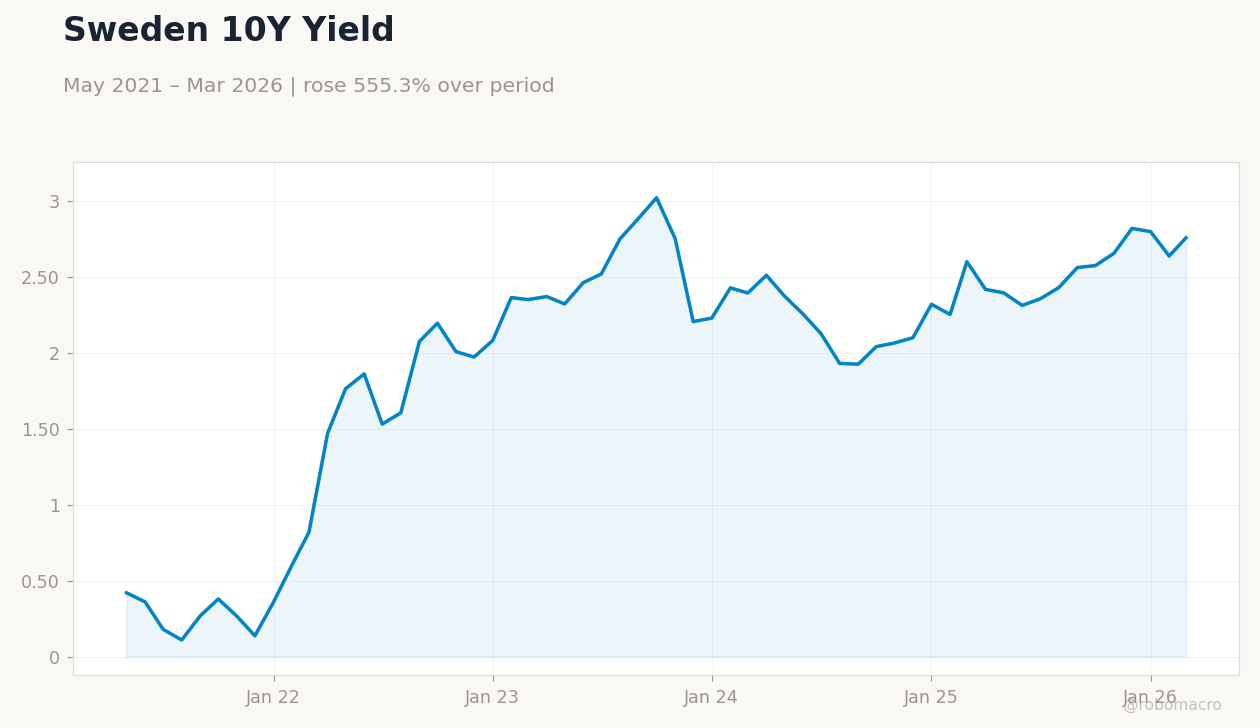
| Sweden 10Y Govt Yield | 2.76% | +4.55% |
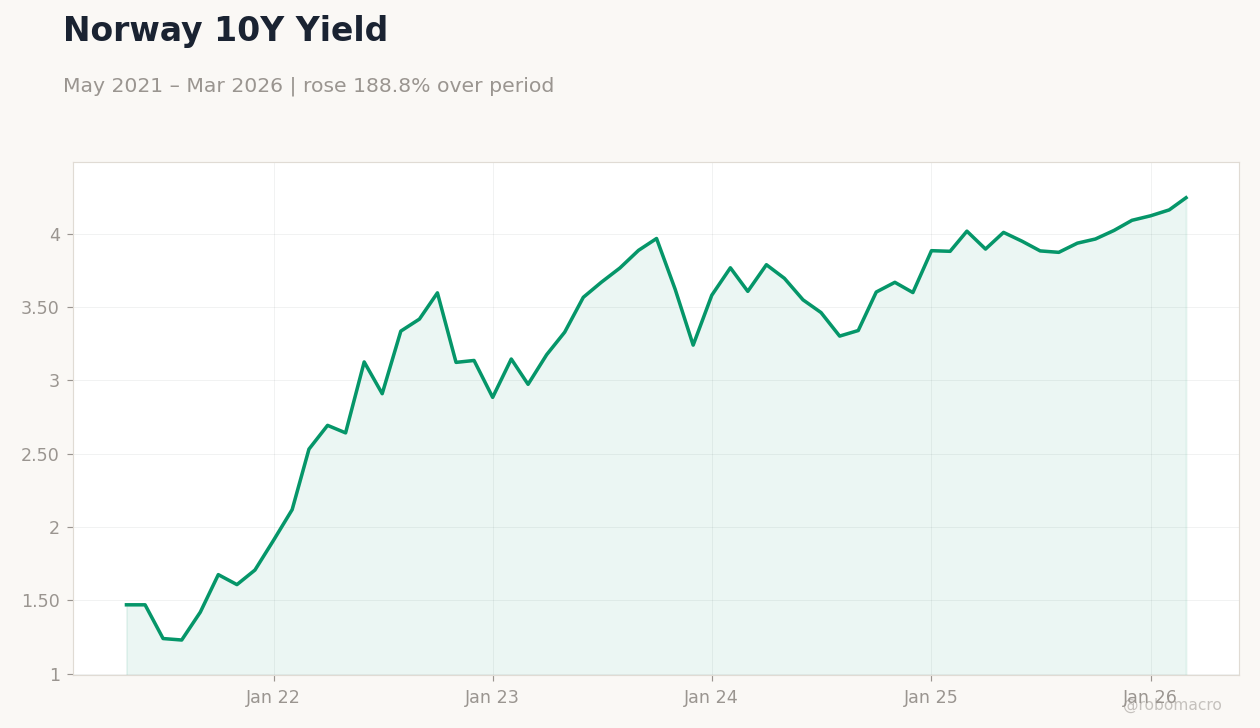
| Norway 10Y Govt Yield | 4.25% | +1.99% |
Prior Economic Events
| Data | Prior | Cons | Actual |
|---|---|---|---|
| No events available | |||
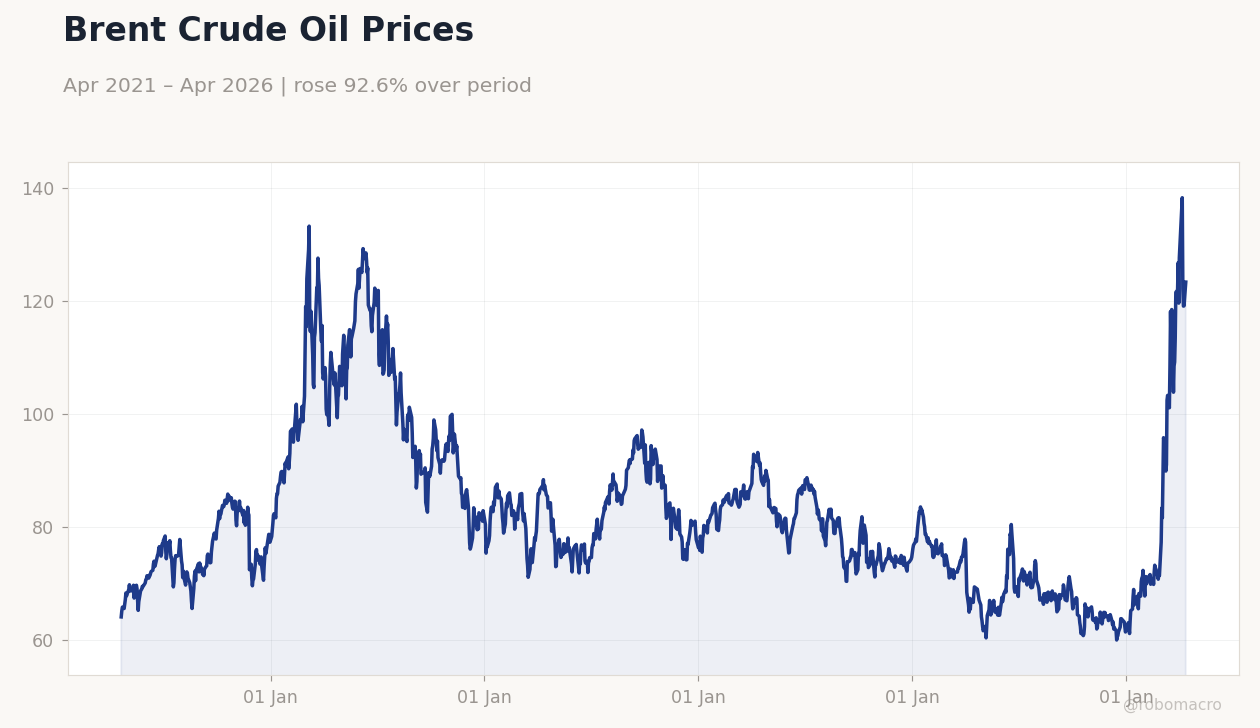 Brent Crude Oil Prices | Type: macro_line | Brent Crude ($/bbl): 123.3 (2026-04-13) | Range: 59.93–138.2 | Trend(6pt): 64.02,117.3,90.99,82.69,119.1,123.3
Today's Economic Events
| Data | Prior | Cons | Time |
|---|---|---|---|
| No events available | |||
- Sharp Brent crude decline pressures Norway's fiscal outlook and NOK, amid global oil shocks from Iran conflict.
- Swedish equities rally while Oslo Bors falls; immigration policy shifts signal labor market tightening.
- Nordic central banks on watch for policy divergences, with ECB rate at 2.00% anchoring Denmark and Finland.
Yesterday's Recap
Nordic equity markets showed mixed performance amid volatile commodity prices and global risk sentiment. Sweden's OMX Stockholm 30 climbed 1.97% to 3,182.13, supported by positive sentiment in manufacturing sectors despite broader uncertainties. Norway's Oslo Bors dropped 2.43% to 1,968.36, hit hard by the 9.07% plunge in Brent crude to 90.38, which undermined energy stocks and fiscal projections.
Denmark's OMX Copenhagen 25 rose 0.71% to 1,786.32, buoyed by export-oriented firms, while Finland's OMX Helsinki 25 gained 0.90% to 6,291.81 on tech rebounds. Currency moves were subdued, with USD/SEK dipping 0.08% to 9.18 and USD/NOK falling 0.27% to 9.35, though EUR/NOK edged up 0.17% to 11.04 amid krone volatility warnings. Bond yields firmed, with Sweden's 10Y government yield rising 4.55% to 2.76% and Norway's up 1.99% to 4.25%, reflecting inflation concerns.
No major macro data releases occurred, keeping focus on market reactions to global oil dynamics and Sweden's spring budget announcements.
The Day Ahead
The Nordic calendar remains quiet with no scheduled data releases or events for today, allowing markets to digest recent commodity volatility and global headlines. Investors will monitor any spillover from Brent's sharp drop, particularly for Norway's oil-dependent economy and potential Norges Bank commentary on krone stability. In Sweden, attention may turn to follow-up details on the spring budget, which earmarks 183 billion kronor for a nuclear waste repository, signaling long-term energy infrastructure priorities.
Denmark and Finland could see indirect influences from ECB-related news, though no specific announcements are slated. Broader sentiment might be shaped by global oil price movements, with any rebound in Brent potentially lifting Norwegian assets. Overall, a light day positions traders to focus on intraday FX and equity flows amid krone strength forecasts from Nordea Markets.
Other Economic Notes
Sweden's move to phase out permanent residency for most immigrants could tighten labor markets, potentially exacerbating wage pressures in export sectors already facing high-skilled worker shortages. Norway's record arms exports exceeding 10 billion kroner in 2025, with Poland as a key recipient, bolster its defense industry and fiscal revenues amid global tensions. Broader Nordic themes include green transition boosts, such as Sweden's nuclear investments, aligning with regional pushes for sustainable energy amid oil price instability.