Nordics Macro Daily(Beta Mode)
Nordics Mixed, Brent Climbs
Market Snapshot
| Asset | Level | Change |
|---|---|---|
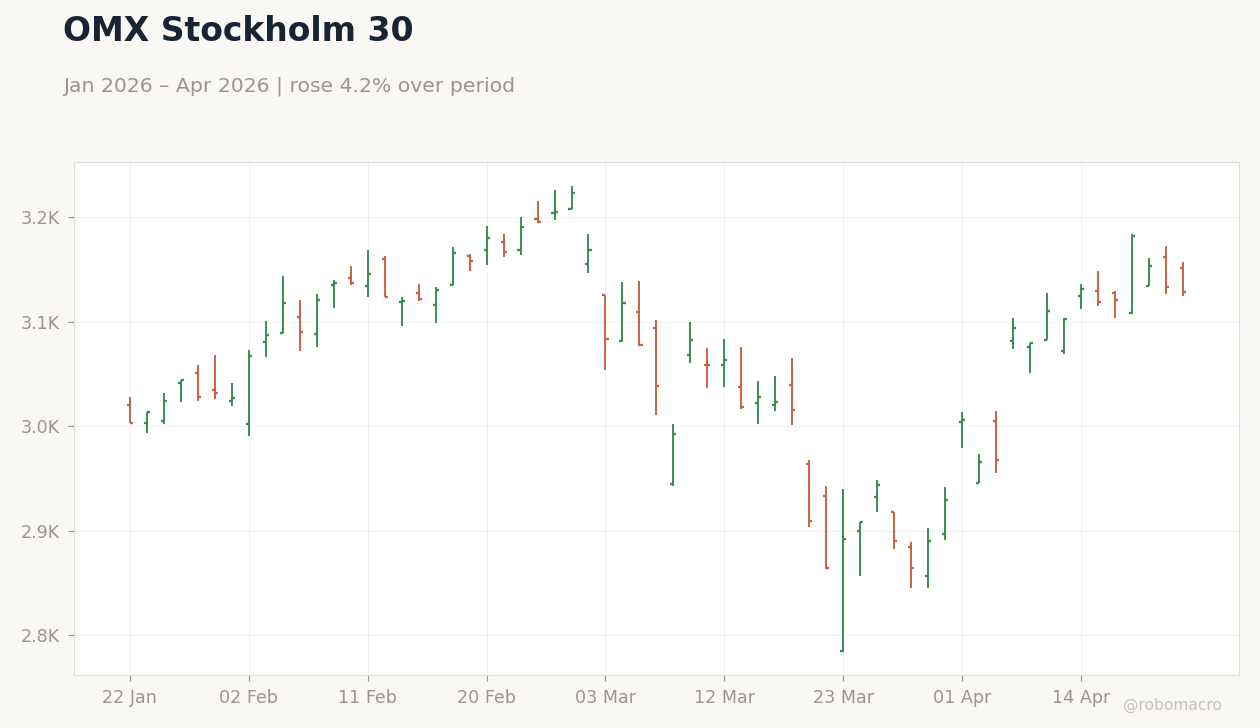
| OMX Stockholm 30 | 3,128.39 | -0.16% |
| Oslo Bors | 1,997.57 | +0.22% |
| OMX Copenhagen 25 | 1,745.64 | -0.36% |
| OMX Helsinki 25 | 6,220.03 | -0.55% |
| USD/SEK | 9.23 | +0.59% |
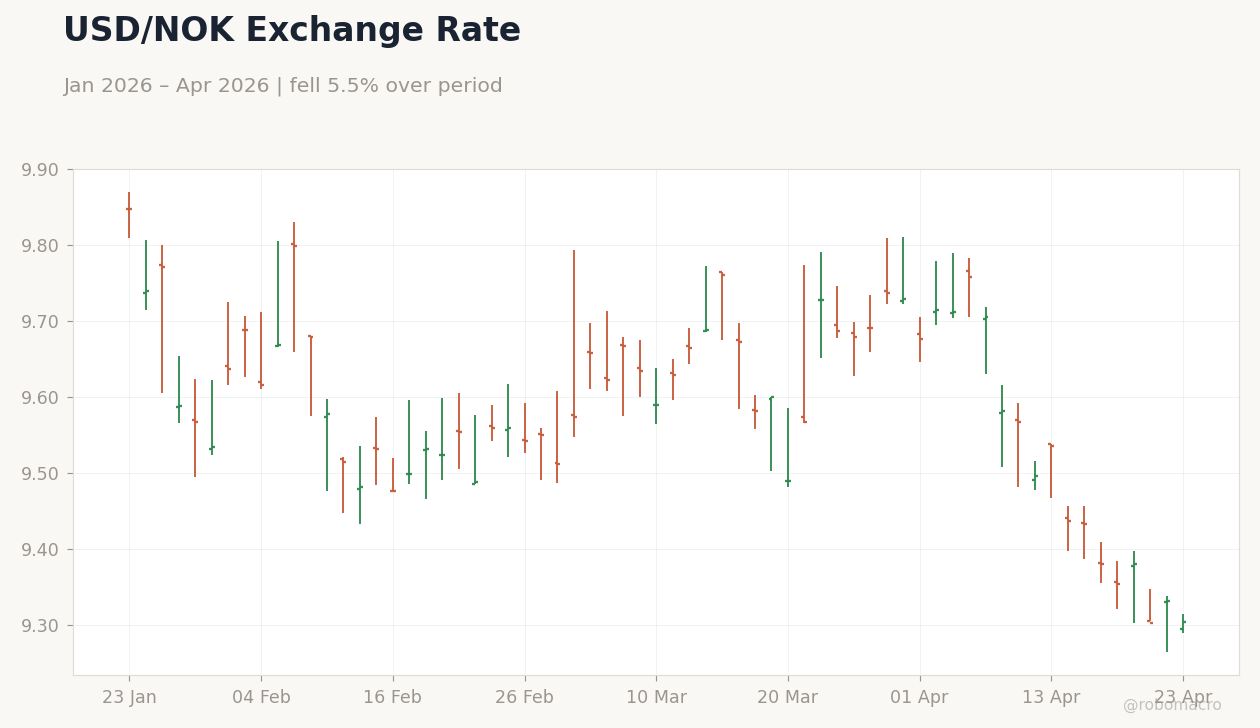
| USD/NOK | 9.30 | -0.30% |
| EUR/SEK | 10.81 | +0.24% |
| EUR/NOK | 10.89 | -0.66% |
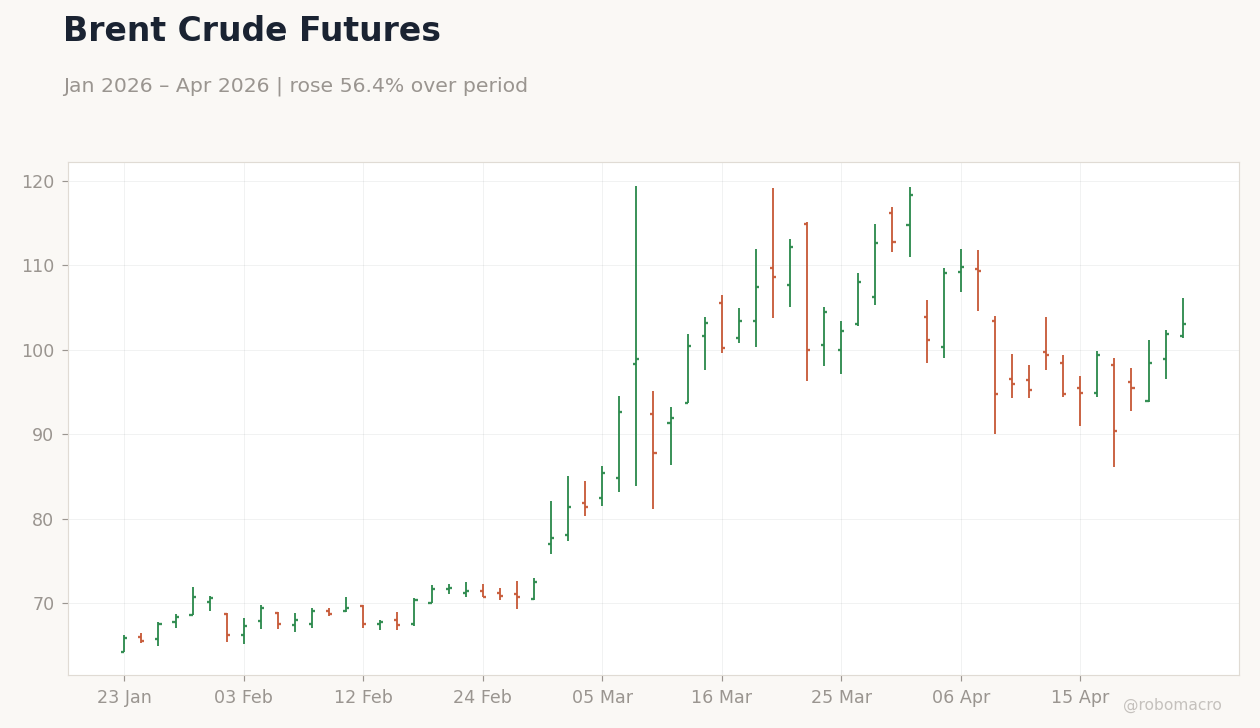
| Brent Crude | 103.11 | +1.18% |
| Gold | 4,717.90 | -0.31% |
| Bitcoin | 78,014.98 | +2.18% |
| Sweden 10Y Govt Yield | 2.76% | +4.55% |
| Norway 10Y Govt Yield | 4.25% | +1.99% |
Prior Economic Events
| Data | Prior | Cons | Actual |
|---|---|---|---|
| No events available | |||
 Brent Crude Oil Price | Type: macro_line | Brent Price: 103.4 (2026-04-20) | Range: 59.93–138.2 | Trend(5pt): 65.5,106.8,91.88,80.57,103.4
Today's Economic Events
| Data | Prior | Cons | Time |
|---|---|---|---|
| No events available | |||
- Nordic equities showed mixed performance with Oslo Bors gaining on oil strength, while others dipped amid global caution.
- Currencies diverged: SEK weakened versus USD, NOK strengthened slightly; yields rose in Sweden and Norway.
- Brent crude advanced, supporting Norway's outlook, as geopolitical tensions lingered.
Yesterday's Recap
Nordic markets displayed varied movements amid a quiet data calendar, with no major releases across the region. Sweden's OMX Stockholm 30 fell 0.16% to 3,128.39, pressured by broader risk aversion, while Norway's Oslo Bors rose 0.22% to 1,997.57, buoyed by Brent crude's 1.18% gain to 103.11. Denmark's OMX Copenhagen 25 declined 0.36% to 1,745.64, and Finland's OMX Helsinki 25 dropped 0.55% to 6,220.03, reflecting eurozone sensitivities.
Currency shifts included USD/SEK rising 0.59% to 9.23 and USD/NOK falling 0.30% to 9.30, with EUR/SEK up 0.24% to 10.81 and EUR/NOK down 0 0.66% to 10.89. Sweden's 10Y government yield increased 4.55% to 2.76%, and Norway's 10Y yield rose 1.99% to 4.25%, signaling inflation concerns. In news, Norway's finance minister discussed halving food VAT to curb price growth, potentially easing household pressures without major impact on Norges Bank's core inflation gauge.
Denmark saw Jyske Bank launch a new mortgage product, aiming to boost housing activity in a stable peg environment.
The Day Ahead
With no scheduled economic releases for the Nordics today, attention turns to any unscheduled policy remarks or market reactions to global developments. Traders may monitor currency fluctuations, particularly NOK amid Brent volatility, as Norway's oil exposure remains key. In Sweden, ongoing housing market trends could influence sentiment without fresh data.
Denmark and Finland, tied to eurozone dynamics, might see indirect effects from ECB-related news. Potential focus includes any updates on Norway's fiscal adjustments following VAT discussions. Overall, a light calendar suggests Nordic assets will track broader European and energy market cues.
Other Economic Notes
Broader Nordic themes include persistent energy shocks, with Norway benefiting from elevated Brent prices that support fiscal revenues and the krone. Sweden's export-oriented manufacturing faces headwinds from global demand slowdowns, as seen in currency weakening. Housing markets remain a watchpoint, especially in Denmark where new mortgage launches aim to stimulate activity amid peg stability.