Nordics Macro Daily(Beta Mode)
Sweden Energy Risks, Norway Fund Hit
Market Snapshot
| Asset | Level | Change |
|---|---|---|
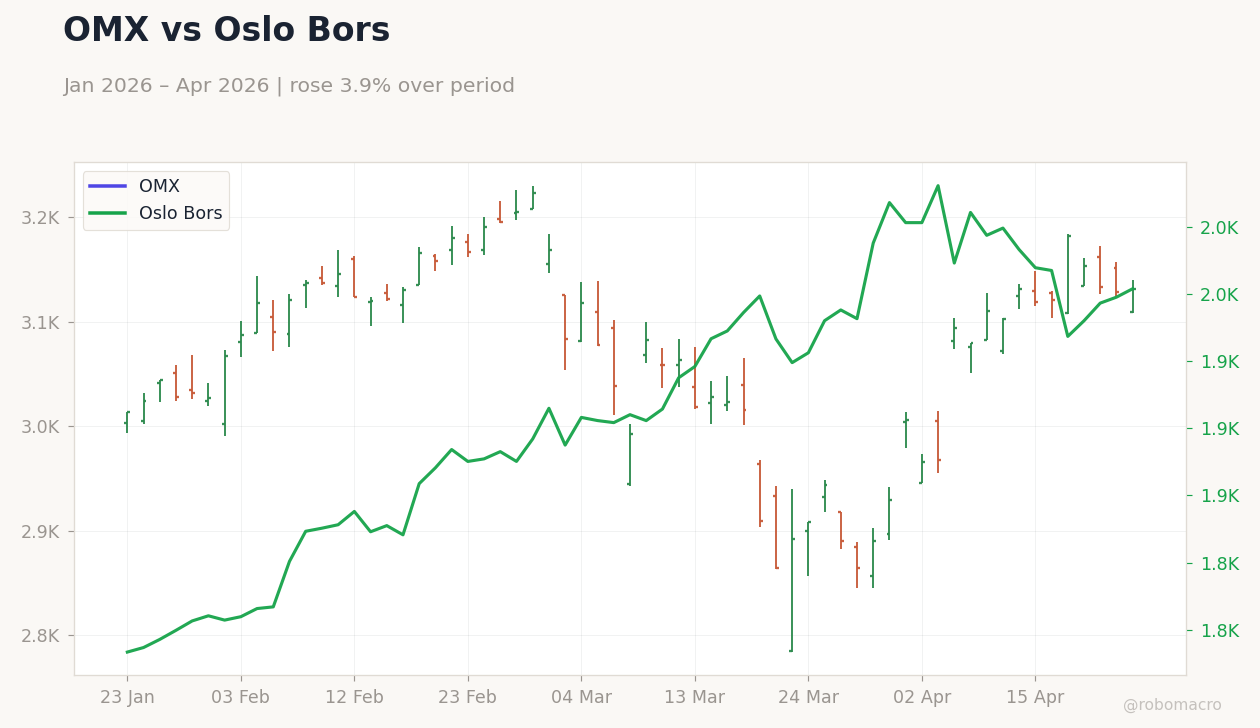
| OMX Stockholm 30 | 3,131.35 | +0.09% |
| Oslo Bors | 2,003.83 | +0.31% |
| OMX Copenhagen 25 | 1,731.99 | -0.78% |
| OMX Helsinki 25 | 6,314.03 | +1.51% |
| USD/SEK | 9.26 | +0.64% |
| USD/NOK | 9.30 | -0.38% |
| EUR/SEK | 10.82 | +0.43% |
| EUR/NOK | 10.91 | +0.25% |
| Brent Crude | 105.40 | +0.31% |
| Gold | 4,693.00 | -0.26% |
| Bitcoin | 77,683.93 | -0.66% |
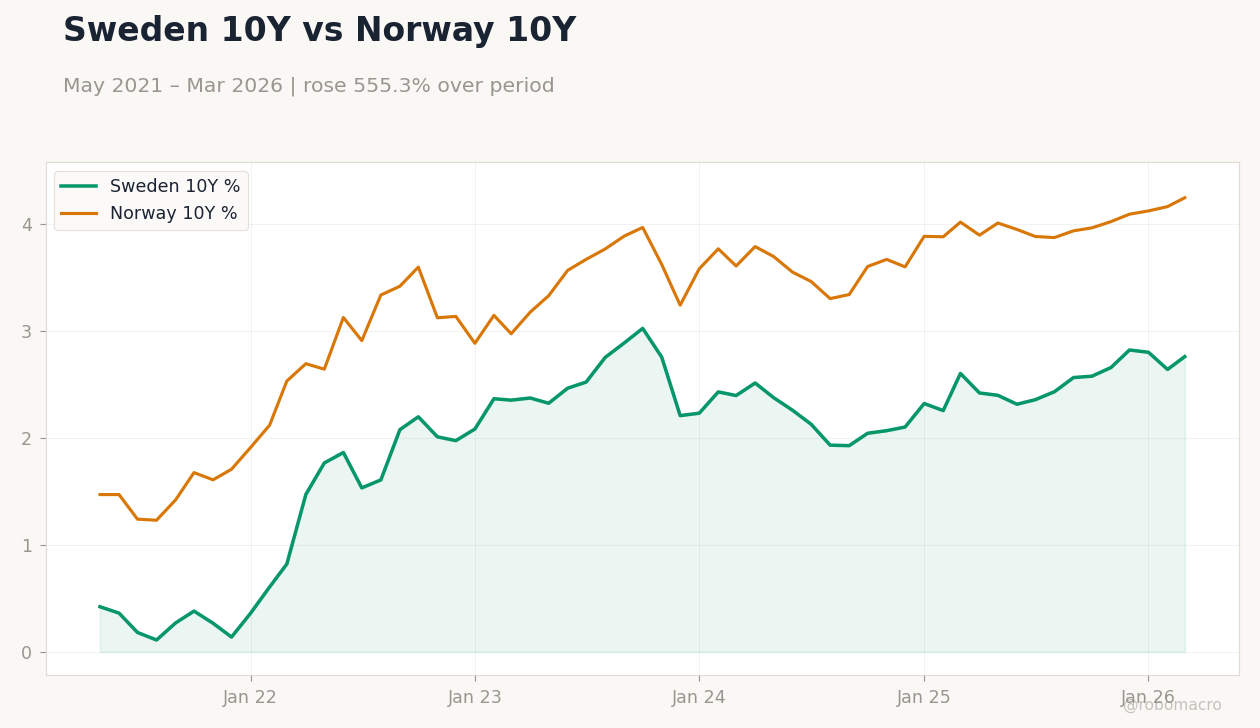
| Sweden 10Y Govt Yield | 2.76% | +4.55% |
| Norway 10Y Govt Yield | 4.25% | +1.99% |
Prior Economic Events
| Data | Prior | Cons | Actual |
|---|---|---|---|
| No events available | |||
 Brent Crude Price History | Type: macro_line | Brent USD/bbl: 103.4 (2026-04-20) | Range: 59.93–138.2 | Trend(5pt): 65.5,106.8,91.88,80.57,103.4
Today's Economic Events
| Data | Prior | Cons | Time |
|---|---|---|---|
| No events available | |||
- Sweden warns of potential fuel rationing if Middle East war disrupts supplies, exacerbating energy crisis.
- Norway's sovereign wealth fund reports Q1 loss of 1.27 trillion kroner, dragged by tech stocks.
- Nordic markets mixed: Finland's OMX Helsinki 25 up 1.51%, Denmark's OMX Copenhagen 25 down 0.78%.
Yesterday's Recap
Nordic markets showed mixed results amid Middle East tensions and energy supply concerns. Sweden's OMX Stockholm 30 edged up 0.09% to 3,131.35, bolstered by banking sector stability despite reports of Handelsbanken's stock underperformance due to conservative risk strategies. Norway's Oslo Bors rose 0.31% to 2,003.83, supported by Brent crude at $105.40 with a 0.31% increase, though the sovereign wealth fund's 1.27 trillion kroner Q1 loss tempered optimism.
Denmark's OMX Copenhagen 25 declined 0.78% to 1,731.99, echoing European caution, while Finland's OMX Helsinki 25 advanced 1.51% to 6,314.03 on broader gains. Currencies varied: USD/SEK rose 0.64% to 9.26 and USD/NOK fell 0.38% to 9.30, driven by oil trends and USD moves. EUR/SEK increased 0.43% to 10.82, and EUR/NOK rose 0.25% to 10.91.
Commodities were uneven: Gold dipped 0.26% to $4,693.00, Bitcoin fell 0.66% to $77,683.93. Yields climbed, with Sweden's 10Y up 4.55% to 2.76% and Norway's 10Y up 1.99% to 4.25%, reflecting inflation signals. No significant data releases took place, but Sweden's fuel rationing discussions highlighted risks to its export-driven economy.
The Day Ahead
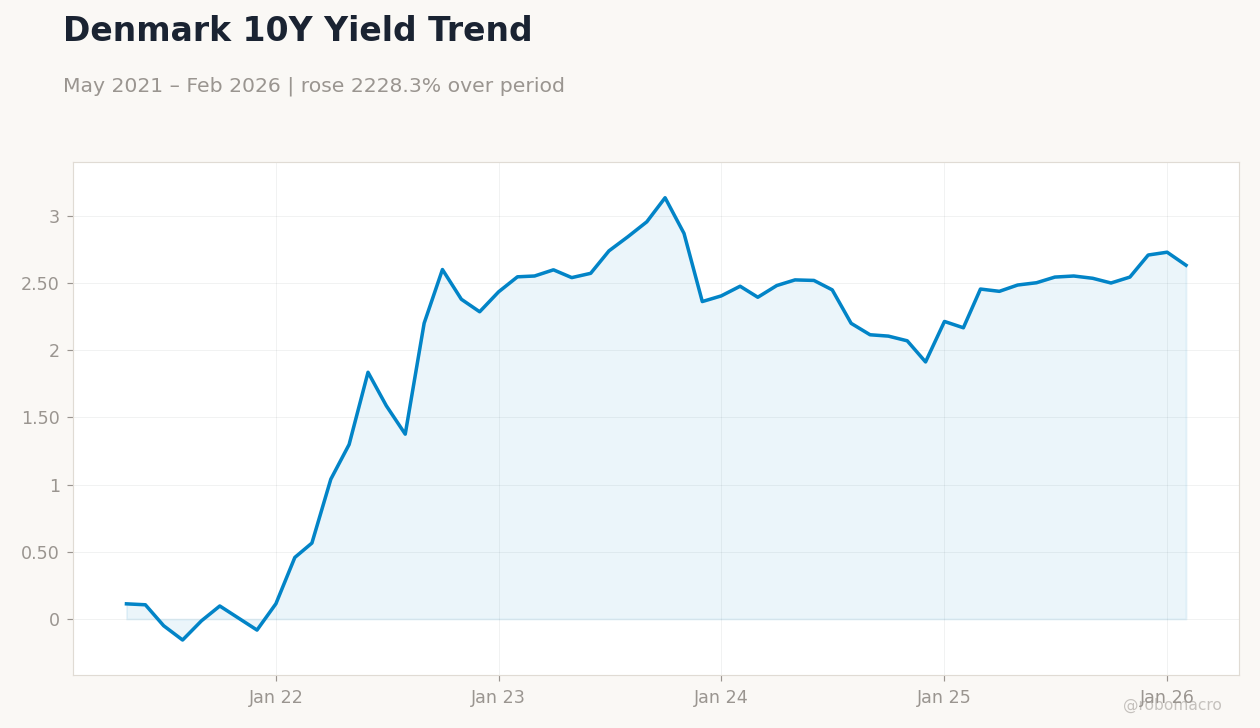
No economic data or events are scheduled for the Nordics today, per the calendar. Focus shifts to global factors, including Middle East war effects on energy flows, which could impact Sweden's imports and Norway's oil exports. Brent crude volatility may influence the Norwegian krone, while European developments could affect Denmark's currency peg and Finland's euro exposure.
The upcoming ECB meeting on April 30 may provide policy cues for Denmark and Finland. Markets could react to external news, such as US economic resilience or Saudi reassessments, potentially driving Nordic FX and equity moves. Expect sentiment to hinge on geopolitical updates rather than local drivers.
Other Economic Notes
Energy security remains a key concern for Sweden, with potential rationing amid Middle East disruptions threatening manufacturing and exports. Norway's wealth fund, down 1.27 trillion kroner or 1.9% in Q1 due to tech slides, adds fiscal uncertainty despite steady oil income. Banking news includes Handelsbanken's CEO buying shares post-report and Norion Bank's Q1 results slightly below expectations at 389 million kronor.
(cont...)