Nordics Macro Daily(Beta Mode)
Nordic Stocks Mixed, Brent Slumps
Market Snapshot
| Asset | Level | Change |
|---|---|---|
| OMX Stockholm 30 | 3,056.01 | -0.77% |
| Oslo Bors | 1,993.31 | +0.34% |
| OMX Copenhagen 25 | 1,738.94 | +0.17% |
| OMX Helsinki 25 | 6,180.28 | -0.94% |
| USD/SEK | 9.28 | +0.71% |
| USD/NOK | 9.33 | +0.54% |
| EUR/SEK | 10.86 | +0.52% |
| EUR/NOK | 10.92 | +0.38% |
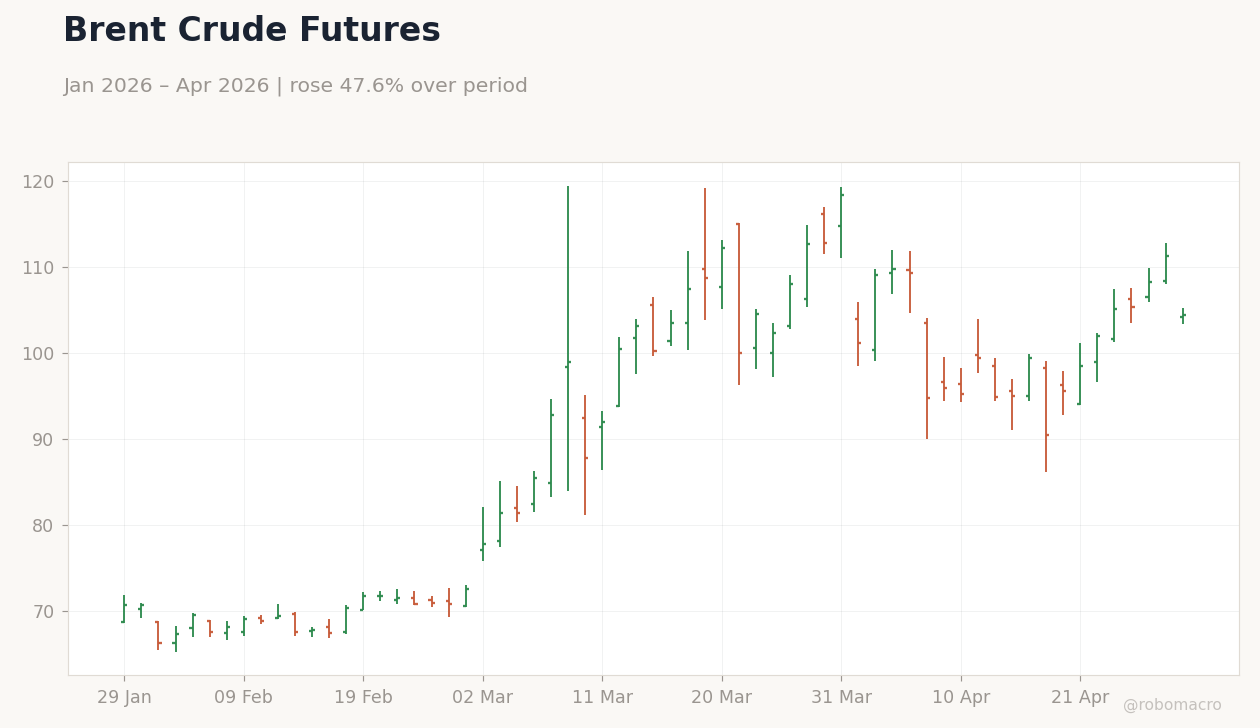
| Brent Crude | 104.29 | -6.26% |
| Gold | 4,618.60 | +0.59% |
| Bitcoin | 77,223.64 | -0.18% |
| Sweden 10Y Govt Yield | 2.76% | +4.55% |
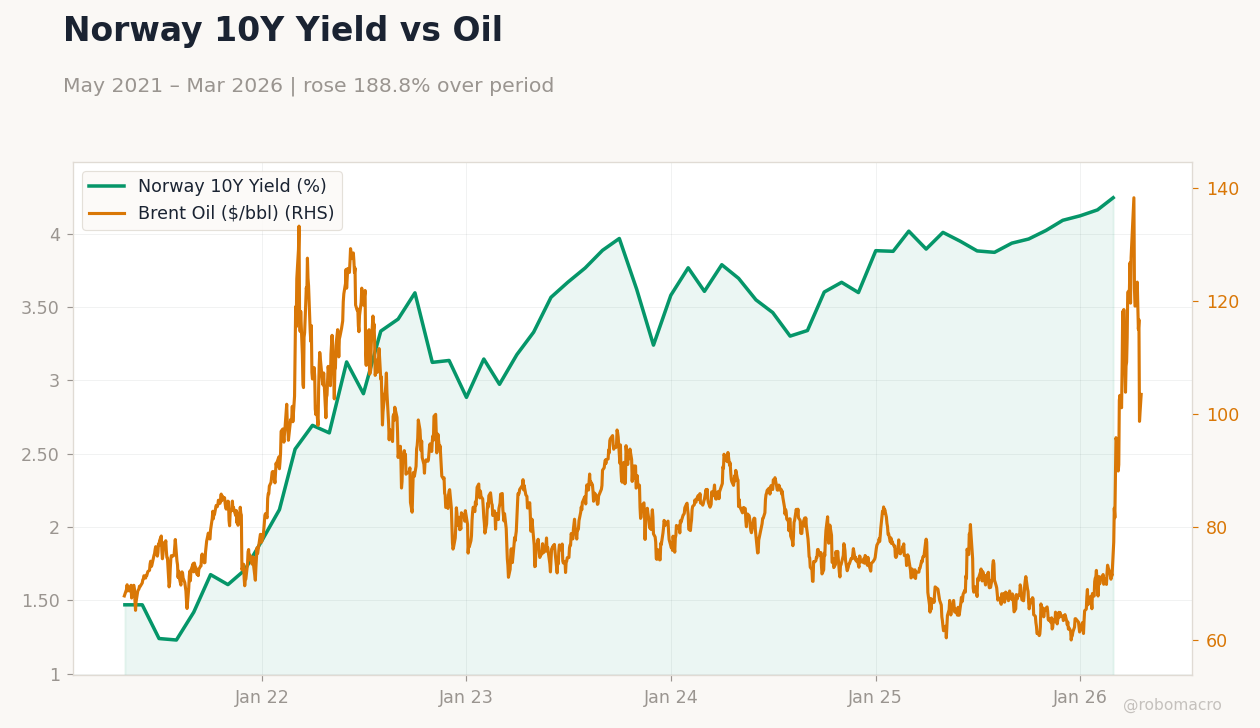
| Norway 10Y Govt Yield | 4.25% | +1.99% |
Prior Economic Events
| Data | Prior | Cons | Actual |
|---|---|---|---|
| No events available | |||
 Brent Crude Oil Prices | Type: macro_line | Brent Oil ($/bbl): 103.4 (2026-04-20) | Range: 59.93–138.2 | Trend(5pt): 67.73,109.6,90.14,80,103.4
Today's Economic Events
| Data | Prior | Cons | Time |
|---|---|---|---|
| No events available | |||
- Nordic equities showed divergence with Oslo up on energy resilience, while Stockholm and Helsinki fell amid global risk aversion.
- Krona and krone weakened versus USD as Brent crude plunged over 6%, pressuring Norway's oil-linked currency.
- Bond yields rose, with Sweden's 10Y up sharply, reflecting inflation concerns despite quiet data calendar.
Yesterday's Recap
Nordic markets displayed mixed performance on April 28, with the OMX Stockholm 30 declining 0.77% to 3,056.01, driven by weakness in industrials and tech amid broader European caution. In contrast, Norway's Oslo Bors rose 0.34% to 1,993.31, supported by energy sector stability despite falling oil prices. Denmark's OMX Copenhagen 25 edged up 0.17% to 1,738.94, buoyed by healthcare gains, while Finland's OMX Helsinki 25 dropped 0.94% to 6,180.28, weighed down by manufacturing and telecoms.
Currency moves saw the Swedish krona weaken, with USD/SEK rising 0.71% to 9.28 and EUR/SEK up 0.52% to 10.86, reflecting investor flight to safety. Norway's krone also softened, with USD/NOK up 0.54% to 9.33 and EUR/NOK gaining 0.38% to 10.92, exacerbated by Brent crude's 6.26% drop to 104.29. Sweden's 10Y government yield climbed 4.55% to 2.76%, signaling persistent inflation worries, while Norway's 10Y yield rose 1.99% to 4.25%.
No major data releases occurred, but Riksbank's certificate sale results and conditions were published, maintaining liquidity operations without surprises.
The Day Ahead
April 29 brings a quiet calendar for Nordic data, with no scheduled releases from Sweden, Norway, Denmark, or Finland, allowing markets to digest recent global volatility. Investors will monitor any updates on Sweden's parliamentary vote on citizenship rules, which could influence labor market dynamics for foreign workers. In Norway, attention turns to potential Norges Bank commentary on oil fund holdings, following disclosures of stakes in firms like Bilibili Inc.
Denmark's peg to the euro via ERM II remains stable, with no FX interventions expected. Finland, under ECB policy, may see indirect impacts from eurozone sentiment. Overall, Brent price movements and global equity trends will drive intraday Nordic asset shifts.
Other Economic Notes
Broader Nordic themes highlight resilience in export-oriented sectors, with Sweden and Denmark benefiting from manufacturing strength despite krona volatility. Norway's fiscal outlook faces headwinds from Brent's decline, as oil revenues constitute a key GDP driver, potentially pressuring public spending. Finland's eurozone integration exposes it to ECB-driven rate paths, contrasting with independent policies in Sweden and Norway.