Nordics Macro Daily(Beta Mode)
Nordic CB Decisions Loom Amid Oil Stability
Market Snapshot
| Asset | Level | Change |
|---|---|---|
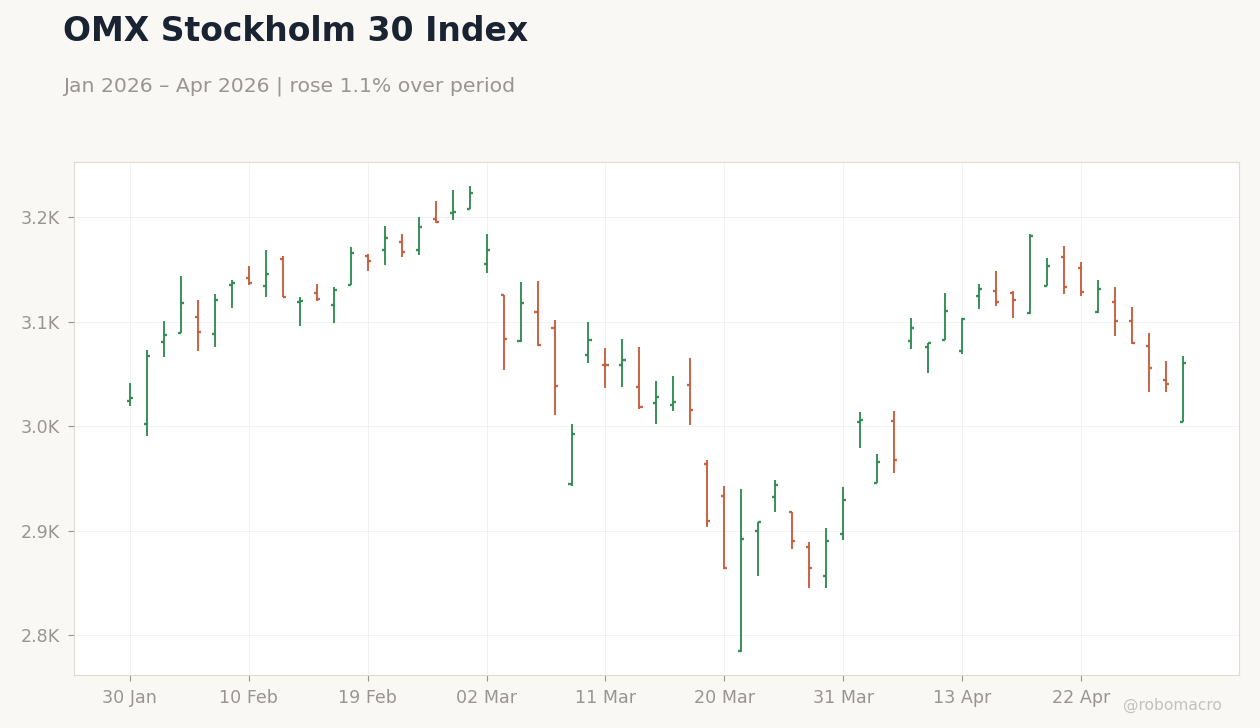
| OMX Stockholm 30 | 3,060.49 | +0.66% |
| Oslo Bors | 2,018.63 | +1.08% |
| OMX Copenhagen 25 | 1,752.43 | +0.67% |
| OMX Helsinki 25 | 6,327.54 | +1.43% |
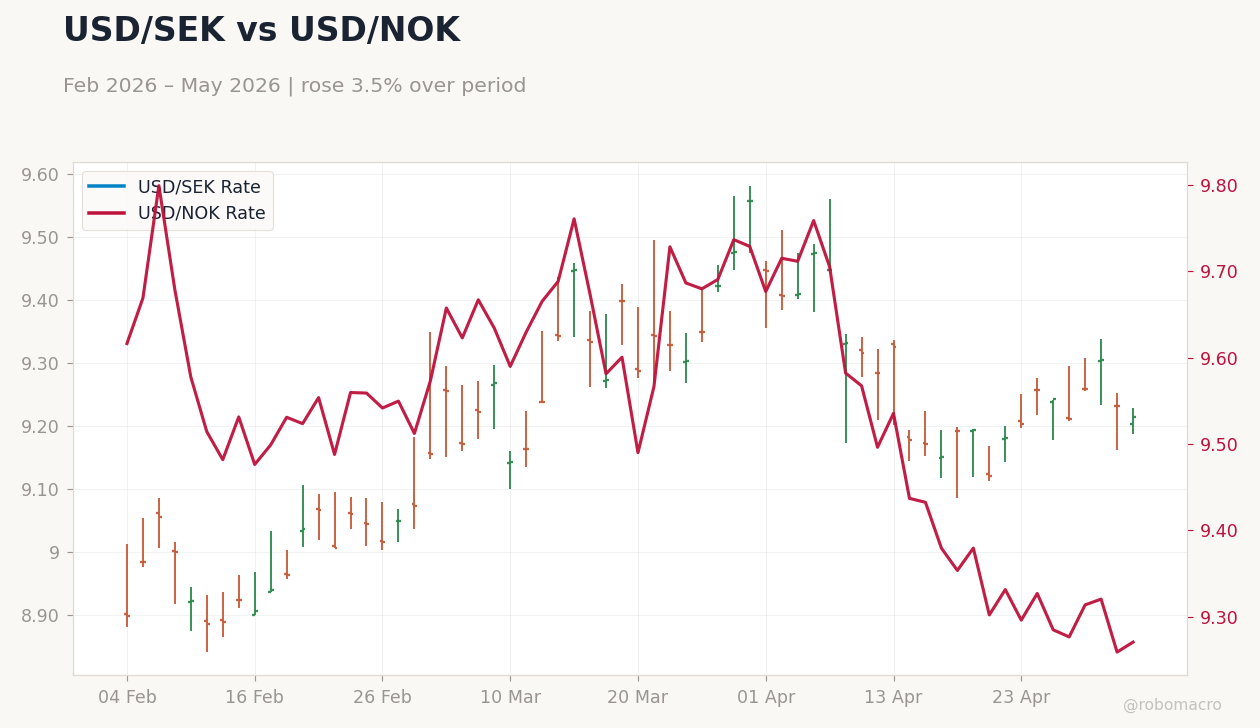
| USD/SEK | 9.21 | -0.19% |
| USD/NOK | 9.27 | +0.12% |
| EUR/SEK | 10.81 | -0.20% |
| EUR/NOK | 10.87 | +0.09% |
| Brent Crude | 108.15 | -0.02% |
| Gold | 4,616.60 | -0.29% |
| Bitcoin | 80,343.19 | +2.14% |
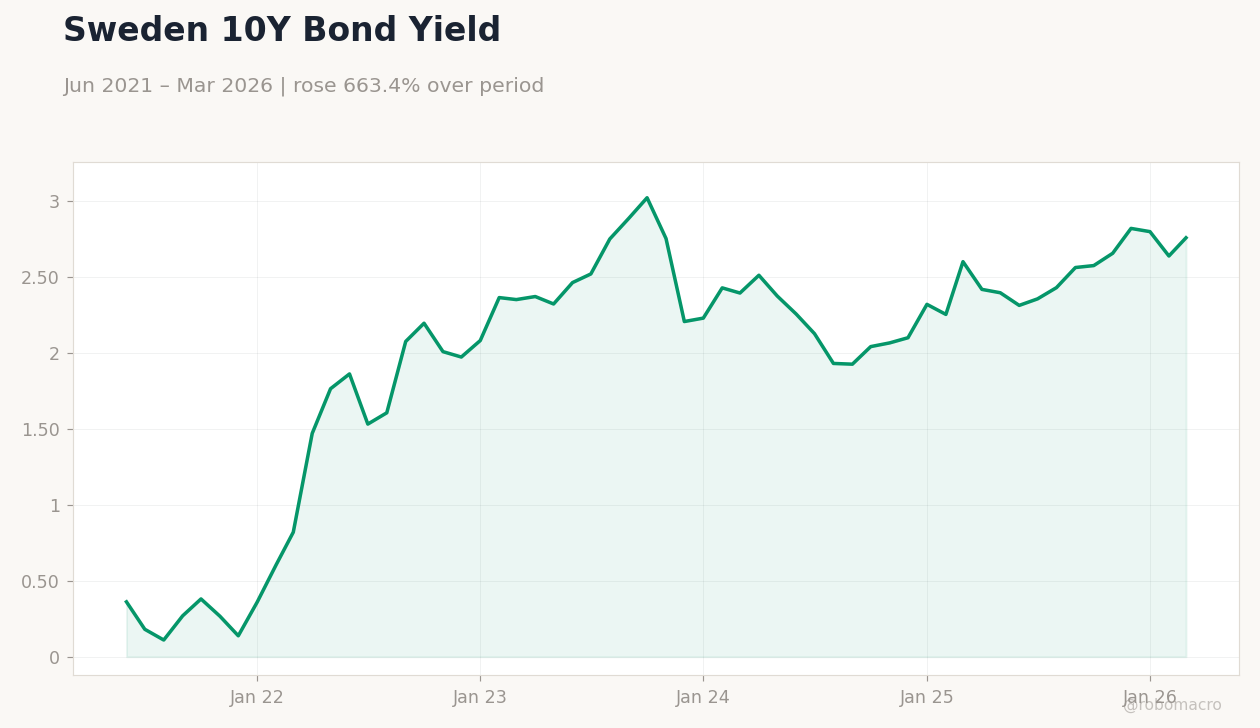
| Sweden 10Y Govt Yield | 2.76% | +4.55% |
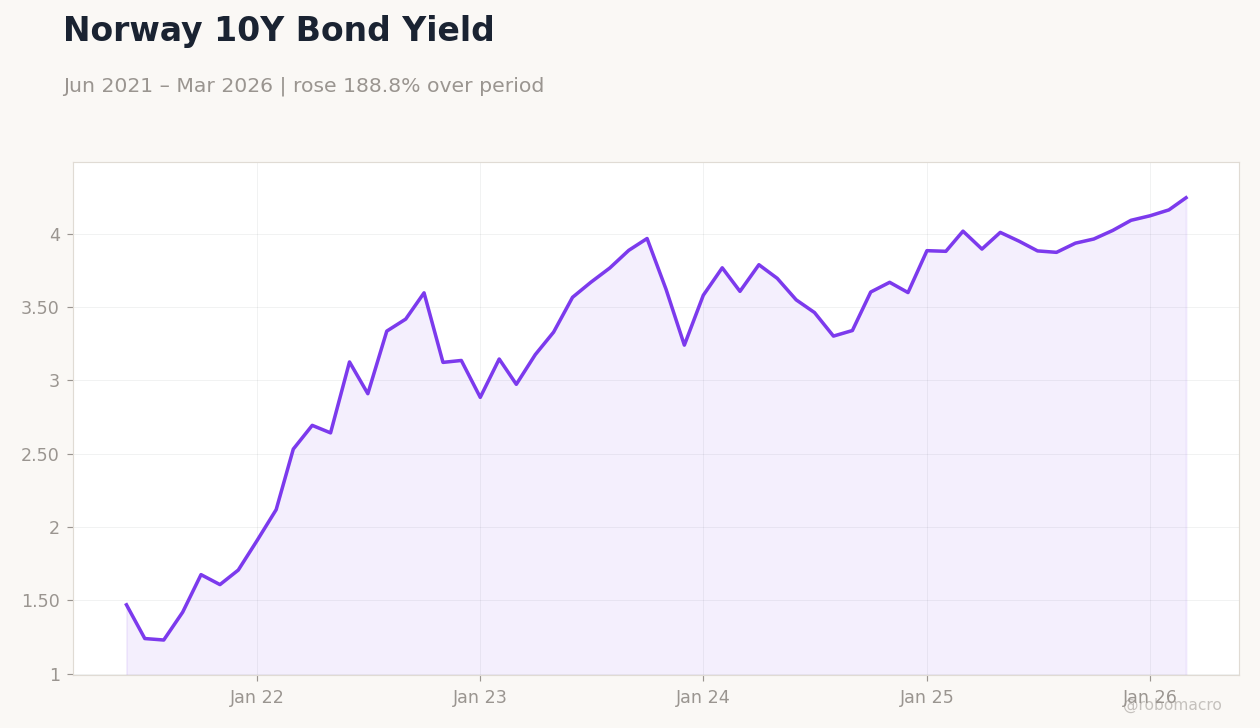
| Norway 10Y Govt Yield | 4.25% | +1.99% |
Prior Economic Events
| Data | Prior | Cons | Actual |
|---|---|---|---|
| No events available | |||
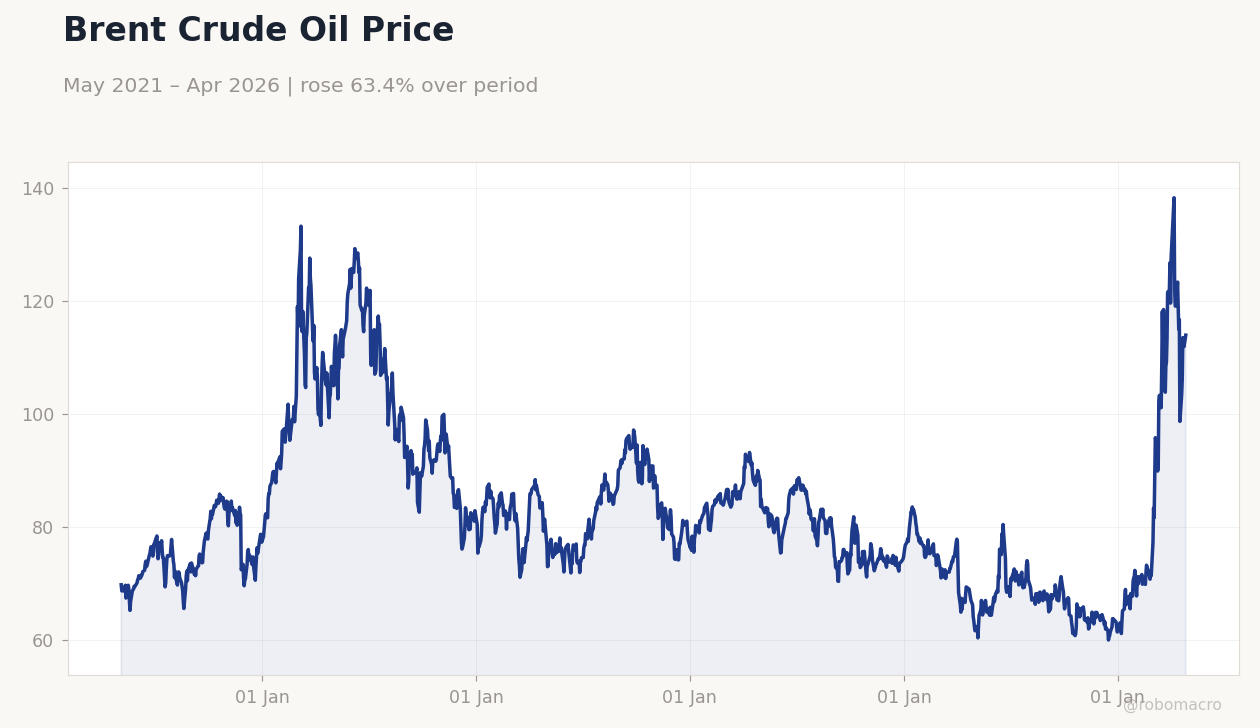 Brent Crude Oil Price | Type: macro_line | Brent USD per Barrel: 113.9 (2026-04-27) | Range: 59.93–138.2 | Trend(6pt): 69.71,111.5,90.73,78.71,113.2,113.9
Today's Economic Events
| Data | Prior | Cons | Time |
|---|---|---|---|
| Riksbank Rate Decision | 1.75 | - | 23:30 |
| Norges Bank Interest Rate Decision | 4 | - | 00:00 |
| Riksbank Press Conference | - | - | 01:00 |
- Nordic equities advanced modestly, with Finland's OMX Helsinki 25 leading at +1.43%, amid stable global sentiment.
- Currency moves mixed: USD/SEK dipped -0.19%, USD/NOK rose +0.12%, reflecting oil price stability.
- Bond yields climbed, Sweden's 10Y up +4.55% to 2.76%, signaling inflation watch ahead of central bank meetings.
Yesterday's Recap
Nordic markets showed resilience with equities posting gains across the board, as Sweden's OMX Stockholm 30 rose +0.66% to 3,060.49, driven by export sector strength despite low inflation signals. Norway's Oslo Bors advanced +1.08% to 2,018.63, supported by steady Brent crude at $108.15 (-0.02%), bolstering oil-linked fiscal outlooks. Denmark's OMX Copenhagen 25 increased +0.67% to 1,752.43, aided by manufacturing resilience, while Finland's OMX Helsinki 25 surged +1.43% to 6,327.54 on tech and industrial rebounds.
Currency pairs reflected divergent pressures: USD/SEK fell -0.19% to 9.21 amid dovish Riksbank expectations, whereas USD/NOK edged up +0.12% to 9.27 on oil stability. EUR/SEK and EUR/NOK followed similar patterns, declining -0.20% to 10.81 and rising +0.09% to 10.87, respectively. Bond markets tightened with Sweden's 10Y yield jumping +4.55% to 2.76% and Norway's +1.99% to 4.25%, as investors priced in policy divergences.
No major data releases occurred, keeping focus on upcoming central bank decisions.
The Day Ahead
Attention turns to Sweden's Riksbank rate decision at 23:30 ET on May 6, with the previous rate at 1.75% and no consensus forecast, amid expert views against hikes due to low inflation and weak growth. Norway's Norges Bank follows with its interest rate decision at 00:00 ET on May 7, holding from 4% prior, where markets see a close call between a raise now or in June. Sweden's Riksbank press conference at 01:00 ET on May 7 will provide guidance on inflation risks from potential war-related pressures.
These events could drive volatility in SEK and NOK, especially given Norway's oil exposure. No releases are slated for Denmark or Finland, but ECB linkages may influence DKK and euro-denominated assets. Overall, the outcomes will highlight Nordic policy divergences.
Other Economic Notes
Broader Nordic themes include Sweden's housing market stability, with flat prices in major cities amid high rates, though construction starts show modest recovery. Norway's economy faces fiscal adjustments from stable Brent prices, potentially trimming surplus forecasts if oil dips further. Denmark and Finland grapple with eurozone spillovers, including energy cost mitigations as Sweden joins European efforts to address fuel shortages and supply disruptions.