Nordics Macro Daily(Beta Mode)
Nordic Yields Climb, Stocks Mixed
Market Snapshot
| Asset | Level | Change |
|---|---|---|
| OMX Stockholm 30 | 3,048.11 | +0.05% |
| Oslo Bors | 1,985.91 | +0.07% |
| OMX Copenhagen 25 | 1,768.00 | +0.15% |
| OMX Helsinki 25 | 6,294.71 | +1.02% |
| USD/SEK | 9.29 | +0.83% |
| USD/NOK | 9.18 | +0.03% |
| EUR/SEK | 10.91 | +0.07% |
| EUR/NOK | 10.73 | -0.42% |
| Brent Crude | 106.09 | +0.44% |
| Gold | 4,697.10 | -0.01% |
| Bitcoin | 79,821.64 | -0.81% |
| Sweden 10Y Govt Yield | 2.76% | +4.55% |
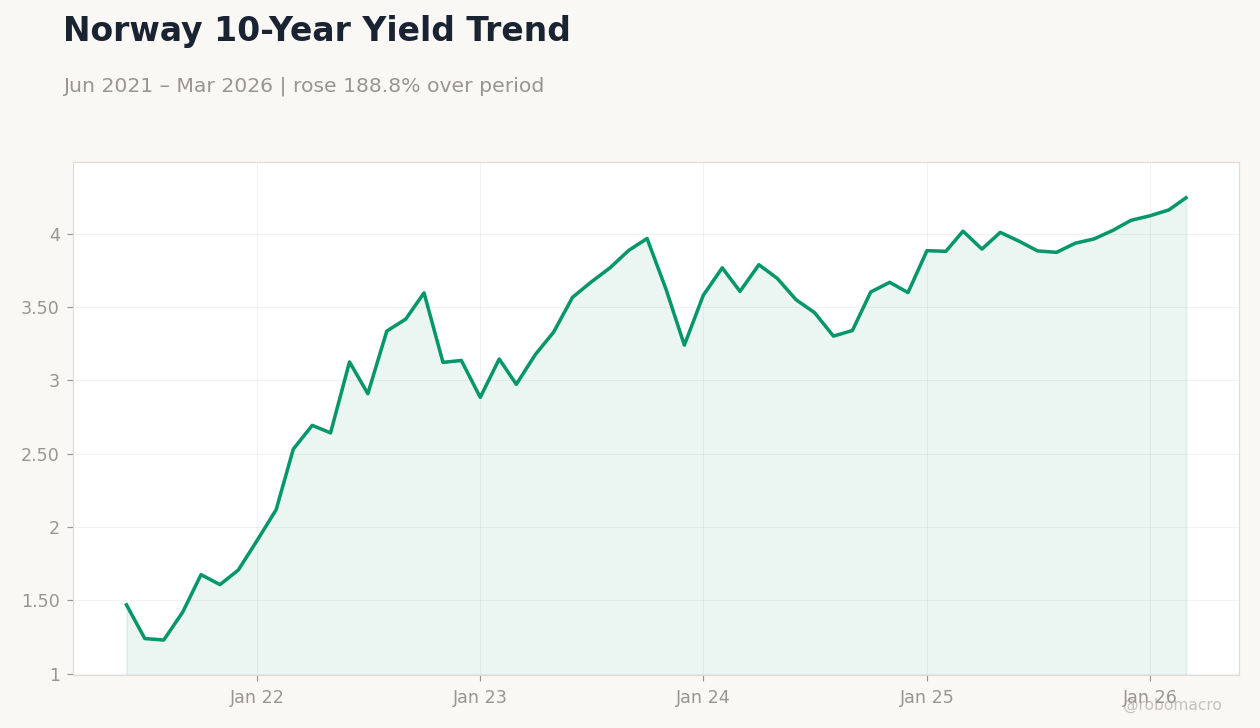
| Norway 10Y Govt Yield | 4.25% | +1.99% |
Prior Economic Events
| Data | Prior | Cons | Actual |
|---|---|---|---|
| No events available | |||
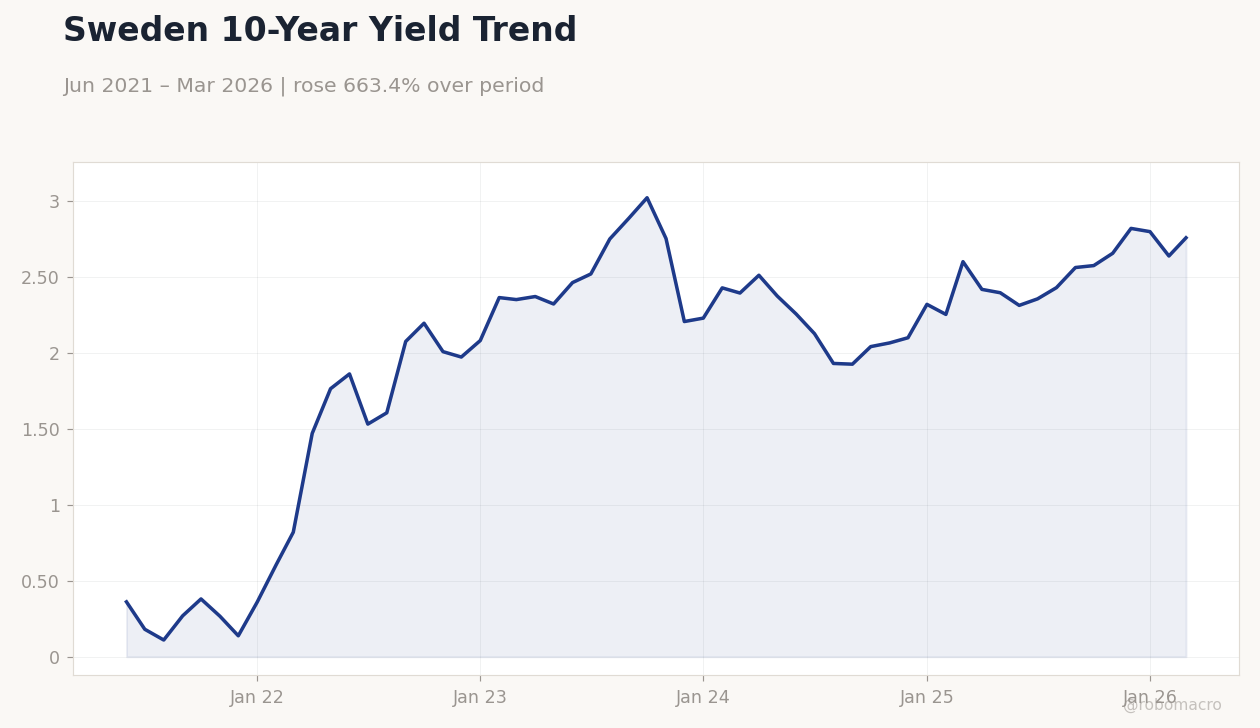 Sweden 10-Year Yield Trend | Type: macro_line | Sweden 10Y Yield (%): 2.76 (2026-03-01) | Range: 0.1101–3.024 | Trend(6pt): 0.3615,1.607,3.024,2.102,2.64,2.76
Today's Economic Events
| Data | Prior | Cons | Time |
|---|---|---|---|
| No events available | |||
- Nordic equity markets showed mixed performance, with Finland's OMX Helsinki 25 leading gains at +1.02%, while others edged up modestly amid stable global sentiment.
- Currency movements were varied: USD/SEK rose +0.83% to 9.29, reflecting krona weakness, while EUR/NOK dipped -0.42% to 10.73, supported by oil dynamics.
- Bond yields increased, with Sweden's 10Y up +4.55% to 2.76% and Norway's +1.99% to 4.25%, signaling persistent inflation concerns in the region.
Yesterday's Recap
Nordic markets experienced a quiet session with no major data releases across Sweden, Norway, Denmark, or Finland, allowing focus on broader sentiment drivers. Equity indices closed with modest gains: Sweden's OMX Stockholm 30 rose +0.05% to 3,048.11, Norway's Oslo Bors increased +0.07% to 1,985.91, Denmark's OMX Copenhagen 25 advanced +0.15% to 1,768.00, and Finland's OMX Helsinki 25 surged +1.02% to 6,294.71, buoyed by positive corporate news. Currency pairs reflected divergent pressures, as USD/SEK climbed +0.83% to 9.29 amid krona softening, while USD/NOK edged up just +0.03% to 9.18, tempered by Brent crude's +0.44% rise to 106.09.
EUR/SEK ticked up +0.07% to 10.91, but EUR/NOK fell -0.42% to 10.73, highlighting Norway's oil-linked resilience. Bond markets saw yields firm, with Sweden's 10Y government yield jumping +4.55% to 2.76% on inflation vigilance, and Norway's equivalent rising +1.99% to 4.25%, influenced by global rate expectations. Overall, the lack of fresh macro prints kept trading volumes low, with investors eyeing central bank speeches for clues on policy paths.
The Day Ahead
With no scheduled economic releases for the Nordics today, attention turns to global events that could influence regional sentiment, including multiple Bank of Canada announcements on interest rates and surveys. Norges Bank's recent speech by Governor Ida Wolden Bache may continue to resonate, emphasizing monetary policy conduct amid Norway's unique oil-driven economy. In Finland, ongoing discussions from Bank of Finland officials highlight potential bright spots like corporate deals, which could support eurozone-tied assets.
Denmark's peg to the euro via ERM II will keep EUR/DKK stable, but any ECB-related ripples could affect Nationalbank positioning. Traders should monitor Brent crude movements, as Norway's fiscal outlook remains sensitive to oil prices above $100/bbl. Expect light volatility unless external shocks emerge from Canadian data.
Other Economic Notes
Finland's economic confidence has plummeted, with Statistics Finland reporting a gloomy consumer outlook for the next year, potentially weighing on domestic demand in the eurozone member. Sweden's export-oriented manufacturing sector faces headwinds from krona volatility, though resilient housing markets could provide a buffer. <i>↓ p.2</i>