Nordics Macro Daily(Beta Mode)
Nordic Stocks Mixed as Brent Surges, Yields Rise
Market Snapshot
| Asset | Level | Change |
|---|---|---|
| OMX Stockholm 30 | 3,036.44 | -0.38% |
| Oslo Bors | 2,017.85 | +1.61% |
| OMX Copenhagen 25 | 1,768.00 | +0.15% |
| OMX Helsinki 25 | 6,272.91 | -0.35% |
| USD/SEK | 9.45 | +0.56% |
| USD/NOK | 9.31 | +0.41% |
| EUR/SEK | 10.99 | +0.20% |
| EUR/NOK | 10.82 | +0.04% |
| Brent Crude | 111.14 | +1.72% |
| Gold | 4,539.10 | -0.37% |
| Bitcoin | 76,979.89 | -1.47% |
| Sweden 10Y Govt Yield | 2.78% | +0.75% |
| Norway 10Y Govt Yield | 4.29% | +0.64% |
Prior Economic Events
| Data | Prior | Cons | Actual |
|---|---|---|---|
| No events available | |||
 Sweden vs Norway 10Y Yields | Type: macro_line | Sweden 10Y (%): 2.785 (2026-04-01) | Range: 0.1101–3.024 | Trend(6pt): 0.3615,1.607,3.024,2.102,2.639,2.785 | Norway 10Y (%): 4.285 (2026-04-01) | Range: 1.23–4.285 | Trend(6pt): 1.47,3.336,3.967,3.599,4.162,4.285
Today's Economic Events
| Data | Prior | Cons | Time |
|---|---|---|---|
| No events available | |||
- Oslo Børs jumps 1.61% to 2,017.85 on Brent crude strength at 111.14
- OMX Stockholm 30 slips 0.38% while Copenhagen holds and Helsinki eases
- Sweden 10Y yield climbs to 2.78% and Norway 10Y reaches 4.29%
Yesterday's Recap
No major data releases occurred across Sweden, Norway, Denmark or Finland on May 17. Equity markets closed mixed with Oslo Børs advancing sharply on higher Brent crude, which rose 1.72% to 111.14 and bolstered Norway’s oil-exporting outlook. OMX Stockholm 30 declined 0.38% to 3,036.44 while OMX Copenhagen 25 gained 0.15% to 1,768.00 and OMX Helsinki 25 fell 0.35% to 6,272.91.
USD/SEK rose 0.56% to 9.45 and USD/NOK increased 0.41% to 9.31, reflecting modest krona and krone softening. Government bond yields moved higher, with the Sweden 10Y yield reaching 2.78% and the Norway 10Y yield climbing to 4.29%. Trading volumes remained light as participants positioned ahead of the mid-week lull.
The Day Ahead
No economic releases are scheduled for May 19 in any Nordic country. Markets will track Brent crude movements given their direct influence on Norwegian fiscal revenues and NOK flows. Equity flows may concentrate in energy-exposed names on the Oslo Børs.
Any ECB-related commentary could affect Finnish and Danish sentiment through eurozone linkages. FX pairs EUR/SEK and EUR/NOK will be watched for volatility around the 10.99 and 10.82 levels.
Other Economic Notes
Sweden’s manufacturing exports remain exposed to global demand cycles in autos and machinery. Norway’s elevated oil prices continue to support the Government Pension Fund’s krone purchases and overall fiscal impulse. Denmark maintains its ERM II peg to the euro, requiring Danmarks Nationalbank to mirror ECB actions to defend the DKK.
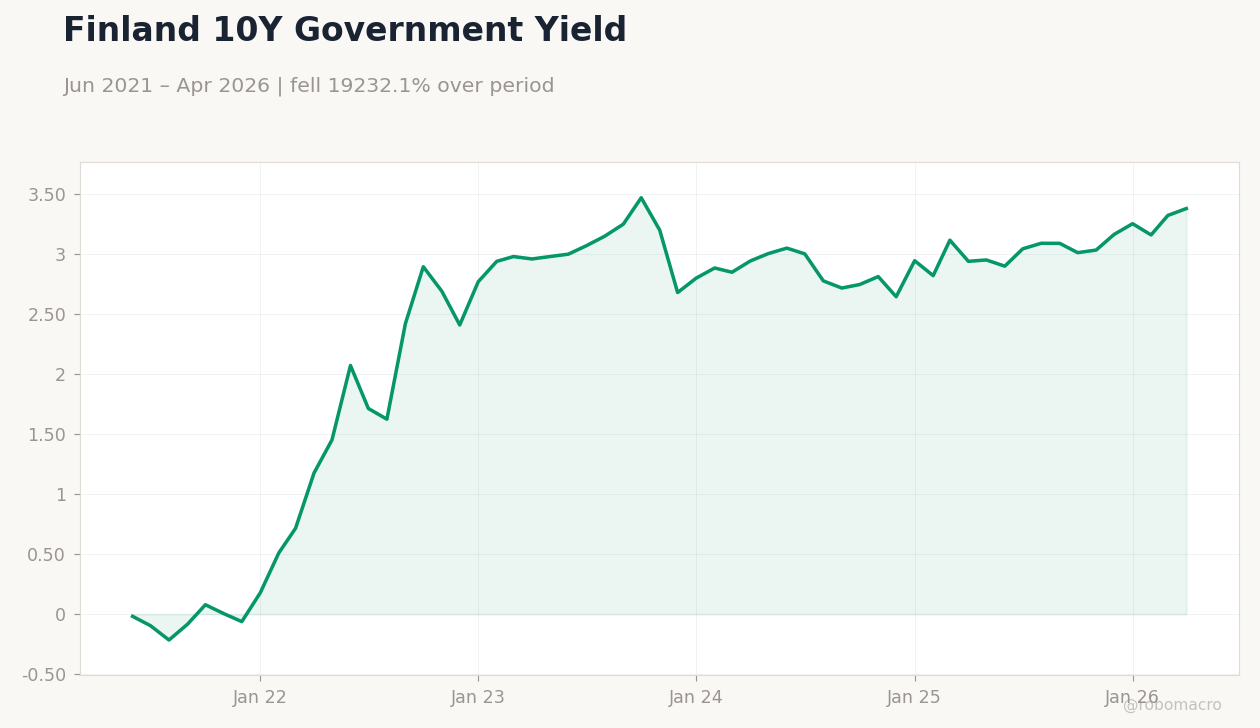
Finland’s growth trajectory tracks eurozone developments closely under ECB policy. Swedish housing prices have stabilized after earlier gains, limiting downside risks amid higher yields.
Global Macro News
Global risk appetite showed caution as Bitcoin fell 1.47% to 76,979.89. Gold eased 0.37% to 4,539.10 while yields rose across bond markets. Brent’s advance to 111.14 underscores supply-side support that benefits Norway’s terms of trade.
Nordic yield increases align with broader global pressures from persistent inflation. Eurozone unemployment at 6.70% offers context for ECB policy that shapes Finnish and Danish rates. The ECB deposit rate at 2.00% reinforces expectations for steady euro-area policy in coming months.